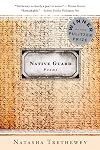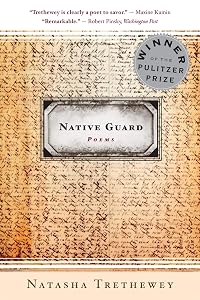
Native Guard: Poems
by Natasha Trethewey
On This Page
Description
Winner of the 2007 Pulitzer Prize for poetry and former U.S. Poet Laureate, Natasha Trethewey's elegiac Native Guard is a deeply personal volume that brings together two legacies of the Deep South.The title of the collection refers to the Mississippi Native Guards, a black regiment whose role in the Civil War has been largely overlooked by history. As a child in Gulfport, Mississippi, in the 1960s, Trethewey could gaze across the water to the fort on Ship Island where Confederate captives show more once were guarded by black soldiers serving the Union cause.?
The racial legacy of the South touched Trethewey's life on a much more immediate level, too. Many of the poems in Native Guard pay loving tribute to her mother, whose marriage to a white man was illegal in her native Mississippi in the 1960s. Years after her mother's tragic death, Trethewey reclaims her memory, just as she reclaims the voices of the black soldiers whose service has been all but forgotten.
. show less
Tags
Recommendations











Member Reviews
The title of Natasha Trethewey's Native Guard refers to the Lousiana Native Guards, a black regiment fighting for the Union in the Civil War. As explained in historical notes at the end, in one incident black Union soldiers and officers were fired on by white Union soldiers, and black dead on the battlefield were ignored by white Union soldiers because of their color.
Much of the collection deals with remembering and forgetting. A Native Guard's journal in the title poem begins in November, 1862:
"Truth be told, I do not want to forget anything of my former life: the landscape's
song of bondage - dirge in the river's throat
where it churns into the Gulf, wind in trees
choked with vines."
Along the way, he realizes to some extent tables have show more turned:
"We know it is our duty now to keep
white men as prisoners - rebel soldiers,
would-be masters. We're all bondsmen here, each
to the other. Freedom has gotten them captivity."
The narrator knows that for anyone in that war, freedom could become captivity, and the Native Guard remained on uncertain ground. It turns out his journal is an "official duty", and he is told "it's best to spare most detail, but I know there are things which must be accounted for." At the end of it all will be the dead on the field, and, though he does not want to forget, the dead will be forgotten.
So much is forgotten in our lives, in our history. In the first section, she mourns the loss of her mother, and thinks about the loss of family history that attends that personal loss. In the horrifying "What is Evidence", the evidence is
"Not the fleeting bruises she'd cover with make-up . . . nor the quiver
in the voice she'd steady, leaning
into a pot of bones on the stove."
In the rhythmic, formal poem "Myth", she deals with the irony of her dead mother reappearing in her dreams:
"The Erebus [god of darkness] I keep you in - still trying -
I make between my slumber and my waking.
It's as if you slipped through some rift, a hollow.
I was asleep while you were dying."
The second section deals predominantly with racism, with Nina Simone's "Everybody knows about Mississippi" as its epitaph. When a child reads the sign "Greenwood Library for Negroes", all she can say to slow-moving history is, "you are late". Yet that literacy is critical throughout this collection, with one soldier, for example, giving mixed-race officer Francis Dumas a tip of the hat for having "taught me to read and write," while at the same time making us think of mixed-race author Alexander Dumas, who lived such a different life.
The third section has the poet reflecting on growing up as a mixed-race child. How her parents broke Missouri miscegenation laws, the shame she now feels because as a little girl she said nothing when taught in school that before the war slaves were "happy . . . The slaves were clothed, fed and better off under a master's care." She constantly questions her parents "why and why and why" , and comes home from school to ask them the meaning of "peckerwood and nigger lover, half-breed and zebra." Oh my.
This Pulitzer Prize winner is bravely written, and often heart-breaking. It reminds us once more about how much should not be forgotten, and the devastating damage we can inflict on each other. show less
Much of the collection deals with remembering and forgetting. A Native Guard's journal in the title poem begins in November, 1862:
"Truth be told, I do not want to forget anything of my former life: the landscape's
song of bondage - dirge in the river's throat
where it churns into the Gulf, wind in trees
choked with vines."
Along the way, he realizes to some extent tables have show more turned:
"We know it is our duty now to keep
white men as prisoners - rebel soldiers,
would-be masters. We're all bondsmen here, each
to the other. Freedom has gotten them captivity."
The narrator knows that for anyone in that war, freedom could become captivity, and the Native Guard remained on uncertain ground. It turns out his journal is an "official duty", and he is told "it's best to spare most detail, but I know there are things which must be accounted for." At the end of it all will be the dead on the field, and, though he does not want to forget, the dead will be forgotten.
So much is forgotten in our lives, in our history. In the first section, she mourns the loss of her mother, and thinks about the loss of family history that attends that personal loss. In the horrifying "What is Evidence", the evidence is
"Not the fleeting bruises she'd cover with make-up . . . nor the quiver
in the voice she'd steady, leaning
into a pot of bones on the stove."
In the rhythmic, formal poem "Myth", she deals with the irony of her dead mother reappearing in her dreams:
"The Erebus [god of darkness] I keep you in - still trying -
I make between my slumber and my waking.
It's as if you slipped through some rift, a hollow.
I was asleep while you were dying."
The second section deals predominantly with racism, with Nina Simone's "Everybody knows about Mississippi" as its epitaph. When a child reads the sign "Greenwood Library for Negroes", all she can say to slow-moving history is, "you are late". Yet that literacy is critical throughout this collection, with one soldier, for example, giving mixed-race officer Francis Dumas a tip of the hat for having "taught me to read and write," while at the same time making us think of mixed-race author Alexander Dumas, who lived such a different life.
The third section has the poet reflecting on growing up as a mixed-race child. How her parents broke Missouri miscegenation laws, the shame she now feels because as a little girl she said nothing when taught in school that before the war slaves were "happy . . . The slaves were clothed, fed and better off under a master's care." She constantly questions her parents "why and why and why" , and comes home from school to ask them the meaning of "peckerwood and nigger lover, half-breed and zebra." Oh my.
This Pulitzer Prize winner is bravely written, and often heart-breaking. It reminds us once more about how much should not be forgotten, and the devastating damage we can inflict on each other. show less
Natasha Trethewey's recent collection brings poetry back into the home. Or at least, it brought it back into mine. The elegant simplicity of her style often draped over complex forms is soft and inviting even when the subject matter is cold, stricken, and calloused.
The presence of her mother invades every page. Indeed, for Trethewey, poetry becomes the monument for her mother: the physical marker on the landscape of history. It is a marker that history would just as soon forget, much like the Louisiana Native Guard, the first officially sanctioned regiment of black soldiers in the Union Army and the focus of the second section. Trethewey's poetry creates a space for remembrance.
But she does not travel into this space without hesitation. show more The opening poem, "Theories of Space and Time," illustrates her acknowledgment of what this trip might cost: "You can get there from here, though / there's no going home." The photograph someone snaps along the way and presents upon your return shows a different you. Nothing is quite the same again. But the will to remember, to create a history that remembers, (thankfully for us) overcomes the poet.
One of my favorite poems, "What the Body Can Say," deals with the inability to reconcile sign and signified without a mediating context. In this case, the context is the body that figures forth "something" unnameable. As with the scarred back of the slave in "Native Guard," the body becomes the organ of speech, saying what the mouth or pen does not. This thought is wonderfully reinforced by the image of a notebook crosshatched in two different hands: one the hand of a white southerner, the other the hand of a black Native Guard soldier (this begs the questions: does Trethewey consider the work of the poet painful or traumatic?).
The need for a human contextualizing agent comes up again and again throughout the first section: the poet offers herself as context in "Photograph: Ice Storm, 1971"; "What is Evidence" again depicts the scarred body, contrasting it with the (less meaningful) historical document; "Letter" emphasizes the fragility of signs, especially ones outside the body (e.g. in the form of a letter to a friend); and "After Your Death" depicts the emotional magnitude of bodiless signs in the context of grief.
Section 2 of Native Guard deals primarily with untold history. Stories that both the orthodox accounts and the landscape itself has forgotten. Section 3 is more personal and explores the role of the poet, our poet, in matters of race, the South, and the African-American's position among the two. Poems like "Incident" weave form with meaning with subtlety to overscore powerful images while poems like "Monument" go straight for the jugular: "At my mother's grave, ants streamed in / and out like arteries, a tiny hill rising / above her untended plot."
I've read Native Guard twice I would eagerly suggest it to others. show less
The presence of her mother invades every page. Indeed, for Trethewey, poetry becomes the monument for her mother: the physical marker on the landscape of history. It is a marker that history would just as soon forget, much like the Louisiana Native Guard, the first officially sanctioned regiment of black soldiers in the Union Army and the focus of the second section. Trethewey's poetry creates a space for remembrance.
But she does not travel into this space without hesitation. show more The opening poem, "Theories of Space and Time," illustrates her acknowledgment of what this trip might cost: "You can get there from here, though / there's no going home." The photograph someone snaps along the way and presents upon your return shows a different you. Nothing is quite the same again. But the will to remember, to create a history that remembers, (thankfully for us) overcomes the poet.
One of my favorite poems, "What the Body Can Say," deals with the inability to reconcile sign and signified without a mediating context. In this case, the context is the body that figures forth "something" unnameable. As with the scarred back of the slave in "Native Guard," the body becomes the organ of speech, saying what the mouth or pen does not. This thought is wonderfully reinforced by the image of a notebook crosshatched in two different hands: one the hand of a white southerner, the other the hand of a black Native Guard soldier (this begs the questions: does Trethewey consider the work of the poet painful or traumatic?).
The need for a human contextualizing agent comes up again and again throughout the first section: the poet offers herself as context in "Photograph: Ice Storm, 1971"; "What is Evidence" again depicts the scarred body, contrasting it with the (less meaningful) historical document; "Letter" emphasizes the fragility of signs, especially ones outside the body (e.g. in the form of a letter to a friend); and "After Your Death" depicts the emotional magnitude of bodiless signs in the context of grief.
Section 2 of Native Guard deals primarily with untold history. Stories that both the orthodox accounts and the landscape itself has forgotten. Section 3 is more personal and explores the role of the poet, our poet, in matters of race, the South, and the African-American's position among the two. Poems like "Incident" weave form with meaning with subtlety to overscore powerful images while poems like "Monument" go straight for the jugular: "At my mother's grave, ants streamed in / and out like arteries, a tiny hill rising / above her untended plot."
I've read Native Guard twice I would eagerly suggest it to others. show less
This Pulitzer Prize-winning poetry collection by Natasha Trethewey contains twenty-six poems divided into three sections. Each section's content is linked thematically as the poet examines her grief over her mother's death, the history of the eponymous 'Native Guard,' and growing up of mixed race in the South. The themes sound disparate, but are truly linked, often by the repetition of a thought or phrase, so that the collection as a whole flows together unmistakeably. Indeed, though I sometimes paused to linger on a single poem, I more often found myself wanting to go on before I lost the connecting thread.
I do not read much poetry; after reading Native Guard, I have determined that I do not read enough poetry. Each poem reads simply - show more by which I do not mean that it is easy, but that I do not have to attack it with a sledgehammer to determine its meaning - contains strong emotion, and begs to be read aloud and savored. Though I find it hard in such a well-seamed collection to pick out one or two pieces as favorites, I often turned back to the first poem, 'Theories of Time and Space,' and had to stop reading to hold back tears when I came to 'Graveyard Blues.' This will definitely be one of my most memorable reads of the year. show less
I do not read much poetry; after reading Native Guard, I have determined that I do not read enough poetry. Each poem reads simply - show more by which I do not mean that it is easy, but that I do not have to attack it with a sledgehammer to determine its meaning - contains strong emotion, and begs to be read aloud and savored. Though I find it hard in such a well-seamed collection to pick out one or two pieces as favorites, I often turned back to the first poem, 'Theories of Time and Space,' and had to stop reading to hold back tears when I came to 'Graveyard Blues.' This will definitely be one of my most memorable reads of the year. show less
This poetry collection is incredible. The way Trethewey weaves together words, themes, and imagery as threads that build on each other throughout every poem is craft at its finest. For example, one poem (Myth) is told in two stanzas, the second a mirror of the first. The title poem Native Guard has multiple sections that bleed into each other, the first line of each echoing the last idea of the previous one.
Many of the poems are detailed descriptions of historical photographs, a fantastic, meaningful lens to present historical interpretations, with details many might pass over but Trethewey points out. This approach, of course, highlights how history can be (mis)interpreted depending on who the observer is. Many of the poems draw you in show more with lovely descriptions and then end with an emotional punch you didn't see coming but fits perfectly.
The overlay of history with the present, both in the poems focusing on Trethewey's family and the ones focusing on the black soldiers, is expertly utilized for maximum impact. The themes of memory, forgetting, and interpretation, of various intersections, are incredibly powerful. I highly recommend these poems, and I especially recommend the audio version as read by the author. show less
Many of the poems are detailed descriptions of historical photographs, a fantastic, meaningful lens to present historical interpretations, with details many might pass over but Trethewey points out. This approach, of course, highlights how history can be (mis)interpreted depending on who the observer is. Many of the poems draw you in show more with lovely descriptions and then end with an emotional punch you didn't see coming but fits perfectly.
The overlay of history with the present, both in the poems focusing on Trethewey's family and the ones focusing on the black soldiers, is expertly utilized for maximum impact. The themes of memory, forgetting, and interpretation, of various intersections, are incredibly powerful. I highly recommend these poems, and I especially recommend the audio version as read by the author. show less
Natasha Trethewey’s Pulitzer Prize-winning collection of poetry, Native Guard, reminds me of an exquisite pearl necklace: perfectly polished pearls assembled into a stunning strand. Trethewey weaves historical references — particularly the Second Louisiana Native Guard, one of the first black regiments to fight for the Union — with poems remembering her mother, her mother’s tragic life and death, and Trethewey’s native Mississippi. Each poem, like a pearl, was beautiful on its own, but together the poems build a gorgeous experience. Highly, highly recommended.
This work did not grip me as much as I believed it would. I would've thought for a work that won the Pulitzer that more would come forth, being impressed with their selections in the past. I feel that there was a disconnect for me in terms of its audience and that is why I could not appreciate it with the same gravity that others might. It was an interesting collection of poetry, but I felt it did not linger long after it was read.
3 stars.
3 stars.
What a completely unexpected surprise! My mom brought this home from the library, and started telling me the premise of the collection: Trethewey's mother was murdered by her second husband in 1985, when she was 41 and Natasha was 19. After we both read the book, we became so fascinated by the events she describes that we started looking up news accounts of her mother’s killing. The events were so horriffic the Atlanta Journal Constitution wrote a large feature story about her mother's death in 1985, and followed up with stories about her stepfather receiving two life sentences for the kidnapping and murder later that year and a lawsuit filed against DeKalb County in the aftermath. In a bit of fateful casting, the reporter who wrote show more about her stepfather’s plea bargain in 1985 also wrote the newspaper’s story when Trethewey won the Pulitzer Prize for this book in 2007. The Gothic South wastes nothing.
But the details are also contained here, in these poems. Native Guard is about what happened to her mother, the fallout for Natasha after her mother died, and also the stories of the forgotten freed slaves who stood guard at a confederate prison in her home state of Mississippi. Natasha, who left her mother behind with her 10-year-old stepbrother when she went to the University of Georgia a year before the murder, sees herself as her mother's Native Guard and has to cope with the intense survivor's guilt she feels after her mother is killed. Her stark and profoundly sad poem, “What the Body Can Say” describes grief boiled over into physical agony. The short and subtle poem, “After Your Death” gives away more than you think: She describes picking a ripe fig from her mother’s tree and turning it over to see it has rotted away in back and concludes “I’m too late, again. Another space emptied by loss.” The damage to the fig is a gasp-inducing metaphor for the particular physical injury inflicted on her mother.
Though I am a moron who is rarely able to follow modern poetry and often finds it idiotic and needlessly vague, Trethewey's poems are so clear it's as if she's struck a note and tapped into the natural frequency of my own fears. Her dirge-like funeral poem, Graveyard Blues, is so painful I cried when I read it for the first time, though my own mother is still very much alive (and sitting across the room from me when I read it).
The exceptional poem “Genus Narcissus” foreshadows the events Trethewey will describe to us throughout the book. The daffodils she picks for her mother are a kind that bloom early and die quickly, just as her own mother will "die early." She also describes her own self-absorption, admiring herself for bringing her mother such a pretty gift, rather than realizing how short her time with her mother will be. Already, in one of the earliest poems, the survivor's guilt is laid bare.
She never lets us forget how young her mother was - not in the haunting last line of Genus Narcissus, nor in the frightening play on the words "pierced temporal" in “What Is Evidence” (for both the gunshot to her mother's head, and the annihilation of the chronology of her mother's life), nor in the reference to her "young father" in describing her mother's funeral in Southern Gothic. Why this dwelling on her mother's age at the time of death? Why repeatedly call her mother "young" when she was 41 when she's killed? Looking at the copyright date in the book, 2006, and doing some math, you realize that Natasha is 40 when these poems are published, the age of her mother's last full living year, the age her mother was when Natasha went to college. From a 1998 profile of Trethewey by the Hartford Courant: "'I think about my mother more and more as I occupy the ages she was,'" Trethewey says. On her 26th birthday, she remembered her mother's 26th birthday, and that she had a cake in the shape of a watermelon; the black seeds were 26 black candles."
Native Guard was published right at the point where there are no more of her mother's years to compare to her own.
For some reason this whole review reads like a high school essay, even though I read this book for pleasure. I could mention fascinating twists and details and memorable phrases and ideas for each of her poems. None of them suck. None are confusing. They are all extraordinary.
Though I am not as gifted with words as this extraordinary poet is, you'll have to trust me that she draws a clear and moving parallel from her own survivor's guilt and grief to the sadness over the forgotten Native Guard of the confederate prison, their graves washed away by Hurricane Camille though the confederate prisoners themselves are remembered by name in a memorial plaque at the ruins of the fort. This is an exceptional work of poetry, deserving not only of the Pulitzer Prize but a wide audience to read and appreciate these poems. I know modern poetry is a pain in the neck most of the time, but this one stands apart from almost every other poetry book I have ever read.
Note: She appears to have a very close relationship with her father in real life. My mother thinks there's something suspicious about the way she never really mentions him much in Native Guard, but I think his absense from the poetry closely parallels his absence from her childhood. Also, It seems from some of her poems that his marriage to her mother represent her most stable, happy years. Her father is also a poet and professor and wrote a long essay about meeting her mother. show less
But the details are also contained here, in these poems. Native Guard is about what happened to her mother, the fallout for Natasha after her mother died, and also the stories of the forgotten freed slaves who stood guard at a confederate prison in her home state of Mississippi. Natasha, who left her mother behind with her 10-year-old stepbrother when she went to the University of Georgia a year before the murder, sees herself as her mother's Native Guard and has to cope with the intense survivor's guilt she feels after her mother is killed. Her stark and profoundly sad poem, “What the Body Can Say” describes grief boiled over into physical agony. The short and subtle poem, “After Your Death” gives away more than you think: She describes picking a ripe fig from her mother’s tree and turning it over to see it has rotted away in back and concludes “I’m too late, again. Another space emptied by loss.” The damage to the fig is a gasp-inducing metaphor for the particular physical injury inflicted on her mother.
Though I am a moron who is rarely able to follow modern poetry and often finds it idiotic and needlessly vague, Trethewey's poems are so clear it's as if she's struck a note and tapped into the natural frequency of my own fears. Her dirge-like funeral poem, Graveyard Blues, is so painful I cried when I read it for the first time, though my own mother is still very much alive (and sitting across the room from me when I read it).
The exceptional poem “Genus Narcissus” foreshadows the events Trethewey will describe to us throughout the book. The daffodils she picks for her mother are a kind that bloom early and die quickly, just as her own mother will "die early." She also describes her own self-absorption, admiring herself for bringing her mother such a pretty gift, rather than realizing how short her time with her mother will be. Already, in one of the earliest poems, the survivor's guilt is laid bare.
She never lets us forget how young her mother was - not in the haunting last line of Genus Narcissus, nor in the frightening play on the words "pierced temporal" in “What Is Evidence” (for both the gunshot to her mother's head, and the annihilation of the chronology of her mother's life), nor in the reference to her "young father" in describing her mother's funeral in Southern Gothic. Why this dwelling on her mother's age at the time of death? Why repeatedly call her mother "young" when she was 41 when she's killed? Looking at the copyright date in the book, 2006, and doing some math, you realize that Natasha is 40 when these poems are published, the age of her mother's last full living year, the age her mother was when Natasha went to college. From a 1998 profile of Trethewey by the Hartford Courant: "'I think about my mother more and more as I occupy the ages she was,'" Trethewey says. On her 26th birthday, she remembered her mother's 26th birthday, and that she had a cake in the shape of a watermelon; the black seeds were 26 black candles."
Native Guard was published right at the point where there are no more of her mother's years to compare to her own.
For some reason this whole review reads like a high school essay, even though I read this book for pleasure. I could mention fascinating twists and details and memorable phrases and ideas for each of her poems. None of them suck. None are confusing. They are all extraordinary.
Though I am not as gifted with words as this extraordinary poet is, you'll have to trust me that she draws a clear and moving parallel from her own survivor's guilt and grief to the sadness over the forgotten Native Guard of the confederate prison, their graves washed away by Hurricane Camille though the confederate prisoners themselves are remembered by name in a memorial plaque at the ruins of the fort. This is an exceptional work of poetry, deserving not only of the Pulitzer Prize but a wide audience to read and appreciate these poems. I know modern poetry is a pain in the neck most of the time, but this one stands apart from almost every other poetry book I have ever read.
Note: She appears to have a very close relationship with her father in real life. My mother thinks there's something suspicious about the way she never really mentions him much in Native Guard, but I think his absense from the poetry closely parallels his absence from her childhood. Also, It seems from some of her poems that his marriage to her mother represent her most stable, happy years. Her father is also a poet and professor and wrote a long essay about meeting her mother. show less
Members
- Recently Added By
Published Reviews
ThingScore 75
By setting the jewel of rage in a formal ring, she suffuses and subsumes it, coloring many of the poems here with pathos. The conflicting facts of the South are with her forever, and haunt her; they’re the blood of her work.
added by Shortride
Lists

Zora Canon
100 works; 6 members

The Zora Canon
98 works; 4 members

Favorite Recent Poetry: 1980-2022
178 works; 70 members
Author Information

13+ Works 2,236 Members
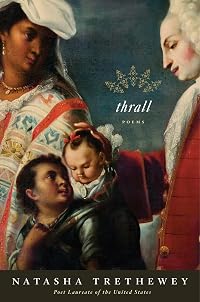
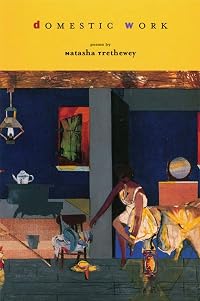
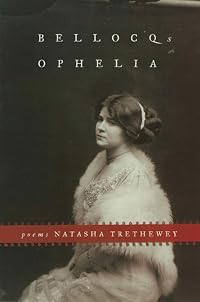
Natasha Trethewey was the Poet Jaureate Consultant in Poetry to the Library of Congress, 2012-14. She is the author of four collections of poetry: Thrall, Domestic Work, Bellocq's Ophelia, and Native Cuard, for which she was awarded the Pulitzer Prize. She is the Robert W. Woodruff Professor of English and Creative Writing at Emory University.
Awards and Honors
Common Knowledge
- Important places
- Ship Island; Port Hudson, Louisiana, USA; Atlanta, Georgia, USA; Fulton County, Georgia, USA; Gulfport, Mississippi, USA; Ohio, USA (show all 7); Vicksburg, Mississippi, USA
- Epigraph
- Memory is a cemetery / I've visited once or twice, white / ubiquitous and the set aside // Everywhere under foot ...
--Charles Wright - Dedication
- For my mother, in memory
- Blurbers
- Madden, David
Classifications
Statistics
- Members
- 614
- Popularity
- 47,530
- Reviews
- 20
- Rating
- (4.25)
- Languages
- English
- Media
- Paper, Audiobook, Ebook
- ISBNs
- 8
- UPCs
- 2
- ASINs
- 6