

Arthur C. Clarke's July 20, 2019: Life in the 21st Century (Omni Book)
by Arthur C. Clarke (Editor)
On This Page
Description
Photos and text provide a speculative tour of life in the future.Tags
Recommendations
























Member Reviews
This book was published in 1986, and marked SF author and futurist Arthur C. Clarke's attempt to imagine what life and technology might be like, well... today. It's presented partly as straightforward speculation, and partly as semi-fictional scenes of future events or imagined future histories.
I picked up my copy in 1986, or possibly early 1987. In any case, I was a teenager at the time. I read it with some interest, and then made an improbable pact with myself: I would re-read it on the date it purported to to represent -- the 50th anniversary of the Apollo 11 landing -- and let the unimaginable middle-aged future me see what she thought about its predictions and their relationship to reality.
I'm pleased to report that I have, in show more fact, kept that pact, although I must say that unimaginable middle-aged future me is mostly just a little bemused, really.
Like most attempts by smart people to imagine the future, this is a combination of the oddly prescient, the way off-base, the almost-but-not-quite, and the just plain bizarre. There is a lot more of that last thing the further the book goes on, I think. Clarke increasingly seems to engage in weird fights of fancy, some of which seem to be intended mainly to provoke or shock. At least, I see no other explanation for things like the implication that necrophilia is likely to become a socially acceptable practice, now or ever. I mean... what?
To the extent that it is trying to be serious and thoughtful, though, I'd say most of the predictions have the not-uncommon problem of being wildly over-optimistic. Some of the technologies he imagines being fully mature by now are still very much under development, and others have never materialized at all. Our understanding of genetics has come a long way, for instance, but we have definitely not yet reached the point where doctors are basically predicting an infant's future medical history and best career choices at birth. We're also not hooking VR machines directly into our brains, or regularly flying around the world at supersonic speeds, and we haven't effectively eliminated rote, dehumanizing jobs. Nor do we yet have a base on the moon, something Clarke describes as having taken longer than anticipated, but still a reality by 2019.
But that's hardly a surprising mistake. Futurists have almost always been wildly optimistic about the future of human space flight, even when they think they're being pessimistic about it. Meanwhile, they seldom seem to have put much thought into imagining the possibilities of robotic space exploration, which, in reality, have been quite impressive.
Actually, robots are something that futurists have always just been kind of weird about, and Clarke is no exception. He scores an impressive point by stating that the future of household automation will consist not of robot butlers, but by a collection of various intelligent appliances. But he then goes on to lose that point again immediately by mostly describing, well, robot butlers. At least he does kinda-sorta predict the Roomba!
He does pretty well with a few other things, too. He's basically right on the money about the rise of HDTV, for instance. Actually, the chapter on the future of movies and television is particularly interesting, because it's just about a 50-50 blend of "Wow, that was uncannily insightful and accurate!" and "Wow, this guy has absolutely no idea what's coming."
No idea, of course, because like most people at the time, he just couldn't quite imagine the internet and its overwhelming significance to the world to come. There are times when he seems to be groping all around the idea. He talks about increased availability of knowledge and the educational possibilities of watching lectures given by teachers halfway around the world. He imagines being able to call your home computer from work to give it orders. He even mentions online support groups that existed on platforms like Compuserve at the time, in the context of a (very strange) chapter on the future of psychiatry, but seems mostly unable to see the larger potential in such things.
Which isn't to berate Clarke for literally not being able to see the future, but it certainly does point out how ultimately futile such attempts pretty much always are.
I thought it might be fun to conclude by quoting a passage that I think captures the experience of reading this sort of thing charmingly well. It's about future cars, from the chapter on transportation:
On-board navigation will make it impossible to get lost. The car will be able to locate its position using satellite navigation systems and show it on a color video map display. This TV display -- located on the passenger side, not the driver's side -- will store an atlas of maps on a videodisc.
That's an impressive prediction! Although perhaps not an entirely surprising one, since if there's anything Clarke did understand the possibilities of really, really well, it's communications satellites. It would be petty to ding him for not predicting the exact placement of the GPS screen, or even for not considering the possibility that the machine would give verbal directions. It seems like an awesome success of a prediction! At least, until you get to the very end. Videodisc, forsooth! Oh, bless.
Well, hey, I suppose if the future were easy to predict in detail, it would be much less interesting to live in.
Rating: Honestly, how does one even rate this? I think I'm going to give it a 3/5. Which is a bit on the low side, as my ratings go, not because he failed to sufficiently predict the future, but mostly just because of how off-the-rails some of the later chapters get. show less
I picked up my copy in 1986, or possibly early 1987. In any case, I was a teenager at the time. I read it with some interest, and then made an improbable pact with myself: I would re-read it on the date it purported to to represent -- the 50th anniversary of the Apollo 11 landing -- and let the unimaginable middle-aged future me see what she thought about its predictions and their relationship to reality.
I'm pleased to report that I have, in show more fact, kept that pact, although I must say that unimaginable middle-aged future me is mostly just a little bemused, really.
Like most attempts by smart people to imagine the future, this is a combination of the oddly prescient, the way off-base, the almost-but-not-quite, and the just plain bizarre. There is a lot more of that last thing the further the book goes on, I think. Clarke increasingly seems to engage in weird fights of fancy, some of which seem to be intended mainly to provoke or shock. At least, I see no other explanation for things like the implication that necrophilia is likely to become a socially acceptable practice, now or ever. I mean... what?
To the extent that it is trying to be serious and thoughtful, though, I'd say most of the predictions have the not-uncommon problem of being wildly over-optimistic. Some of the technologies he imagines being fully mature by now are still very much under development, and others have never materialized at all. Our understanding of genetics has come a long way, for instance, but we have definitely not yet reached the point where doctors are basically predicting an infant's future medical history and best career choices at birth. We're also not hooking VR machines directly into our brains, or regularly flying around the world at supersonic speeds, and we haven't effectively eliminated rote, dehumanizing jobs. Nor do we yet have a base on the moon, something Clarke describes as having taken longer than anticipated, but still a reality by 2019.
But that's hardly a surprising mistake. Futurists have almost always been wildly optimistic about the future of human space flight, even when they think they're being pessimistic about it. Meanwhile, they seldom seem to have put much thought into imagining the possibilities of robotic space exploration, which, in reality, have been quite impressive.
Actually, robots are something that futurists have always just been kind of weird about, and Clarke is no exception. He scores an impressive point by stating that the future of household automation will consist not of robot butlers, but by a collection of various intelligent appliances. But he then goes on to lose that point again immediately by mostly describing, well, robot butlers. At least he does kinda-sorta predict the Roomba!
He does pretty well with a few other things, too. He's basically right on the money about the rise of HDTV, for instance. Actually, the chapter on the future of movies and television is particularly interesting, because it's just about a 50-50 blend of "Wow, that was uncannily insightful and accurate!" and "Wow, this guy has absolutely no idea what's coming."
No idea, of course, because like most people at the time, he just couldn't quite imagine the internet and its overwhelming significance to the world to come. There are times when he seems to be groping all around the idea. He talks about increased availability of knowledge and the educational possibilities of watching lectures given by teachers halfway around the world. He imagines being able to call your home computer from work to give it orders. He even mentions online support groups that existed on platforms like Compuserve at the time, in the context of a (very strange) chapter on the future of psychiatry, but seems mostly unable to see the larger potential in such things.
Which isn't to berate Clarke for literally not being able to see the future, but it certainly does point out how ultimately futile such attempts pretty much always are.
I thought it might be fun to conclude by quoting a passage that I think captures the experience of reading this sort of thing charmingly well. It's about future cars, from the chapter on transportation:
On-board navigation will make it impossible to get lost. The car will be able to locate its position using satellite navigation systems and show it on a color video map display. This TV display -- located on the passenger side, not the driver's side -- will store an atlas of maps on a videodisc.
That's an impressive prediction! Although perhaps not an entirely surprising one, since if there's anything Clarke did understand the possibilities of really, really well, it's communications satellites. It would be petty to ding him for not predicting the exact placement of the GPS screen, or even for not considering the possibility that the machine would give verbal directions. It seems like an awesome success of a prediction! At least, until you get to the very end. Videodisc, forsooth! Oh, bless.
Well, hey, I suppose if the future were easy to predict in detail, it would be much less interesting to live in.
Rating: Honestly, how does one even rate this? I think I'm going to give it a 3/5. Which is a bit on the low side, as my ratings go, not because he failed to sufficiently predict the future, but mostly just because of how off-the-rails some of the later chapters get. show less
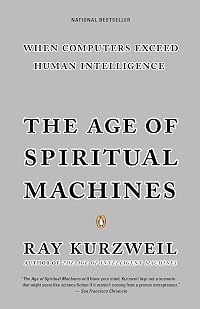
I found this in an antique store a couple of months ago and as I’d never seen a copy before, nor expect to again, I bought it. Published in 1986, it is Clarke’s vision of what life in the 21st century would be like. Being Clarke, one would assume that the predictions were more educated than not, but quite a bit of this is fanciful wishful thinking. Right off the bat, the Introduction is a Letter from a Lunar Inhabitant. That humans haven’t “set foot” outside of low Earth orbit since 1972 certainly would have surprised the 1986 Clarke, as might some of his “hits” and probably more of his “misses”. I like looking at (smart) predictions and seeing how close we are. That this is only one year past Clarke’s target is a show more great perspective. Ray Kurzweil made many predictions in several books and some worked, some didn’t (though he was quite generous to himself in each subsequent book as to how well his turned out). Some of Clarke’s may be 50 to 100 years more from now to fruition. Or maybe 20. Who knows?
Clarke looked at medicine, robotics, education, transportation, a space station, entertainment (movies), sports, home automation, changes to an office environment, psychiatry, life extension and war. Technology is hard to predict 33 years in the future, even for Clarke. He was locked into the tech of the day for data storage - optical discs - which haven’t kept up with solid state multi terabyte storage systems. And I am not sure why he mentioned several times that people could be traveling at Mach 22. And as with his later fiction, he is weakest when it comes to social interactions. And wildly off the mark on performance enhancing sports through chemical and bionic means. Spot on for using computers to analyze and help train, but ixnay of the hormones.
Some of the ideas he floated are in place or in development today, but not ubiquitous. Home automation is a thing, just not most places, and Alexa may have some AI and capabilities, but “she” isn’t close to semi-sentient. He pretty much nailed the price of a movie ticket, if not the experience, but he did note that the content of entertainment wouldn’t change much. (I won’t tell him about “reality” television if you won’t {wink}.) Hugely optimistic with respect to psychiatry - most things should be an easy fix with all kinds of designer (he doesn’t call the that) drugs, right? Psychiatry may have progressed the least of his examinations - but it’s a fuzzy science at best so that is understandable. And war...well, he can’t be blamed for overestimating the use and impact of tanks.
“In spite of the emphasis on longevity, death in the 21st century is no longer a dirty word.” Statements like this pervade and there is no way Clarke, much like the Enlightenment Framers, could anticipate a recoil from science, the retrogressive social march, the exultation of ignorance that roadblocks any progress (which unlike Clarke’s “death”, is a dirty word, at least among the backwards population.) show less
Clarke looked at medicine, robotics, education, transportation, a space station, entertainment (movies), sports, home automation, changes to an office environment, psychiatry, life extension and war. Technology is hard to predict 33 years in the future, even for Clarke. He was locked into the tech of the day for data storage - optical discs - which haven’t kept up with solid state multi terabyte storage systems. And I am not sure why he mentioned several times that people could be traveling at Mach 22. And as with his later fiction, he is weakest when it comes to social interactions. And wildly off the mark on performance enhancing sports through chemical and bionic means. Spot on for using computers to analyze and help train, but ixnay of the hormones.
Some of the ideas he floated are in place or in development today, but not ubiquitous. Home automation is a thing, just not most places, and Alexa may have some AI and capabilities, but “she” isn’t close to semi-sentient. He pretty much nailed the price of a movie ticket, if not the experience, but he did note that the content of entertainment wouldn’t change much. (I won’t tell him about “reality” television if you won’t {wink}.) Hugely optimistic with respect to psychiatry - most things should be an easy fix with all kinds of designer (he doesn’t call the that) drugs, right? Psychiatry may have progressed the least of his examinations - but it’s a fuzzy science at best so that is understandable. And war...well, he can’t be blamed for overestimating the use and impact of tanks.
“In spite of the emphasis on longevity, death in the 21st century is no longer a dirty word.” Statements like this pervade and there is no way Clarke, much like the Enlightenment Framers, could anticipate a recoil from science, the retrogressive social march, the exultation of ignorance that roadblocks any progress (which unlike Clarke’s “death”, is a dirty word, at least among the backwards population.) show less
Clarke wrote this book in 1986 so at that time he was projecting over 30 years into the future. Of course, he got a lot of things wrong. Who living now has ever heard of the Phosphotron, a device that uses goggles with electrodes that stimulate abstract light patterns on your retinas even with your eyes closed? Even googling the word only produced a page and a half of hits. However in the same chapter (The Movies) Clarke predicts HDTV and flat screen TVs. Clarke talks about the Internet although he doesn't refer to it as that and predicts people will have computer friends that they never meet.
A lot of his predictions seem just as distant now as they were in 1986. I'm pretty sure we won't have a lunar base by 2019 and maglev trains seem show more even farther away. Clarke thought we would be much further ahead in terms of energy conservation than we are and computers certainly haven't created the paperless office as Clarke predicts on page 194. However, as Clarke's second law says: "The only way of discovering the limits of the possible is to venture a little way past them into the impossible." and so we should keep pushing past the possible as much as we can. show less
A lot of his predictions seem just as distant now as they were in 1986. I'm pretty sure we won't have a lunar base by 2019 and maglev trains seem show more even farther away. Clarke thought we would be much further ahead in terms of energy conservation than we are and computers certainly haven't created the paperless office as Clarke predicts on page 194. However, as Clarke's second law says: "The only way of discovering the limits of the possible is to venture a little way past them into the impossible." and so we should keep pushing past the possible as much as we can. show less
Fun mixture of the history of science, and futuristic speculation. Chapters on moon inhabitation, Apollo 11, Robots, living inside a Space Station, Psychiatry, and more. Written in 1986, it was interesting to compare how much of the speculation had become a reality (including supersonic flight, and electrophonic hearing amongst many others). The book is absolutely brimming with ideas, and fires the imagination.
On July 20th, 1969, millions of people watched Neil Armstrong and Buzz Aldrin take man's first step on the moon. Arthur Clarke takes us fifty years into the future from that date, and gives us a guided tour of some pretty amazing future accomplishments. He also gives his idea of how a historian from 2019 might interpret the 1969 Apollo landing. Like all good science fiction writers, he based his predictions on the cutting edge of the technology of the time. At this point, the world is closer to 2019 than it is to 1986 when the book was written. It's really interesting to see which of his social and technological predictions are still on target, and to wonder how on earth he came up with some of the others! I know I will want to go show more through this book again in a few years. show less
Ratings
Members
- Recently Added By
Author Information

Arthur C. Clarke was born in Minehead, Somerset, England, on December 16, 1917. During World War II, he served as a radar specialist in the RAF. His first published piece of fiction was Rescue Party and appeared in Astounding Science, May 1946. He graduated from King's College in London with honors in physics and mathematics, and worked in show more scientific research before turning his attention to writing fiction. His first book, Prelude to Space, was published in 1951. He is best known for his book 2001: A Space Odyssey, which was later turned into a highly successful and controversial film under the direction of Stanley Kubrick. His other works include Childhood's End, Rendezvous with Rama, The Garden of Rama, The Snows of Olympus, 2010: A Space Odyssey II, 2062: Odyssey III, and 3001: The Final Odyssey. During his lifetime, he received at least three Hugo Awards and two Nebula Awards. He died of heart failure on March 19, 2008 at the age of 90. (Bowker Author Biography) show less
All Editions
Common Knowledge
- Original title
- Arthur C. Clarke's July 20, 2019
- Original publication date
- 1986
- First words
- The best book ever written about the future opens with these words: "There are two futures, the future of desire and the future of fate, and man's reason has never learnt to separate them."
--J. D. Bernal, "The World, the... (show all) Flesh, and the Devil," 1929 - Last words
- (Click to show. Warning: May contain spoilers.)And when we have the Global Family, we will no longer need the United Nations. But until then, however....
- Original language
- English
Classifications
Statistics
- Members
- 196
- Popularity
- 166,995
- Reviews
- 5
- Rating
- (3.08)
- Languages
- 5 — English, French, German, Portuguese, Spanish
- Media
- Paper
- ISBNs
- 7


