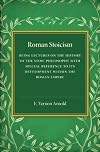
Roman stoicism
by Edward Vernon Arnold
16 Members (4.50)
On This Page
Description
Roman Stoicism, first published in 1911, offers an authoritative introduction to this fascinating chapter in the history of Western philosophy, which throughout the 20th century has been rediscovered and rehabilitated among philosophers, theologians and intellectual historians. Stoicism played a significant part in Roman history via the public figures who were its adherents (Seneca is perhaps the most famous); and, as it became more widely accepted, it assumed the features of a religion. The show more Stoic approach to physics, the universe, divine providence, ethics, law and humanity are all investigated, as is its diffuse impact upon literature. The origins of Christianity are also examined. Arnold offers a sympathetic reading of St. Paul in light of Stoicism, and regards the latter as the crucial bridge between Antiquity and Christendom: it allowed a swathe of Pagan intellectuals to join the Church and influenced the development of Christian doctrine, thus making an immense contribution to the bedrock of modern European civilisation. show lessTags
Member Reviews
Members
- Recently Added By
Lists

Trinity College Booklist (1951): Class Three, Philosophy and Religion
80 works; 3 members
Author Information
7 Works 24 Members
Common Knowledge
- Original publication date
- 1911
- Dedication
- HENRICO JACKSON, LITT.D.
DILECTISSIMO PRAECEPTORI - First words
- This book is the outcome of a course of lectures delivered by me in successive years to Latin Honours students in accordance with the regulations of the University of Wales.
- Last words
- (Click to show. Warning: May contain spoilers.)To the simple and the straightforward, who trust themselves because they trust a power higher than themselves, the future belongs.
Classifications
Statistics
- Members
- 16
- Popularity
- 1,521,509
- Rating
- (4.50)
- Languages
- English
- Media
- Paper, Ebook
- ISBNs
- 9
- ASINs
- 2