On This Page
Description
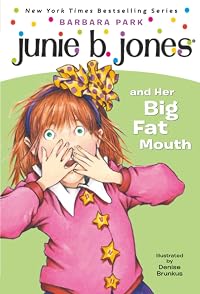
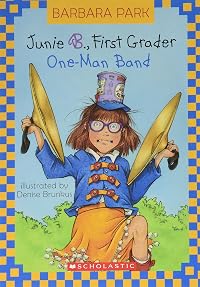
When her kindergarten class has Job Day, Junie B. goes through much confusion and excitement before deciding on the "bestest" job of all.Tags
Recommendations






Member Reviews
I love Junie B. Jones and her hilarious hijinks. Why? Because she’s not my student, that’s why! As a teacher, I love to read about the most destructive, self-involved and misbehaving child in literary history — and I’m including the funny papers’ Dennis the Menace! Thank God she is not in my class, though!
In this third chapter book, Junie B. shoots off her mouth, bragging about her cosplay for Job Day at kindergarten. As so often happens with boasting, Junie B. is hit with unintended repercussions. While some complain about Junie B.’s bad grammar and misbehavior, Barbara Park’s books always contain the moral that doing bad things will always boomerang and hit you in the head.
In this third chapter book, Junie B. shoots off her mouth, bragging about her cosplay for Job Day at kindergarten. As so often happens with boasting, Junie B. is hit with unintended repercussions. While some complain about Junie B.’s bad grammar and misbehavior, Barbara Park’s books always contain the moral that doing bad things will always boomerang and hit you in the head.
In my opinion, this is a great chapter book for beginner readers. I have always enjoyed the Junie B. Jones series as a child and I like this particular book for many reasons. The language is written in the way that a typical kindergartner, such as Junie, would speak. The informal grammar and spelling may make it easier for young readers to understand. An example of this language is, “That’s how come I shined it right in his big fat crying mouth.” The writing of this book is engaging and organized into chapters. Larger font is used to make reading less stressful, which I enjoy because the story is easier to read and comprehend. The great use of dialogue also enhances comprehension and makes you feel as if you were there. I like the show more author’s use of capital letters to emphasize screaming because it makes the story come alive. You can hear the character’s loud voices and strong emotions through the pages. The characters in this story are believable and relatable. Junie B. Jones is a very lively and animated character whose emotions of excitement and embarrassment can be felt throughout the story. Other characters that may relate to a child are the mean boy, Jim, the snobby girl, Lucille, the annoying baby brother, Ollie, the pre-occupied parents, and the friendly janitor. These characters may appear in a child’s everyday life. This book is written in first person through the eyes of Junie, which I really like because the reader learns so much about Junie’s personality and opinions. For example, Junie states, “I made a growly face at her. I do act like a little lady, you dumb bunny Lucille! And don’t say that again, or I’ll knock you on your can,” demonstrating her defiant nature. The plot, which is Junie must choose an extravagant career to represent on Job Day in order to impress her friends, is relatable to students with similar school assignments. This book pushes readers to broaden their views on different types of careers and understand that both boys and girls can select any job they want. The book reads, “Girls can be anything boys can be! Right, Mrs.? Right? Right? … Mrs. did a smile. Then my bestest friend Grace started to clap. And guess what? All of the other girls in Room Nine clapped too.” The big idea is every type of job is important and necessary. You can be anything you want as long as you work hard for it and not worry about the opinions of others. show less
This entire book series is one of my favorites, but I particularly love this book. Barbara Park develops the character Junie B. Jones exceptionally well. She is a sassy little girl, who is obnoxious and very outspoken. She acts just like a regular kindergartener. The language used in this book is the reason I fell in love with this series. This book is written the way a five year old would talk. For example, Junie B. Jones says, “Yeah, only guess what?’ I said. “I never even heard of that dumb word careers before. And so I won’t know what the heck we’re talking about.” Her reactions to the situations presented in this book are believable and so realistic. For example, when she comes home and wants to talk to her mother but show more cannot because of her baby brother, she states, “ ’Cause that dumb old baby takes up all Mother’s time. And he’s not even interesting.” I also like that even thought it is a chapter book there are still illustrations. It is a great transition from picture books to chapter books.
The central message of this book is to not judge a person because of the job they have. While Junie B. Jones is trying to figure out the best career to have, she discovers someone she looks up to and sees things about this person that most people would not. show less
The central message of this book is to not judge a person because of the job they have. While Junie B. Jones is trying to figure out the best career to have, she discovers someone she looks up to and sees things about this person that most people would not. show less
It all starts when Junie B. opens her big fat mouth and gets in trouble in class. This is during career week so her teacher invited a cop and dentist to the class to talk to them about jobs. The teacher tells the students they need to pick a career for job day and Junie says hers will be the best. Later that day at recess, Junie B. sees a piece of candy on the ground puts it in her mouth. The janitor saw and yelled at her to spit it out. On Job Day, Junie told the class that she was going to be a janitor and everyone laughed, which made her feel horrible. The teacher noticed this and decided it would be best to have the janitor come to class so he can tell the students about his job. After this, Junie B. still felt like she had the best show more job and even befriended the janitor. This book can not only be used as a lesson on how to be kind for students, but also for me as a teacher. I think the way Junie's teacher handled the students laughing at the job she picked was a good alternative to yelling and embarrassing other students. show less
Junie B. Jones and Her Big Fat Mouth’s central theme concerns the consequences of speaking without thinking. Junie B., an outspoken kindergartener, learns that there are consequences for speaking without thinking about how your words could be hurtful to others. Written in first person, the book captures Junie B.’s voice in a simple and humorous style that may have children engaged in the story. Denise Brunkus’s illustrations also helped complement the text.
Younger children should avoid reading Junie B. Jones’s books due to her poor attitude toward others. She and her peers frequently use hurtful words like “fat,” “dumb,” and “stupid” without facing any consequences. Junie B. even celebrates headbutting a peer without show more getting caught. This behavior could negatively impact a child’s behavior and vocabulary. Although I enjoyed these books in middle school, I’ve realized they aren’t suitable for younger readers. show less
Younger children should avoid reading Junie B. Jones’s books due to her poor attitude toward others. She and her peers frequently use hurtful words like “fat,” “dumb,” and “stupid” without facing any consequences. Junie B. even celebrates headbutting a peer without show more getting caught. This behavior could negatively impact a child’s behavior and vocabulary. Although I enjoyed these books in middle school, I’ve realized they aren’t suitable for younger readers. show less
I did not enjoy this book for two reasons. First, I did not like the writing style/language used through Junie’s speech. For example, “After that, Room Nine was very excited. Except for not me. ‘Cause I had a big problem, that’s why.” Although the author may be aiming for authentic speech, the grammar is despicable and is confusing for emerging readers. At one point Junie defines “’nouncement.” Her definition is at a wonderful level for students, but the fact that the writer purposely chose to misspell that word is aggravating. I also did not like this book due to the character development. I believe that Junie is very well developed, but I also believe her attitude is too dramatic and a bad example for students. For show more example, when the teacher is explaining what a career is Junie shouts out “Yeah, only guess what? I never heard of that dumb word careers before.” This is to me is unneededly disrespectful. Yes, students may be like this character. However, to glorify this type of behavior is unacceptable. The main idea of this book is to not fib. show less
I enjoyed this book for many reasons. First, the main character, Junie, is believable and relatable. For example, Junie gets in trouble with her mother after she wakes up her baby brother from a nap. Her mother tells her, "Get out, get out now," then Junie gets really sad. Junie feels like her mom doesn't care because she won't listen to what she has to say. I feel that many kids with siblings feel this way and can relate to Junie.
Another reason I liked this book is because of the suspense created in the plot. Throughout most of the story the reader keeps trying to guess what Junie will be for career day at school. She says she's going to be someone that paints, has keys, and saves people. The reader is left wondering what this mystery show more job is throughout the book since Junie doesn't tell her class till the very end that she wants to be a janitor when she grows up.
The message of this story is you can be anything you want. Towards the end of the book the boys in Junie's class say she can't be a janitor because she is a girl. She then fights back at them saying that girls can do anything that boys can do. Her teacher agrees with her and the rest of the girls in her class clap for her. I think that this is an important message for children to learn so that they know they can be anything no matter what gender they are. show less
Another reason I liked this book is because of the suspense created in the plot. Throughout most of the story the reader keeps trying to guess what Junie will be for career day at school. She says she's going to be someone that paints, has keys, and saves people. The reader is left wondering what this mystery show more job is throughout the book since Junie doesn't tell her class till the very end that she wants to be a janitor when she grows up.
The message of this story is you can be anything you want. Towards the end of the book the boys in Junie's class say she can't be a janitor because she is a girl. She then fights back at them saying that girls can do anything that boys can do. Her teacher agrees with her and the rest of the girls in her class clap for her. I think that this is an important message for children to learn so that they know they can be anything no matter what gender they are. show less
Members
- Recently Added By
Published Reviews
Genre: Fiction
This book is about Junie B. Jones and her experience though kindergarten. She is having a hard time in school because she is getting in trouble and causing disruptions in her class. She tells a lie to her classmates but does not know what to do afterwards. This book would be great in the classroom to show the importance of telling the truth and also the importance of when it is show more alright to have free time in school and work time in school. show less
This book is about Junie B. Jones and her experience though kindergarten. She is having a hard time in school because she is getting in trouble and causing disruptions in her class. She tells a lie to her classmates but does not know what to do afterwards. This book would be great in the classroom to show the importance of telling the truth and also the importance of when it is show more alright to have free time in school and work time in school. show less
added by Emmerie
Lists

Banned Books Week 2014
268 works; 63 members

Books About Girls
219 works; 17 members
Author Information

Barbara Park was born in Mount Holly, New Jersey on April 21, 1947. She spent her first two years of college at Rider University in New Jersey before receiving a B.S. degree from the University of Alabama. She began writing children's books after she had children of her own. In a career that began in 1982, she published over 50 books including show more Don't Make Me Smile, Operation: Dump the Chump, Ma! There's Nothing to Do Here!, Skinnybones, and The Kid in the Red Jacket. She was best known for her 28-book Junie B. Jones series which was first published in 1992. She won seven Children's Choice Awards and four Parents' Choice Awards. She helped found a charitable organization, Sisters in Survival, to raise money for women with ovarian cancer. She died from ovarian cancer on November 15, 2013 at the age of 66. (Bowker Author Biography) show less
All Editions
Awards and Honors
Awards
Series

Belongs to Publisher Series
Work Relationships
Is contained in
Has the adaptation
Common Knowledge
- Canonical title
- Junie B. Jones and Her Big Fat Mouth
- Original publication date
- 1993
- People/Characters
- Junie B. Jones
- First words
- My name is Junie B. Jones.
- Quotations
- "Losing baby teeth is exciting isn't it?" she asked. "Yes," I said. "Except for I don't like the part where you cry and spit blood."
- Last words
- (Click to show. Warning: May contain spoilers.)And his jingly keys jangled all the way out the door.
Classifications
- Genres
- Children's Books, Fiction and Literature
- DDC/MDS
- 813.54 — Literature & rhetoric American literature in English American fiction in English 1900-1999 1945-1999
- LCC
- PZ7 .P2197 .J — Language and Literature Fiction and juvenile belles lettres Fiction and juvenile belles lettres Juvenile belles lettres
- BISAC
Statistics
- Members
- 6,632
- Popularity
- 1,836
- Reviews
- 66
- Rating
- (4.03)
- Languages
- 5 — English, French, Korean, Serbian, Spanish
- Media
- Paper, Audiobook, Ebook
- ISBNs
- 52
- ASINs
- 15