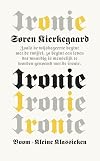
The Concept of Irony: With Constant Reference to Socrates
by Søren Kierkegaard
On This Page
Description
To celebrate the 270th anniversary of the De Gruyter publishing house, the company is providing permanent open access to 270 selected treasures from the De Gruyter Book Archive. Titles will be made available to anyone, anywhere at any time that might be interested. The DGBA project seeks to digitize the entire backlist of titles published since 1749 to ensure that future generations have digital access to the high-quality primary sources that De Gruyter has published over the centuries.Tags
Recommendations












Member Reviews
For someone who has already read a considerable amount of Kierkegaard's works, his thesis was quite the disappointment.
As most academic pieces, it takes too long to touch on the subjects it is actually going to talk about; in fact, that happens only on the second and final part of the book, which is roughly 1/3 of it. The rest is some tedious philosophy history, a recollection of Socrates' life.
However, when Kierkegaard the thinker does come in, on the second part, it shines. Many of the subjects he would discuss in greater detail later on his career might already be seen here, summarised: his appraisal of existence, the steps taken from the aesthetic to the ethic and then to the religious life, the despair and its relation to faith.
It show more may be a good introduction to his philosophy, but definitely not a book for those already familiar with it. Ironic, I know. Like a free ride, when you've already paid. show less
As most academic pieces, it takes too long to touch on the subjects it is actually going to talk about; in fact, that happens only on the second and final part of the book, which is roughly 1/3 of it. The rest is some tedious philosophy history, a recollection of Socrates' life.
However, when Kierkegaard the thinker does come in, on the second part, it shines. Many of the subjects he would discuss in greater detail later on his career might already be seen here, summarised: his appraisal of existence, the steps taken from the aesthetic to the ethic and then to the religious life, the despair and its relation to faith.
It show more may be a good introduction to his philosophy, but definitely not a book for those already familiar with it. Ironic, I know. Like a free ride, when you've already paid. show less
Kierkegaard is misschien wel bij uitstek de denker van de ironie. Keer op keer haalde hij in zijn werk de filosofische conventies van zijn tijd onderuit. Ironie is voor hem een 'afbijtmiddel' tegen de pseudogoddelijke pretenties van systeemdenkers als Descartes en Hegel. Het stelt hem in staat te protesteren tegen de romantiek en de daarmee verbonden pathetische zinloosheid. En passant kan hij met zijn beheerste ironie de burgerlijke cultuur belachelijk maken. In deze vroege tekst zet hij zijn gedachten over dit stijlmiddel op aansprekende wijze uiteen.
Recensie(s)
Toen de filosoof Soren Kierkegaard in 1841 promoveerde op een proefschrift over het begrip ironie, was er heel wat om te doen. Niet alle professoren waren overtuigd van de show more kwaliteit van het proefschrift (dat bovendien niet in het Latijn maar in het Deens was gesteld). Na interventie van de koning mocht Kierkegaard promoveren. Het proefschrift bestaat uit twee delen. Het eerste deel gaat over Socrates en ironie. Het tweede, veel kortere deel gaat met name over de visie op ironie als wereldvlucht door filosofen als Schelling, Hegel, Fichte, Tieck en Solger, en geeft Kierkegaards eigen benadering van ironie als authentieke levensstijl. Dit boekje, deel van de serie 'Kleine klassieken', is een vertaling van dat tweede deel. Erg moeilijk, omdat Kierkegaard nergens onomwonden zegt wat hij onder 'ironie' verstaat, en vanwege veronderstelde kennis van het idealistische en Hegeliaanse denken en Kierkegaards eigen strijd daarmee. De tekst is erg formeel vertaald, soms met onnodig moeilijke woorden als 'subaltern' en 'retireren'. Met voetnoten en een Nederlandse bibliografie achterin. Pocketuitgave; kleine druk. show less
Recensie(s)
Toen de filosoof Soren Kierkegaard in 1841 promoveerde op een proefschrift over het begrip ironie, was er heel wat om te doen. Niet alle professoren waren overtuigd van de show more kwaliteit van het proefschrift (dat bovendien niet in het Latijn maar in het Deens was gesteld). Na interventie van de koning mocht Kierkegaard promoveren. Het proefschrift bestaat uit twee delen. Het eerste deel gaat over Socrates en ironie. Het tweede, veel kortere deel gaat met name over de visie op ironie als wereldvlucht door filosofen als Schelling, Hegel, Fichte, Tieck en Solger, en geeft Kierkegaards eigen benadering van ironie als authentieke levensstijl. Dit boekje, deel van de serie 'Kleine klassieken', is een vertaling van dat tweede deel. Erg moeilijk, omdat Kierkegaard nergens onomwonden zegt wat hij onder 'ironie' verstaat, en vanwege veronderstelde kennis van het idealistische en Hegeliaanse denken en Kierkegaards eigen strijd daarmee. De tekst is erg formeel vertaald, soms met onnodig moeilijke woorden als 'subaltern' en 'retireren'. Met voetnoten en een Nederlandse bibliografie achterin. Pocketuitgave; kleine druk. show less
Mar 28, 2016Dutch
Ratings
Members
- Recently Added By
Lists

Little philosophical challang
4 works; 1 member
Author Information

624+ Works 33,020 Members
Born in Copenhagen, Denmark, Søren Kierkegaard was the son of a wealthy middle-class merchant. He lived all his life on his inheritance, using it to finance his literary career. He studied theology at the University of Copenhagen, completing a master's thesis in 1841 on the topic of irony in Socrates. At about this time, he became engaged to a show more woman he loved, but he broke the engagement when he decided that God had destined him not to marry. The years 1841 to 1846 were a period of intense literary activity for Kierkegaard, in which he produced his "authorship," a series of writings of varying forms published under a series of fantastic pseudonyms. Parallel to these, he wrote a series of shorter Edifying Discourses, quasi-sermons published under his own name. As he later interpreted it in the posthumously published Point of View for My Work as an Author, the authorship was a systematic attempt to raise the question of what it means to be a Christian. Kierkegaard was persuaded that in his time people took the meaning of the Christian life for granted, allowing all kinds of worldly and pagan ways of thinking and living to pass for Christian. He applied this analysis especially to the speculative philosophy of German idealism. After 1846, Kierkegaard continued to write, publishing most works under his own name. Within Denmark he was isolated and often despised, a man whose writings had little impact in his own day or for a long time afterward. They were translated into German early in the twentieth century and have had an enormous influence since then, on both Christian theology and the existentialist tradition in philosophy. (Bowker Author Biography) show less
Some Editions
Series
Belongs to Publisher Series
Work Relationships
Common Knowledge
- Canonical title
- The Concept of Irony: With Constant Reference to Socrates
- Original title
- Om begrebet ironi, med stadigt hensyn til Socrates
- Original publication date
- 1841
- Original language*
- Deens
*Some information comes from Common Knowledge in other languages. Click "Edit" for more information.
Classifications
Statistics
- Members
- 176
- Popularity
- 185,157
- Reviews
- 2
- Rating
- (3.63)
- Languages
- 7 — Danish, Dutch, English, German, Italian, Portuguese, Turkish
- Media
- Paper, Ebook
- ISBNs
- 16
- ASINs
- 7