On This Page
Description
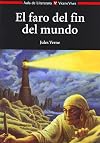
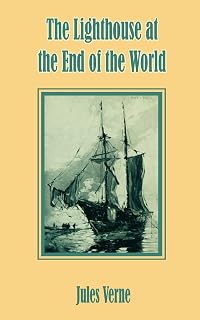
In 1859, three sailors arrive on an isolated island to man a new lighthouse at the wreck-prone tippy tip of South America. They soon discover a band of egregious criminals, led by dangerous evildoer Kongre, who have been tricking ships into running aground, killing the survivors and taking the loot. When two lighthouse men go to assist a ship and are killed, serious trouble ensues.Tags
Recommendations


















Member Reviews
Written in 1905, Lighthouse at the End of the World is a novel of both survival and revenge. In the 1850s the Argentine navy built a lighthouse at Isla de los Estados, located on the southern tip of South America, near the Magellan Strait that connects the Atlantic and the Pacific. Three lighthouse keepers are left on the island to protect the world's ships in the dangerous and stormy seas surrounding the island. Unknown to them, a gang of pirates is also stranded on the island, lead by an evil man named Kongre. After killing two of the lighthouse keepers, the remaining man named Vasquez is forced to hide alone in the wilderness, hoping the returning ship will come back and save him. During a particularly bad storm the pirates draw in show more an American ship, killing all on board except the First Officer, John Davis. Vasquez and Davis team up to try to capture the pirates.
Verne’s novel paints a gripping picture of intrigue and heroism. You can see the beginnings of the modern action novel in this short book. Written at the end of his life, Lighthouse was revised by his son, and is not considered one of his best works. I thought it was a really good book that completely captured my attention. The author excelled in capturing the turbulent atmosphere of an island at the end of the world. show less
Verne’s novel paints a gripping picture of intrigue and heroism. You can see the beginnings of the modern action novel in this short book. Written at the end of his life, Lighthouse was revised by his son, and is not considered one of his best works. I thought it was a really good book that completely captured my attention. The author excelled in capturing the turbulent atmosphere of an island at the end of the world. show less
(55) Le Phare du bout du monde (The Lighthouse at the End of the World, 1905) (1 volume) 41K words
The 55th Extraordinary Voyage, published shortly after Jules Verne's death is the first of the eight posthumous novels in the series. The story takes us to an island at the Southern tip of South America, near Tierra del Fuego and Cape Horn. The series had previously visited South America in "Eight Hundred Leagues on the Amazon", "The Mighty Orinoco", and in the first volume of "In Search of the Castaways".
First read or reread?: First read for me.
What is it about?: The Argentine navy has just built a lighthouse at Isla de los Estados, a large, barren island on the southern tip of South America, near the Magellan Strait that connects the show more Atlantic and the Pacific. This structure, nicknamed "the lighthouse at the end of the world", is to be operated by three keepers, who will serve for three months before being relieved. After the lighthouse is completed, the first keepers are left on the island, supposedly alone. Unfortunately, the island has other residents, a group of pirates who've been waiting for the opportunity to seize a vessel with which to leave the island. They murder two of the keepers and take possession of the lighthouse. The other keeper manages to escape, and it's up to this lone survivor to remain alive until the relief comes in three months and, if possible, fight back.
As I mentioned elsewhere, the eight posthumous Extraordinary Voyages were attributed solely to Jules Verne for almost a century. However, after the discovery by Verne scholars of the Hetzel (the publishing house) archives we now know that Michel Verne, Jules' son, edited and modified these posthumous novels. The modifications he made are important, and I think it's appropriate to call these last eight novels collaborations between Jules and Michel. I wouldn't attribute them solely to Michel (except maybe in the case of "The Thompson Travel Agency", where no Jules Verne manuscript was discovered), since the younger Verne worked on the story and writing his father had produced.
"The Lighthouse at the End of the World" was almost ready for publication when Jules Verne died, and the edits that Michel did are slight, so the published version is very similar to Jules' manuscript. In the other seven posthumous novels Michel did more changes, but I'll comment on that when I get to them.
The original versions of the posthumous novels, as Jules Verne wrote them, have also been published, so people can read both and compare if they want. Opinions among Verne fans are divided regarding Michel's modifications: Some think that they are an artistic betrayal, in some cases even going against Jules' intentions (see for example the changed ending of "The Golden Volcano"). Others think that Michel was a decent writer who came along at the right moment, as the posthumous manuscripts were slow and lacking in action, and Michel's changes made the plots more entertaining and adventurous. One also has to remember that these posthumous manuscripts had not been submitted for publication yet, so Jules might have edited or modified them himself if he had lived (he also made modifications sometimes following suggestions from his editor).
In any case, I care more about entertaining stories than about artistic integrity, so I'll read and review the versions modified by Michel, which are the ones that were published as part of the Extraordinary Voyages series.
Coming back to "The Lighthouse at the End of the World", it is one of the shortest Extraordinary Voyages, barely more than a novella. It is a fast read and I found it quite entertaining. The premise was also very good, setting up a tense scenario.
I wouldn't place it among Verne's best works, though. I thought the beginning, with the description of the island, is not as evocative as Verne's best geographical writing, and the characters of the three keepers are not explored enough that we care about them before they are attacked.
Immediately after the attack, the narration was again a bit distant, although the pace soon quickened and the last part of the story was thrilling.
Overall, I though it was a good adventure short novel, maybe not among Verne's best, but very deserving of its place in the series..
Enjoyment factor: I enjoyed it. It's a short, fast read. I thought Verne might have taken better advantage of this interesting premise, at least during the first part, but the story is never boring and it becomes quite gripping.
Next up: The Golden Volcano
See all my Verne reviews here: https://www.sffworld.com/forum/threads/reading-vernes-voyages-extraordinaires.58... show less
The 55th Extraordinary Voyage, published shortly after Jules Verne's death is the first of the eight posthumous novels in the series. The story takes us to an island at the Southern tip of South America, near Tierra del Fuego and Cape Horn. The series had previously visited South America in "Eight Hundred Leagues on the Amazon", "The Mighty Orinoco", and in the first volume of "In Search of the Castaways".
First read or reread?: First read for me.
What is it about?: The Argentine navy has just built a lighthouse at Isla de los Estados, a large, barren island on the southern tip of South America, near the Magellan Strait that connects the show more Atlantic and the Pacific. This structure, nicknamed "the lighthouse at the end of the world", is to be operated by three keepers, who will serve for three months before being relieved. After the lighthouse is completed, the first keepers are left on the island, supposedly alone. Unfortunately, the island has other residents, a group of pirates who've been waiting for the opportunity to seize a vessel with which to leave the island. They murder two of the keepers and take possession of the lighthouse. The other keeper manages to escape, and it's up to this lone survivor to remain alive until the relief comes in three months and, if possible, fight back.
As I mentioned elsewhere, the eight posthumous Extraordinary Voyages were attributed solely to Jules Verne for almost a century. However, after the discovery by Verne scholars of the Hetzel (the publishing house) archives we now know that Michel Verne, Jules' son, edited and modified these posthumous novels. The modifications he made are important, and I think it's appropriate to call these last eight novels collaborations between Jules and Michel. I wouldn't attribute them solely to Michel (except maybe in the case of "The Thompson Travel Agency", where no Jules Verne manuscript was discovered), since the younger Verne worked on the story and writing his father had produced.
"The Lighthouse at the End of the World" was almost ready for publication when Jules Verne died, and the edits that Michel did are slight, so the published version is very similar to Jules' manuscript. In the other seven posthumous novels Michel did more changes, but I'll comment on that when I get to them.
The original versions of the posthumous novels, as Jules Verne wrote them, have also been published, so people can read both and compare if they want. Opinions among Verne fans are divided regarding Michel's modifications: Some think that they are an artistic betrayal, in some cases even going against Jules' intentions (see for example the changed ending of "The Golden Volcano"). Others think that Michel was a decent writer who came along at the right moment, as the posthumous manuscripts were slow and lacking in action, and Michel's changes made the plots more entertaining and adventurous. One also has to remember that these posthumous manuscripts had not been submitted for publication yet, so Jules might have edited or modified them himself if he had lived (he also made modifications sometimes following suggestions from his editor).
In any case, I care more about entertaining stories than about artistic integrity, so I'll read and review the versions modified by Michel, which are the ones that were published as part of the Extraordinary Voyages series.
Coming back to "The Lighthouse at the End of the World", it is one of the shortest Extraordinary Voyages, barely more than a novella. It is a fast read and I found it quite entertaining. The premise was also very good, setting up a tense scenario.
I wouldn't place it among Verne's best works, though. I thought the beginning, with the description of the island, is not as evocative as Verne's best geographical writing, and the characters of the three keepers are not explored enough that we care about them before they are attacked.
Immediately after the attack, the narration was again a bit distant, although the pace soon quickened and the last part of the story was thrilling.
Overall, I though it was a good adventure short novel, maybe not among Verne's best, but very deserving of its place in the series..
Enjoyment factor: I enjoyed it. It's a short, fast read. I thought Verne might have taken better advantage of this interesting premise, at least during the first part, but the story is never boring and it becomes quite gripping.
Next up: The Golden Volcano
See all my Verne reviews here: https://www.sffworld.com/forum/threads/reading-vernes-voyages-extraordinaires.58... show less
Wikipedia: The Lighthouse at the End of the World (French: Le Phare du bout du monde) is an adventure novel by French author Jules Verne. Verne wrote the first draft in 1901.[1] It was first published posthumously in 1905. The plot of the novel involves piracy in the South Atlantic during the mid-19th century, with a theme of survival in extreme circumstances, and events centering on an isolated lighthouse. Verne was inspired by the real lighthouse at the Isla de los Estados, Argentina, near Tierra del Fuego and Cape Horn.
The novel was adapted into the 1971 movie, The Light at the Edge of the World.
The novel was adapted into the 1971 movie, The Light at the Edge of the World.
01-VER-FAR
9788495060143
JEDEN Z NEJPRAVDĚPODOBNĚJŠÍCH VERNEOVÝCH PŘÍBĚHŮ |
Tři muži, Vasquez, Felipe a Moriz jsou ponecháni jako strážci nového majáku na malém Státním ostrově (Isla de los Estados) v Atlantickém oceánu asi dvě stě kilometrů severovýchodně od Hornova mysu s příslibem, že budou za tři měsíce vystřídáni.
Jenomže ostrov má ještě jiné obyvatele, a to bandu pirátů vedenou mužem jménem Kongre. Ostrov jim slouží jako tajná skrýš pro uloupenou kořist. Piráti Felipeho a Morize zavraždí, zmocní se majáku a Vasquez je nucen uprchnout do nitra ostrova. Brzy kvůli nefunkčnosti majáku ztroskotá u ostrova loď, ze které se jako jediný zachrání vrchní kormidelník John Davis. Vasquez se s ním show more domluví, že se společně pirátům pomstí. show less
Tři muži, Vasquez, Felipe a Moriz jsou ponecháni jako strážci nového majáku na malém Státním ostrově (Isla de los Estados) v Atlantickém oceánu asi dvě stě kilometrů severovýchodně od Hornova mysu s příslibem, že budou za tři měsíce vystřídáni.
Jenomže ostrov má ještě jiné obyvatele, a to bandu pirátů vedenou mužem jménem Kongre. Ostrov jim slouží jako tajná skrýš pro uloupenou kořist. Piráti Felipeho a Morize zavraždí, zmocní se majáku a Vasquez je nucen uprchnout do nitra ostrova. Brzy kvůli nefunkčnosti majáku ztroskotá u ostrova loď, ze které se jako jediný zachrání vrchní kormidelník John Davis. Vasquez se s ním show more domluví, že se společně pirátům pomstí. show less
Dec 18, 2023Czech
Sydamerika, Argentina, Isla de los Estados, ca 1850
Indeholder "1. Fyret tændes", "2. På den øde og forladte ø", "3. De tre fyrvogtere", "4. Mellem sørøvere og vragplyndrere", "5. Briggen 'Maule'", "6. I Elgor-bugten", "7. I hulen", "8. 'Maule's havari udbedres", "9. Hvad Vasques oplevede", "10. Strandingen ", "11. Vasques får sig en ny ven og kammerat", "12. Vraget plyndres", "13. Der bødes på skaden", "14. Med kniv og krudt", "15. Nu tændes fyret atter", "16. Den straffende hånd".
???
Indeholder "1. Fyret tændes", "2. På den øde og forladte ø", "3. De tre fyrvogtere", "4. Mellem sørøvere og vragplyndrere", "5. Briggen 'Maule'", "6. I Elgor-bugten", "7. I hulen", "8. 'Maule's havari udbedres", "9. Hvad Vasques oplevede", "10. Strandingen ", "11. Vasques får sig en ny ven og kammerat", "12. Vraget plyndres", "13. Der bødes på skaden", "14. Med kniv og krudt", "15. Nu tændes fyret atter", "16. Den straffende hånd".
???
Aug 15, 2022Danish
Members
- Recently Added By
Author Information

Jules Verne was born on February 8, 1828 in Nantes, France. He wrote for the theater and worked briefly as a stockbroker. He is considered by many to be the father of science fiction. His most popular novels included Journey to the Center of the Earth, Twenty Thousand Leagues Under the Sea, and Around the World in Eighty Days. Several of his works show more have been adapted into movies and TV mini-series. In 1892, he was made a Chevalier of the Legion of Honor in France. He died on March 24, 1905 at the age of 77. (Bowker Author Biography) Jules Verne (1828-1905) is the author of numerous adventure stories grounded in popularizations of science. (Publisher Provided) show less
Some Editions
Awards and Honors
Series

Belongs to Publisher Series
Work Relationships
Is contained in
Has the adaptation
Common Knowledge
- Canonical title*
- Fyrtornet vid världens ände
- Original title
- Le phare du bout du monde
- Alternate titles*
- Fyrbåken vid världens ände (1907) (1907)
- Original publication date
- 1905
- First words
- The sun was about to sink below the line where sea and sky met, four or five leagues to the west.
- Last words
- (Click to show. Warning: May contain spoilers.)And, like the last time he sailed out of Elgor Bay, the sea for eight miles around Staten Island was brightly illuminated with the light projected by the Lighthouse at the End of the World.
- Original language
- French
*Some information comes from Common Knowledge in other languages. Click "Edit" for more information.
Classifications
Statistics
- Members
- 462
- Popularity
- 66,148
- Reviews
- 9
- Rating
- (3.56)
- Languages
- 13 — Catalan, Czech, English, Finnish, French, German, Hungarian, Italian, Polish, Portuguese, Spanish, Swedish, Turkish
- Media
- Paper, Audiobook, Ebook
- ISBNs
- 77
- ASINs
- 24