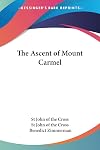
The Ascent of Mount Carmel
by St. John of the Cross
On This Page
Description
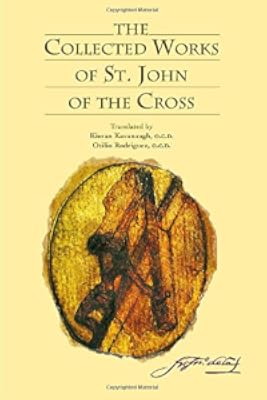
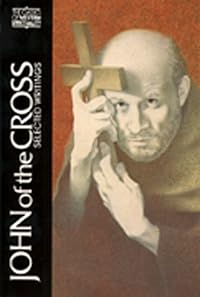
"I remained, lost in oblivion; My face I reclined on the Beloved. All ceased and I abandoned myself, Leaving my cares forgotten among the lilies." Thus writes 16th century Spanish poet and mystic, St. John of the Cross. In this, his third work, the author reflects on the nature of a personal union with Christ, found in the abandonment of self.Tags
Recommendations





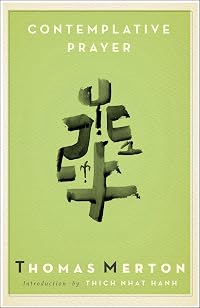

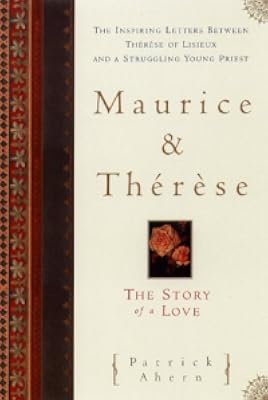
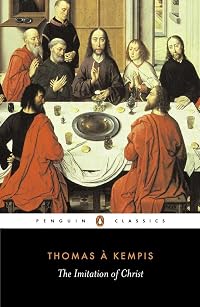
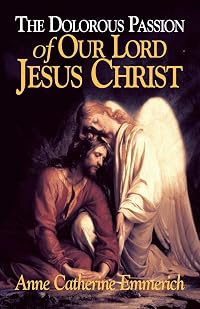







Member Reviews
It has been sometime since I read John of the Cross and I think that biblical studies and Barth have ruined me for mysticism. Oh well. John of the Cross is a poetic soul and well I think there may be too much Neoplatonism in places, there is a lot of wisdom here. John of the Cross uses one of his poems to frame this discussion of progress in the spiritual life (like in Dark Night of the Soul) Ascent of Mt Carmel is built on a poem about a Dark Night of the Soul where we have the three 'dark nights': the dark night of the senses, the dark night of faith, and the dark night of God. Each of these correspond to times of night (early evening is the senses when we are starting out on the spiritual life; the dark night of faith is mid-night show more when the time seems darkest, and God is the dark night closest to the light of day where we exprience the soul in union with God). These correspond to the classic mystical progression of purgation, illumination, union, although there is purgation that happens at every stage of the dark night. We strip away material attachments, the benefits and supernatural gifts of God until we find our joy in God alone. A lot to ponder, and some interesting examples of medieval exegesis too. show less
This is a recent publication of this master peice. The is a re-edited editon for today's reader.
Ratings
Members
- Recently Added By
Author Information

365+ Works 8,711 Members
St. John of the Cross represents the pinnacle of Spanish mysticism. In contrast to St. Teresa's works, which refer frequently to things of this world, St. John's poetry works on a purely spiritual, abstract plane. His poems consist of allegorical descriptions of the journey of his spirit through mortification of earthly appetites, illumination, show more and purification of the soul to union with God. In his prose commentaries on his own poems he laments the insufficiency of language to communicate his mystical experiences and his interior life. A disciple of St. Teresa, he became the spiritual director of her convent at Avila in 1572 and was responsible for carrying out many of her rigorous new programs for the Carmelite Order. Objections to his extreme reforms led to a period of imprisonment and torture in Toledo. During this time, according to tradition, he wrote Spiritual Canticle. His concentrated symbolic poetry has been studied with enthusiasm by such modern poets as T. S. Eliot, Paul Valery, and Jorge Guillen. (Bowker Author Biography) show less
Some Editions
Series
Belongs to Publisher Series
Image Books (D63)
Work Relationships
Is abridged in
Common Knowledge
- Canonical title
- The Ascent of Mount Carmel
Classifications
- Genres
- Religion & Spirituality, Nonfiction
- DDC/MDS
- 248.2 — Religion Christian practice & observance Christian experience, practice, life Religious experience
- LCC
- BV5080 .J77593 — Philosophy, Psychology and Religion Practical Theology Practical Theology Practical religion. The Christian life Mysticism
- BISAC
Statistics
- Members
- 577
- Popularity
- 51,253
- Reviews
- 3
- Rating
- (4.60)
- Languages
- 6 — Czech, English, French, Italian, Spanish, Swedish
- Media
- Paper, Audiobook, Ebook
- ISBNs
- 50
- UPCs
- 1
- ASINs
- 13