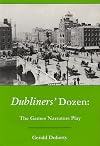
Dubliners' Dozen: The Games Narrators Play
by Gerald Doherty
4 Members (0.50)
On This Page
Description
Traditional readings of Dubliners have entrapped themselves in easy identifications with the narrator in the stories, who acts as the mouthpiece of what Joyce wanted to say about the Irish and about Ireland. With paralysis as the key term in his diagnosis, the narrator draws the reader into harshly judgmental stances toward the stories' characters. Recent critics of Dubliners, however, have distanced themselves from such facile identifications, viewing the stories as writerly rather than show more readerly texts. Using strong overarching theories, such as Lacan's, they explore the techniques through which the narrator produces these reductive effects. Instead of settling for a single theory, Dubliners' Dozen by contrast, applies a different contemporary theoretical lens to each of the stories. In opting for an array of theoretical vantage points, Dubliners' Dozen employs microtheories, which are small knots or junctures in larger theoretical structures: Foucault on confession and power-knowledge, Barthes on Italian opera and on narrative contracts, Freud on identification, Lacan on metaphor, Derrida on mimesis, Genette on narrative embedding, and Ricoeur on bound and wild images. show lessTags
Member Reviews
Members
- Recently Added By
Author Information
6+ Works 14 Members
Gerald Doherty was Professor of Literary Theory at the University of Turku in Finland until his retirement in 1995
Classifications
Statistics
- Members
- 4
- Popularity
- 3,961,668
- Rating
- (0.50)
- Languages
- English
- Media
- Paper
- ISBNs
- 2