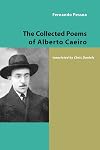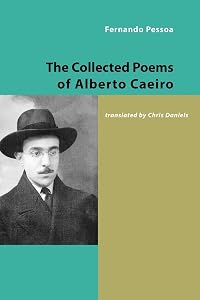
The Collected Poems of Alberto Caeiro
by Fernando Pessoa
On This Page
Description
This is the only integral collection of Pessoa's Caeiro heteronym in English, and the poems are accompanied by the introductions of Ricardo Reis and a memoir by lvaro de Campos, two of Pessoa's other major poetic heteronyms, as well as a poem dedicated to Caeiro by Coelho Pacheco, believed by many commentators to be another one-off heteronym. Ricardo Reis says: "Alberto Caeiro da Silva was born in Lisbon on April 16, 1889, and died of tuberculosis in the same city on (. . .), 1915. He spent show more nearly all his life in a village in Ribatejo, and only returned to the city of his birth in his final months. In Ribatejo he wrote nearly all his poems . . ." Fernando Pessoa was educated in English in Durban, as the stepson of a Portuguese diplomat, and was completely bilingual. During his lifetime he was to publish only one collection of his poems in Portuguese, although many appeared in literary journals, under a number of alter egos, or heteronyms, chief amongst them Alberto Caeiro, Alvaro de Campos and Ricardo Reis. At his death in 1935, Pessoa left more than 20,000 manuscripts - poetry and prose - in a large trunk, the contents of which are still being transcribed and deciphered to this day. He is the greatest modern poet in the Portuguese language, but always considered himself a poet in the English tradition. show lessTags
Recommendations
















Member Reviews
Texto bilingüe : castellano-portugués
No cabe duda de que la poesía de Alberto Caeiro (1889-1915) marca la línea que subyace a toda la obra pessoana. Caeiro, reconocido como el Maestro por todos "los del grupo", nace como el poeta de la espontaneidad, del candor y del instinto. Su voz, visceralmente vivencial, construida a partir de las impresiones recibidas de su permanente contacto con la naturaleza, tiene la fuerza indomeñable de la autenticidad, la energía telúrica de la voz de la tierra. Según nos cuenta Álvaro de Campos, recibió tan sólo la enseñanza primaria, y se pasó casi toda su vida en una finca de Ribatejo, ajeno a todo salvo a la luz unánime del día. Alberto Caeiro se opone radicalmente a todo sistema show more filosófico, puesto que cualquier filosofía parte de unos principios que enturbian la pura contemplación de la realidad: "No es suficiente no ser ciego / para ver los árboles y las flores / es necesario también no tener filosofía alguna / con filosofía no hay árboles: hay ideas tan sólo". show less
No cabe duda de que la poesía de Alberto Caeiro (1889-1915) marca la línea que subyace a toda la obra pessoana. Caeiro, reconocido como el Maestro por todos "los del grupo", nace como el poeta de la espontaneidad, del candor y del instinto. Su voz, visceralmente vivencial, construida a partir de las impresiones recibidas de su permanente contacto con la naturaleza, tiene la fuerza indomeñable de la autenticidad, la energía telúrica de la voz de la tierra. Según nos cuenta Álvaro de Campos, recibió tan sólo la enseñanza primaria, y se pasó casi toda su vida en una finca de Ribatejo, ajeno a todo salvo a la luz unánime del día. Alberto Caeiro se opone radicalmente a todo sistema show more filosófico, puesto que cualquier filosofía parte de unos principios que enturbian la pura contemplación de la realidad: "No es suficiente no ser ciego / para ver los árboles y las flores / es necesario también no tener filosofía alguna / con filosofía no hay árboles: hay ideas tan sólo". show less
Jul 8, 2011Spanish
"Por tu existires vejo-a melhor, mas a mesma,
Por tu me amares, amo-a do mesmo modo, mas mais,
Por tu me escolheres para te ter e te amar,
Os meus olhos fitaram-na mais demoradamente
Sobre todas as coisas."
As nuanças sobre as diferença entre os heterônimos são efetivamente sutis. Os quatro são tristes, pessimistas, e blasés
Por tu me amares, amo-a do mesmo modo, mas mais,
Por tu me escolheres para te ter e te amar,
Os meus olhos fitaram-na mais demoradamente
Sobre todas as coisas."
As nuanças sobre as diferença entre os heterônimos são efetivamente sutis. Os quatro são tristes, pessimistas, e blasés
Oct 23, 2023Portuguese (Brazil)
Ratings
Members
- Recently Added By
Author Information

967+ Works 16,279 Members
Fernando Pessoa, 1888 - 1935 Portuguese poet Fernando Pessoa was born in Lisbon. His father died when he was young and his mother married the Portuguese consul in Durban in South Africa where they lived from 1896 to 1951. During this time, Pessoa became fluent in English and was educated in Cape Town and Lisbon. Pessoa was employed as a business show more correspondent and also as a commercial translator. The bulk of his work was published in literary magazines, especially in his own Athena. His first book, "Antinous," appeared in 1918 and was followed by two other collection of poems, all written in English. In 1933, he published "Mensagem" his first book in Portuguese. "Livro Do Dessossogego (The Book of Disquiet)" the "factless autobiography" was written under the name of Bernardo Soares and appeared for the first time in 1982, almost fifty years after his death. After the republican revolution, in 1910, and consequent patriotic atmosphera, Pessoa created an alter ego, a heteronym, named Álvaro de Campos, supposedly a Portuguese naval engineer, born in Tavira and graduated in Glasgow. Translator Richard Zenith notes that Pessoa eventually established at least seventy-two heteronyms. According to Pessoa himself, there were three main heteronyms: Alberto Caeiro, Álvaro de Campos and Ricardo Reis. The heteronyms possess distinct biographies, temperaments, philosophies, appearances and writing styles. Pessoa died on November 30, 1935 in Lisbon. Other writings that were published posthumously and translated into several languages include "Poesias de Fernando Pessoa" (1942), Poesias de Alvaro de Campos" (1944), Poemas de Alberto Caeiro" (1946), and "Odes de Ricardo Reis" (1946). (Bowker Author Biography) show less
Some Editions
Awards and Honors
Notable Lists
Series
Belongs to Publisher Series
Work Relationships
Common Knowledge
- Original title
- Poesias
- Original publication date
- 1873
Classifications
- Genres
- Poetry, Fiction and Literature
- DDC/MDS
- 869.141 — Literature & rhetoric Spanish Literature Literatures of Portuguese and Galician languages Portuguese poetry 20th Century 1900-1945
- LCC
- PQ9261 .P417 .A17 — Language and Literature French, Italian, Spanish and Portuguese literatures Portuguese literature Individual authors, 1701-1960
- BISAC
Statistics
- Members
- 345
- Popularity
- 92,014
- Reviews
- 2
- Rating
- (4.28)
- Languages
- 10 — Catalan, Danish, English, French, German, Hebrew, Italian, Portuguese, Spanish, Swedish
- Media
- Paper, Ebook
- ISBNs
- 38
- ASINs
- 13