On This Page
Description
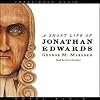
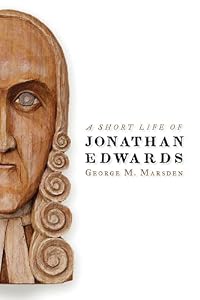
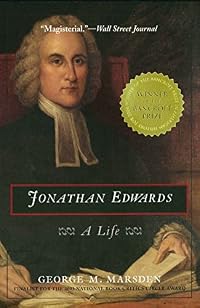
Jonathan Edwards is one of the most extraordinary figures in American history. Arguably, the most brilliant theologian ever born on American soil, Edwards (1703-1758) was also a pastor, a renowned preacher, a missionary to the Native Americans, a biographer, a college president, a philosopher, a loving husband, and the father of eleven children. George M. Marsden, widely acclaimed for his magisterial large study of Edwards, has now written a new, shorter biography of this many-sided, show more remarkable man. A Short Life of Jonathan Edwards is not an abridgment of Marsden's earlier award-winning study but is instead a completely new narrative based on his extensive research. The result is a concise, fresh retelling of the Edwards story, rich in scholarship yet compelling and readable for a much wider audience, including students. Known best for his famous sermon "Sinners in the Hands of an Angry God," Jonathan Edwards is often viewed as a proponent of fire, brimstone, and the wrath of God. As Marsden shows, however, the focus of Edwards's preaching was not God's wrath but rather his overwhelming and all-encompassing love. Marsden also rescues Edwards from the high realms of intellectual history, revealing him more comprehensively through the lens of his everyday life and interactions. Further, Marsden shows how Edwards provides a window on the fascinating and often dangerous world of the American colonies in the decades before the American Revolution. Marsden here gives us an Edwards who illumines both American history and Christian theology, an Edwards that will appeal to readers with little or no training in either field. This short life will contribute significantly to the widespread and growing interest in Jonathan Edwards. show lessTags
Recommendations




Member Reviews
This is a truly excellent introduction to the life of Jonathan Edwards. Marsden has written a fuller treatment of the topic, Jonathan Edwards: A Life. Have read this book, I am thoroughly convinced that I need to read the larger work.
I’ve just finished (took me a little under a week) this book about Jonathan Edwards. There were a few reasons I wanted to read about him. Firstly, he has inspired John Piper and I’ve heard Piper talk about Edwards many times. So I wanted to get a better understanding of the man who has influenced Piper so much, as Piper has influenced me. Secondly, Ridley is about to have some sort of Jonathan Edwards partnership with Yale going on, so I figured I was probably going to end up learning something about him in the future.
The book is pretty good. It’s engaging and interesting and very easy to read. The only real criticism I have is that it implied way to much knowledge of colonial America and the American Revolution. I knew nothing show more really of these events and so it was obvious as I was reading I wasn’t getting a full picture of some of the important things that Edwards did. (For example the book talks a lot about Edwards in contrast to Benjamin Franklin, I really don’t know much about Franklin at all, except that he is some important old American dude). So I’m at least inspired from this book to go out and read some more on the history of Colonial America and Franklin.
Edwards himself was a very interesting person. He was involved in revivals (aka Awakenings) that sounded to be very much like some of the more Pentecostal gatherings (eg. Toronto or Lakeland) we hear about, lots of physical and deep emotional response to the Gospel. Edwards recognised that these big displays of emotion could be used for ill, but defended them in general because it was a big deal for someone to realise that God had saved them a terrible sinner and why shouldn’t they feel a weight of emotion? I thought there was probably a rebuff to many of us who can tend to be hard nosed no emotion evangelicals. Edwards lived by his convictions and never apologised for that. Even if, as it did, cost him his job and therefore his security. I felt sad when Jonathan Edwards died in this book. It was like my new friend had just died, and all too soon. Edwards died in is 50s not long after becoming Principal of Princeton.
If you’re interested in famous smart old Christians (like I seem to be) then I would definitely recommend reading this book. There is a bigger longer one by the same authour (Marsden) called Jonathan Edwards: A Life, which is probably also worth reading, though I haven’t. show less
The book is pretty good. It’s engaging and interesting and very easy to read. The only real criticism I have is that it implied way to much knowledge of colonial America and the American Revolution. I knew nothing show more really of these events and so it was obvious as I was reading I wasn’t getting a full picture of some of the important things that Edwards did. (For example the book talks a lot about Edwards in contrast to Benjamin Franklin, I really don’t know much about Franklin at all, except that he is some important old American dude). So I’m at least inspired from this book to go out and read some more on the history of Colonial America and Franklin.
Edwards himself was a very interesting person. He was involved in revivals (aka Awakenings) that sounded to be very much like some of the more Pentecostal gatherings (eg. Toronto or Lakeland) we hear about, lots of physical and deep emotional response to the Gospel. Edwards recognised that these big displays of emotion could be used for ill, but defended them in general because it was a big deal for someone to realise that God had saved them a terrible sinner and why shouldn’t they feel a weight of emotion? I thought there was probably a rebuff to many of us who can tend to be hard nosed no emotion evangelicals. Edwards lived by his convictions and never apologised for that. Even if, as it did, cost him his job and therefore his security. I felt sad when Jonathan Edwards died in this book. It was like my new friend had just died, and all too soon. Edwards died in is 50s not long after becoming Principal of Princeton.
If you’re interested in famous smart old Christians (like I seem to be) then I would definitely recommend reading this book. There is a bigger longer one by the same authour (Marsden) called Jonathan Edwards: A Life, which is probably also worth reading, though I haven’t. show less
We listened to the audiobook during recent road trips. This isn't an abridgment of Marsden's magisterial Life of Edwards (which I read for a Yale seminar some 7 years ago), but a revision of that work for a popular audience, well done in its own right. A surprisingly entertaining listen.
Listened to this audiobook and thoroughly enjoyed it. While he is remembered as perhaps the most influential pastor/thinker in American history, this book helped me realize that he probably felt largely unsuccessful throughout his ministry. Very interesting.
To those who have heard at least a bit of the life of Jonathan Edwards (1703-1758) you probably often remember as the preacher of the famous sermon “Sinners in the Hands of an Angry God.” At times by unlearned historians he is given as the caricature of a hell-fire preaching of the Puritan age. In this biography George Marden, professor emeritus of history at the University of Notre Dame gives not an abridged version of the larger biography of Edwards called Jonathan Edwards: A Life (Yale, 2003). Instead he gives readers “the most essential and most engaging” aspects of the real Edwards. Marsden is acknowledged as the premier historian of Edwards in the world today; his full length biography called for nine book awards. This show more volume is a wonderful jumping off point for those who have never read anything on Edwards, especially church groups and American history students.
Marsden does a masterful job of showing how Edwards’ life flowed and integrated into the larger story of early America. The often forgotten truth that this nation was founded not only in the midst of Revolution but also Revivalism helps us see how America can be simultaneously so religious and materialistic. Edwards epitomized the Puritan heritage of his pre-Revolutionary day with his calvinistic leanings, and this was at a time when clergy were the best educated and most influential citizens. He combined intellectual rigor, spiritual discipline, and pastoral care which made him a puritan of puritans.
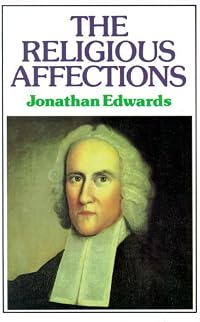
Whereas the Puritans were a beleaguered minority in England, they were the first and largest group to settle New England, and so enjoyed a sort of cultural monopoly. Edwards was the only boy in a family with ten sisters. He entered what became Yale College at the age of thirteen, and after a stint in New York City, in 1726 he moved to a church in Northampton, Massachusetts. Northampton was a town of 1,000 people about 100 miles west of Boston. For the next twenty-two years he cared for his flock, welcomed George Whitefield and became a leading advocate of the “Great Awakening” revivals, fathered ten children with his wife Sarah, and wrote some of the most important works in American religious history – one being his Treatise on Religious Affections. Late in 1748 Edwards was fired and ousted from the church for his more conservative views on church membership and the sacraments. After a brief time as a missionary to Indians in Stockbridge, Edwards was appointed president of Princeton in January of 1758, only to die of a smallpox inoculation eight weeks later at the age of 54.
When writing about his death Marsden writes “He was just fifty-four years old….Almost all his life he had been preparing for this moment. He had often preached to others about how they should be ready for death and righteous judgment at any minute, and he had disciplined himself with a regimen of devotion so that he would be prepared. In the weeks when he was wasting away he must have wondered why God would take him when he had so much to do. But submission to the mysteries of God’s love beyond human understanding was at the heart of his theology.” Edwards even in death as in life found peace in solace in the high view of the soveriegnty of God.
He concludes that Edwards most importantly was a man of “remarkable constituency of his life and though” and “God-centered integrity.”The last chapter of the book titled “What Should We Learn from Edwards?” Marsden explores Edwards towering influence on American cultural and his significant impact on the future reformed theology. Marsden concludes this work by examining the lasting theological insights that Edwards pursued and which are shared and treasured by a number of religious traditions today. Know after reading this short read of 144pgs my mind screams more and i now wanting to purchase and devour his schloraly work Jonathan Ewards: A Life all 513pgs of it.
On a personal note if your interested in more on Edwards you can visit The Jonathan Edwards Center at Yale University where alot of his original writings are housed and they are in the process of still in the process of publishing his works for the public to have and see. Also in 2003 a the Desiring God Pastor’s National Conference the likes of John Piper, Donald Whitney, Mark Dever, and J.I. Packer spoke on a variety of theological topics pertaining to the theology of Jonathan Edwards. Something worth listening to those interested. show less
Marsden does a masterful job of showing how Edwards’ life flowed and integrated into the larger story of early America. The often forgotten truth that this nation was founded not only in the midst of Revolution but also Revivalism helps us see how America can be simultaneously so religious and materialistic. Edwards epitomized the Puritan heritage of his pre-Revolutionary day with his calvinistic leanings, and this was at a time when clergy were the best educated and most influential citizens. He combined intellectual rigor, spiritual discipline, and pastoral care which made him a puritan of puritans.
Whereas the Puritans were a beleaguered minority in England, they were the first and largest group to settle New England, and so enjoyed a sort of cultural monopoly. Edwards was the only boy in a family with ten sisters. He entered what became Yale College at the age of thirteen, and after a stint in New York City, in 1726 he moved to a church in Northampton, Massachusetts. Northampton was a town of 1,000 people about 100 miles west of Boston. For the next twenty-two years he cared for his flock, welcomed George Whitefield and became a leading advocate of the “Great Awakening” revivals, fathered ten children with his wife Sarah, and wrote some of the most important works in American religious history – one being his Treatise on Religious Affections. Late in 1748 Edwards was fired and ousted from the church for his more conservative views on church membership and the sacraments. After a brief time as a missionary to Indians in Stockbridge, Edwards was appointed president of Princeton in January of 1758, only to die of a smallpox inoculation eight weeks later at the age of 54.
When writing about his death Marsden writes “He was just fifty-four years old….Almost all his life he had been preparing for this moment. He had often preached to others about how they should be ready for death and righteous judgment at any minute, and he had disciplined himself with a regimen of devotion so that he would be prepared. In the weeks when he was wasting away he must have wondered why God would take him when he had so much to do. But submission to the mysteries of God’s love beyond human understanding was at the heart of his theology.” Edwards even in death as in life found peace in solace in the high view of the soveriegnty of God.
He concludes that Edwards most importantly was a man of “remarkable constituency of his life and though” and “God-centered integrity.”The last chapter of the book titled “What Should We Learn from Edwards?” Marsden explores Edwards towering influence on American cultural and his significant impact on the future reformed theology. Marsden concludes this work by examining the lasting theological insights that Edwards pursued and which are shared and treasured by a number of religious traditions today. Know after reading this short read of 144pgs my mind screams more and i now wanting to purchase and devour his schloraly work Jonathan Ewards: A Life all 513pgs of it.
On a personal note if your interested in more on Edwards you can visit The Jonathan Edwards Center at Yale University where alot of his original writings are housed and they are in the process of still in the process of publishing his works for the public to have and see. Also in 2003 a the Desiring God Pastor’s National Conference the likes of John Piper, Donald Whitney, Mark Dever, and J.I. Packer spoke on a variety of theological topics pertaining to the theology of Jonathan Edwards. Something worth listening to those interested. show less
Great work on Jonathan Edwards. I enjoyed how Marsden paralleled Edwards and Franklin and mixed Edwards' life and works and I am more excited to read Marsden's larger work on Edwards.
This was a brief book on the life of Edwards. It tells how Edwards and Benjamin Franklin were both up and coming around the same time in the early colonies. This book deals less with Edwards theology and more of his life. Talks of his deep love for his wife and his strong conviction of getting the 20's something colonist to quit having premarital sex. Seems like still a noble cause of today!
Members
- Recently Added By
Lists

Sycamore Baptist Church Book Study Reading List
156 works; 5 members
Author Information

30+ Works 5,238 Members
George M. Marsden is the Francis A. McAnaney Professor of History Emeritus at the University of Notre Dame. His books include Fundamentalism and American Culture, Jonathan Edwards: A Life, and The Outrageous Idea of Christian Scholarship.
Series

Common Knowledge
- Canonical title
- A Short Life of Jonathan Edwards
Classifications
- Genres
- Religion & Spirituality, Nonfiction, Biography & Memoir, History, General Nonfiction
- DDC/MDS
- 285.8092 — Religion Christian denominations Presbyterian churches, Reformed churches centered in America, Congregational churches, Puritanism Congregational
- LCC
- BX7260 .E3 .M415 — Philosophy, Psychology and Religion Christian Denominations Christian Denominations Protestantism Other Protestant denominations Congregationalism
- BISAC
Statistics
- Members
- 391
- Popularity
- 79,969
- Reviews
- 9
- Rating
- (3.83)
- Languages
- English
- Media
- Paper, Audiobook, Ebook
- ISBNs
- 5
- ASINs
- 4