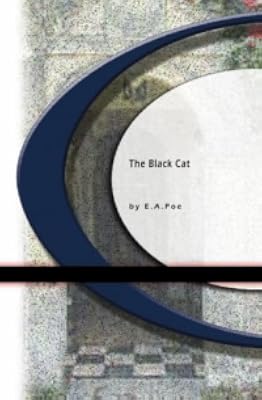
The Black Cat [short story]
by Edgar Allan Poe
On This Page
Description
First published in a 1843 edition of The Saturday Evening Post, The Black Cat tells the story of a man and his increasingly antagonistic relationship with his cat. Akin to The Tell-Tale Heart and The Cask of Amontillado, The Black Cat investigates the psychological effects of guilt as well as the potentially destructive and violent consequences of alcoholism.Tags
Recommendations










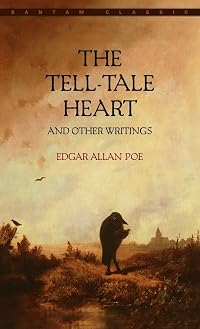


Member Recommendations
mysimas I would liken Lucio’s Confession rather to a ‘Poe vibe’ than just one story specifically, but I chose The Black Cat because it’s one of Poe’s works that I remember best.
Lucio’s Confession, much like Poe’s stories, features a mad narrator who recounts his story while trying to convince us of his sanity. It gets fairly dark, though not as outright horror-y as Poe, and, unlike Poe, features prominent lgbt+ themes (subtext).
Member Reviews
Pluto---this was the cat's name---was my favorite pet and playmate.
I read this for the Black Cat Halloween Bingo square.
This short story is a doozie for animal lovers, especially cat ones. Our leader through this madness states he has an "illness". As you read along, it seems to be a mixture of self-loathing and depression with alcoholism the symptom and pushing the progression of his deterioration.
I didn't know what to expect and was firmly along with the guy at this quote:
To those who have cherished an affection for a faithful and salacious dog, I need hardly be at the trouble of explaining the nature or the intensity of the gratification thus derivable.
Love my doggies. Things, uh, quickly went off the rails though...
I took from show more my waistcoat pocket a pen-knife, opened it, grasped the poor beast by the throat, and deliberately cut one of its eyes from the socket!
*********************
Have we not a perpetual inclination, in the teeth of our best judgment, to violate that which is Law, merely because we understand it to be such?
No dude, healthy, in body and mind, people generally do not strongly feel this way. Or if they do, they sign up for boxing classes or eat cookie dough.
I was not expecting the ending and kind of had a "Well, that escalated quickly." moment.
Goaded, by the interference, into a rage more than egomaniacal, I withdrew my arm from her grasp and buried the axe in her brain.
His alcoholism is not strongly thrust to the forefront but it is weaved in to remind and give the reader an easier out for him. What I found the most compelling about this story and why I love reading Poe is directly related to this snippet quote:
---hung it because I knew that it loved me, and because I felt it had given me no reason of offense;
There's a lot to unpack there. It portrays a man struggling with self-hatred, not feeling worthy of love, and striking out violently because he doesn't know how to process his feelings any other way (again, probably aggravated by the inclusion of alcohol). This story is hard to read because of the animal cruelty but it's a great discussion on why and how humans punish themselves. show less
I read this for the Black Cat Halloween Bingo square.
This short story is a doozie for animal lovers, especially cat ones. Our leader through this madness states he has an "illness". As you read along, it seems to be a mixture of self-loathing and depression with alcoholism the symptom and pushing the progression of his deterioration.
I didn't know what to expect and was firmly along with the guy at this quote:
To those who have cherished an affection for a faithful and salacious dog, I need hardly be at the trouble of explaining the nature or the intensity of the gratification thus derivable.
Love my doggies. Things, uh, quickly went off the rails though...
I took from show more my waistcoat pocket a pen-knife, opened it, grasped the poor beast by the throat, and deliberately cut one of its eyes from the socket!
*********************
Have we not a perpetual inclination, in the teeth of our best judgment, to violate that which is Law, merely because we understand it to be such?
No dude, healthy, in body and mind, people generally do not strongly feel this way. Or if they do, they sign up for boxing classes or eat cookie dough.
I was not expecting the ending and kind of had a "Well, that escalated quickly." moment.
His alcoholism is not strongly thrust to the forefront but it is weaved in to remind and give the reader an easier out for him. What I found the most compelling about this story and why I love reading Poe is directly related to this snippet quote:
---hung it because I knew that it loved me, and because I felt it had given me no reason of offense;
There's a lot to unpack there. It portrays a man struggling with self-hatred, not feeling worthy of love, and striking out violently because he doesn't know how to process his feelings any other way (again, probably aggravated by the inclusion of alcohol). This story is hard to read because of the animal cruelty but it's a great discussion on why and how humans punish themselves. show less
I think I might have to give this one the Most Unpleasant Narrator of All Time award.
It's true, animal abusers tend to be psychopaths.
Here, Poe gives us a disturbing glimpse into the mind of a man who shows no remorse for his deeds and is eager to blame outside factors for his own decisions. The story, published in 1843, still has the ability to shock, even today.
It's true, animal abusers tend to be psychopaths.
Here, Poe gives us a disturbing glimpse into the mind of a man who shows no remorse for his deeds and is eager to blame outside factors for his own decisions. The story, published in 1843, still has the ability to shock, even today.
Here is another classic Poe tale of dissolution and madness. It's very similar to The Tell-Tale Heart, yet different in interesting ways. For one thing, this tale is told from a distant, calm, and indeed sane perspective. Unlike The Tell-Tale Heart, which begins with the narrator breathlessly trying to convince the reader of his sanity, here the narrator calmly states that "I neither expect nor solicit belief" in his tale, but that because he is to die tomorrow (presumably to be executed), he wishes to "unburthen my soul" of the events that "have terrified--have tortured--have destroyed me."
We begin with a mundane account of the narrator's early years. He was known from a young age for loving pets. What a good guy! After his marriage, show more his wife gets him birds, fish, a dog, rabbits, a small monkey, and a cat. And that's where things start to go wrong--with that cat--or rather with the narrator's perception of it. There's a hint that the narrator starts abusing alcohol, and then starts abusing the cat, and when the cat bites him a little, "a demon instantly possessed me" and he cuts out one of its eyes.
***spoilers to follow***
Quickly the descent into madness gathers force. He hangs the cat, not because it did him any wrong, but because of precisely the opposite: he "hung it because I knew that it had loved me, and because I felt it had given me no reason of offense;--hung it because I knew that in so doing I was committing a sin." It's the transgression itself that he can't resist. When he gets another cat, he can't help feeling the same way toward it, and the pressure builds inside him until he takes an axe to it, and when his wife stops him, he kills her with the axe, bricks up her corpse inside the wall, and when the police come and search his house, they don't find her until he can't help himself--he taps the wall until there's a wailing shriek from inside, and the police uncover the corpse and there is the cat too, "whose informing voice had consigned me to the hangman."
There's an interesting and perhaps obvious use of symbolism throughout--the voice from the bricked-up tomb is like the repressed voices inside him that caused him to do these evil deeds, and the black cat is of course a famous symbol of superstition and bad luck. Nonetheless, this tale isn't too heavy-handed about any of this. It works on a purely narrative level in the same deliciously macabre way of Poe's best work, and provides another keen insight into irrationality and the demons lurking inside the human heart. show less
We begin with a mundane account of the narrator's early years. He was known from a young age for loving pets. What a good guy! After his marriage, show more his wife gets him birds, fish, a dog, rabbits, a small monkey, and a cat. And that's where things start to go wrong--with that cat--or rather with the narrator's perception of it. There's a hint that the narrator starts abusing alcohol, and then starts abusing the cat, and when the cat bites him a little, "a demon instantly possessed me" and he cuts out one of its eyes.
***spoilers to follow***
Quickly the descent into madness gathers force. He hangs the cat, not because it did him any wrong, but because of precisely the opposite: he "hung it because I knew that it had loved me, and because I felt it had given me no reason of offense;--hung it because I knew that in so doing I was committing a sin." It's the transgression itself that he can't resist. When he gets another cat, he can't help feeling the same way toward it, and the pressure builds inside him until he takes an axe to it, and when his wife stops him, he kills her with the axe, bricks up her corpse inside the wall, and when the police come and search his house, they don't find her until he can't help himself--he taps the wall until there's a wailing shriek from inside, and the police uncover the corpse and there is the cat too, "whose informing voice had consigned me to the hangman."
There's an interesting and perhaps obvious use of symbolism throughout--the voice from the bricked-up tomb is like the repressed voices inside him that caused him to do these evil deeds, and the black cat is of course a famous symbol of superstition and bad luck. Nonetheless, this tale isn't too heavy-handed about any of this. It works on a purely narrative level in the same deliciously macabre way of Poe's best work, and provides another keen insight into irrationality and the demons lurking inside the human heart. show less
Horror e mistério. Edgar Allan Poe, em "The Black Cat", mostra o porquê de ser considerado um dos grandes mestres - senão o maior deles - no gênero das histórias de mistério e terror.
Neste conto, o personagem, inicialmente pessoa de bons sentimentos, e especialmente aficcionado por bichos, cai, pouco a pouco, no abismo da perversidade e da loucura por conta dos excessos com o álcool.
Mata, a sangue frio, o gato preto de estimação - não sem tempos antes arrancar-lhe um olho -, num impulso cego de pura crueldade. Este é o evento, o estopim, que marca a derrocada final rumo à demência e à alucinação.
Eventos misteriosos se sucedem numa espiral de prodígios fora do alcance de explicações humanas: o incêndio e destruição show more da morada do casal; a permanência de uma mancha que reproduz de modo assombroso a figura do gato preto na única parede que restou de pé; o encontro de outro gato preto também caolho; a mancha branca desse segundo gato preto que, pouco a pouco, assume a figura de uma forca; o terrível assassinato da esposa, motivado pelo mesmo gato; e, por fim, a tétrica cena do emparedamento do corpo da mulher.
Fatos terrificantes e sem aparente explicação que mergulham o infeliz no mais fundo abismo de miséria e depressão.
Pergunto-me se, além da loucura do personagem, outro motivo poderia estar por trás dessa sucessões escabrosa de desastres.
A única coisa que me vem à mente, a única pista, é o nome do gato preto, do primeiro gato preto: "pluto". Plutão não é apenas o planetinha - ou seria satélite - perdido nos confins da Via Láctea. É, mais do que isso, o nome de uma divindade sinistra: Plutão é, para os antigos romanos, o senhor do mundo dos mortos, das moradas inferiores - é o Hades dos gregos.
Não é de se estranhar, portanto, que o gato preto esteja por trás de lances tão sinistros - é uma entidade maléfica, de mau agouro mesmo. A última cena do conto, de cores intensamente macabras, não deixa dúvidas: aquele gato tinha parte com o canhoto! show less
Neste conto, o personagem, inicialmente pessoa de bons sentimentos, e especialmente aficcionado por bichos, cai, pouco a pouco, no abismo da perversidade e da loucura por conta dos excessos com o álcool.
Mata, a sangue frio, o gato preto de estimação - não sem tempos antes arrancar-lhe um olho -, num impulso cego de pura crueldade. Este é o evento, o estopim, que marca a derrocada final rumo à demência e à alucinação.
Eventos misteriosos se sucedem numa espiral de prodígios fora do alcance de explicações humanas: o incêndio e destruição show more da morada do casal; a permanência de uma mancha que reproduz de modo assombroso a figura do gato preto na única parede que restou de pé; o encontro de outro gato preto também caolho; a mancha branca desse segundo gato preto que, pouco a pouco, assume a figura de uma forca; o terrível assassinato da esposa, motivado pelo mesmo gato; e, por fim, a tétrica cena do emparedamento do corpo da mulher.
Fatos terrificantes e sem aparente explicação que mergulham o infeliz no mais fundo abismo de miséria e depressão.
Pergunto-me se, além da loucura do personagem, outro motivo poderia estar por trás dessa sucessões escabrosa de desastres.
A única coisa que me vem à mente, a única pista, é o nome do gato preto, do primeiro gato preto: "pluto". Plutão não é apenas o planetinha - ou seria satélite - perdido nos confins da Via Láctea. É, mais do que isso, o nome de uma divindade sinistra: Plutão é, para os antigos romanos, o senhor do mundo dos mortos, das moradas inferiores - é o Hades dos gregos.
Não é de se estranhar, portanto, que o gato preto esteja por trás de lances tão sinistros - é uma entidade maléfica, de mau agouro mesmo. A última cena do conto, de cores intensamente macabras, não deixa dúvidas: aquele gato tinha parte com o canhoto! show less
What a disappointing little story.
I was expecting a lot from this- Poe managed to make nightmare fuel out of a simple raven, so what terrific terrors might he concoct of a black cat, which already has a weight of lore and superstition behind it?
Well, sadly, The Black Cat really isn't about a black cat. It's mostly about the narrator/protagonist (unnamed, as always), who also happens to be the most unsavoury character I have ever read about in a short story. Because not only is he evil- the man kills a defenceless cat who loves him- but he is also incredibly stupid. (That wasn't a spoiler, by the by- it happens about two pages in.) A drunk and an animal abuser, we get to follow this lovely man as he makes a complete 180 from gentle, show more quiet, animal lover to alcoholic and murderer.
That's the main reason why I gave this just two stars: the man's transformation is so damn unrealistic. I realise that alcoholism can change people- make them bitter, angry, distracted- but it does not completely overhaul who they are inside. He is a totally different person by the end of seven pages than he was when he began, and his reasoning for why this was- pinning it all on alcohol- was feeble and ridiculous. It's also never explained why he began drinking excessively in the first place. He's also a moron of the highest order:after inexplicably MURDERING HIS WIFE (all because of alcohol and a damned cat) he's so confident in his Cask of Amontillado-esque form of body disposal that he unintentionally rats himself out. I wanted to punch this asshole in the face, especially when he said things like this:
BOO HOO WOE IS YOU.
The supernatural element in here was quite confusing. I didn't really understand the significance of the cat other than a catalyst to madness, and I feel like The Raven does a much better job of portraying a specific animal as a distressing symbol of unending grief. The eponymous black cat isn't anything special, and there's no explanation of why the man projected all of his rage onto this one random feline. Look, I hate cats, but I've never been pushed to hang one from a tree, and I'm certain I wouldn't even if I was super drunk and angry. People have principles that can't just be thrown away with the introduction of alcoholism or cat-rage.
The writing was nice, but even that couldn't save this mess from the stupidity and inexplicability it was drowning in, so it gets two sad stars from me.
(I still love you, Edgar.) show less
I was expecting a lot from this- Poe managed to make nightmare fuel out of a simple raven, so what terrific terrors might he concoct of a black cat, which already has a weight of lore and superstition behind it?
Well, sadly, The Black Cat really isn't about a black cat. It's mostly about the narrator/protagonist (unnamed, as always), who also happens to be the most unsavoury character I have ever read about in a short story. Because not only is he evil- the man kills a defenceless cat who loves him- but he is also incredibly stupid. (That wasn't a spoiler, by the by- it happens about two pages in.) A drunk and an animal abuser, we get to follow this lovely man as he makes a complete 180 from gentle, show more quiet, animal lover to alcoholic and murderer.
That's the main reason why I gave this just two stars: the man's transformation is so damn unrealistic. I realise that alcoholism can change people- make them bitter, angry, distracted- but it does not completely overhaul who they are inside. He is a totally different person by the end of seven pages than he was when he began, and his reasoning for why this was- pinning it all on alcohol- was feeble and ridiculous. It's also never explained why he began drinking excessively in the first place. He's also a moron of the highest order:
And a brute beast- whose fellow I had contemptuously destroyed- a brute beast to work out for me- for me, a man fashioned in the image of the High God- so much of insufferable woe! Alas! neither by day nor by night knew I the blessing of rest any more!
BOO HOO WOE IS YOU.
The supernatural element in here was quite confusing. I didn't really understand the significance of the cat other than a catalyst to madness, and I feel like The Raven does a much better job of portraying a specific animal as a distressing symbol of unending grief. The eponymous black cat isn't anything special, and there's no explanation of why the man projected all of his rage onto this one random feline. Look, I hate cats, but I've never been pushed to hang one from a tree, and I'm certain I wouldn't even if I was super drunk and angry. People have principles that can't just be thrown away with the introduction of alcoholism or cat-rage.
The writing was nice, but even that couldn't save this mess from the stupidity and inexplicability it was drowning in, so it gets two sad stars from me.
(I still love you, Edgar.) show less
Every time I encounter a reading slump, I always turn to Poe’s short stories. He surely never disappoints.
The Black Cat tells a horrifying story of a morbid man and I am amazed by how the few pages of this story have conveyed such strong emotions in me.
The Black Cat tells a horrifying story of a morbid man and I am amazed by how the few pages of this story have conveyed such strong emotions in me.
Tenía ya bastante tiempo que no leía, ni escuchaba, este cuento...desde una discusión con mi profesora de literatura acerca del significado del cuento (lo curioso es que ya ni siquiera recuerdo lo que ella defendía)...aun hoy este cuento logra provocar en mi varios sentimientos, especialmente fascinación por la locura de este hombre y su perturbación por todos sus demonios internos, representados en este gato...
En cuanto a versiones habladas he escuchado varias pero nunca la versión de Radio UNAM...muy recomendable, aunque no tan buena como leer el cuento(las voces de mi cabeza son un poco más escalofriantes).
En cuanto a versiones habladas he escuchado varias pero nunca la versión de Radio UNAM...muy recomendable, aunque no tan buena como leer el cuento(las voces de mi cabeza son un poco más escalofriantes).
Members
- Recently Added By
Lists

Favourite 19th century fiction
257 works; 62 members

Best Gothic Fiction
110 works; 31 members

19th Century
190 works; 16 members

Favourite Books
1,819 works; 316 members

Favourite Short Stories
153 works; 9 members
Talk Discussions
Past Discussions
THE DEEP ONES: "The Black Cat" by Edgar Allan Poe in The Weird Tradition (April 2023)
Author Information

3,811+ Works 107,538 Members
Edgar Allan Poe was born in Boston, Massachusetts on January 19, 1809. In 1827, he enlisted in the United States Army and his first collection of poems, Tamerlane and Other Poems, was published. In 1835, he became the editor of the Southern Literary Messenger. Over the next ten years, Poe would edit a number of literary journals including the show more Burton's Gentleman's Magazine and Graham's Magazine in Philadelphia and the Broadway Journal in New York City. It was during these years that he established himself as a poet, a short story writer, and an editor. His works include The Fall of the House of Usher, The Tell-Tale Heart, The Murders in the Rue Morgue, The Mystery of Marie Roget, A Descent into the Maelstrom, The Masque of the Red Death, and The Raven. He struggle with depression and alcoholism his entire life and died on October 7, 1849 at the age of 40. (Bowker Author Biography) show less
Some Editions
Series
Belongs to Publisher Series
Tus libros (25)
Work Relationships
Is contained in
The Fall of the House of Usher and Other Writings: Poems, Tales, Essays, and Reviews (Penguin Classics) by Edgar Allan Poe
The Fall of the House of Usher. Ligeia. The Black Cat. The Pit and the Pendulum. The Cask of Amontillado. The Assignation. The Gold-Bug. MS. found in a Bottle by Edgar Allan Poe
The Gold Bug / The Pit and the Pendulum / The Oval Portrait / The Purloined Letter / The Black Cat by Edgar Allan Poe
Edgar Allan Poe: Collected Stories and Poems (Collector's Library Editions) by Edgar Allan Poe (indirect)
The Complete Tales of Mystery and Imagination; The Narrative of Arthur Gordon Pym; The Raven and Other Poems by Edgar Allan Poe (indirect)
The Works of Edgar Allen Poe in One Volume: Poems, Tales, Essays, Criticisms with New Notes by Edgar Allan Poe
The Best Known Works of Edgar Allan Poe in One Volume: Poems, Tales, Essays, Criticisms by Edgar Allan Poe
The Complete Tales and Poems of Edgar Allan Poe with Selections from His Critical Writings by Edgar Allan Poe
The annotated tales of Edgar Allan Poe edited with an introduction, notes, and a bibliography by Edgar Allan Poe
The Day They Hanged My Best Friend Jimmy... And 21 Other Weird Tales: To Get You Through The Coldest Nights by Barry J. Gillis
Demons by John Skipp
Penguin English Library Murders in Rue Morgue and Other Tales (The Penguin English Library) by Edgar Allan Poe
Selected Shorts: American Classics (Selected Shorts: A Celebration of the Short Story) by Symphony Space
90 Masterpieces You Must Read (Vol.1): Novels, Poetry, Plays, Short Stories, Essays, Psychology & Philosophy by Various
Panik. Gruselgeschichten aus England und Amerika von R. L. Stevenson bis Ernest Hemingway by Mary Hottinger (indirect)
The Edge of the Chair: A Superlative Collection, Some Fact, Some Fiction, All Suspense by Joan Kahn (indirect)
The fall of the House of Usher and other stories (Classics of mystery & suspense) by Edgar Allan Poe
The Fall of the House of Usher / The Pit and the Pendulum / Other Tales of Mystery and Imagination by Edgar Allan Poe
47 Great Short Stories: Stories by Poe, Chekhov, Maupassant, Gogol, O. Henry and Twain [Dover Thrift] by Dover Publications (indirect)
Has the adaptation
Has as a student's study guide
Common Knowledge
- Canonical title
- The Black Cat [short story]
- Original title
- The Black Cat
- Original publication date
- 1843-08-19
- People/Characters
- Pluto (cat)
- First words
- For the most wild yet most homely narrative I am about to pen, I neither expect nor solicit belief.
- Last words
- (Click to show. Warning: May contain spoilers.)I had walled the monster up within the tomb.
- Original language
- English
- Disambiguation notice
- This is a short story, do NOT combine with the collection. This is also not the same as the novel The Black Cat by ROBERT Poe. Please do NOT combine those either.
Classifications
Statistics
- Members
- 650
- Popularity
- 44,519
- Reviews
- 37
- Rating
- (3.80)
- Languages
- 10 — Danish, English, French, German, Italian, Japanese, Norwegian (Bokmål), Portuguese (Portugal), Spanish, Swedish
- Media
- Paper, Audiobook, Ebook
- ISBNs
- 90
- ASINs
- 25