The Dead Bird
by Margaret Wise Brown
On This Page
Description
When they find a dead bird, a group of children bury it in the woods, sing a song to it, and put flowers on the grave.Tags
Recommendations






Member Reviews
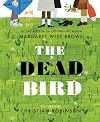
Another beautiful book by Margaret Wise Brown. There are earlier illustrated editions, but I was able to read the pictured version with illustrations by Christian Robinson. Initially it was Robinson's beautiful, vibrant, and engaging illustrations that called to me from a busy library shelf. Bright colors and a diverse collection of children depict the bittersweet tale of a bird's passing.
While playing in an urban park, children come upon a recently dead bird. Some may find the honest descriptions of the bird disturbing, "That was the way animals got when they had been dead for some time -- cold dead and stone still with no heart beating." I would hesitate to introduce this book unless there had been some discussion beforehand of death show more and what that means. To me there is beauty in the way the children enact the ritual of grieving and honoring the life of the bird.
They take great care to prepare a resting place, sing to the bird, and then perhaps most beautifully of all, go back to their play, returning only until they forget. What a wonderful quality, the ability to lose themselves in the play and imitation of a natural part of life. As time moves, the children simply forget to return. In some ways I think they would make for a lovely wordless book or an illustration read. show less
While playing in an urban park, children come upon a recently dead bird. Some may find the honest descriptions of the bird disturbing, "That was the way animals got when they had been dead for some time -- cold dead and stone still with no heart beating." I would hesitate to introduce this book unless there had been some discussion beforehand of death show more and what that means. To me there is beauty in the way the children enact the ritual of grieving and honoring the life of the bird.
They take great care to prepare a resting place, sing to the bird, and then perhaps most beautifully of all, go back to their play, returning only until they forget. What a wonderful quality, the ability to lose themselves in the play and imitation of a natural part of life. As time moves, the children simply forget to return. In some ways I think they would make for a lovely wordless book or an illustration read. show less
(easy) Children find a dead bird in the woods where they are playing. The children are very sad but in their ritualistic sacred treatment of the bird's remains, they are able to find happiness once again. Only Margaret Wise Brown could deliver such a potent message with such limited use of not only text, but illustrations. You probably could have told the story without words and it would have been just as effective. This was a wonderful book and what a beautiful way to approach what can be a very scary topic (death) for children. The story was sad, but bittersweet as well when we see that though the beauty of the bird will not be forgotten, the children were able to continue their play after they buried the bird.
The book I wanted to read is the original, illustrated by the acclaimed [a:Remy Charlip|27552|Remy Charlip|https://images.gr-assets.com/authors/1311577404p2/27552.jpg]. I have no idea if I'd like his art better for this story, but I have to admit I'm not keen on Robinson's. I wonder if Brown's estate wanted this to be in print for modern children, but Charlip's didn't? Whatever.
The story itself captures the children's perspectives and all their feelings about what death means perfectly and concisely. Children do have a genuine understanding of loss, of the fragility of life, and they also love ceremony and drama.... so of course they'd have a funeral with all the solemn rituals.
I believe I'd rate this four stars if I didn't know there show more was an original to compare it to. I hope my other library fills my requests for that.... show less
The story itself captures the children's perspectives and all their feelings about what death means perfectly and concisely. Children do have a genuine understanding of loss, of the fragility of life, and they also love ceremony and drama.... so of course they'd have a funeral with all the solemn rituals.
I believe I'd rate this four stars if I didn't know there show more was an original to compare it to. I hope my other library fills my requests for that.... show less
An odd little book from 1938 with updated illustrations by Christian Robinson. The story is almost macabre the way the bird is "still warm" when they find it and then grows "stiff" (and its "head didn't flop when they moved it"). A group of children pick up the bird (?!) and bury it in the woods, afterwards singing it an almost taunting little song. They go back every day ("until they forgot) and repeat this ritual.
Personally, I would not read this book to young children - handling a dead bird? - without some pretty thorough discussion beforehand.
The illustrations are actually quite sweet in a naive style and add an element of delight to an otherwise downbeat story.
Personally, I would not read this book to young children - handling a dead bird? - without some pretty thorough discussion beforehand.
The illustrations are actually quite sweet in a naive style and add an element of delight to an otherwise downbeat story.
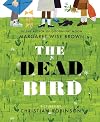
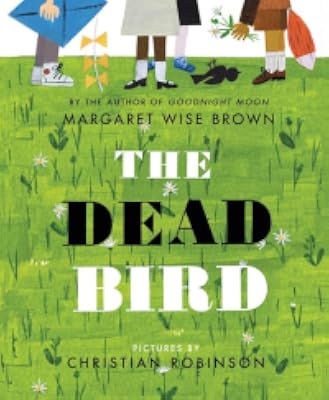
Margaret Wise Brown addresses the topic of death straightforwardly, as four children and a dog find a dead bird in the park, bury it, have a funeral, and return to the grave to leave flowers "every day, until they forgot." Christian Robinson's illustrations showcase the deep greens of the park and forest; the bird is only shown up close once, cupped in a pair of brown hands, and appears to be peaceful, with eyes closed and feet up. The children's expressions range from happy to solemn, sad to surprised.
"The children were very sorry the bird was dead and could never fly again. But they were glad they had found it, because now they could dig a grave in the woods and bury it. They could have a funeral and sing to it the way grown-up show more people did when someone died." show less
"The children were very sorry the bird was dead and could never fly again. But they were glad they had found it, because now they could dig a grave in the woods and bury it. They could have a funeral and sing to it the way grown-up show more people did when someone died." show less
Some children walking through the park discover a dead bird lying on the ground and decide to give it a proper burial.
I wanted to like this book. The concept was great -- introducing kids to the concept of death in a way that isn't overwhelming -- and the illustrations were lauded as among "the best" of last year's crop of picture books.
But I was a little skeptical of the actual book. Again, I still liked the idea of the book, but references to the flopping heads of dead creatures seems a bit too detailed for young readers. The lauded illustrations are okay but a little too stylized for my taste.
Overall, I was disappointed with this book. I was hoping for something better from Margaret Wise Brown. That all being said though, this book show more seems to have gotten a much more positive response from critics and general readers other than me. show less
I wanted to like this book. The concept was great -- introducing kids to the concept of death in a way that isn't overwhelming -- and the illustrations were lauded as among "the best" of last year's crop of picture books.
But I was a little skeptical of the actual book. Again, I still liked the idea of the book, but references to the flopping heads of dead creatures seems a bit too detailed for young readers. The lauded illustrations are okay but a little too stylized for my taste.
Overall, I was disappointed with this book. I was hoping for something better from Margaret Wise Brown. That all being said though, this book show more seems to have gotten a much more positive response from critics and general readers other than me. show less
This book is Margaret Wise Brown at her most intriguing, and her most blunt. This is a book about death and children The bluntness of the theme, the bluntness of the art and the fact the the book is presented on alternating text-only and image-only pages is a little off-putting to adults at first, but not as much to kids. As an adult I got over it and could enjoy this wonderful book.
Charlip's illustrations are clear and bold although the color is a but washed out in a 60's sort of way.
This is the story of some children coming upon a dead bird and what they do with it. It is an excellent take on how children would respond to the death of bird if they were awed and moved by it. And an action that readers can identify with. Here is the show more song they sing to it after burying it:
Oh bird you're dead / You'll nover fly again / Way up high / With other birds in the sky / We sing to you / Because you're dead / Feather bird / And we buried you / in the ground / With ferns and flowers / Because you will never fly / Again in the sky / Way up high / little dead bird.
This is just the thing a group of six year-olds would have come up with.
It is also a good model for children dealing with death in their lives beyond the story. The children continue their play on the last page, but with the knowledge that they can, and the intention to return to visit the grave every day.
Although this book does not have whimsy or humor, and is not visually bold or detailed by our modern standards it tends to captivate both kids and adults (as with most things Margaret Wise Brown wrote). show less
Charlip's illustrations are clear and bold although the color is a but washed out in a 60's sort of way.
This is the story of some children coming upon a dead bird and what they do with it. It is an excellent take on how children would respond to the death of bird if they were awed and moved by it. And an action that readers can identify with. Here is the show more song they sing to it after burying it:
Oh bird you're dead / You'll nover fly again / Way up high / With other birds in the sky / We sing to you / Because you're dead / Feather bird / And we buried you / in the ground / With ferns and flowers / Because you will never fly / Again in the sky / Way up high / little dead bird.
This is just the thing a group of six year-olds would have come up with.
It is also a good model for children dealing with death in their lives beyond the story. The children continue their play on the last page, but with the knowledge that they can, and the intention to return to visit the grave every day.
Although this book does not have whimsy or humor, and is not visually bold or detailed by our modern standards it tends to captivate both kids and adults (as with most things Margaret Wise Brown wrote). show less
Members
- Recently Added By
Author Information

266+ Works 80,233 Members
Margaret Wise Brown was born on May 10, 1910 in Greenpoint, Brooklyn, New York, to Robert Brown, a Vice President at American Manufacturing Company and Maud Brown, a housewife. She attended school in Lausanne, Switzerland for three years, before attending Dana Hall in Wellesley, Massachusetts for two years. In 1928, she began taking classes at show more Hollis College in Virginia. In 1935, Brown began working at the Bank Street Cooperative School for student teachers. Two years later, her writing career took off with the publication of "When the Wind Blows." Over the course of fourteen years, Brown wrote over one hundred picture books for children. Some of her best known titles include Goodnight Moon, Big Red Barn and Runaway Bunny. Margaret Wise Brown died on November 13, 1952 of an embolism following an operation in Nice, France. (Bowker Author Biography) show less
Some Editions
Awards and Honors
Awards
Common Knowledge
- Canonical title
- The Dead Bird
Classifications
Statistics
- Members
- 481
- Popularity
- 63,076
- Reviews
- 36
- Rating
- (3.43)
- Languages
- English, French
- Media
- Paper
- ISBNs
- 13
- ASINs
- 4