On This Page
Description
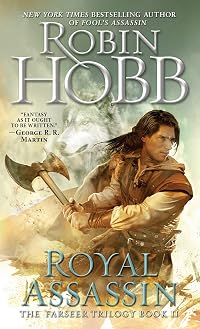
Fantasy. Fiction. Literature. Young Fitz, the illegitimate son of the noble Prince Chivalry, is ignored by all royalty except the devious King Shrewd, who has had him tutored him in the dark arts of the assassin. He has barely survived his first, soul-shattering mission, and when he returns to the court, he is thrown headfirst into the tumult of royal life. With the king near death, and Fitz's only ally off on a seemingly hopeless quest, the throne itself is threatened. Meanwhile, the show more treacherous Red Ship Raiders have renewed their attacks on the Six Duchies, slaughtering the inhabitants of entire seaside towns. In this time of great peril, it soon becomes clear that the fate of the kingdom may rest in Fitz's hands-and his role in its salvation may require the ultimate sacrifice. show lessTags
Recommendations
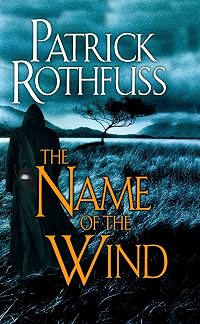
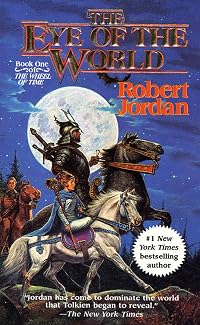
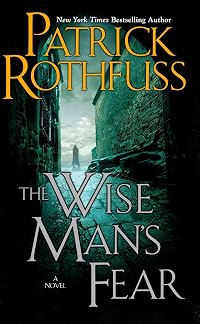
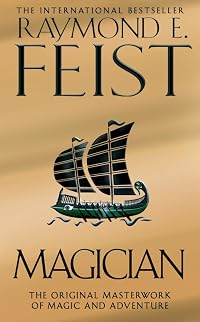
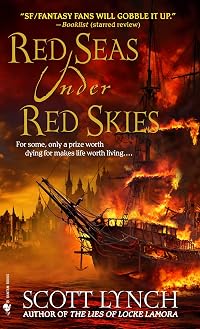
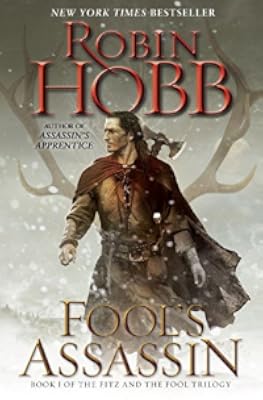
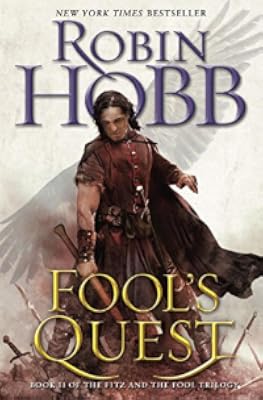
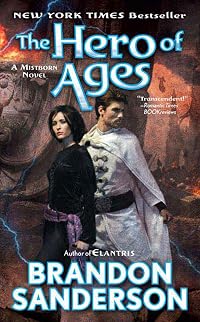


Member Recommendations
Member Reviews
This is the middle book of the Farseer Trilogy and it is very much a middle book. It begins with its central character, Fitz (FitzCivalry Farseer), still reeling from the after-effects of the near-fatal conclusion of book I and ends with him similarly struggling with the aftermath of another harrowing “near-death” experience. In between, the story goes from bad to worse.
I’m finding that Robin Hobb’s willingness to brutalize her characters sometimes exceeds my tolerance for reading about brutality. If she were any less skilled a writer or I were any less hooked on her characters, I would probably not continue. Having some foreknowledge of events based on having already read Fool’s Errand (book I of the second trilogy) made it show more sometimes easier and sometimes harder to read on. The brutality isn’t only physical, it’s emotional as well. The betrayals are the worst, when you find out that one of the few things you thought the character was doing right is actually wrong.
My complaints are not criticisms so much as personal reactions. Hobb is marvelously effective in doing what she does (it wouldn’t hurt so much if it weren’t so real), and many readers just eat this up, I’m sure. If I do have a genuine criticism, it’s that Fitz often doesn’t feel his age. He can be no more than sixteen, but his first person “voice” sounds like an adult. This is partly explained by the fact that he is telling the tale in retrospect, but that doesn’t account for why the other characters mostly seem to treat him like an adult and expect him to act like one when his youth and lack of experience ought to excuse his rashness and immaturity. I know that the age of majority is a cultural variable, but even so I felt the other characters’ harsh judgements of him were often out of line. show less
I’m finding that Robin Hobb’s willingness to brutalize her characters sometimes exceeds my tolerance for reading about brutality. If she were any less skilled a writer or I were any less hooked on her characters, I would probably not continue. Having some foreknowledge of events based on having already read Fool’s Errand (book I of the second trilogy) made it show more sometimes easier and sometimes harder to read on. The brutality isn’t only physical, it’s emotional as well. The betrayals are the worst, when you find out that one of the few things you thought the character was doing right is actually wrong.
My complaints are not criticisms so much as personal reactions. Hobb is marvelously effective in doing what she does (it wouldn’t hurt so much if it weren’t so real), and many readers just eat this up, I’m sure. If I do have a genuine criticism, it’s that Fitz often doesn’t feel his age. He can be no more than sixteen, but his first person “voice” sounds like an adult. This is partly explained by the fact that he is telling the tale in retrospect, but that doesn’t account for why the other characters mostly seem to treat him like an adult and expect him to act like one when his youth and lack of experience ought to excuse his rashness and immaturity. I know that the age of majority is a cultural variable, but even so I felt the other characters’ harsh judgements of him were often out of line. show less
This review refers to the whole Farseer Trilogy:
I read The Farseer Saga years ago and it is still one of my favorite epic fantasies. Its main strengths are its simple writing style and excellent characterization.
Robin Hobb's prose is lovely — straightforward and simple. It never calls attention to itself (and therefore away from the story). The characters are complex and believable. Fitz is my favorite fantasy "hero" and someone I came to really care about. He's not perfect, he's not beautiful, he's not a master swordsman. He's an abandoned bastard coming of age. He's insecure, he's lonely, and sometimes he broods. Not in an annoying whiny way, but in a normal, realistic way.
Things don't always go so well for Fitz. His story is show more heart-wrenching, and I felt emotionally drained after I finished it. But somehow, that was so satisfying.
Read more Robin Hobb book reviews at Fantasy literature. show less
I read The Farseer Saga years ago and it is still one of my favorite epic fantasies. Its main strengths are its simple writing style and excellent characterization.
Robin Hobb's prose is lovely — straightforward and simple. It never calls attention to itself (and therefore away from the story). The characters are complex and believable. Fitz is my favorite fantasy "hero" and someone I came to really care about. He's not perfect, he's not beautiful, he's not a master swordsman. He's an abandoned bastard coming of age. He's insecure, he's lonely, and sometimes he broods. Not in an annoying whiny way, but in a normal, realistic way.
Things don't always go so well for Fitz. His story is show more heart-wrenching, and I felt emotionally drained after I finished it. But somehow, that was so satisfying.
Read more Robin Hobb book reviews at Fantasy literature. show less
I think that my feelings about a story or a series, once I’ve read it, are still influenced by the cover art. This second book doesn't engender feelings as bleak as thinking about the first one does and Fitz, now with a recognised name, has many strands of his life woven through the castle of Buck Keep and the politics behind the throne. The first person narrative pulls you in and though the protagonist’s position keeps him on the outskirts, it also lets him, and us, in behind the scenes of governance. The writing and plot were exciting enough for me to buy for my own shelves the entire [Realm of the Elderlings] series.
The narrator tells us his life story as he looks back from some undefined later point in time with each chapter show more prefaced by an extract from the history of the Six Duchies which he is in the process of writing, or some other lore or writing relevant to the chapter.
Fitz, our narrator telling us of his mid teens at this point, returns from the Mountain Kingdom broken in body. He aids Verity, the King-in-Waiting, with the defence of the realm against the Red Ship raiders and helps the new Queen-in-Waiting settle into court life. At the same time he is frustrated that he is not allowed to counter Regal, the spoiled youngest son of King Shrewd and the only child of his second marriage to Queen Desire, in his play for the throne and watches helplessly as Regal fractures the Six Duchies between the coastal and inland territories.
There may not be intense action throughout the book although there are fights against the raiders and confrontations with Regal and his henchmen, but there is suspense and treachery to keep you on the edge of your seat. Although not your typical teenager, Fitz feels misunderstood and unable to completely confide in any one person. He feels that he carries the weight of the kingdom on his shoulders and no-one loves him; although we see throughout the book that lots of people love this orphan as a parent would and are willing to risk everything for him. And at some point, Fitz recognises his love for the Six Duchies and its people.
And Nighteyes! He is young and playful and a bit cocky and revelling in the joy of living and just being; he reminds me rather of our ditzy golden retriever. I did like his first interaction with the Heart of the Pack.
Hobb writes well and makes you care about the characters. The first person point of view leaves you feeling as frustrated as Fitz that you can only see and act so far or are prevented by vows or circumstances from moving to better protect the kingdom.
I picked this book up to re-read for the group read of the entire series (https://www.librarything.com/topic/283714#6419124 and http://www.librarything.com/topic/287725) and I found it as readable as I did the first time. This book doesn't end on a cliff-hanger, but it does leave you wanting to find out what happens to Fitz and his Six Duchies and to various characters off-screen (by this point) who may or may not be in danger.
I am paying more attention to the Fool on this re-read and starting to understand his place in the series.
4.5/5 stars show less
The narrator tells us his life story as he looks back from some undefined later point in time with each chapter show more prefaced by an extract from the history of the Six Duchies which he is in the process of writing, or some other lore or writing relevant to the chapter.
Fitz, our narrator telling us of his mid teens at this point, returns from the Mountain Kingdom broken in body. He aids Verity, the King-in-Waiting, with the defence of the realm against the Red Ship raiders and helps the new Queen-in-Waiting settle into court life. At the same time he is frustrated that he is not allowed to counter Regal, the spoiled youngest son of King Shrewd and the only child of his second marriage to Queen Desire, in his play for the throne and watches helplessly as Regal fractures the Six Duchies between the coastal and inland territories.
There may not be intense action throughout the book although there are fights against the raiders and confrontations with Regal and his henchmen, but there is suspense and treachery to keep you on the edge of your seat. Although not your typical teenager, Fitz feels misunderstood and unable to completely confide in any one person. He feels that he carries the weight of the kingdom on his shoulders and no-one loves him; although we see throughout the book that lots of people love this orphan as a parent would and are willing to risk everything for him. And at some point, Fitz recognises his love for the Six Duchies and its people.
And Nighteyes! He is young and playful and a bit cocky and revelling in the joy of living and just being; he reminds me rather of our ditzy golden retriever. I did like his first interaction with the Heart of the Pack.
It is what we all are, Nighteyes smirked. Come, Heart of the Pack, speak to me. Will not we hunt well together?
Hobb writes well and makes you care about the characters. The first person point of view leaves you feeling as frustrated as Fitz that you can only see and act so far or are prevented by vows or circumstances from moving to better protect the kingdom.
I picked this book up to re-read for the group read of the entire series (https://www.librarything.com/topic/283714#6419124 and http://www.librarything.com/topic/287725) and I found it as readable as I did the first time. This book doesn't end on a cliff-hanger, but it does leave you wanting to find out what happens to Fitz and his Six Duchies and to various characters off-screen (by this point) who may or may not be in danger.
I am paying more attention to the Fool on this re-read and starting to understand his place in the series.
4.5/5 stars show less
In this second volume of Hobb's 'Assassin' trilogy, matters progress from bad to worse. As FitzChivalry Farseer recovers from the near-fatal assassination attempt on him by Prince Regal, he begins to see that Buckkeep and the Six Duchies are falling apart around him. The Red-Ship Raiders grow ever more bold, and the vicious, amoral Forged Ones that the raiders somehow create from good citizens are growing to be ever more of a problem. King Shrewd is failing, wracked by illness - and drugs. In desperation, Prince Verity goes on a quest to seek the mythical Elderlings - and in his absence, Regal seizes yet more power, disregarding the woes of the nation and partying with pomp and ceremony. Fitz believes that the Duchies' decline may be show more all part of a plot designed by Regal - but his mentor, Chade, seems to think that his opinion may be based on his personal (although admittedly justified) dislike of that prince.
Can Fitz stay loyal to the royal family, balance his job as an assassin with his love of his childhood sweetheart, Molly, support Verity's wife, the foreign quuen, Kettricken, against those who would discredit her, remain friends with the stablemaster, Burrich, even though he has the illegal 'Wit' (an ability to speak with animals), and survive the various hatreds of those who are arrayed against him?
OK, I'm still missing some of the subplots here...
It's a complex, soap-opera-esque story with plenty of drama - pure entertainment, and executed near-perfectly! Great stuff! show less
Can Fitz stay loyal to the royal family, balance his job as an assassin with his love of his childhood sweetheart, Molly, support Verity's wife, the foreign quuen, Kettricken, against those who would discredit her, remain friends with the stablemaster, Burrich, even though he has the illegal 'Wit' (an ability to speak with animals), and survive the various hatreds of those who are arrayed against him?
OK, I'm still missing some of the subplots here...
It's a complex, soap-opera-esque story with plenty of drama - pure entertainment, and executed near-perfectly! Great stuff! show less
Review of Book Two in the Farseer Trilogy
Set in the Realm of the Elderlings
Title: Royal Assassin
Rating: ⭐️ 4.75
At one point in the book, she describes a land stripped of trees. But she doesn’t stop there. She explains that a lightning strike hit that land, which was once covered in forest, burning it down until it became a flat, lifeless plain, scorched by fire. That kind of detail wasn’t necessary for the plot. It had no direct impact just a fleeting memory in the protagonist’s mind. Yet that description breathes life into the world. It makes you feel like this is a real place where disasters happen naturally, not a world that only exists when the main character moves through it.
Or take how she describes a baby’s hand, full show more and creased at the joints. It’s a kind of writing that lets you experience something rare. You’d never expect to need details like that to enjoy a story, but they make the image vivid in your mind. Her ability to connect your world with hers is genuinely astonishing.
As a whole, the second book surpasses the first in many ways. The characters are deeper, the writing is stronger, the political side is more intricate, and the emotional impact of events is much more powerful than in the previous book. Still, the first half left me feeling a bit lost. I couldn’t quite grasp the direction. I was simply watching his daily life unfold. It was beautifully written, often captivating, but longer and slower than the first installment. I told myself that maybe this was intentional, that the aimlessness was meant to reflect the protagonist’s own confusion. The narration mirrors his view of life and the disorientation he experiences. But not every reader will enjoy that.
The magic, though still mysterious, developed in a really satisfying way. I kept imagining different scenarios where it could be used, and I found Hobb’s approach to magical elements really creative. Some aspects were hinted at as far back as the first book, which I appreciated. It didn’t feel like anything came out of nowhere.
There was one thing that bothered me. Occasionally, the writing would refer back to a place or character from earlier in the story, but instead of showing it in a new light or adding anything fresh, it would repeat almost the exact same description. It didn’t add depth or reflect the protagonist’s changing perspective. That surprised me, because it’s clear that Hobb doesn’t lack creativity at all.
She portrays hopelessness in a way that hurts you more than it hurts her characters. No amount of praise could fully capture what she achieves in this book. I honestly struggled to put into words the emotions she explores. But they absolutely reach you as you read. Your mind stops at certain lines or moments, and suddenly you’re thinking about your own worries. The feelings hit close, as if they came from within you.
I really appreciated how characters change when under the influence of drugs or hallucinations. Many books attempt this, but in Royal Assassin, it feels natural. It doesn’t come off as a gimmick or just a tool to move the plot. Hobb draws you into the character’s mind and lets you feel the effect. It was beautifully done. Most books treat these scenes superficially, like a moment that passes quickly. Hobb turns them into real, meaningful experiences that let you understand the psychological depth behind them. She’s not the only one who can do this, but she’s definitely one of the few who can do it this well.
The story follows the same emotional crisis as the first book. At times, I found myself pulled out of the narrative, unsure of where things were going. I didn’t like the direction at the time. But by the end, when I looked back, it all made sense. My issue wasn’t with what happened, but with the fact that it wasn’t what I wanted. And just because it wasn’t what I wanted doesn’t mean it was wrong.
The character growth was very clear, from adolescence into early adulthood. What I liked most was how natural and believable that development felt. It matched his experiences, his struggles, and the phase of life he was in. Unlike many fantasy protagonists, he didn’t feel like some all-knowing hero.
The female characters really stood out. They didn’t need to mimic men in order to be strong. A lot of stories fall into that trap. Here, even when a few characters leaned in that direction, there was still something unique about them. The women in this book are distinct. Maybe not as complex or powerful as what you’d find in A Song of Ice and Fire, but definitely better than many female characters I’ve seen in other books.
The ending? I hoped for a heroic moment, something grand and triumphant. But the ending was realistic, painful, and placed you face to face with limits you can’t easily escape. I was a bit upset because it didn’t give me what I wanted. But it gave me what the story needed. And that, in my view, is what makes Robin Hobb a truly great author not just a good one. show less
Set in the Realm of the Elderlings
Title: Royal Assassin
Rating: ⭐️ 4.75
At one point in the book, she describes a land stripped of trees. But she doesn’t stop there. She explains that a lightning strike hit that land, which was once covered in forest, burning it down until it became a flat, lifeless plain, scorched by fire. That kind of detail wasn’t necessary for the plot. It had no direct impact just a fleeting memory in the protagonist’s mind. Yet that description breathes life into the world. It makes you feel like this is a real place where disasters happen naturally, not a world that only exists when the main character moves through it.
Or take how she describes a baby’s hand, full show more and creased at the joints. It’s a kind of writing that lets you experience something rare. You’d never expect to need details like that to enjoy a story, but they make the image vivid in your mind. Her ability to connect your world with hers is genuinely astonishing.
As a whole, the second book surpasses the first in many ways. The characters are deeper, the writing is stronger, the political side is more intricate, and the emotional impact of events is much more powerful than in the previous book. Still, the first half left me feeling a bit lost. I couldn’t quite grasp the direction. I was simply watching his daily life unfold. It was beautifully written, often captivating, but longer and slower than the first installment. I told myself that maybe this was intentional, that the aimlessness was meant to reflect the protagonist’s own confusion. The narration mirrors his view of life and the disorientation he experiences. But not every reader will enjoy that.
The magic, though still mysterious, developed in a really satisfying way. I kept imagining different scenarios where it could be used, and I found Hobb’s approach to magical elements really creative. Some aspects were hinted at as far back as the first book, which I appreciated. It didn’t feel like anything came out of nowhere.
There was one thing that bothered me. Occasionally, the writing would refer back to a place or character from earlier in the story, but instead of showing it in a new light or adding anything fresh, it would repeat almost the exact same description. It didn’t add depth or reflect the protagonist’s changing perspective. That surprised me, because it’s clear that Hobb doesn’t lack creativity at all.
She portrays hopelessness in a way that hurts you more than it hurts her characters. No amount of praise could fully capture what she achieves in this book. I honestly struggled to put into words the emotions she explores. But they absolutely reach you as you read. Your mind stops at certain lines or moments, and suddenly you’re thinking about your own worries. The feelings hit close, as if they came from within you.
I really appreciated how characters change when under the influence of drugs or hallucinations. Many books attempt this, but in Royal Assassin, it feels natural. It doesn’t come off as a gimmick or just a tool to move the plot. Hobb draws you into the character’s mind and lets you feel the effect. It was beautifully done. Most books treat these scenes superficially, like a moment that passes quickly. Hobb turns them into real, meaningful experiences that let you understand the psychological depth behind them. She’s not the only one who can do this, but she’s definitely one of the few who can do it this well.
The story follows the same emotional crisis as the first book. At times, I found myself pulled out of the narrative, unsure of where things were going. I didn’t like the direction at the time. But by the end, when I looked back, it all made sense. My issue wasn’t with what happened, but with the fact that it wasn’t what I wanted. And just because it wasn’t what I wanted doesn’t mean it was wrong.
The character growth was very clear, from adolescence into early adulthood. What I liked most was how natural and believable that development felt. It matched his experiences, his struggles, and the phase of life he was in. Unlike many fantasy protagonists, he didn’t feel like some all-knowing hero.
The female characters really stood out. They didn’t need to mimic men in order to be strong. A lot of stories fall into that trap. Here, even when a few characters leaned in that direction, there was still something unique about them. The women in this book are distinct. Maybe not as complex or powerful as what you’d find in A Song of Ice and Fire, but definitely better than many female characters I’ve seen in other books.
The ending? I hoped for a heroic moment, something grand and triumphant. But the ending was realistic, painful, and placed you face to face with limits you can’t easily escape. I was a bit upset because it didn’t give me what I wanted. But it gave me what the story needed. And that, in my view, is what makes Robin Hobb a truly great author not just a good one. show less
Middle book of a trilogy - not usually that great, right? Just a bunch of junk between the scene setting of the first book and the thrilling finale of the third. Well, not this book. This is tense, gripping, exciting stuff! I could barely put it down, and read it over a weekend, and went out hunting for volume 3 just two days later.
So what's so great? Book 1, [b:Apprentice Assassin|45107|Assassin's Apprentice (Farseer Trilogy, #1)|Robin Hobb|http://d.gr-assets.com/books/1320339497s/45107.jpg|171715], ends with Fitz, the main character, in desperate straits, but with some hope that things in the world are looking up. Well, this volume details the difficult and painful ways Fitz must cope with his troubles, while the state of the world show more doesn't improve after all, but instead grows steadily worse, and Fitz's enemies continue to thrive. I don't want to say a word about how this one ends, because it's really not what I expected, and I'd hate to spoil the surprise for anyone. show less
So what's so great? Book 1, [b:Apprentice Assassin|45107|Assassin's Apprentice (Farseer Trilogy, #1)|Robin Hobb|http://d.gr-assets.com/books/1320339497s/45107.jpg|171715], ends with Fitz, the main character, in desperate straits, but with some hope that things in the world are looking up. Well, this volume details the difficult and painful ways Fitz must cope with his troubles, while the state of the world show more doesn't improve after all, but instead grows steadily worse, and Fitz's enemies continue to thrive. I don't want to say a word about how this one ends, because it's really not what I expected, and I'd hate to spoil the surprise for anyone. show less
To read more reviews in this series and others, check out keikii eats books!
97 points, 5 STARS!
Fitz has survived his first mission and the attempt on his life, but it has left him almost crippled. He has given up on being an assassin, and is poised to abandon his oath to the King when an enemy they cannot seem to fight, the Red-Ship Raiders, renew their raiding. He has to return to help Prince Verity as the Raiders leave more and more villages in their wake dead or changed.
If I thought the end of Assassin's Apprentice was hard on me and Fitz, boy was I in for a surprise when I started Royal Assassin. Tears. Running all down my face. For an hour or more. And then periodically throughout as well. And then that ending! Holy hell the end! show more WHHHYYYY?! WHY DOES SHE HURT ME SO?! I cannot think of higher praise for a book than the fact that I cried throughout it. But also being curled around a tissue box is..pointy.
Royal Assassin is much more exciting than the previous book in this trilogy. Fitz is older, and he isn't really an apprentice any longer. He is able to work on his own. Which means not much time spent in lesson after lesson. And it also means that things actually happen. This is still slow, but that is because it is working up to that ending. Fitz has to take a lot of time to heal after the events in Assassin's Apprentice. But after that there is just so much going on, and I loved it all.
Robin Hobb is the best at writing people. Oh my god the characters are just the best.
Fitz is hurting throughout the entire book. He feels betrayed. He hates what he has been turned into, what has been done to him, and is taking it out on others. He is very bad at staying hidden as an assassin should - he draws way too much attention to himself. He just doesn't know how to stick to his station, he is too much his father's son. His devotion to Verity is the best thing about Fitz during this dark period in his life. He hates everyone and everything at once time or another except Verity and Molly. Can't really blame him, really.
Verity isn't the best King in Waiting. He was never supposed to get the job. He is young. He has only held the position a short time. But he has the potential to be the best king. He fits his name. He has this ring of veracity and honor to him. Which is especially important because King Shrewd is declining throughout the book. The King's mental and physical decline in his old age is so realistic it hurts. I've seen it with my own grandmother, and it sucks. It really sucks. When it is your King, the person who is supposed to protect you and everyone you know and the entire kingdom? God it is so disastrous. I love it.
The Fool being there for his King like that...I'm crying again. The Fool is always a mystery and enigma. Just plain weird. He is always talking about weird things and trying to make sure things play out the way he wants them to in the background of things. But his King is failing and he can't accept it. It is so sad. I love the Fool and only want good things for him. [[Aside: Tawny Man is going to fucking slay me, isn't it?]]
Also I have rarely wanted to kill anyone more than I want to kill Prince Regal. I've read a lot of people I would like to murder in books. Regal is near the fucking top of them all right now.
Plus there is a new doggie! Well, a wolf. Nighteyes is awesome and I'm so happy. I was tired of Fitz losing people he cares about. The fact that he has to hide Nighteyes makes me sad, but he makes up for it by being the best wolfie ever.
...Nighteyes might try to kill me if he hears I said that. Don't no one tell him.
Royal Assassin is just my kind of story. The people are amazing, and there is an entire array of different types and personalities and things that happen to them. The story has things happening that are interesting and dangerous. There is a ton of mystery to be solved. It is like this was made exactly for me.
...Exactly for me to die to the ending to. I have to go read the next book now. show less
97 points, 5 STARS!
Fitz has survived his first mission and the attempt on his life, but it has left him almost crippled. He has given up on being an assassin, and is poised to abandon his oath to the King when an enemy they cannot seem to fight, the Red-Ship Raiders, renew their raiding. He has to return to help Prince Verity as the Raiders leave more and more villages in their wake dead or changed.
If I thought the end of Assassin's Apprentice was hard on me and Fitz, boy was I in for a surprise when I started Royal Assassin. Tears. Running all down my face. For an hour or more. And then periodically throughout as well. And then that ending! Holy hell the end! show more WHHHYYYY?! WHY DOES SHE HURT ME SO?! I cannot think of higher praise for a book than the fact that I cried throughout it. But also being curled around a tissue box is..pointy.
Royal Assassin is much more exciting than the previous book in this trilogy. Fitz is older, and he isn't really an apprentice any longer. He is able to work on his own. Which means not much time spent in lesson after lesson. And it also means that things actually happen. This is still slow, but that is because it is working up to that ending. Fitz has to take a lot of time to heal after the events in Assassin's Apprentice. But after that there is just so much going on, and I loved it all.
Robin Hobb is the best at writing people. Oh my god the characters are just the best.
Fitz is hurting throughout the entire book. He feels betrayed. He hates what he has been turned into, what has been done to him, and is taking it out on others. He is very bad at staying hidden as an assassin should - he draws way too much attention to himself. He just doesn't know how to stick to his station, he is too much his father's son. His devotion to Verity is the best thing about Fitz during this dark period in his life. He hates everyone and everything at once time or another except Verity and Molly. Can't really blame him, really.
Verity isn't the best King in Waiting. He was never supposed to get the job. He is young. He has only held the position a short time. But he has the potential to be the best king. He fits his name. He has this ring of veracity and honor to him. Which is especially important because King Shrewd is declining throughout the book. The King's mental and physical decline in his old age is so realistic it hurts. I've seen it with my own grandmother, and it sucks. It really sucks. When it is your King, the person who is supposed to protect you and everyone you know and the entire kingdom? God it is so disastrous. I love it.
The Fool being there for his King like that...I'm crying again. The Fool is always a mystery and enigma. Just plain weird. He is always talking about weird things and trying to make sure things play out the way he wants them to in the background of things. But his King is failing and he can't accept it. It is so sad. I love the Fool and only want good things for him. [[Aside: Tawny Man is going to fucking slay me, isn't it?]]
Also I have rarely wanted to kill anyone more than I want to kill Prince Regal. I've read a lot of people I would like to murder in books. Regal is near the fucking top of them all right now.
Plus there is a new doggie! Well, a wolf. Nighteyes is awesome and I'm so happy. I was tired of Fitz losing people he cares about. The fact that he has to hide Nighteyes makes me sad, but he makes up for it by being the best wolfie ever.
...Nighteyes might try to kill me if he hears I said that. Don't no one tell him.
Royal Assassin is just my kind of story. The people are amazing, and there is an entire array of different types and personalities and things that happen to them. The story has things happening that are interesting and dangerous. There is a ton of mystery to be solved. It is like this was made exactly for me.
...Exactly for me to die to the ending to. I have to go read the next book now. show less
Members
- Recently Added By
Lists

Best Fantasy Novels
821 works; 357 members

NPRs your picks: top 100 Sci-Fi/Fantasy books
297 works; 80 members
Favorite Long Books
330 works; 42 members

Books tagged favorites
390 works; 30 members

Unread books
1,063 works; 87 members

Books Read in 2014
2,344 works; 86 members

Epic Fantasy of the 90s
111 works; 4 members

Books Read in 2016
4,666 works; 199 members

Books Read in 2018
4,360 works; 110 members

Books Read in 2020
4,379 works; 124 members

Recommend Fantasy Books
100 works; 1 member

Florida
366 works; 3 members

Books Read in 2006
424 works; 7 members

Read in 2006
140 works; 1 member

READ 2026
77 works; 1 member

FAB 2026
4 works; 1 member
Talk Discussions
Past Discussions
Group read: Royal Assassin by Robin Hobb - Farseer trilogy in 75 Books Challenge for 2018 (May 2018)
Author Information

Robin Hobb was born in California but grew up in Alaska. It was there that she learned to love the forest and the wilderness. She has lived most of her life in the Pacific Northwest and currently resides in Tacoma, Washington. She is the author of five critically acclaimed fantasy series: The Rain Wilds Chronicles (Dragon Keeper, Dragon Haven, show more City of Dragons, Blood of Dragons), The Soldier Son Trilogy, The Tawny Man Trilogy, The Liveship Traders Trilogy, and The Farseer Trilogy. Under the name Megan Lindholm she is the author of The Wizard of the Pigeons, Windsingers, and Cloven Hooves. The Inheritance, a collection of stories, was published under both names. Her short fiction has won the Asimov's Readers' Award and she has been a finalist for both the Nebula and Hugo awards. (Publisher Provided) Margaret Astrid Lindholm Ogden was born in Berkeley, California on March 5, 1952. She writes under the pseudonyms Megan Lindholm and Robin Hobb. She writes fantasy and science fiction under the name Robin Hobb including the Farseer Trilogy, the Liveship Traders Trilogy, the Tawny Man Trilogy, the Soldier Son Trilogy, the Rain Wilds Chronicles, and the Fitz and the Fool Trilogy. Her title, Assassin's Fate, made The New York Times Best Seller List in 2017. (Bowker Author Biography) show less
Some Editions
Awards and Honors
Awards
Series


Work Relationships
Is contained in
Common Knowledge
- Canonical title
- Royal Assassin; Royal Assassin
- Original title
- Royal Assassin
- Original publication date
- 1996
- People/Characters
- FitzChivalry Farseer (Fitz, Newboy, Catalyst, Changer); The Fool (Beloved); Burrich (Heart of the Pack); Verity Farseer; Regal Farseer; Lady Patience Farseer (show all 24); Kettricken; Lacey; Molly Nosegay; Cook; Serene; Justin; Will; King Shrewd; Duke Brawndry; Nighteyes; Celerity; Chade Fallstar; Wallace; Rosemary; Hands; Duke Kelvar; Lady Grace; Blade
- Important places
- Six Duchies; Buck Duchy; Buck Town; Buckkeep; Neatbay; Antler Island
- Dedication
- For Giles
And for Raphael and Freddy,
the Princes of Assassins - First words
- Why is it forbidden to write down specific knowledge of the magics?
- Quotations*
- "Het zijn kwade tijden. En ik vroeg me af of er wel ooit een eind aan zou komen. Het was een vraag die ik me in de daaropvolgende jaren nog vaak zou stellen." - FitzChevalric
- Last words
- (Click to show. Warning: May contain spoilers.)Wolves have no Kings.
- Original language
- English
- Disambiguation notice
- in the portuguese edition the royal assassion was split between o punhal do soberano e a corte dos traidores
*Some information comes from Common Knowledge in other languages. Click "Edit" for more information.
Classifications
Statistics
- Members
- 10,231
- Popularity
- 964
- Reviews
- 165
- Rating
- (4.14)
- Languages
- 15 — Bulgarian, Czech, Danish, Dutch, English, Finnish, German, Hungarian, Italian, Polish, Romanian, Russian, Spanish, Swedish, Portuguese (Brazil)
- Media
- Paper, Audiobook, Ebook
- ISBNs
- 77
- ASINs
- 35