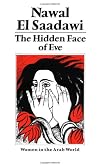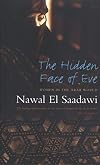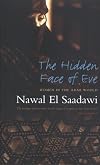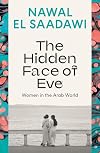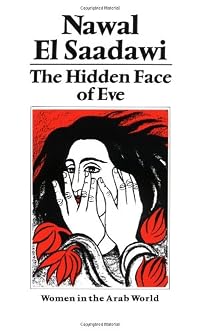
The Hidden Face of Eve
by Nawal El Saadawi
On This Page
Description
Passionate, powerful and thought-provoking, in The Hidden Face of Eve, leading feminist writer Nawal El Saadawi provides a shocking account of the oppression of women in the Arab world. Inspired by her experiences working as a doctor in rural Egypt and her life as an activist for women's rights, she charts the injustices and violence faced by women in the society she grew up in, from legal inequality to honour killings and sexual violence, including female genital mutilation. Examining show more the historical roots of this oppression, she tackles the controversial topic of women and Islam, arguing that customs such as veiling and polygamy are contradictory to the fundamental teachings of the Muslim faith or any other. As necessary now as when it was first published, The Hidden Face of Eve is a classic of Arab feminist writing. show lessTags
Recommendations

















Member Reviews
Another fantastic, revolutionary book by this incredibly courageous woman. It ranges over so many themes I need to acknowledge them all at least by listing them:
* Part I - The Mutilated Half * The Question that No One Would Answer * Sexual Agression Against the Female Child * The Grandfather with Bad Manners * The Injustice of Justice * The Very Fine Membrane Called 'Honour' * Circumcision of Girls * Obscurantism and Contradiction * The Illegitimate Child and the Prostitute * Abortion and Fertility * Distorted Notions about Femininity, Beauty and Love * Part II - Women in History * The Thirteenth Rib of Adam * Man the God, Woman the Sinful * Woman at the Time of the Pharaohs * Liberty to the Slave, But Not for the Woman * Part III - The show more Arab Woman * The Role of Women in Arab History * Love and Sex in the Life of the Arabs * The Heroine in Arab Literature * Part IV - Breaking Through * Arab Pioneers of Women's Liberation * Work and Women * Marriage and Divorce *
As you can see, she didn't baulk at tackling the most taboo, incendiary themes, such as female circumcision, rampant sexual abuse of female children by family and strangers, virginity, the whole complex of loathsome beliefs and practices surrounding it, prostitution, sex and women in general; all the way to calling out and rejecting the reactionary interpretations of Islam.
I must begin with what may look like a contradiction--first, to note that we must keep in mind that the audience addressed is that of Arab women and men in the 1970s, i.e. no polemical comparison with the West is intended. But then to stress immediately that we should not think of the text as foreign, dealing with problems mostly outside our own experience, but as in fact applying to us, to women everywhere, because the principles of oppression are at the root the same. So, while Western ideas and situations may serve as a reference point, to elucidate some problem or serve as an example, we must fight the all-too-frequent tendency to interpret processes outside the West as subordinate to and tending to some ideal specifically Western status. Loving freedom and fighting for it is neither of the West or the East, it's of human nature.
Saadawi rightly observes that patriarchal systems are everywhere, that the subjugation of women is generally attempted if not the rule, and that this is related to the class war.
Her outlook is emancipatory not only in relation to the gender but class as well, which is unsurprising given that poor women are the most numerous of women, and that economic deprivation and inequality is the pre-condition of every oppression of women. And yet this insight is still neglected in the West in particular.
But, what were the specific problems of the women in the Arab world in 1977, and why were they?
Answering the second part first: practically, Arab women had problems because the society elevated and favoured the male and men at the expense of women. And, returning to the first part, nowhere is this clearer or faster seen than in the laws regulating marriage and divorce. Men can do everything; women can do nothing--women must suffer everything that men can do.
First, marriage is an institution in which the woman's (or, usually, the girl's) will is of no importance--it's a deal made by the prospective husband with the girl's parents, usually simply the father, or other male relatives acting as guardians. A woman can't offer or demand marriage on her own behalf.
Once married, the woman is easily divorced, but she cannot initiate divorce. Moreover, all kind of arrangements exist to make already loose marriage contract even looser and less onerous for the man, such as marrying without a written contract, or divorcing a woman temporarily in order to acquire more wives over the limit of four, then divorcing those and remarrying etc.
" ...it is probably not accurate to use the term 'rights of the woman' since a woman under the Islamic system of marriage has no human rights unless we consider that a slave has rights under a slave system.
(...)
Among the most serious obstacles that confront Arab women in so far as their employment and work is concerned are the laws related to marriage and civil rights. These laws still give the husband an absolute right to prevent his wife from taking a job, travelling abroad, or even going out of her home whenever she desires."
Poor female workers, representing more than 80% of the female workforce, that in agriculture and domestic service, worked for no pay at all--they worked for their husbands or families or, if in service to strangers, for their upkeep (this is a situation I saw first hand when my mother's cleaning woman in Syria showed up once with eight children of varying ages, her relatives, saying they'd all work just for food and shelter).
Women working in factories were so mercilessly exploited in conditions worse than that of the male workers that few lasted more than a few years--it suited the owners fine to run them down as hard as possible because every year brought a new crop of unskilled poor girls happy to earn peanuts.
(Prostitution, otoh, was criminalized in Egypt in 1951--and the ones going to prison were the prostitutes, not the johns. In fact the latter would testify against the women.)
The way the conditions of marriage and divorce are so essential in creating the women's miserable state isn't due just to the upper hand it gives men regarding family life, but also the status of children. Just as easily as unmarried men (but not unmarried women) can confer legitimacy on their children, if they wish to do so, the married man can withdraw legitimacy from the children he fathered in legal marriage, even with the woman still his wife. This places not just the woman but her children in limbo.
Given that the options for work for women are so few, most divorced women see themselves obliged to go back to their parents or other family--if those will have them.
Given all of this, it's not hard to see how women existed in a perennially precarious situation, always in the shadow of a threat, always potentially on the brink of ruin.
Polygamy and repudiation can be seen as the basic mechanisms that bring about women's dehumanization and disenfranchisement. From that basis other myriad forms of discrimination follow.
"There are no laws in Egypt at present that discriminate between the sexes as far as education or employment are concerned. Yet, in actual practice, discrimination is a frequent occurrence. One example of this discrimination is what happens in the appointment of judges. The men who dominate the judicial system in Egypt have been able to prevent women from becoming judges on the assumption that a woman, by her very nature, is unfit to shoulder the responsibilities related to a court of law. This assumption is built on the fact that Islam considers the testimony of one man equivalent to that of two women. (...)... in the daily newspaper, El Akhbar, on 12 January 1976 ... the author maintains that the post of a judge is forbidden to women by Islam: 'It is superfluous to explain, that according to Islam, ten conditions must be fulfilled for a person to judge. Without these ten conditions, the very essence of "judging" is non-existent, and the right or even possibility to be accorded this high function is lost. These ten conditions are: Islamic belief, reason, masculinity, freedom, maturity, justice, knowledge and to be a complete individual with a normal capacity to hear, to see and to speak.'
in addition, women are not allowed to hold posts of an executive nature, such as that of a Governor, or the Mayor of a town, or the Head of a village."
The remarks on the (in)capacity of women to be judges and the justification for this found "in Islam", brings us to the question of the use of religion, Koranic verses and the hadith, in upholding the oppression of women.
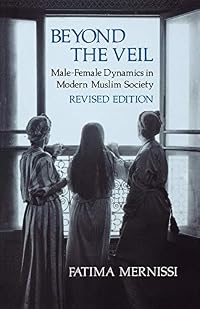
Saadawi, like Mernissi in the previous book, posits that Islam in "essence" does not preclude women's equality with the men. In Saadawi's view the oppression of women in the name of the faith stems from a false and reactionary interpretation of Islam--ergo, a progressive interpretation would not only do away with oppression but also represent the authentic faith. show less
* Part I - The Mutilated Half * The Question that No One Would Answer * Sexual Agression Against the Female Child * The Grandfather with Bad Manners * The Injustice of Justice * The Very Fine Membrane Called 'Honour' * Circumcision of Girls * Obscurantism and Contradiction * The Illegitimate Child and the Prostitute * Abortion and Fertility * Distorted Notions about Femininity, Beauty and Love * Part II - Women in History * The Thirteenth Rib of Adam * Man the God, Woman the Sinful * Woman at the Time of the Pharaohs * Liberty to the Slave, But Not for the Woman * Part III - The show more Arab Woman * The Role of Women in Arab History * Love and Sex in the Life of the Arabs * The Heroine in Arab Literature * Part IV - Breaking Through * Arab Pioneers of Women's Liberation * Work and Women * Marriage and Divorce *
As you can see, she didn't baulk at tackling the most taboo, incendiary themes, such as female circumcision, rampant sexual abuse of female children by family and strangers, virginity, the whole complex of loathsome beliefs and practices surrounding it, prostitution, sex and women in general; all the way to calling out and rejecting the reactionary interpretations of Islam.
I must begin with what may look like a contradiction--first, to note that we must keep in mind that the audience addressed is that of Arab women and men in the 1970s, i.e. no polemical comparison with the West is intended. But then to stress immediately that we should not think of the text as foreign, dealing with problems mostly outside our own experience, but as in fact applying to us, to women everywhere, because the principles of oppression are at the root the same. So, while Western ideas and situations may serve as a reference point, to elucidate some problem or serve as an example, we must fight the all-too-frequent tendency to interpret processes outside the West as subordinate to and tending to some ideal specifically Western status. Loving freedom and fighting for it is neither of the West or the East, it's of human nature.
Saadawi rightly observes that patriarchal systems are everywhere, that the subjugation of women is generally attempted if not the rule, and that this is related to the class war.
Her outlook is emancipatory not only in relation to the gender but class as well, which is unsurprising given that poor women are the most numerous of women, and that economic deprivation and inequality is the pre-condition of every oppression of women. And yet this insight is still neglected in the West in particular.
But, what were the specific problems of the women in the Arab world in 1977, and why were they?
Answering the second part first: practically, Arab women had problems because the society elevated and favoured the male and men at the expense of women. And, returning to the first part, nowhere is this clearer or faster seen than in the laws regulating marriage and divorce. Men can do everything; women can do nothing--women must suffer everything that men can do.
First, marriage is an institution in which the woman's (or, usually, the girl's) will is of no importance--it's a deal made by the prospective husband with the girl's parents, usually simply the father, or other male relatives acting as guardians. A woman can't offer or demand marriage on her own behalf.
Once married, the woman is easily divorced, but she cannot initiate divorce. Moreover, all kind of arrangements exist to make already loose marriage contract even looser and less onerous for the man, such as marrying without a written contract, or divorcing a woman temporarily in order to acquire more wives over the limit of four, then divorcing those and remarrying etc.
" ...it is probably not accurate to use the term 'rights of the woman' since a woman under the Islamic system of marriage has no human rights unless we consider that a slave has rights under a slave system.
(...)
Among the most serious obstacles that confront Arab women in so far as their employment and work is concerned are the laws related to marriage and civil rights. These laws still give the husband an absolute right to prevent his wife from taking a job, travelling abroad, or even going out of her home whenever she desires."
Poor female workers, representing more than 80% of the female workforce, that in agriculture and domestic service, worked for no pay at all--they worked for their husbands or families or, if in service to strangers, for their upkeep (this is a situation I saw first hand when my mother's cleaning woman in Syria showed up once with eight children of varying ages, her relatives, saying they'd all work just for food and shelter).
Women working in factories were so mercilessly exploited in conditions worse than that of the male workers that few lasted more than a few years--it suited the owners fine to run them down as hard as possible because every year brought a new crop of unskilled poor girls happy to earn peanuts.
(Prostitution, otoh, was criminalized in Egypt in 1951--and the ones going to prison were the prostitutes, not the johns. In fact the latter would testify against the women.)
The way the conditions of marriage and divorce are so essential in creating the women's miserable state isn't due just to the upper hand it gives men regarding family life, but also the status of children. Just as easily as unmarried men (but not unmarried women) can confer legitimacy on their children, if they wish to do so, the married man can withdraw legitimacy from the children he fathered in legal marriage, even with the woman still his wife. This places not just the woman but her children in limbo.
Given that the options for work for women are so few, most divorced women see themselves obliged to go back to their parents or other family--if those will have them.
Given all of this, it's not hard to see how women existed in a perennially precarious situation, always in the shadow of a threat, always potentially on the brink of ruin.
Polygamy and repudiation can be seen as the basic mechanisms that bring about women's dehumanization and disenfranchisement. From that basis other myriad forms of discrimination follow.
"There are no laws in Egypt at present that discriminate between the sexes as far as education or employment are concerned. Yet, in actual practice, discrimination is a frequent occurrence. One example of this discrimination is what happens in the appointment of judges. The men who dominate the judicial system in Egypt have been able to prevent women from becoming judges on the assumption that a woman, by her very nature, is unfit to shoulder the responsibilities related to a court of law. This assumption is built on the fact that Islam considers the testimony of one man equivalent to that of two women. (...)... in the daily newspaper, El Akhbar, on 12 January 1976 ... the author maintains that the post of a judge is forbidden to women by Islam: 'It is superfluous to explain, that according to Islam, ten conditions must be fulfilled for a person to judge. Without these ten conditions, the very essence of "judging" is non-existent, and the right or even possibility to be accorded this high function is lost. These ten conditions are: Islamic belief, reason, masculinity, freedom, maturity, justice, knowledge and to be a complete individual with a normal capacity to hear, to see and to speak.'
in addition, women are not allowed to hold posts of an executive nature, such as that of a Governor, or the Mayor of a town, or the Head of a village."
The remarks on the (in)capacity of women to be judges and the justification for this found "in Islam", brings us to the question of the use of religion, Koranic verses and the hadith, in upholding the oppression of women.
Saadawi, like Mernissi in the previous book, posits that Islam in "essence" does not preclude women's equality with the men. In Saadawi's view the oppression of women in the name of the faith stems from a false and reactionary interpretation of Islam--ergo, a progressive interpretation would not only do away with oppression but also represent the authentic faith. show less
Despite the orientalist book cover of a veiled woman and the fact that the original title was “The naked face of the Arab woman” and not the submissive “hidden face of eve” I would still recommend this dense and intense read. As a doctor and psychiatrist, Nawal el-saadawi has seen and heard many women pass through her clinic doors for issues related to gendered violence. Whether it’s circumcisions and general mutilations gone wrong, or bleeding out and infected from the cultural practice of a woman puncturing through the hymen with a finger to draw blood, or men coming over to demand to know whether their new wives were really virgins, or witnessing the psychological trauma they went through -- she was in direct contact with show more the culture and women she’s writing about. A generational epidemic where girls are sexually assaulted by older male relatives, girls who are killed for the sake of honour even if they are innocent, women who resort to dangerous home abortions so they can continue working at their exploitative jobs where they are paid less than men for more hours.She also makes the huge but important effort to point out the structural factors, fearlessly implicating religious culture and tradition as well, that continues to be used to justify horrific, systematic abuse against women. If you want to know of a struggle beyond what we usually hear about, I highly recommend this read. Nawal el-saadawi holds no punches. show less
Eevan kätketyt kasvot on Nawal El Saadawin kirjoittama teos, joka käsittelee naisen asemaa arabimaailmassa ihmisen varhaisajoista tähän päivään. Kirja on ilmestynyt ensimmäisen kerran arabian kielellä 1980 (Zed Books Ltd.) ja sitten englanniksi josta suomenkielinen teos on käännetty. Suomenkielisen version ensimmäinen painos on julkaistu 1992. Luin kirjan kolmannen korjatun painoksen joka julkaistiin vuonna 2002.
Kirjailija Nawal El Saadawi on egyptiläinen naislääkäri ja, hän on itse kasvanut arabialaisessa muslimi yhteisössä. Saadawin teos on jaoteltu neljään osaan. Ensimmäinen osa on nimeltään ’’Silvottu puolisko’’ ja sen kappaleissa käsitellään arabinaisten elämää yleisesti ja siinä on käytetty show more paljon naisten omakohtaisia kokemuksia. Toisessa osassa on naisen asemasta yleisesti historiassa ja siinä on kerrottu naisten asemasta niin länsimaissa kuin itämaissa sekä verrattu niin kristinuskoa, juutalaisuutta ja islamia. Kolmannessa osassa lähennytään nimenomaan arabinaisiin ja neljännessä osassa kerrotaan naisten aseman paranemisen läpimurrosta. Kirjassa on paljon informaatiota ja viitteet ja lähteet on merkitty tarkasti.
Mielestäni kirja oli lukemisen arvoinen. Se toi ilmi yhteiskunnallisia epäkohtia ja otti hyvin kantaa siihen miten paljon painoarvoa taloudella on ollut maailman ja ihmisten välisten suhteiden kehityksen kanssa. Kirjailijalla on omakohtaisia kokemuksia tietyistä asioista kuten naisten ympärileikkauksesta, joka omaan korvaani kuulostaa äärettömän julmalta. Länsimaisen ja etenkin pohjoismaalaisen naisen maailmankuvan vuoksi kirja oli erityisen avartava. Teos auttoi minua ymmärtämään paremmin arabialaista maailmaa ja rajaamaan mikä on arabialaista kulttuuria ja mikä islamin uskoa ja sitä mitä vaikutusta taloudella on ollut sekä arabialaisessa, että länsimaisessa yhteiskunnassa.
Kirja etenee mielestäni sujuvasti ja sen joistakin vaikeista käsitteistä huolimatta oli suhteellisen helppolukuinen. Kirjailija oli mielestäni merkinnyt lähteensä erittäin hyvin ja kirjoittanut haastateltujensa kokemuksista luonnollisesti, mutta huomiota herättävästi. Teos oli ensimmäinen vapaaehtoisesti lukemani tietokirja ja olen positiivisesti yllättynyt siitä miten mielenkiintoisesti asiat oli esitetty. Kirja oli erittäin kantaaottava ja erityisen hyvän siitä teki nimenomaan kirjailijan tyyli tuoda asiat esille ja argumentoida. Mielestäni teos on merkittävä sen käsittelemän sisällön vuoksi. Ei ole itsestään selvyys, että tämänkaltaisista asioista kirjoitetaan.
Kirja kannattaa ehdottomasti lukea, sillä se tuo erilaista näkökulmaa maailmankatsomukseen. Vaikka naisten asema nyky-yhteiskunnassa onkin parantunut, ei taistelu naisten oikeuksien puolesta ole loppunut ja teos ottaa siihen osuvasti kantaa.
Taija show less
Kirjailija Nawal El Saadawi on egyptiläinen naislääkäri ja, hän on itse kasvanut arabialaisessa muslimi yhteisössä. Saadawin teos on jaoteltu neljään osaan. Ensimmäinen osa on nimeltään ’’Silvottu puolisko’’ ja sen kappaleissa käsitellään arabinaisten elämää yleisesti ja siinä on käytetty show more paljon naisten omakohtaisia kokemuksia. Toisessa osassa on naisen asemasta yleisesti historiassa ja siinä on kerrottu naisten asemasta niin länsimaissa kuin itämaissa sekä verrattu niin kristinuskoa, juutalaisuutta ja islamia. Kolmannessa osassa lähennytään nimenomaan arabinaisiin ja neljännessä osassa kerrotaan naisten aseman paranemisen läpimurrosta. Kirjassa on paljon informaatiota ja viitteet ja lähteet on merkitty tarkasti.
Mielestäni kirja oli lukemisen arvoinen. Se toi ilmi yhteiskunnallisia epäkohtia ja otti hyvin kantaa siihen miten paljon painoarvoa taloudella on ollut maailman ja ihmisten välisten suhteiden kehityksen kanssa. Kirjailijalla on omakohtaisia kokemuksia tietyistä asioista kuten naisten ympärileikkauksesta, joka omaan korvaani kuulostaa äärettömän julmalta. Länsimaisen ja etenkin pohjoismaalaisen naisen maailmankuvan vuoksi kirja oli erityisen avartava. Teos auttoi minua ymmärtämään paremmin arabialaista maailmaa ja rajaamaan mikä on arabialaista kulttuuria ja mikä islamin uskoa ja sitä mitä vaikutusta taloudella on ollut sekä arabialaisessa, että länsimaisessa yhteiskunnassa.
Kirja etenee mielestäni sujuvasti ja sen joistakin vaikeista käsitteistä huolimatta oli suhteellisen helppolukuinen. Kirjailija oli mielestäni merkinnyt lähteensä erittäin hyvin ja kirjoittanut haastateltujensa kokemuksista luonnollisesti, mutta huomiota herättävästi. Teos oli ensimmäinen vapaaehtoisesti lukemani tietokirja ja olen positiivisesti yllättynyt siitä miten mielenkiintoisesti asiat oli esitetty. Kirja oli erittäin kantaaottava ja erityisen hyvän siitä teki nimenomaan kirjailijan tyyli tuoda asiat esille ja argumentoida. Mielestäni teos on merkittävä sen käsittelemän sisällön vuoksi. Ei ole itsestään selvyys, että tämänkaltaisista asioista kirjoitetaan.
Kirja kannattaa ehdottomasti lukea, sillä se tuo erilaista näkökulmaa maailmankatsomukseen. Vaikka naisten asema nyky-yhteiskunnassa onkin parantunut, ei taistelu naisten oikeuksien puolesta ole loppunut ja teos ottaa siihen osuvasti kantaa.
Taija show less
Extremely well written and fluid to read. I don't agree with some of the theories she proposes, as modern theories have been developed that are more fitting than some of the antiquated references used from the late-1800's. Giving insight not only to the "third world countries," it briefly relates to modernized countries, and is a book that shouldn't be missed.
A disturbing history of women in the Arab world and how they have been brutalized and mistreated in many ways throughout history up to the present day. This isn't a happy read, but would be an important one, I think, if it weren't for the frequent and sometimes incredibly blatant inaccuracies included in the text. I assume the author knows her own subject (Arab women and their mistreatment) since she is a doctor herself and has treated and interviewed many Arab women and has extensively studied the subject. But she should have stuck to what she knows; she branches out into the history of mistreatment of women in other areas of the world, including ancient Greece and Rome, and she boldly states as fact - frequently without citing sources show more - wildly inaccurate and untrue ideas. This, as you can probably guess, drove me absolutely bananas. show less
Este poderoso relato de la opresión de las mujeres en el mundo musulmán sigue siendo hoy tan impactante como cuando fue publicado por primera vez, hace más de un cuarto de siglo.
Nawal El Saadawi escribe sobre un poderoso sentido de la violencia y la injusticia que impregnaba su sociedad. Sus experiencias trabajando como médica en los pueblos de alrededor de Egipto, testigos de la prostitución, los crímenes de honor y los abusos sexuales, incluida la circuncisión femenina, la llevó a dar voz a este sufrimiento. Ella explora las causas de la situación a través de una discusión sobre el papel histórico de las mujeres árabes en la religión y la literatura. Saadawi argumenta que el velo, la poligamia y la desigualdad jurídica show more son incompatibles con la esencia del Islam o de cualquier fe humana. show less
Nawal El Saadawi escribe sobre un poderoso sentido de la violencia y la injusticia que impregnaba su sociedad. Sus experiencias trabajando como médica en los pueblos de alrededor de Egipto, testigos de la prostitución, los crímenes de honor y los abusos sexuales, incluida la circuncisión femenina, la llevó a dar voz a este sufrimiento. Ella explora las causas de la situación a través de una discusión sobre el papel histórico de las mujeres árabes en la religión y la literatura. Saadawi argumenta que el velo, la poligamia y la desigualdad jurídica show more son incompatibles con la esencia del Islam o de cualquier fe humana. show less
Jul 18, 2011Spanish
Om te beginnen dacht ik dat het een roman ging zijn en bleek het meer non-fictie te zijn.
Het kon me maar matig boeien. Fragmentair gelezen. En ik vroeg me ook de hele tijd of het boek nog wel actueel is intussen.
Het kon me maar matig boeien. Fragmentair gelezen. En ik vroeg me ook de hele tijd of het boek nog wel actueel is intussen.
Aug 3, 2025Dutch
Members
- Recently Added By
Published Reviews
'A harrowing expose of the abuse of women in the Arab world' - London Review of Books
'Nawal El Saadawi has become something of a heroine for many young Arab women ... a cry from the heart' - MESA Bulletin
'The Arab world's leading feminist and iconoclast' - Fedwa Malti-Davis
'The leading spokeswoman on the status of women in the Arab world' - The Guardian
'Nawal El Saadawi speaks directly on show more behalf of many women in the Third World and the daily struggles they face' - West Africa
'The most recognisable name in Egyptian and Middle Eastern feminism… poignant, penetrating yet simple' - Library Journal
'A tour-de-force of the reality of life for women in Islamic society. This groundbreaking book still retains the power to shock.' - Banipal show less
'Nawal El Saadawi has become something of a heroine for many young Arab women ... a cry from the heart' - MESA Bulletin
'The Arab world's leading feminist and iconoclast' - Fedwa Malti-Davis
'The leading spokeswoman on the status of women in the Arab world' - The Guardian
'Nawal El Saadawi speaks directly on show more behalf of many women in the Third World and the daily struggles they face' - West Africa
'The most recognisable name in Egyptian and Middle Eastern feminism… poignant, penetrating yet simple' - Library Journal
'A tour-de-force of the reality of life for women in Islamic society. This groundbreaking book still retains the power to shock.' - Banipal show less
added by ZedBooks
Lists

Women in Islam
120 works; 8 members
Author Information

69+ Works 3,153 Members
Nawal El Saadawi was born in 1931. She is an Egyptian feminist author, acitvist, physician and psychiatrist whose writings focus on the subject of women in Islam. She is founder and president of the Arab Women's Solidarity Association, and co-founder of the Arab Association for Human Rights.
Some Editions
Awards and Honors
Awards
Notable Lists
Series
Belongs to Publisher Series
Rainbow pocketboeken (78)
Common Knowledge
- Canonical title
- The Hidden Face of Eve
- Original title
- The Hidden Face of Eve: Women in the Arab World
- Alternate titles
- La Face cachée d'Ève
- Original publication date
- 1977 (Arabisch) (Arabisch); 1980 (Engels) (Engels); 1980 (Nederlands) (Nederlands)
- Important places*
- Egypte
- Dedication
- Dedicated to Zeinab Shoukry, the great woman who lived and died without giving me her name - my mother.
- First words
- I was six years old that night when I lay in my bed, warm and peaceful in that pleasurable state which lies half way between wakefulness and sleep.
- Last words
- (Click to show. Warning: May contain spoilers.)For a woman to be able to regain her personality, her humanity, her intrinsic and real self is much more worthwhile than all the approbation of a male dominated society.
- Original language*
- Arabisch
*Some information comes from Common Knowledge in other languages. Click "Edit" for more information.
Classifications
- Genres
- Nonfiction, Sexuality and Gender Studies, General Nonfiction, Religion & Spirituality, History
- DDC/MDS
- 305.4 — Society, Government, and Culture Social sciences, sociology & anthropology Social group - Age, Gender, Ethnicity Women
- LCC
- HQ1784 .S18 — Social sciences The family. Marriage, Women and Sexuality The Family. Marriage. Women Women. Feminism
- BISAC
Statistics
- Members
- 329
- Popularity
- 96,249
- Reviews
- 9
- Rating
- (4.02)
- Languages
- 7 — Arabic, Danish, Dutch, English, Finnish, Indonesian, Spanish
- Media
- Paper, Ebook
- ISBNs
- 20
- ASINs
- 5