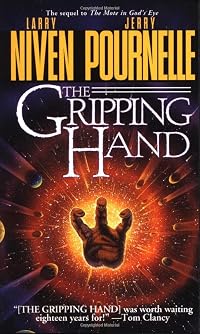
The Gripping Hand
by Larry Niven, Jerry Pournelle
The Mote in God's Eye (2), CoDominium Internal Chronology (9)
On This Page
Description
Robert Heinlein called it "possibly the finest science fiction novel I have ever read." The San Francisco Chronicle declared that "as science fiction, The Mote in God's Eye is one of the most important novels ever published." Now Larry Niven and Jerry Pournelle, award winning authors of such bestsellers as Footfall and The Legacy of Heorot, return us to the Mote, and to the universe of Kevin Renner and Horace Bury, of Rod Blaine and Sally Fowler. There, 25 years have passed since humanity show more quarantined the mysterious aliens known as Moties within the confines of their own solar system. They have spent a quarter century analyzing and agonizing over the deadly threat posed by the only aliens mankind has ever encountered-- a race divided into distinct biological forms, each serving a different function. Master, Mediator, Engineer. Warrior. Each supremely adapted to its task, yet doomed by millions of years of evolution to an inescapable fate. For the Moties must breed-- or die. And now the fragile wall separating them and the galaxy beyond is beginning to crumble. show lessTags
Recommendations




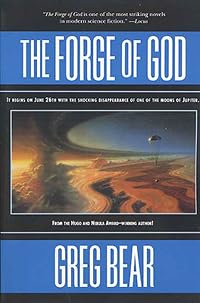
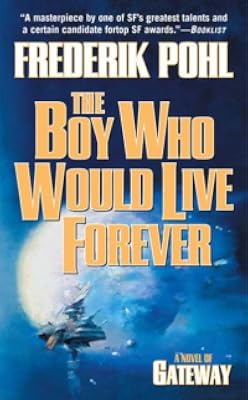
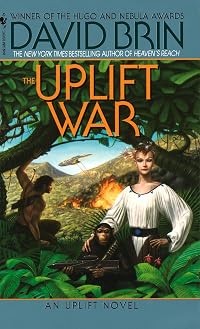
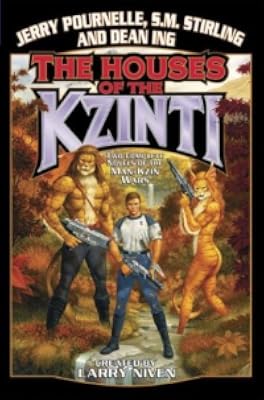
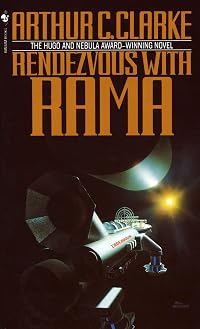
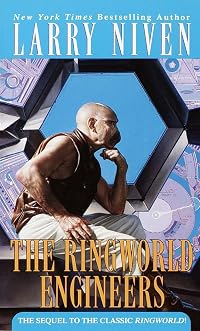



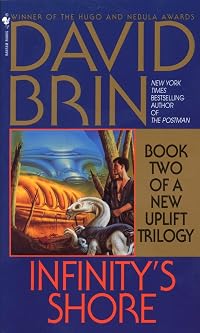
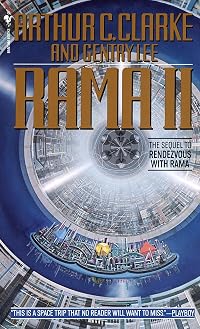













Member Recommendations
anonymous user The original work to which The gripping Hand is a sequel.
20

J.R.Pournelle Authorized sequel, by Jerry Pournelle's daughter.
Member Reviews
I can't really say that I loved this book, the way I loved The Mote in God's Eye, but the second half kept me turning pages and in many ways the storytelling is quite inventive (i.e., we return to the Mote but what we find when we get there isn't at all what our first visit might have led us to expect). It also makes an effort to avoid and in one case actually undo some of the dated colonial cringeyness of the beloved first novel of Mote,
Worth reading if you enjoyed "The Mote in God's Eye," as it follows up on what happened to the principal characters from that book, though the focus is primarily on Renner & Bury. Unfortunately, some characters who one would expect to play a bigger role (Rod & Sarah for example) merit only a cameo appearance.
In a sense, the book is equal parts satisfying and frustrating - satisfying in that it eventually ties up most of the loose ends from the first book, but frustrating in that there seem to be a number of intriguing ideas and plot developments which are then forgotten about. The "Library of Alexandria" Motie faction for example, is never mentioned again after being introduced, except to refer to sending off their data. Rod & Sarah show more pack up their institute and move to New Caledonia . . . only to never be mentioned again., etc. Some can be explained as red herrings to keep the reader on their toes, but they feel more like false starts - as a red herring would surely get more development!
While it was fun to learn about the Mote system from the perspective of the asteroid civilizations, the early part of the book felt more exciting than the latter - I'd enjoy a "prequel" which follows Renner & Bury on more espionage missions against Outie entanglements.
One aspect that I particularly missed was the "motie perspective" segments, especially compared to the previous work. They really helped drive home just how alien the Moties were, and how their thought processes were very different from those of the human characters. show less
In a sense, the book is equal parts satisfying and frustrating - satisfying in that it eventually ties up most of the loose ends from the first book, but frustrating in that there seem to be a number of intriguing ideas and plot developments which are then forgotten about. The "Library of Alexandria" Motie faction for example, is never mentioned again after being introduced, except to refer to sending off their data. Rod & Sarah show more pack up their institute and move to New Caledonia . . . only to never be mentioned again., etc. Some can be explained as red herrings to keep the reader on their toes, but they feel more like false starts - as a red herring would surely get more development!
While it was fun to learn about the Mote system from the perspective of the asteroid civilizations, the early part of the book felt more exciting than the latter - I'd enjoy a "prequel" which follows Renner & Bury on more espionage missions against Outie entanglements.
One aspect that I particularly missed was the "motie perspective" segments, especially compared to the previous work. They really helped drive home just how alien the Moties were, and how their thought processes were very different from those of the human characters. show less
The popular wisdom is that this sequel, written two decades later, is quite inferior to the first book. In this case, the popular wisdom is right. This is just not as good as The Mote in God's Eye, but still I'm happy I read it, to see how the story ended.
The first part of the book takes place in the human CoDominium. I don't know how the authors got the impression that the CoDominium is as interesting as the Moties, but it is not. The Empire's politics, so old-fashioned and aristocratic, would seem to belong in the 19th century more than in the future. I know this is explained by the collapse of the first Empire and the related wars that put humanity's survival at risk, but still it's not as interesting as the Moties. The same goes for show more Bury and Renner's secret agent antics. I like what the authors do with Bury, though. When he was introduced in the first book it seemed he was going to be a one-dimensional villain, but he has turned out to be a much more complex and interesting character.
In the second part of the novel we finally get the Moties, which is what I wanted all the time. That part of the novel turns out to be a military thriller more than a first-contact chess game, but when the moties are around things are always interesting, even if most of the focus is on the action.
One could say that the solution the book offers to the Moties' little problem is a bit too easy, but let's not get into spoilers. At least we get an ending that's more conclusive than the one in the first book, even though I still would have liked to see some more. Unfortunately, the authors did not write any more sequels. There's a more recent book, however, an authorized sequel written by Pournelle's daughter. show less
The first part of the book takes place in the human CoDominium. I don't know how the authors got the impression that the CoDominium is as interesting as the Moties, but it is not. The Empire's politics, so old-fashioned and aristocratic, would seem to belong in the 19th century more than in the future. I know this is explained by the collapse of the first Empire and the related wars that put humanity's survival at risk, but still it's not as interesting as the Moties. The same goes for show more Bury and Renner's secret agent antics. I like what the authors do with Bury, though. When he was introduced in the first book it seemed he was going to be a one-dimensional villain, but he has turned out to be a much more complex and interesting character.
In the second part of the novel we finally get the Moties, which is what I wanted all the time. That part of the novel turns out to be a military thriller more than a first-contact chess game, but when the moties are around things are always interesting, even if most of the focus is on the action.
One could say that the solution the book offers to the Moties' little problem is a bit too easy, but let's not get into spoilers. At least we get an ending that's more conclusive than the one in the first book, even though I still would have liked to see some more. Unfortunately, the authors did not write any more sequels. There's a more recent book, however, an authorized sequel written by Pournelle's daughter. show less
My reactions to reading this novel in 1993. Spoilers follow.
Stylistically this novel is odd in that it is almost entirely told in dialogue. Therein lies a symptom of its problems. There are too many people with many of them involved in subplots of no interest. I’m thinking particularly of Glenda Blaine and boyfriend Frederick Townsend. I got tired of their on and off relationship. Slightly more tolerable, but ultimately just as pointless, was the brief affair between Kevin Renner and Ruth Cohen. Some characters hang around for long periods of time just to have a brief bit of importance to the plot. Perhaps Pournelle and Niven were making a point about important events being the product of many individual acts done by usually show more insignificant people (except most of those people are important military figures and/or aristocrats). I’m thinking particularly of Alysia Trujillo, a reporter who has one moment of mild plot significance and spends the rest of her too long on-stage time serving as a wise repository for explanations of various historical allusions, and Sauron descended Terry Kakumi.
But the novel did have a lot of good points even if its impact was dulled by the Moties no longer being novel. First, it featured as its main characters two of my favorite Mote in God’s Eye characters: Kevin Renner and Horace Bury (here rehabilitated from a seemingly greedy, treasonous trader to a former Arab nationalist agent now loyal to the Empire, dedicated to checking the Motie threat and who gives his life to the cause. For his part, Renner is just as much a playboy and curious smart-aleck as ever. I liked the Byzantine intrigue of the Asteroid Motie clans (the fact that Moties only have loyalty to their bloodline and not abstract ideals like race and nation is emphasized more here than in The Mote in God’s Eye) as the humans scheme and fight to put the rest of the Motie race under the control of the Medina Trading Company clan who in turn will insure sterilization of Moties going outsystem. Pournelle and Niven do a nice job showing how the economics and power of the asteroid clans shift with the orbital positions of their homes since trade routes and geopolitical relations shift as a result. I also liked the vicious Motie warbots being described as vermin by other Moties since they are completely profligate with their resources of mass. There is also a little more pessimism about the Empire in this story as aristocrats are increasingly depicted as being (unlike the Blaines) more interested in privilege and responsibilities. Pournelle realizes that’s probably a natural, inevitable consequence of this form of government. Indeed, almost every governing group seems to increase their privileges with time. I also liked Buckman’s presence though he wasn’t depicted as as much of the preoccuppied astrophysicist as in the predecessor. He and Bury still have a special friendship though I would have liked to have had more with Buckman.
This sequel does, despite its over realiance and dialogue and too many characters – usually the balance between stage time and importance is better in other Niven and Pournelle works) what a good one should do: explore under-or-unexplored areas of the original story. show less
Stylistically this novel is odd in that it is almost entirely told in dialogue. Therein lies a symptom of its problems. There are too many people with many of them involved in subplots of no interest. I’m thinking particularly of Glenda Blaine and boyfriend Frederick Townsend. I got tired of their on and off relationship. Slightly more tolerable, but ultimately just as pointless, was the brief affair between Kevin Renner and Ruth Cohen. Some characters hang around for long periods of time just to have a brief bit of importance to the plot. Perhaps Pournelle and Niven were making a point about important events being the product of many individual acts done by usually show more insignificant people (except most of those people are important military figures and/or aristocrats). I’m thinking particularly of Alysia Trujillo, a reporter who has one moment of mild plot significance and spends the rest of her too long on-stage time serving as a wise repository for explanations of various historical allusions, and Sauron descended Terry Kakumi.
But the novel did have a lot of good points even if its impact was dulled by the Moties no longer being novel. First, it featured as its main characters two of my favorite Mote in God’s Eye characters: Kevin Renner and Horace Bury (here rehabilitated from a seemingly greedy, treasonous trader to a former Arab nationalist agent now loyal to the Empire, dedicated to checking the Motie threat and who gives his life to the cause. For his part, Renner is just as much a playboy and curious smart-aleck as ever. I liked the Byzantine intrigue of the Asteroid Motie clans (the fact that Moties only have loyalty to their bloodline and not abstract ideals like race and nation is emphasized more here than in The Mote in God’s Eye) as the humans scheme and fight to put the rest of the Motie race under the control of the Medina Trading Company clan who in turn will insure sterilization of Moties going outsystem. Pournelle and Niven do a nice job showing how the economics and power of the asteroid clans shift with the orbital positions of their homes since trade routes and geopolitical relations shift as a result. I also liked the vicious Motie warbots being described as vermin by other Moties since they are completely profligate with their resources of mass. There is also a little more pessimism about the Empire in this story as aristocrats are increasingly depicted as being (unlike the Blaines) more interested in privilege and responsibilities. Pournelle realizes that’s probably a natural, inevitable consequence of this form of government. Indeed, almost every governing group seems to increase their privileges with time. I also liked Buckman’s presence though he wasn’t depicted as as much of the preoccuppied astrophysicist as in the predecessor. He and Bury still have a special friendship though I would have liked to have had more with Buckman.
This sequel does, despite its over realiance and dialogue and too many characters – usually the balance between stage time and importance is better in other Niven and Pournelle works) what a good one should do: explore under-or-unexplored areas of the original story. show less
I enjoyed this probably more than my 3 star rating would indicate. Non-planetary Moties, some returning characters from [b:The Mote in God's Eye|1903886|The Mote in God's Eye|Larry Niven|http://photo.goodreads.com/books/1237166991s/1903886.jpg|2190500] and some new, space battles and political strategy--all pluses. But the big minus for me was that most of the book seemed to be build-up and all the action was really crammed into the second half of the book.
I enjoyed the first book in this series, but after reading 60% of this second book, I'm giving up. The plot seems confusing to me, probably because I am lost in terminology and find the characters not memorable enough to keep track of them, with one exception. I kept reading to see if the problem of overpopulation of Moties gets solved, but after plodding along for more than half of a rather long book, I no longer really care. There has been very little in the book that has been interesting to me. There is a mystery, primarily, "What is going on and when will it end?"
It's always hard to follow up a great book with an equally enjoyable sequel. While I have speculated that this is because the best ideas tend to get used up in the first book, it goes without saying that so many sequels fail to live up to their predecessor. With "The Gripping Hand," Larry Niven and Jerry Pournelle present their attempt to follow up the success of "The Mote in God's Eye," and while it is an admirable effort, I believe that it falls short, if only just.
The first book in this two book series, "The Mote in God's Eye,"(and no, it has nothing to do with God, or with His eye) presented mankind's first encounter with alien sentient life. In Niven and Pournelle's universe, mankind has left earth and spread through the universe show more under the rule of an enlightened dictatorship. One day, an alien probe, of sorts, appears in one of mankind's remote systems. An expedition is quickly dispatched to the source of the probe, a distant solar system known as the Mote. When the danger to human-life in the alien civilization becomes apparent, mankind blockades the only access route out of the system, narrowly avoiding genocide, either for man or them.
"The Gripping Hand" opens up twenty-five years later. Suddenly, a new exit from the system is opening, and the Empire of Man is scrambling to prepare for what may be imminent war with the Motie civilization.
The book is enjoyable, and Niven and Pournelle do a wonderful job of presenting the Motie culture in contrast to human nature, creating space battles that span hundreds of thousands of kilometers, and developing characters that have changed over the decades between the books. They stick as close science as possible, or as much as one can without dipping into a fast and loose "Star Wars" type of universe (where the space ships make noise, fly like fighter jets under gravity and an atmosphere, and a mystical power called the Force allows just about anything...not that I'm knocking Star Wars...), which makes the books more credible and enjoyable and suspension of disbelief less difficult.
The weakness in their story telling is, for me, in the development of characters and culture. In "The Mote in God's Eye" we meet a culture that is closer in its morality to Edwardian or Victorian Great Britain than the looser morals of the twenty-first century. By the time the events of "The Gripping Hand" take place, however, just twenty-five years later (and mind that this is all over a thousand years in our future), sexual mores have digressed to the point where the marriage relationship means little. Whereas in the first book a couple would not even consider sexual contact outside of marriage, sexual pairing in the second appears at time to be almost recreational, bearing no connection to relationships.
Please do not mistake me--Niven and Pournelle keep their books PG or PG-13, and I do not recall any language, sexual descriptions, or even gratuitous violence. However, the characters act more like the Hollywood set than would be expected after a mere twenty-five years beyond the very careful and chaste Victorian modes of interaction. The reason behind this, I believe, is in large part because the first book was written nearly 20 years ago, and Niven and Pournelle are trying to make their book more palatable and readable to a far more sexually active culture (ours) than that in which they wrote. I think it does not serve the book, and in fact weakens the character development.
The second complaint I have is about the ending. While "The Gripping Hand" appropriately builds the tension and quickly ends after the resolution, the final resolution gives the impression that Niven and Pournelle just ran out of ideas and energy. And that was where they ended it.
Whatever the cause, these two complaints result in an almost five star book getting knocked down to three. It is worth reading if you want to know "the rest of the story" after "The Mote In God's Eye," but that's about it. It doesn't have the same energy, but is merely a sequel. show less
The first book in this two book series, "The Mote in God's Eye,"(and no, it has nothing to do with God, or with His eye) presented mankind's first encounter with alien sentient life. In Niven and Pournelle's universe, mankind has left earth and spread through the universe show more under the rule of an enlightened dictatorship. One day, an alien probe, of sorts, appears in one of mankind's remote systems. An expedition is quickly dispatched to the source of the probe, a distant solar system known as the Mote. When the danger to human-life in the alien civilization becomes apparent, mankind blockades the only access route out of the system, narrowly avoiding genocide, either for man or them.
"The Gripping Hand" opens up twenty-five years later. Suddenly, a new exit from the system is opening, and the Empire of Man is scrambling to prepare for what may be imminent war with the Motie civilization.
The book is enjoyable, and Niven and Pournelle do a wonderful job of presenting the Motie culture in contrast to human nature, creating space battles that span hundreds of thousands of kilometers, and developing characters that have changed over the decades between the books. They stick as close science as possible, or as much as one can without dipping into a fast and loose "Star Wars" type of universe (where the space ships make noise, fly like fighter jets under gravity and an atmosphere, and a mystical power called the Force allows just about anything...not that I'm knocking Star Wars...), which makes the books more credible and enjoyable and suspension of disbelief less difficult.
The weakness in their story telling is, for me, in the development of characters and culture. In "The Mote in God's Eye" we meet a culture that is closer in its morality to Edwardian or Victorian Great Britain than the looser morals of the twenty-first century. By the time the events of "The Gripping Hand" take place, however, just twenty-five years later (and mind that this is all over a thousand years in our future), sexual mores have digressed to the point where the marriage relationship means little. Whereas in the first book a couple would not even consider sexual contact outside of marriage, sexual pairing in the second appears at time to be almost recreational, bearing no connection to relationships.
Please do not mistake me--Niven and Pournelle keep their books PG or PG-13, and I do not recall any language, sexual descriptions, or even gratuitous violence. However, the characters act more like the Hollywood set than would be expected after a mere twenty-five years beyond the very careful and chaste Victorian modes of interaction. The reason behind this, I believe, is in large part because the first book was written nearly 20 years ago, and Niven and Pournelle are trying to make their book more palatable and readable to a far more sexually active culture (ours) than that in which they wrote. I think it does not serve the book, and in fact weakens the character development.
The second complaint I have is about the ending. While "The Gripping Hand" appropriately builds the tension and quickly ends after the resolution, the final resolution gives the impression that Niven and Pournelle just ran out of ideas and energy. And that was where they ended it.
Whatever the cause, these two complaints result in an almost five star book getting knocked down to three. It is worth reading if you want to know "the rest of the story" after "The Mote In God's Eye," but that's about it. It doesn't have the same energy, but is merely a sequel. show less
Members
- Recently Added By
Author Information

333+ Works 98,416 Members
Larry Niven received his B.A. in mathematics in 1962. His first novel, World of Ptavvs (1966), was a success and launched his career. Niven has won five Hugos and one Nebula award, testimony that his colleagues in the science fiction world respect his work. Perhaps Niven's most well-known creation is Ringworld, a distant planet that may be taken show more as a metaphor for Earth, as it was once great but has since fallen into decay. (Bowker Author Biography) show less

148+ Works 40,560 Members
Jerry Eugene Pournelle was born in Shreveport, Louisiana on August 7, 1933. During the Korean War, he served in the U. S. Army. He received a B.S. in psychology in 1955, an M.S. in psychology in 1958, and a Ph.D. in political science in 1964 from the University of Washington. He worked for Boeing and NASA where he worked on the Mercury, Gemini, show more and Apollo missions. He also advised the federal government on military matters and space exploration. He wrote science fiction and helped popularize the military science fiction genre. His first novel, Red Heroin, was published in 1969 under the pen name Wade Curtis. His other novels published under his own name included Janissaries, Starswarm, and The Mercenary. He also wrote novels with Larry Niven including Oath of Fealty, The Mote in God's Eye, Lucifer's Hammer, Inferno, Escape from Hell, and Footfall. Pournelle was widely credited as the first major author to write a published novel entirely on a computer. He wrote a witty advice columns for computer users in Byte magazine. He received the John W. Campbell Award for Best New Writer of 1973. He died of heart failure on September 8, 2017 at the age of 84. (Bowker Author Biography) show less
Some Editions
Series


Belongs to Publisher Series
Common Knowledge
- Canonical title*
- Der Ring um das Auge Gottes
- Original title
- The Gripping Hand
- Alternate titles
- The Moat around Murcheson's Eye
- Original publication date
- 1993-02
- People/Characters
- Lord Roderick Blaine; Sandra Bright Fowler; Horace Bury; Kevin Renner; Kevin Christian Blaine; Glenda Ruth Blaine
- Dedication
- For Marilyn and Roberta, those most patient of ladies...
- First words
- A severed head spun across black sky.
- Last words
- (Click to show. Warning: May contain spoilers.)"Witness my voice and signature, Horace Hussein al-Shamlan Bury, aboard the ship Sinbad somewhere in the Mote system."
- Blurbers
- Clancy, Tom; Heinlein, Robert A.; Sturgeon, Theodore
- Original language
- English
- Disambiguation notice
- Published in the US with Title "The Gripping Hand"; Published in the UK with Title "The Moat Around Murcheson's Eye"
*Some information comes from Common Knowledge in other languages. Click "Edit" for more information.
Classifications
Statistics
- Members
- 2,714
- Popularity
- 6,831
- Reviews
- 32
- Rating
- (3.54)
- Languages
- 7 — Czech, Dutch, English, German, Italian, Russian, Spanish
- Media
- Paper, Audiobook, Ebook
- ISBNs
- 21
- ASINs
- 16