Treatise on the Gods
by H. L. Mencken
On This Page
Description
"I am quite convinced that all religions, at bottom, are pretty much alike. On the surface they may seem to differ greatly, but what appears on the surface is not always religion. Go beneath it, and one finds invariably the same sense of helplessness before the cosmic mysteries, and the same pathetic attempt to resolve it by appealing to higher powers."--from Treatise on the Gods H. L. Mencken is perhaps best known for his scathing political satire. But politicians, as far as Mencken was show more concerned, had no monopoly on self-righteous chest-thumping, deceit, and thievery. He also found religion to be an adversary worthy of his attention and, in Treatise on the Gods, he offers some of his best shots, a choreographed cannonade. Mencken examines religion everywhere, from India to Peru, from the myths of Egypt to the traditional beliefs of America's Bible Belt. He compares Incas and Greeks, examines doctrines, dogmas, sacred texts, heresies, and ceremonies. He ranges far and wide, but returns at last to the subject that most provokes him: Christianity. He reviews the history of the Church and its founders. "It is Tertullian who is credited with the motto, Credo, quia absurdum est: I believe because it is incredible. Needless to say, he began life as a lawyer." Mencken is no less interested in the dissidents: "The Reformers were men of courage, but not many of them were intelligent." Against the old-time religion of fellow countrymen, Mencken posed as a figure of old-time skepticism, and he reaped the whirlwind. Controversial even before it was published in 1930, Treatise on the Gods remains what its author wished it to be: the plain, clear challenge of honest doubt. show lessTags
Recommendations











Member Reviews
A remakable and scholarly work, written perhaps in 1930 by the sage of Baltimore. He postulates development of religion from magic, by practitioners, then priests, with a vested interest in the perpetuation of Gods, very nasty minded in places. Mencken nicely reviews the origin of the New Testament, and the early days of the church. He finishes with a chapter on the state of religion in his day, soon after prohibition had been repealed, and naturally decries the hypocrisy of organized religion. He has many very funny comments on the silliness of Biblebelt preachers. His praise for modern man, liberated from religious fears by science, resonates with my beliefs, but sounds, interestingly, a bit naive and dated in the year 2000.
Mencken show more was a great sceptic, and scourge of fundamentalist religion, having reported from the Scopes’ trial itself on the excesses of the religious attack on evolution. He wrote this book in 1930, and it was controversial before publication. He begins with a theory of evolution of the first priests, individuals who railed and yelled at the elements, luckily prevailed, and were then adulated and fed by their companions. This naturally led to the desire to perpetuate this employment, and the development, according to Mencken, of the rich apparatus of multiple gods and impenetrable theology to support their racket. Mencken’s prose is the very definition of pithy, sharply observed, unsympathetic, and only gets more biting as he takes on Protestants. He has some respect for the Roman Catholic Church as virtuosi of casuistry and ritual. I read this, as I recall, with thorough enjoyment over a few hours, and long cherished the points it made. I re-read parts of it in 2009 show less
Mencken show more was a great sceptic, and scourge of fundamentalist religion, having reported from the Scopes’ trial itself on the excesses of the religious attack on evolution. He wrote this book in 1930, and it was controversial before publication. He begins with a theory of evolution of the first priests, individuals who railed and yelled at the elements, luckily prevailed, and were then adulated and fed by their companions. This naturally led to the desire to perpetuate this employment, and the development, according to Mencken, of the rich apparatus of multiple gods and impenetrable theology to support their racket. Mencken’s prose is the very definition of pithy, sharply observed, unsympathetic, and only gets more biting as he takes on Protestants. He has some respect for the Roman Catholic Church as virtuosi of casuistry and ritual. I read this, as I recall, with thorough enjoyment over a few hours, and long cherished the points it made. I re-read parts of it in 2009 show less
There was a time in my life where, wouldn’t you know it I questioned the nature of existence and the universal truths of reality. I believe that I called it 7th grade… During this time of spiritual and emotional upheaval (maybe it was some deeper yearning for spiritual understanding and perhaps a transcendence of traditional human understanding, maybe it was the hormones, who knows?) I came upon Mencken. Let me make something very clear before I review his diatribe on the nature of organized religion: I can’t stand Mencken. Every other time I’ve read him he has been an arrogant, pompous windbag. Mencken is an intellectual elitist, or in layman’s terms, a smarty-pants. He peppers in French sayings and the like simply to elevate show more his own status, and he is the master of the put-down. His style is crass (in as much as a classically educated religious historian and columnist can be crass) and I can’t stand the condescending way he addresses his audience. However, I loved the novel Treatise on the Gods. For anyone attempting to understand the human systems of religion and the way that the organized church developed, this book should be able to answer all your questions.
Mencken begins with pre-man and addresses first the rise of the priestly class, and already he uses logic and very basic reasoning to explain the occurrence of each phase of a religion. The priests and the shamans were the members of the tribe who could do nothing else in support of the tribe. They had no real talents or skills besides being highly intelligent and clever, and they used this charisma (though by no means do intelligence and charisma go together all the time) to develop sway within the village. Mencken treats the matter of religion very gently, carefully refuting divine intervention while stressing the inherent need for an organized church, especially in the times of pre-man. And he does this, interestingly enough, without lambasting faith. He does an excellent job of sparing your faith while appealing to your sense of logic and founds his arguments in a basis of fact. He reasons through the development of the church so as to have a broader understanding of its necessity, and this is what necessarily lends his novel considerable weight; it was done as a scholarly work calling for the end of organized religion as we know it, and in my view, individualized faith.
Of course, there are common stories throughout many faiths, including the flood story, and Mencken discusses the need for the priests to explain and to elaborate. If they can find an excuse for the flood story, they can hold power within in the tribe. And of course, according to Mencken, this was all in a ploy by the priestly class to usurp control from the tribal leaders. They soon took a seat of power behind the scenes, possibly wielding more influence than even the leaders. The case became that the tribe was soon controlled by the priests, and this early programming deep within our psyche, at least according to Mencken, promoted a desire for an overarching religious organization guiding us and advising us. Cynical yes, but to a realist of the early 20th century, this provided a reprieve from the growing wave of Fundamentalism.
Treatise on the Gods is not an interesting book besides simply as a rant about the dangers of organized religion, and this appeals to a very specific audience (cynical 7th grade boys and cynical senior post-boys), but it was an incredibly enlightening view on the nature of the church, and how faith had little to do with the establishment of organized churches. Of course, if you read this and agree, you could very well found a church dedicated to the Atheism of Mencken. But then, that would be hypocritical. show less
Mencken begins with pre-man and addresses first the rise of the priestly class, and already he uses logic and very basic reasoning to explain the occurrence of each phase of a religion. The priests and the shamans were the members of the tribe who could do nothing else in support of the tribe. They had no real talents or skills besides being highly intelligent and clever, and they used this charisma (though by no means do intelligence and charisma go together all the time) to develop sway within the village. Mencken treats the matter of religion very gently, carefully refuting divine intervention while stressing the inherent need for an organized church, especially in the times of pre-man. And he does this, interestingly enough, without lambasting faith. He does an excellent job of sparing your faith while appealing to your sense of logic and founds his arguments in a basis of fact. He reasons through the development of the church so as to have a broader understanding of its necessity, and this is what necessarily lends his novel considerable weight; it was done as a scholarly work calling for the end of organized religion as we know it, and in my view, individualized faith.
Of course, there are common stories throughout many faiths, including the flood story, and Mencken discusses the need for the priests to explain and to elaborate. If they can find an excuse for the flood story, they can hold power within in the tribe. And of course, according to Mencken, this was all in a ploy by the priestly class to usurp control from the tribal leaders. They soon took a seat of power behind the scenes, possibly wielding more influence than even the leaders. The case became that the tribe was soon controlled by the priests, and this early programming deep within our psyche, at least according to Mencken, promoted a desire for an overarching religious organization guiding us and advising us. Cynical yes, but to a realist of the early 20th century, this provided a reprieve from the growing wave of Fundamentalism.
Treatise on the Gods is not an interesting book besides simply as a rant about the dangers of organized religion, and this appeals to a very specific audience (cynical 7th grade boys and cynical senior post-boys), but it was an incredibly enlightening view on the nature of the church, and how faith had little to do with the establishment of organized churches. Of course, if you read this and agree, you could very well found a church dedicated to the Atheism of Mencken. But then, that would be hypocritical. show less
H. L. Mencken was a rare man indeed. He was a hard headed skeptic of the theological arts, but took an intense, scholarly interest in it, and it was a boon to the universe of thoughtful men when he decided to report back to them on what he found there. The book he wrote will stand for a long while as the best of its kind--at once dispassionate and informative, with more than a little of his trademark wit thrown about with an undisguised glee. His enthusiasm for his subject bubbles out all over the place.
The book begins with an imaginary story of how religion must have gotten started among the first primitive men. It is a story well told, and reveals what Mencken imagines is at the root of men's heart much of the time--a fear of the show more unknown, and an understandable aspiration to master that fear by some means. Then, very early on, the con men step in to utilize the fear for their own ends--power and cash. To successfully create a job for himself, he proceeds to invent embellishments unintelligible to the poor saps, and rituals that only the initiated, such as himself, can perform.
The book continues with some comparative religion, basing most of it on what the Romans sneered at, that the Greeks made dramas about, what the Jews borrowed from the Babylonians, and what the Asiatics actually first dreamed up. He finds in all of this the roots of Christianity, and especially the stuff that Christ had never thought of, which the theologians later added for the most practical of reasons.
His account of the early church and the evolution of the bibles is gratifying in its scholarship and clarity of description. He makes the ancient theological quarrels come to life, imparting an understanding that is a valuable addition to any freethinker's equipment. Occasionally, the real Mencken peeks through, enlivening and enlightening as he goes.
The best part of the book, though, is when he shows how religion is inadequate for the job, and is in a full retreat before the onslaught of science and rational methods, leaving the truly civilized man with " a way of facing the impenetrable dark that must engulf him in the end, as it engulfs the birds of the air and the protozoa in the sea ooze....not perhaps with complete serenity, but at least with dignity, calm, a gallant spirit." show less
The book begins with an imaginary story of how religion must have gotten started among the first primitive men. It is a story well told, and reveals what Mencken imagines is at the root of men's heart much of the time--a fear of the show more unknown, and an understandable aspiration to master that fear by some means. Then, very early on, the con men step in to utilize the fear for their own ends--power and cash. To successfully create a job for himself, he proceeds to invent embellishments unintelligible to the poor saps, and rituals that only the initiated, such as himself, can perform.
The book continues with some comparative religion, basing most of it on what the Romans sneered at, that the Greeks made dramas about, what the Jews borrowed from the Babylonians, and what the Asiatics actually first dreamed up. He finds in all of this the roots of Christianity, and especially the stuff that Christ had never thought of, which the theologians later added for the most practical of reasons.
His account of the early church and the evolution of the bibles is gratifying in its scholarship and clarity of description. He makes the ancient theological quarrels come to life, imparting an understanding that is a valuable addition to any freethinker's equipment. Occasionally, the real Mencken peeks through, enlivening and enlightening as he goes.
The best part of the book, though, is when he shows how religion is inadequate for the job, and is in a full retreat before the onslaught of science and rational methods, leaving the truly civilized man with " a way of facing the impenetrable dark that must engulf him in the end, as it engulfs the birds of the air and the protozoa in the sea ooze....not perhaps with complete serenity, but at least with dignity, calm, a gallant spirit." show less
!!! Buyer beware. My copy of this used book (through Amazon) is missing about 30 pages, and another 30 are duplicated. Johns Hopkins University Press, 1997 Second Edition.
I suspect every copy of that issue is the same, as I later saw a disclaimer on AbeBooks of "possible missing pages" from this book.
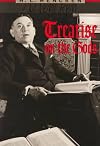
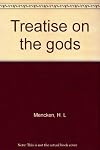
Sepia cover with Mencken open-mouth, cigar in hand, book on his lap.
This is a rock-solid 5-star book, even with the missing pages.
Though a layman to Theology, I have read a good bit, yet Treatise on the Gods is thoroughly interesting and enlightening and well- and simply written.
And you can read it entire and free at archiv.org .
I suspect every copy of that issue is the same, as I later saw a disclaimer on AbeBooks of "possible missing pages" from this book.
Sepia cover with Mencken open-mouth, cigar in hand, book on his lap.
This is a rock-solid 5-star book, even with the missing pages.
Though a layman to Theology, I have read a good bit, yet Treatise on the Gods is thoroughly interesting and enlightening and well- and simply written.
And you can read it entire and free at archiv.org .
Mencken is not at his finest here, but he does manage to make quite a good case against the Gods. Overall, it is worthy reading, just not quite his peak.
The most damning critique of religion I've ever read.
Chapter topics include the nature and origin of religion; its evolution; its varieties; its Christian form; its state today.
Members
- Recently Added By
Lists

Atheism, humanism, freethought, &c. — Best nonfiction books in favour of
167 works; 14 members
Author Information

184+ Works 7,471 Members
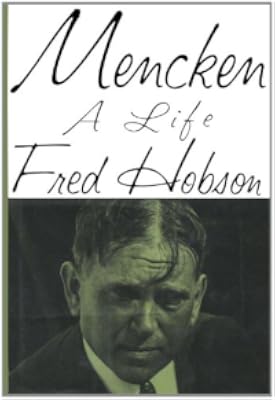
H. L. Mencken 1880-1956 H. L. (Henry Louis) Mencken was born in Baltimore, Maryland, on September 12, 1880. He considered Maryland to be his home despite his many years in New York. As a child he attended Professor Friedrich Knapp's Institute, a private school for children of German descent. He completed his secondary education at Baltimore show more Polytechnic Institute, from which he graduated at the age of 16. Mencken wanted to be a writer but was obligated to work in his father's cigar factory. When his father died suddenly in 1899, Mencken immediately sought a job at the Baltimore Herald. Through he began with no experience in journalism, he quickly learned every job at the newspaper and at age 25 became its editor. Mencken went on to build himself a reputation as one of America's most brilliant writers and literary critics. His basic approach was to question everything and to accept no limits on personal freedom. He attacked organized religion, American cultural and literary standards, and every aspect of American life that he found shallow, ignorant, or false - which was almost everything. From the 1920's until his death, Mencken's sharp wit and penetrating social commentary made him one of the most highly regarded - and fiercely hated - of American social critics. He was later memorialized in the dramatic portrait of the cynical journalist in the play and film Inherit the Wind. Shortly after World War I, Mencken began a project that was to fascinate him for the rest of his life: a study of American language and how it had evolved from British English. In 1919 he published The American Language: A Preliminary Inquiry into the Development of English in the United States. To this and his publisher's surprise, the book sold out quickly; its wit and nonscholarly approach attracted many readers who would not normally buy a book on such a subject. In 1936, a revised and enlarged edition was published, and in 1945 and 1948, supplements were added. The work shows not only how American English differs from British English but how the 300 year American experience shaped American dialect. Thus the book, still considered a classic in its field, is both a linguistic and social history of the United States. Mencken died in his sleep on January 29, 1956. He was interred in Baltimore's Loudon Park Cemetery. (Bowker Author Biography) show less
Series
Belongs to Publisher Series
Work Relationships
Common Knowledge
- Canonical title
- Treatise on the Gods
- Original publication date
- 1930
- Important places
- USA
- First words
- Preface to the revised edition
This book was first published in 1930.
The ancient and curious thing called religion, as it shows itself in the modern world, is often so overladen with excrescences and irrelevancies that its fundamental nature tends to be obscured. - Last words
- (Click to show. Warning: May contain spoilers.)As an American, I naturally spend most of my time laughing, but that time I did not laugh.
Classifications
Statistics
- Members
- 223
- Popularity
- 145,717
- Reviews
- 8
- Rating
- (4.45)
- Languages
- English, Italian
- Media
- Paper, Ebook
- ISBNs
- 3
- ASINs
- 9