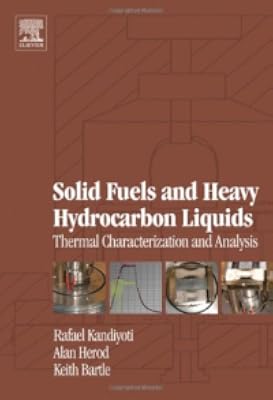
Solid Fuels and Heavy Hydrocarbon Liquids: Thermal Characterisation
by Rafael Kandiyoti
On This Page
Description
The first strand involves a critical overview of the design of experimental methods used for examining the thermal behaviour of solid fuels [pyrolysis, liquefaction and gasification], while the second will emphasise chemical structures and molecular mass distributions of coal derived tars, extracts and pitches, petroleum-derived asphaltenes, and biomass derived heavy hydrocarbon liquids. Two major, interdependent strands in the study of fossil and renewable fuel utilisation are focused on show more within this text: (i) Thermal characterisation of solid fuels including various ranks of coals, biomass and waste, and, (ii) The analytical characterisation of heavy hydrocarbon liquids, covering coal, petroleum and biomass derived heavy fractions. Two major, interdependent strands in the study of fossil and renewable fuel utilisation are focused on within this text: (i) Thermal characterisation of solid fuels including various ranks of coals, biomass and waste, and, (ii) The analytical characterisation of heavy hydrocarbon liquids, covering coal, petroleum and biomass derived heavy fractions. show lessMembers
- Recently Added By
Author Information
5 Works 29 Members
Rafael Kandiyoti is Professor of Chemical Engineering of Imperial College London.
Classifications
- Genres
- Nonfiction, Science & Nature
- DDC/MDS
- 621.042 — Applied science & technology Engineering Applied physics Designs and drawings
- LCC
- TK2896 .K36 — Technology Electrical engineering. Electronics. Nuclear engineering Electrical engineering. Electronics. Nuclear Production of electricity by direct energy
- BISAC
Statistics
- Members
- 4
- Popularity
- 3,432,892
- Languages
- English
- Media
- Paper, Ebook
- ISBNs
- 6