On This Page
Description
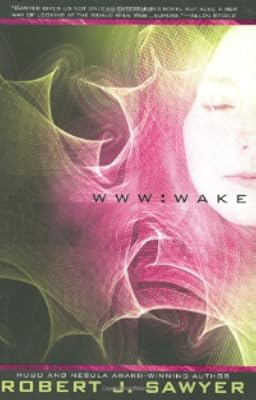
Although Caitlin Decter is blind, she can effortlessly surf the Internet by following its complex paths clearly in her mind. When she receives an implant to restore her sight, instead of seeing reality, the landscape of the World Wide Web explodes into her consciousness.Tags
Recommendations

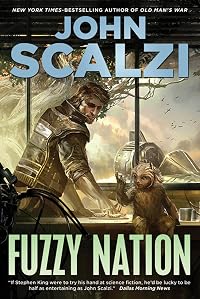
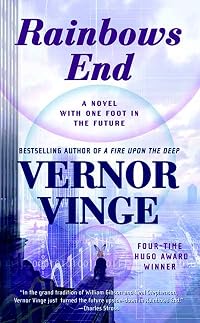



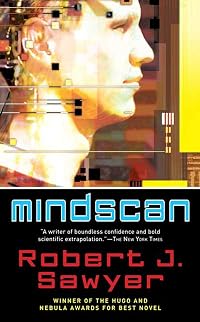
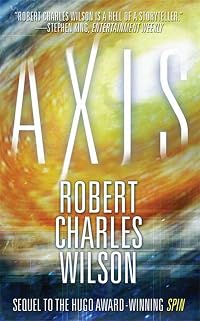

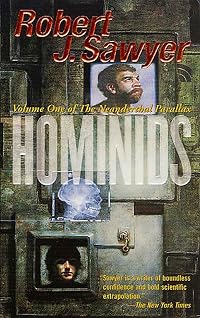
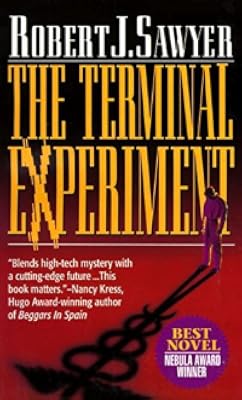






Member Recommendations

cattwing Wake, with its exploration of internet consciousness, reminded me very much of Orson Card's Ender's game series, in which he deals with the same subject and creates a similar character who I really enjoyed. This short story, "investment counselor" is where we first meet "jane," the internet being, but I would recommend reading his entire series - it was quite enjoyable.
Member Reviews
It has been a long time since I read a science fiction book with such joy as "Wake". This is science fiction as I want it to be: human, accessible, exciting, challenging, educative, serious, funny and fast-paced.
Of course, I fell in love with Calculass - the fifteen year old math genius who is given technology meant to let her see the real world for the first time. If she really had a LiveJournal blog, I would be a regular reader.
I loved the web-native view of the net, which captures what it feels like to be on-line as well as explaining the technology simply and without becoming boring.
I enjoyed the humour that peppers the book, including some of the reference that only old folks like me who've been on-line since the 80s (when there show more was no W.W.W.) will understand.
The pace of the ideas and the action and the geographic sweep of the converging sub-plots kept me turning the pages rapidly.
Wonderful, wonderful stuff. I will definitely read the rest of the trilogy and I hope someone good (preferably Canadian or British) makes the TV series that this deserves to become. show less
Of course, I fell in love with Calculass - the fifteen year old math genius who is given technology meant to let her see the real world for the first time. If she really had a LiveJournal blog, I would be a regular reader.
I loved the web-native view of the net, which captures what it feels like to be on-line as well as explaining the technology simply and without becoming boring.
I enjoyed the humour that peppers the book, including some of the reference that only old folks like me who've been on-line since the 80s (when there show more was no W.W.W.) will understand.
The pace of the ideas and the action and the geographic sweep of the converging sub-plots kept me turning the pages rapidly.
Wonderful, wonderful stuff. I will definitely read the rest of the trilogy and I hope someone good (preferably Canadian or British) makes the TV series that this deserves to become. show less
Wake contains two stories which dance alongside each other until their collision in the latter part of the novel. The first plot follows a web-savvy blind girl who becomes the recipient of an experimental implant. The second strand follows the emergence of something within the web-space itself. Whereas Caitlin's story is full of emotion, interesting characters and creative near-future ideas, the other story is cold and calculated, rooted in maths and science and feels sterile alongside a tale rooted in humanity. This creates an imbalance, although deliberate, which is distracting. Caitlin's tale could have been a standalone tale and although it may not have contained as much science fiction, it would have engaged the reader with a more show more captivating story. show less
It's been a while since a book brought me to tears. It's been a while since a book brought me to tears out of joy and optimism.
This one did. It wasn't earth-shattering, but it was absolutely joyous.
Why?
Well, the main reason is that I absolutely love stories of emergent AIs. And when Sawyer applies a lot of very well-researched speculations based on only the technology we have now, building a beautiful picture of waking up from first principles?
I have nothing but respect for this.
And yet, this is hardly the only thing this book is good at. The main story is gorgeous as well. Young Caitlin has grown up blind but thanks to some equally interesting sight-restoring techniques, she discovers she can see the World Wide Web as colorful show more geometry.
Between her own life and discoveries, some very nice parallels with the overall story-structure with a team of scientists and a half-Bonobo monkey and a quasi-revolutionary hacker on the other side of China's Firewall, we've got a huge, beautiful setup and the first very careful steps of a new consciousness.
I can't stress how well this was accomplished. This isn't a fly-by-night story with the same elements but with a tenth the research, care, or intelligence. This is a direct commentary on our current science and it actually gave me a sense of real wonder. Awe.
It also helps that it accurately describes just about all its foundations in not just a clear way, but in an ACCURATE way. :)
But what did I love most?
Okay. I'm weird. I loved the Shannon Entropy Function. I want someone to run a plot on me, please. :)
Let me sum up something:
This book ought to be well-known. It ought to be discussed and enjoyed and in the common zeitgeist of modern SF. It isn't a throwaway title meant to pass an afternoon away. It's a complex and stand-up commentary on what we could all BE, in all the best ways that SF can function.
Of course, if I might get to the point sooner, I should refer back to my first statement. The book made me cry from joy. It OUGHT to be enough to encourage anyone to read it. :) show less
This one did. It wasn't earth-shattering, but it was absolutely joyous.
Why?
Well, the main reason is that I absolutely love stories of emergent AIs. And when Sawyer applies a lot of very well-researched speculations based on only the technology we have now, building a beautiful picture of waking up from first principles?
I have nothing but respect for this.
And yet, this is hardly the only thing this book is good at. The main story is gorgeous as well. Young Caitlin has grown up blind but thanks to some equally interesting sight-restoring techniques, she discovers she can see the World Wide Web as colorful show more geometry.
Between her own life and discoveries, some very nice parallels with the overall story-structure with a team of scientists and a half-Bonobo monkey and a quasi-revolutionary hacker on the other side of China's Firewall, we've got a huge, beautiful setup and the first very careful steps of a new consciousness.
I can't stress how well this was accomplished. This isn't a fly-by-night story with the same elements but with a tenth the research, care, or intelligence. This is a direct commentary on our current science and it actually gave me a sense of real wonder. Awe.
It also helps that it accurately describes just about all its foundations in not just a clear way, but in an ACCURATE way. :)
But what did I love most?
Okay. I'm weird. I loved the Shannon Entropy Function. I want someone to run a plot on me, please. :)
Let me sum up something:
This book ought to be well-known. It ought to be discussed and enjoyed and in the common zeitgeist of modern SF. It isn't a throwaway title meant to pass an afternoon away. It's a complex and stand-up commentary on what we could all BE, in all the best ways that SF can function.
Of course, if I might get to the point sooner, I should refer back to my first statement. The book made me cry from joy. It OUGHT to be enough to encourage anyone to read it. :) show less
WWW: Wake is a coming of age YA novel by one of my very favorite scifi authors, Robert Sawyer.
Caitlin Decter, a precocious and witty fifteen-year-old, has been blind since birth because of scrambled coding in her visual-processing system. When a Japanese scientist offers to test an experimental “eyepod” on her that will remap the signals from her eye to her brain, she jumps at the chance.
Dr. Kuroda misses an important coding sequence on the first try, and what Caitlin sees is not the structure of the world, but that of the world wide web, which her brain has adapted to use since she was small. He figures out how to change the code, and Caitlin is able to see "real life" for the first time. She can still toggle the eyepad back and show more forth, however, to see just the web. And what she discovers there is a primitive-seeming intelligence that is trying to communicate with her. Inspired by Helen Keller’s autobiography, The Story of My Life, Caitlin makes it her mission to reach out to this "other," and bring it to whatever self-actualization it can accomplish.
Discussion: I loved the use of Caitlin’s blindness to “see” through the preoccupations of the sighted world. In this passage, Caitlin and her friend Bashira are discussing a boy who has shown an interest in Caitlin, after he walks away from their cafeteria table:
"…Bashira said, ‘He’s hot.’
‘He’s an asshole,’ Caitlin replied.
‘Yeah,’ agreed Bashira, ‘but he’s a hunky asshole.’
Caitlin shook her head. How seeing more could make people see less was beyond her.”
And Sawyer has a bit of fun with the status of the scifi genre, in this passage from Caitlin’s LiveJournal (entries for which are interspersed throughout the text):
"Back in the summer, the school gave me a list of all the books we’re doing this year in English class. I got them then either as ebooks or as Talking Books from the CNIB [Canadian National Institute for the Blind], and have now read them all. Coming attractions include The Handmaid’s Tale by Margaret Atwood .... In fact, I’ve already had an argument with Mrs. Zed, my English teacher, about that one, because I called it science fiction. She refused to believe it was, finally exclaiming ‘It can’t be science fiction, young lady –if it were, we wouldn’t be studying it!’”
Caitlin’s other journal entries seem delightfully apt for a fifteen-year-old, with just the right blend of humor and bravado. And I loved experiencing the sensations with her when she gets to see for the first time: her mom! her room! her own face! (and, OMG, she has acne!)
I loved all the discussions among the characters about the nature of consciousness, a subject that has always interested me. As part of Caitlin’s research into contacting the other, she reads [the real book] The Origin of Consciousness in the Breakdown of the Bicameral Mind by Julian Jaynes, and quotes extensively from it. (This 1976 book argued that the sense of self emerged only as recently as 3000 years ago, when the left and right sides of the brain became integrated into a single consciousness.) Dr. Kuroda also explains to Caitlin other ways to measure consciousness that have been used to test animal intelligence. These fascinating discussions do not seem didactic at all, but rather are integrated into Caitlin’s quest to contact “the other.”
Evaluation: This is the first book of a trilogy, but unlike other book continuations, it seems perfectly complete the way it is. However, I enjoyed it as both a YA book and a scifi book, and will definitely be reading the next two in the series.
Note: This book won the 2010 Prix Aurora Award (given out annually for the best Canadian science fiction and fantasy literary works) for best novel in English, and is a nominee for the 2010 Hugo Award (the analogous award in the U.S.). show less
Caitlin Decter, a precocious and witty fifteen-year-old, has been blind since birth because of scrambled coding in her visual-processing system. When a Japanese scientist offers to test an experimental “eyepod” on her that will remap the signals from her eye to her brain, she jumps at the chance.
Dr. Kuroda misses an important coding sequence on the first try, and what Caitlin sees is not the structure of the world, but that of the world wide web, which her brain has adapted to use since she was small. He figures out how to change the code, and Caitlin is able to see "real life" for the first time. She can still toggle the eyepad back and show more forth, however, to see just the web. And what she discovers there is a primitive-seeming intelligence that is trying to communicate with her. Inspired by Helen Keller’s autobiography, The Story of My Life, Caitlin makes it her mission to reach out to this "other," and bring it to whatever self-actualization it can accomplish.
Discussion: I loved the use of Caitlin’s blindness to “see” through the preoccupations of the sighted world. In this passage, Caitlin and her friend Bashira are discussing a boy who has shown an interest in Caitlin, after he walks away from their cafeteria table:
"…Bashira said, ‘He’s hot.’
‘He’s an asshole,’ Caitlin replied.
‘Yeah,’ agreed Bashira, ‘but he’s a hunky asshole.’
Caitlin shook her head. How seeing more could make people see less was beyond her.”
And Sawyer has a bit of fun with the status of the scifi genre, in this passage from Caitlin’s LiveJournal (entries for which are interspersed throughout the text):
"Back in the summer, the school gave me a list of all the books we’re doing this year in English class. I got them then either as ebooks or as Talking Books from the CNIB [Canadian National Institute for the Blind], and have now read them all. Coming attractions include The Handmaid’s Tale by Margaret Atwood .... In fact, I’ve already had an argument with Mrs. Zed, my English teacher, about that one, because I called it science fiction. She refused to believe it was, finally exclaiming ‘It can’t be science fiction, young lady –if it were, we wouldn’t be studying it!’”
Caitlin’s other journal entries seem delightfully apt for a fifteen-year-old, with just the right blend of humor and bravado. And I loved experiencing the sensations with her when she gets to see for the first time: her mom! her room! her own face! (and, OMG, she has acne!)
I loved all the discussions among the characters about the nature of consciousness, a subject that has always interested me. As part of Caitlin’s research into contacting the other, she reads [the real book] The Origin of Consciousness in the Breakdown of the Bicameral Mind by Julian Jaynes, and quotes extensively from it. (This 1976 book argued that the sense of self emerged only as recently as 3000 years ago, when the left and right sides of the brain became integrated into a single consciousness.) Dr. Kuroda also explains to Caitlin other ways to measure consciousness that have been used to test animal intelligence. These fascinating discussions do not seem didactic at all, but rather are integrated into Caitlin’s quest to contact “the other.”
Evaluation: This is the first book of a trilogy, but unlike other book continuations, it seems perfectly complete the way it is. However, I enjoyed it as both a YA book and a scifi book, and will definitely be reading the next two in the series.
Note: This book won the 2010 Prix Aurora Award (given out annually for the best Canadian science fiction and fantasy literary works) for best novel in English, and is a nominee for the 2010 Hugo Award (the analogous award in the U.S.). show less
How have I missed reading Sawyer all these years? The man has won so many awards for his writing, and based on my first reading I can see why. Although not all the multiple storylines are left in a satisfactory state (in my opinion) in this first volume of the trilogy, they are all nonetheless peopled with well-fleshed characters. The pacing is good, the details (both technical and cultural) are plentiful. Best of all, Sawyer uses the story to examine questions on the nature of intelligence/consciousness: human, primate, and computer. This is one of the best examinations of the emergence of artificial intelligence I have read. I look very much forward to reading the next 2 volumes.
[UPDATE: Still enjoyable the second time around. And the show more multi-reader audiobook is excellent.] show less
[UPDATE: Still enjoyable the second time around. And the show more multi-reader audiobook is excellent.] show less
I must admit up front that I'm not a science fiction reader and only read this for a book club discussion, I did enjoy the story, and found many of the ideas of intelligence and the awakening of different kinds or levels of awareness very interesting! On the down side, this is the first book of a trilogy and the author used it partly to set up the other books (I assume). There were two subplots, one of which ended abruptly and the other not integrated into the main story. On the other hand, the main story did come to a satisfactory ending in itself, even though there is obviously room for the story to expand in the rest of the series.
This sounded like an incredibly interesting read. I have always been fascinated by the idea of information structures becoming sentient. This was a great book that delves into deep topics of consciousness and humanity while still providing a very approachable and engaging story. I listened to this on audio book and it was one of the best audio books I've listened to yet; they provided different readers for different parts of the book and did an excellent job with the whole thing.
This story has a lot of threads to it, but the main one follows Caitlin a fifteen year old mathematical genius who is blind. Caitlin is contacted by a Japanese scientist who thinks he can help her to see; in the beginning she does start to see but what she sees show more is not what she expects to see. Entwined with her story is the story of the World Wide Web; the Web is gaining some sense of self and is beginning to recognize itself as an entity. Additional side stories are the story of an orangutan hybrid who can paint, a Chinese dissident who blogs about the injustice of the Chinese government, and an outbreak of a very contagious strain of bird flu.
This is a fascinating book. Sawyer deals with the "curing" of Caitlin's blindness and the awareness of the Web in ways that are realistic and believable. I was absolutely intrigued by how the Web gained a sense of self and started to draw conclusions about the world around it. I was impressed with how methodically this was laid out and at how much sense it made.
The overlying theme throughout this book is that of the emergence of consciousness. This theme runs through Caitlin gaining the ability to see, the Web realizing that it is part of a bigger world, and the monkey realizing he can form images with paint. The Origins of Consciousness is a book that is frequently referenced as are Helen Keller's books.
I don't want to make this sound like a text book though...it really isn't. It is a very engaging story. The characterization is extremely well done and the plot is very engaging and propels the reader through the book. It was a very hard book to put down. Caitlin is an intelligent young woman who is easy to relate too. She has to go to school and has problems with boys; but her main drive is to understand things. I think she is a person a lot of young women, and people in general, can relate to. I loved that such a great character is bringing us into all these deeper topics. Many of the side characters were also intriguing and well-done.
I really loved this book. You don't get a ton of closure at the end of it. So it is definitely a "to be continued" type of thing. Although it didn't end in an annoying cliffhanger either. I am planning on starting the next book WWW: Watch soon. There really isn't anything I would change about this book.
I highly recommend this book to anyone with even a hint of curiosity. It does an excellent job of using interesting characters and a great plot to bring up complex issues, such as the origin of consciousness, the emergence of artificial intelligence, and the way data is processed by the human brain. show less
This story has a lot of threads to it, but the main one follows Caitlin a fifteen year old mathematical genius who is blind. Caitlin is contacted by a Japanese scientist who thinks he can help her to see; in the beginning she does start to see but what she sees show more is not what she expects to see. Entwined with her story is the story of the World Wide Web; the Web is gaining some sense of self and is beginning to recognize itself as an entity. Additional side stories are the story of an orangutan hybrid who can paint, a Chinese dissident who blogs about the injustice of the Chinese government, and an outbreak of a very contagious strain of bird flu.
This is a fascinating book. Sawyer deals with the "curing" of Caitlin's blindness and the awareness of the Web in ways that are realistic and believable. I was absolutely intrigued by how the Web gained a sense of self and started to draw conclusions about the world around it. I was impressed with how methodically this was laid out and at how much sense it made.
The overlying theme throughout this book is that of the emergence of consciousness. This theme runs through Caitlin gaining the ability to see, the Web realizing that it is part of a bigger world, and the monkey realizing he can form images with paint. The Origins of Consciousness is a book that is frequently referenced as are Helen Keller's books.
I don't want to make this sound like a text book though...it really isn't. It is a very engaging story. The characterization is extremely well done and the plot is very engaging and propels the reader through the book. It was a very hard book to put down. Caitlin is an intelligent young woman who is easy to relate too. She has to go to school and has problems with boys; but her main drive is to understand things. I think she is a person a lot of young women, and people in general, can relate to. I loved that such a great character is bringing us into all these deeper topics. Many of the side characters were also intriguing and well-done.
I really loved this book. You don't get a ton of closure at the end of it. So it is definitely a "to be continued" type of thing. Although it didn't end in an annoying cliffhanger either. I am planning on starting the next book WWW: Watch soon. There really isn't anything I would change about this book.
I highly recommend this book to anyone with even a hint of curiosity. It does an excellent job of using interesting characters and a great plot to bring up complex issues, such as the origin of consciousness, the emergence of artificial intelligence, and the way data is processed by the human brain. show less
Members
- Recently Added By
Lists

Best Science Fiction Novels
816 works; 430 members

Top Five Books of 2013
1,562 works; 715 members

Female Protagonist
1,056 works; 57 members

Books Read in 2016
4,666 works; 199 members
Author Information

107+ Works 20,026 Members
Robert J. Sawyer was born in Ottawa on April 29, 1960, but raised in Toronto. In 1980, while still in high school, Sawyer submitted a short story to the the Rochester Museum and Science Center, which was running a contest for light show ideas. Sawyer didn't win, but the Museum purchased his story Motive anyway and it ran for 192 performances. show more Sawyer went on to attend Toronto's Ryerson Polytechnical Institute, majoring in Radio and Television Arts. In September 1979, he had his first piece of fiction published at the end of his first year, in Ryerson's literary annual, White Wall Review. Sawyer graduated from Ryerson in 1982. Sawyer was hired back the following semester to teach television studio production techniques to second- and third-year students. In the four months interim, he worked for minimum wage at the local SF bookstore, spending all his earnings on books. From 1984 to 1992, while teaching, Sawyer also coordinated a social group of Toronto-area science-fiction writers founded by SF editor Judith Merril. He established a Canadian region of the Science Fiction and Fantasy Writers of America; and in 1998, served as that organization's president. Sawyer also retained freelance nonfiction writing contracts, writing articles for newspapers and magazines, press releases and brochures for corporations, newsletters for government departments. He churned out vast amounts of promotional materials and over 200 articles for computing and personal-finance magazines in a span of five years. But in that time, his only really significant publication was the novelette Golden Fleece, which appeared as the cover story in the September 1988 edition of Amazing Stories. The novel-length Golden Fleece was sold to Warner Books a year later in 1989. The sales of his first five books were uninspiring and Sawyer faced being dropped by his publisher. Sawyer decided to take the time to write a book, without a contract, take as long as necessary, and produce a blockbuster. He also wanted to tackle a controversial issue and deal with it head on. With that in mind, Sawyer wrote The Terminal Experiment, about abortion and the soul. His publisher rejected it on grounds of controversy. HarperPrism then bought the book and serialization rights were sold to Analog, the number-one best-selling English-language SF magazine. The Terminal Experiment went on to win the Science Fiction and Fantasy Writers of America's Nebula Award for Best Novel of 1995. His novel Frameshift was his first book published in hardcover, and was nominated for the Hugo Award, and won Japan's Seiun Award for best foreign novel of the year. (Bowker Author Biography) show less
Some Editions
Awards and Honors
Series

Work Relationships
Is contained in
Contains
Common Knowledge
- Original title
- Wake (first magazine publication) (first magazine publication)
- Alternate titles
- Wake; WWW:Wake (First US Book Publication) (First US Book Publication)
- Original publication date
- 2009-04-07
- People/Characters
- Caitlin Doreen Decter; Barbara Decter; Dr. Decter (Caitlin's father); Bashira; Masayuki Kuroda; Trevor Nordmann (show all 18); Quan Li; President of China (generic); Minister Zhang; Wong Wai-Jeng (Sinanthropus); Shoshana Glick; Hobo (chimpanzee); Harl Marcuse; Dillon Fontana; Virgil (orangutan); Anna Bloom; Webmind (artificial intelligence); Helen Keller
- Important places
- Waterloo, Ontario, Canada; Shanxi Province, China; Beijing, China; Tokyo, Japan; California, USA; Haifa, Israel
- Epigraph
- What a blind person needs
is not a teacher
but another self.
—Helen Keller - Dedication
- For
Pat Forde
Great Writer
Great Friend - First words
- Not Darkness, for that implies an understanding of light.
- Quotations
- "Please", she thought. "Let there be light."
She pressed the key.
And there was light.
Before had been better.
And then, and then, and then —
It was —
The gold mine.
The mother lode.
—and he firmly shook Kuroda's hand.
Hey, how do you find Canadian in a crowded room? Start stepping on people's feet and wait for someone to apologize to you. - Last words
- (Click to show. Warning: May contain spoilers.)And then Webmind added one final word, which she heard and saw and felt: "Together."
- Blurbers
- Wilson, Robert Charles; Scalzi, John; McDevitt, Jack; Steele, Allen
Classifications
Statistics
- Members
- 1,232
- Popularity
- 20,016
- Reviews
- 80
- Rating
- (3.67)
- Languages
- 6 — English, French, Hungarian, Korean, Polish, Turkish
- Media
- Paper, Audiobook, Ebook
- ISBNs
- 24
- ASINs
- 11