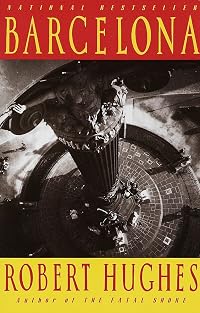
Barcelona
by Robert Hughes
On This Page
Description
A monumentally informed and irresistibly opinionated guide to the most un-Spanish city in Spain, from the bestselling author of The Fatal Shore. In these pages, Robert Hughes scrolls through Barcelona's often violent history; tells the stories of its kings, poets, magnates, and revolutionaries; and ushers readers through municipal landmarks that range from Antoni Gaudi's sublimely surreal cathedral to a postmodern restaurant with a glass-walled urinal. The result is a work filled with the show more attributes of Barcelona itself: proportion, humor, and seny--the Catalan word for triumphant common sense. show lessTags
Recommendations










Member Reviews
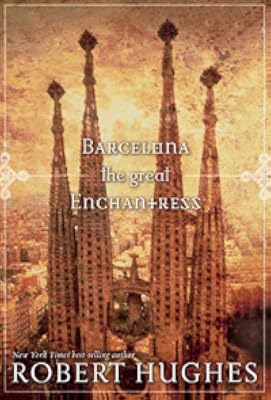
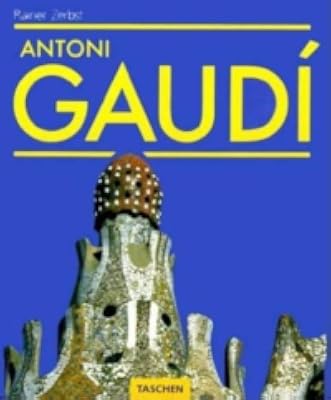
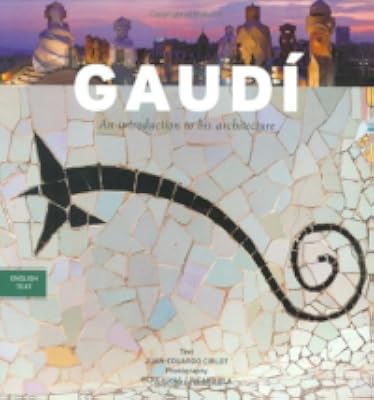
My first thought about Barcelona always goes to the eponymous ying and yang duet of Freddy Mercury and Montserrat Caballé for the 1992 Summer Olympic Games. My second thought goes to the crazy architectural genius of the city, Antoni Gaudì. Robert Hughes' genial history of Barcelona similarly builds up to Gaudì, leaving the messy story of the 20th century and the city's recovery to other authors. After a prologue about the modern city of Barcelona, Hughes smartly divides his history into two parts. Part one gives an account of the "Old City" from insignificant Roman times to its medieval heyday as the center of a medieval empire followed by decay. The second part about the "New City" deals with the 19th century, presenting the birth show more of Catalan nationalism, the 1888 Universal Exposition (which revealed Barcelona to a world-wide audience) and finally a concluding chapter about Gaudì.
Much of Barcelona was built by the desire to control and to show off by both the rulers and the bourgeoisie. Catalan nationalism thus acquired its provincial, conservative flavor, a bourgeois reminiscence to a fake agricultural past. It is no wonder that art deco came to prominence in the spent decaying capitals of the long 19th century: Vienna, Prague, Brussels and Paris, as well as Barcelona. Financed by fat cats and their trophy wives, it anachronistically celebrated a time gone-by. Gaudì the ascetic religious nut celebrated an ascetic conservative religion that had died with the advent of the rights of man. The works of Gaudì (/as well as Gustav Klimt) are a crescendo of the dying old, killed by the First World War. Barcelona, the city thus preserves three eras of its prosperity: Medieval Barcelona, art deco Barcelona and 1992 Barcelona. Hughes offers a wonderful and highly readable account to the first two periods. show less
Much of Barcelona was built by the desire to control and to show off by both the rulers and the bourgeoisie. Catalan nationalism thus acquired its provincial, conservative flavor, a bourgeois reminiscence to a fake agricultural past. It is no wonder that art deco came to prominence in the spent decaying capitals of the long 19th century: Vienna, Prague, Brussels and Paris, as well as Barcelona. Financed by fat cats and their trophy wives, it anachronistically celebrated a time gone-by. Gaudì the ascetic religious nut celebrated an ascetic conservative religion that had died with the advent of the rights of man. The works of Gaudì (/as well as Gustav Klimt) are a crescendo of the dying old, killed by the First World War. Barcelona, the city thus preserves three eras of its prosperity: Medieval Barcelona, art deco Barcelona and 1992 Barcelona. Hughes offers a wonderful and highly readable account to the first two periods. show less
In brief, I began the book some time ago, got about to the halfway point. After a long hiatus, finished the second half. Great skill in architectural description and communicating the author's enthusiasm; had me wishing for more pictures of the buildings and details. My favorite: the description of Domenech i Montaner's Hospital de Sant Pau in chapter 7. As an aside, Hughes wonders about the affinity of Japanese tourists for the works of Gaudi. Is there an affinity of his surrealistic designs and manga, perhaps? I got a little bogged down in the number of names to keep track of, and there were a lot of architectural and building construction terms that I was unfamiliar with. The first half covers history, culture, and the plan of the show more city. Hats off to the author for mastering the secondary literature available only in Catalan, given his many other interests (Australian history, American art and culture). From the many quotations and references it sounds like it would be worth learning Catalan just to be able to read the gossipy chronicles of Josep Pla. I now want to go back and re-read the first half. This is a recommendation from the perspective of a novice in both the history of the region and architecture in general; I'm not in the habit of assigning 4 or 5 stars; a 3 is "good enough to re-read." show less
A whale of a book, but a very satisfying companion to Catalonian history in general and Barcelona’s story in particular with exquisite chapters on Modernism and Gaudi. Highly recommended if you have a need to be informed. One has to start early, though. I was only halfway through (541 pages in my edition) when I visited Barcelona, and I wish I had read it in its entirety before I got there. I wouldn’t have missed a couple of more obscure modernista places then, and I would have known more about, frankly, everything there. A big book, but well worth it. Fantastically researched and very well written.
Robert Hughes writes beautifully and I was enchanted with his book "the Shock of the New. And here, with "Barcelona" he's done a great job. I worked for four years in Spain and made a number of trips to Barcelona. Loved the place and managed to see a fair bit of it. Though, as a tourist, one never really gets to know a city. Hughes's book is mainly historical but some delightful sections about Picasso and Gaudi. I really liked the book and I'm sad to see kit going to a charity. But I have to downsize my library and this is one of the victims. The reality is that I will never be able to sit down and re-read it ....pity. I give it five stars.
This is a wonderful book, which tells Barcelona's story through the last two thousand years - though its main focus is the last thousand. Hughes' area of expertise is art and architecture, but in order to tell the story of Barcelona's cultural past and present, he has painted a vivid picture of the city's political and social past. Highly readable, this is a book so densely packed with information that it definitely merits a second, perhaps a third reading as an introduction to the history of this fascinating city.
A wonderful read by such an expressive knowledgable writer on art and architecture. This book sets a high standard in its field and must rate as a most informative guide to any city on Earth. Full marks to Robert Hughes, a titan in Twentieth Century art criticism.
This is one of the best travel books I have ever read. Though, to be honest, this book is too massive to travel with. However, it is dense with history and wonderful artstic and biographical facts, illuminating sidelights on restaurants, roads, buildings, events, etc. It truly is a biography of a city. You will feel as if you intimately know the city afetr reading this text. An amazing accomplishment.
Members
- Recently Added By
Published Reviews
ThingScore 100
Het hele boek door blijft Hughes het best in zijn element — gepassioneerd, erudiet, wendbaar — als hij over bouwkunst mag schrijven. Voorzien van een register is Barcelona ideaal als architectuurgids voor de hedendaagse citytripper.
added by bewogenlucht
Author Information

53+ Works 11,271 Members
Robert Hughes was born in Sydney, Australia on July 28, 1938. He studied art and architecture at the University of Sydney. He pursued art criticism mostly as a sideline while painting, writing poetry and serving as a cartoonist for the weekly intellectual journal The Observer. He left Australia and spent time in Italy before settling in London, show more where he became a well-known critical voice and wrote for several newspapers. He was chief art critic for Time magazine for over 30 years. He wrote several books including The Fatal Shore, American Visions: The Epic History of Art in America, Culture of Complaint: The Fraying of America, Things I Didn't Know, and Rome. He also hosted an eight-part documentary about the development of modernism from the Impressionists through Warhol entitled The Shock of the New. It was seen by more than 25 million viewers when it ran first on BBC and then on PBS. He also wrote a book by the same name about the series. He died after a long illness on August 6, 2012 at the age of 74. (Bowker Author Biography) show less
Awards and Honors
Distinctions
Series
Belongs to Publisher Series
Harvill (140)
Work Relationships
Is abridged in
Common Knowledge
- Original title
- Barcelona
- Original publication date
- 1991
- People/Characters
- Antoni Plàcid Guillem Gaudí i Cornet (Antoni Gaudi)
- Important places
- Barcelona, Catalonia, Spain
Classifications
- Genres
- Nonfiction, Travel, Art & Design, History, General Nonfiction
- DDC/MDS
- 946.72 — History & geography History of Europe Spain & Portugal Catalonia; Balearic isles; Valencia; Murcia; Andorra Barcelona
- LCC
- DP402 .B265 .H85 — History of Europe, Asia, Africa and Oceania Spain – Portugal History of Spain Local history and description Other cities, towns, etc., A-Z
- BISAC
Statistics
- Members
- 849
- Popularity
- 32,147
- Reviews
- 14
- Rating
- (3.77)
- Languages
- 10 — Dutch, English, French, German, Italian, Polish, Portuguese, Russian, Spanish, Swedish
- Media
- Paper, Audiobook, Ebook
- ISBNs
- 24
- ASINs
- 4