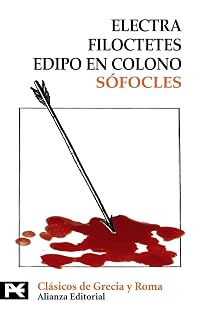
Electra; Oedipus at Colonus; Philoctetes
by Sophocles
On This Page
Description
Sophocles created these three tragedies in his 80s, when Athenian democracy was heading towards final defeat in the Peloponnesian War. The volume also includes his unfinished satyr-drama Trackers. This study edition contains both the texts and notes upon them.Tags
Recommendations














Member Reviews
Done with Aeschylus, on to Sophocles! This book contains three of his seven surviving plays along with a partial Satyr-drama and some assorted tantalising fragments. As an added bonus, the editors/translators had actually gone through the process of workshopping and staging the plays themselves, providing some insight into the practicalities of the production and what the authentic experience may have been like.
Elektra is broadly the same story as told in Aeshylus's Libation Bearers and one of the advantages to reading these works chronologically is that the various interpretations can begin to feel like a conversation. Where Aeshylus's Orestian trilogy focuses on extremes coming together in eventual reconciliation, Sophocles' version show more seems to focus more on achieving vengeance and doing "right" regardless of what it might cost you personally. It may once, however, have been part of a trilogy, and any nuance the lost parts of it may have provided are lost along with the plays themselves.
Philoktetes was my favourite of the three. Its easy to empathise with the abandoned and disabled warrior, and Neoptolemus's struggle to reconcile personal ethics with what is socially demanded of him is still relatable today. Odysseus is portrayed more like a villain than a trickster hero here, and the line that stood out to me was his declaration, "I am the whatever man the circumstances demand of me". Again, the conclusion celebrates remaining true to one's own morals despite the cost.
Oedipus at Colonos was the final entry, and presents the famous friend of Freud as an old man, close to death. This was new to me, as my knowledge of this story was pretty much limited to the "killing his father, marrying his mother" elements. Here, he is hard done by, plaything of fate and the gods, who never intended for any of that to happen. There's an amusing scene which feels almost modern, in which one of the elders of Colonos finds a moment to broach the sensitive subject with Oedipus. I doubt it was meant to be played for laughs, but I found it bleakly amusing with its "so you're the guy who...", "I don't want to talk about it!", "But with your mum?", "Ah, stop it!", "And so the daughter with you...?", "Yes, also my sister! Can we stop now?"
The other fragments are interesting, but not really enough to provide more than a fleeting glimpse into what has been lost. All we can do is hope that one day we'll find more pieces to the puzzle. show less
Elektra is broadly the same story as told in Aeshylus's Libation Bearers and one of the advantages to reading these works chronologically is that the various interpretations can begin to feel like a conversation. Where Aeshylus's Orestian trilogy focuses on extremes coming together in eventual reconciliation, Sophocles' version show more seems to focus more on achieving vengeance and doing "right" regardless of what it might cost you personally. It may once, however, have been part of a trilogy, and any nuance the lost parts of it may have provided are lost along with the plays themselves.
Philoktetes was my favourite of the three. Its easy to empathise with the abandoned and disabled warrior, and Neoptolemus's struggle to reconcile personal ethics with what is socially demanded of him is still relatable today. Odysseus is portrayed more like a villain than a trickster hero here, and the line that stood out to me was his declaration, "I am the whatever man the circumstances demand of me". Again, the conclusion celebrates remaining true to one's own morals despite the cost.
Oedipus at Colonos was the final entry, and presents the famous friend of Freud as an old man, close to death. This was new to me, as my knowledge of this story was pretty much limited to the "killing his father, marrying his mother" elements. Here, he is hard done by, plaything of fate and the gods, who never intended for any of that to happen. There's an amusing scene which feels almost modern, in which one of the elders of Colonos finds a moment to broach the sensitive subject with Oedipus. I doubt it was meant to be played for laughs, but I found it bleakly amusing with its "so you're the guy who...", "I don't want to talk about it!", "But with your mum?", "Ah, stop it!", "And so the daughter with you...?", "Yes, also my sister! Can we stop now?"
The other fragments are interesting, but not really enough to provide more than a fleeting glimpse into what has been lost. All we can do is hope that one day we'll find more pieces to the puzzle. show less
Ratings
Members
- Recently Added By
Author Information

828+ Works 46,134 Members
Sophocles was born around 496 B.C. in Colonus (near Athens), Greece. In 480, he was selected to lead the paean (choral chant to a god) celebrating the decisive Greek sea victory over the Persians at the Battle of Salamis. He served as a treasurer and general for Athens when it was expanding its empire and influence. He wrote approximately 123 show more plays including Ajax, Antigone, Oedipus Tyrannus, Trachiniae, Electra, Philoctetes, and Oedipus at Colonus. His last recorded act was to lead a chorus in public mourning for Euripides. He died in 406 B. C. (Bowker Author Biography) show less
Common Knowledge
- Canonical title
- Electra; Oedipus at Colonus; Philoctetes
Classifications
- Genres
- Fiction and Literature, Literature Studies and Criticism
- DDC/MDS
- 808 — Literature & rhetoric Literature, rhetoric & criticism Rhetoric and collections of literary texts from more than two literatures
- LCC
- PA4415 .S7 .E5 — Language and Literature Greek language and literature. Latin language and literature Greek literature Individual authors Sophocles
- BISAC
Statistics
- Members
- 20
- Popularity
- 1,284,960
- Reviews
- 1
- Rating
- (3.50)
- Languages
- English, Spanish
- Media
- Paper
- ISBNs
- 2
- ASINs
- 1