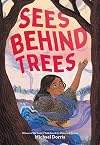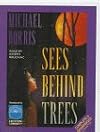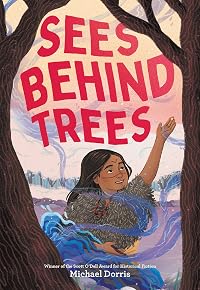
Sees Behind Trees
by Michael Dorris
On This Page
Description
A Native American boy with a special gift to "see" beyond his poor eyesight journeys with an old warrior to a land of mystery and beauty.Tags
Recommendations





Member Recommendations

Member Reviews
I love this book, and I'd give it my highest recommendation to parents who have kids who are visually impaired--as I was, when I was a child. Those with clear vision can have no idea what it's like to see people and objects as blobs. So much is missed when we can't see the facial expressions of those we interact with. In my case, it made me withdrawn as a child. In this poignant story, "Walnut," who later becomes "See Behind Trees," is gently made to realize that he, too, is an integral part of his tribe, despite not seeing the way others see.
Wonderfully written, you can really understand what it is like to be severely nearsighted. Dorris writes sympathetically of a boy on the brink of becoming a man who is worried that he won't be good enough. As he fails again and again to shoot accurately, his mother realizes he can't see the target. We find there are many ways he has just figured out how to get along with poor sight, some of which help him pay attention to what most other people miss. He goes on a journey with an elder, and learns that being an adult often means keeping secrets.
The time and place are left vague, but we get the idea that this is a Native American (or Canadian) in pre-contact times.
The time and place are left vague, but we get the idea that this is a Native American (or Canadian) in pre-contact times.
Sees Behind Trees, the story of the boy Walnut, turned man named Sees Behind Trees, is highly suggested for parents who want to teach their children that everyone has limitations, but that those limitations do not have to be the end to your world. This is a boy who grows up with poor eyesight and eventually learns to rely on his other senses in order to make himself into an important part of his society.
The text has a few moments where I wished I was the type of person to highlight or underline fictional passages. This is a book that creates lines of thought that you want to kick yourself for not having all of the time. Each character has something to add to the lessons, even in minor ways. Gray Fire teaches Sees that life is for show more living in the present, that getting tied down by the past is dangerous. Otter teaches him that trying to hold onto someone too tightly makes them even easier to lose. Three Chances teaches him that some things can’t be told, but that there is always a compromise to make.
Perhaps the most poignant quotation I took from the book is part of Gray Fire’s lesson… “To not want more, to be so satisfied that you didn’t want to move, didn’t want to be surprised at what happened next, didn’t want to hear a new story, learn a new song, wish a new wish, didn’t want more–to me, that was like being a rock or a stick frozen in the ice of a pond: awful.”
Highly suggested for children (preteens) and parents. For others, the writing might be a bit too transparent, but I felt as though it was done properly given the Native American environment. There are questions that are not answered, seemingly as though Dorris was leaving room for a sequel he would never complete. show less
The text has a few moments where I wished I was the type of person to highlight or underline fictional passages. This is a book that creates lines of thought that you want to kick yourself for not having all of the time. Each character has something to add to the lessons, even in minor ways. Gray Fire teaches Sees that life is for show more living in the present, that getting tied down by the past is dangerous. Otter teaches him that trying to hold onto someone too tightly makes them even easier to lose. Three Chances teaches him that some things can’t be told, but that there is always a compromise to make.
Perhaps the most poignant quotation I took from the book is part of Gray Fire’s lesson… “To not want more, to be so satisfied that you didn’t want to move, didn’t want to be surprised at what happened next, didn’t want to hear a new story, learn a new song, wish a new wish, didn’t want more–to me, that was like being a rock or a stick frozen in the ice of a pond: awful.”
Highly suggested for children (preteens) and parents. For others, the writing might be a bit too transparent, but I felt as though it was done properly given the Native American environment. There are questions that are not answered, seemingly as though Dorris was leaving room for a sequel he would never complete. show less
I enjoyed this book a lot because it has a lot of meaning and it is very metaphorical. My favorite part was in the very beginning when the boy's mother found out that the boy can not hunt very good because he can not see. She then takes him and teaches him to see with his ears. She does this by blindfolding him in a different part of the forest than what he was used to seeing. I like this so very much because it shows that although he can not see with his eyes, there are other ways to see without your eyes. That particular part has a lot of meaning. Another thing is that he feels out of place because he is different and "not as good as the others" since he can not see but he ends up actually having an advantage because of his skill to show more be able to see behind trees. show less
In turns lyrical, wise, and funny, this compelling novel, set in sixteenth-century America, tells the story of how one Native American boy learns to turn handicap into an advantage as he crossed the often blurred boundaries between being a child and becoming a man.
Sees Behind Trees is a work of historical fiction that focuses on the Native American Culture. Walnut is a boy who is coming of age. In Walnut’s culture, to be seen as a young man each boy must pass a test. Unfortunately, Walnut suffers from a vision impairment and cannot pass the traditional hunting test and he begins to worry about his future. However, when he passes a test that the other boys view as impossible, the whole village is in wonder of his abilities. When he is asked to go on a very special mission with one of the tribe’s elders, will he be able to accomplish the mission? Sees Behind Trees must dig deep within himself to succeed and survive this most difficult adventure.
Michael Dorris’s portrayal of the Native show more American culture is thoughtful and wise. He incorporates native teachings throughout the book with insights such as “It’s a mistake to let any one thing about yourself become that important.” (pg. 36) and “I had been hearing through it instead of hearing it.” (pg. 74) The characters are well developed and intriguing, leaving the reader with a sense of place within the story. The plot envelops the reader and has the perfect amount of suspense. This was a very enjoyable read. This is a great selection to teach literary elements and about finding strength even with a disability. show less
Michael Dorris’s portrayal of the Native show more American culture is thoughtful and wise. He incorporates native teachings throughout the book with insights such as “It’s a mistake to let any one thing about yourself become that important.” (pg. 36) and “I had been hearing through it instead of hearing it.” (pg. 74) The characters are well developed and intriguing, leaving the reader with a sense of place within the story. The plot envelops the reader and has the perfect amount of suspense. This was a very enjoyable read. This is a great selection to teach literary elements and about finding strength even with a disability. show less
This story is about a Native American boy who has a sight impairment and it is harder for him to earn his adult name than other boys. He has to learn to rely on other senses since he can't see. Walnut goes on a dangerous journey which helps him earn his name. Walnut gradually learns confidence in himself through his journey in finding his name. He also learned the respect of his tribe by going on a dangerous adventure. This book is exciting and will keep you reading to the end!!
Members
- Recently Added By
Lists

4th Grade Books
312 works; 5 members
Author Information

17+ Works 7,534 Members
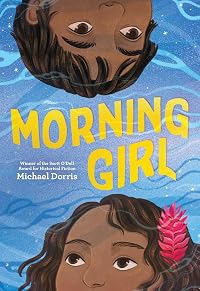
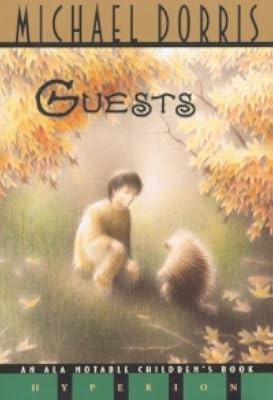
Michael Dorris, Author Michael Dorris received an undergraduate degree in English, with honors, from Georgetown University and a graduate degree in anthropology from Yale. He taught for fifteen years at Dartmouth College and founded the Native American Studies Program there. His novels include "A Yellow Raft in Blue Water" and "The Crown of show more Columbus," co-authored with Louise Erdrich. "The Broken Cord," which was named Best Non-Fiction of the Year by the National Book Critics Circle, brought attention to the disorder Fetal Alcohol Syndrome. He has also written novels for young adults, which include "Guests," "Sees Behind Trees," and "Morning Girl," which won the Scott O'Dell Award for Historical Fiction. (Bowker Author Biography) show less
Awards and Honors
Awards
Distinctions
Common Knowledge
- Canonical title
- Sees Behind Trees
- Original publication date
- 1996
- People/Characters
- Sees Behind Trees; Gray Fire; Otter; Three Chances; Diver; Brings The Deer
- Dedication
- For Persia, who teaches me how to sing
For Pallas, who teaches me how to laugh
For Aza, who teaches me how to dance
For Louise, who teaches me how to listen - First words
- "Try harder, track it with your eye before you shoot."
- Last words
- (Click to show. Warning: May contain spoilers.)We will search for Karna, search for Pitew, search until we find them - and make the circle whole.
Classifications
Statistics
- Members
- 949
- Popularity
- 27,873
- Reviews
- 13
- Rating
- (3.83)
- Languages
- English, German, Italian
- Media
- Paper, Audiobook
- ISBNs
- 18
- ASINs
- 8