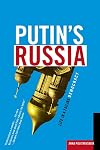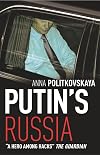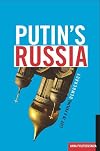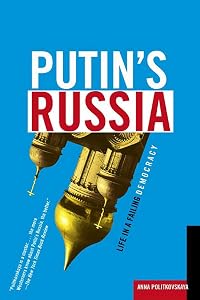
Putin’s Russia
by Anna Politkovskaya
On This Page
Description
A searing portrait of a country in disarray and of the man at its helm, from "the bravest of Russian journalists" ( The New York Times ) Hailed as "a lone voice crying out in a moral wilderness" ( New Statesman ), Anna Politkovskaya made her name with her fearless reporting on the war in Chechnya. Here, she turned her steely gaze on the multiple threats to Russian stability, among them Vladimir Putin himself.Rich with characters and poignant accounts, Putin's Russia depicts a far-reaching show more state of decay. Politkovskaya describes an army in which soldiers die from malnutrition, parents must pay bribes to recover their dead sons' bodies, and conscripts are even hired out as slaves. She exposes rampant corruption in business, government, and the judiciary, where everything from store permits to bus routes to court appointments is for sale. And she offers a scathing condemnation of the war in Chechnya, where kidnappings, extra-judicial killings, rape, and torture beget terrorism rather than fighting it. Finally, Politkovskaya denounces both Putin, for stifling civil liberties as he pushes the country back to a Soviet-style dictatorship, and the West, for its unqualified embrace of the Russian leader.Sounding an urgent alarm, Putin's Russia is a gripping portrayal of a country in crisis and the testament of a great and intrepid reporter, who received death threats and survived assassination attempts for her scathing criticism of the Kremlin. Tragically, on October 7, 2006, Politkovskaya was shot and found dead in an elevator in her Moscow apartment building. After several years of investigations, five men were imprisoned for her murder. show lessTags
Recommendations








Member Recommendations
Member Reviews
This is a set of journalistic reports from Russia in the early 2000s, some of the last ones the author completed before she was murdered in 2006. She provides sickening details on war crimes in Chechnya, but her pieces on the corruption running rampant on all levels of the Russian state are even more disheartening. At the end there's an acerbic harangue against Putin, which many western readers (including myself) would have considered excessive in 2004 when it was written, but which seems accurate and foreboding in 2015. According to the back cover this book has never been published in Russia, and it's easy to see why. At the end the author scoffs at western leaders and emphasizes that "we alone can change Russia's political climate". show more The complete vacuum of critical journalism in Russia today sadly shows that her murderers identified all too accurately the person whose work might have catalyzed such change. show less
This was a very depressing read. The author was a famous Russian journalist who was assassinated two years after writing this book. She is extremely cynical about Putin's style of rule, and the book is written in a rather unstructured and slightly shrill tone, that is a little reminiscent of Solzhenitsyn's Gulag Archipelago. While the horrors catalogued in this book are not as widespread and appalling as what happened under Stalin, they strike home with great force as they are very recent and took place while Russia was nominally a democracy and accepted, broadly speaking, as more of an intentional partner than was the case under Stalin, except during the war. The corruption she describes in the armed forces, police and judiciary; the show more treatment of experienced professionals and new military recruits alike; the barbaric and racist treatment meted out to all Chechens by Russian officials and soldiers on the morally perverse notion that the whole of their nation must be terrorist due to the actions of a few; the use of poison gas killing nearly 200 of the hostages during the Nord Ost theatre siege; all of these combine to leave a very nasty taste in the mouth. Putin has destroyed Russia's post-communist hope, flickering and inconsistent under Yeltsin, but definitely present, through his cynical and callous disregard for many basic human values, and most Russian citizens appear not to care. For the sake of the future of that great nation, let there be some grounds for some optimism and hope for the development of a pluralist and less cynical society in the years ahead. show less
Politkovskaya, a well known and unfortunately now-deceased Russian journalist fills her book with tales of sad reality of living in the New Russia of late 1990s and early 2000s. She focuses her attention on the broken elements of the Russian system: the army (including the Navy which is responsible for the nuclear assets) and the judicial apparatus which is very much dependent of the politics and rule of oligarchs. She also spends a lot of time on the Chechen conflict: the two wars and subsequent Moscow theatre hostage crisis, and the influence of those events and terrifying times on the State and its citizens (both of Russian and Chechen descent).
It is not an easy read for sure. Being raised in the Eastern Bloc, it all sounds show more surprisingly very familiar, but some stories still saddened and shocked me to the bone. Very sad indeed to read about this broken Post-Soviet system and mindset that in theory should be long gone and yet somehow lingers many years later with such tragic consequences to many.
This well written account and journalist investigation of what became of Russia after Putin’s rise to power can be recommended to anybody interested in politics, human rights activism and history. show less
It is not an easy read for sure. Being raised in the Eastern Bloc, it all sounds show more surprisingly very familiar, but some stories still saddened and shocked me to the bone. Very sad indeed to read about this broken Post-Soviet system and mindset that in theory should be long gone and yet somehow lingers many years later with such tragic consequences to many.
This well written account and journalist investigation of what became of Russia after Putin’s rise to power can be recommended to anybody interested in politics, human rights activism and history. show less
A terrifying and depressing account of Russia under Putin, cataloguing corruption, racism (above all against Chechens) and the croneyism of a government made up of Putin's former KGB/FSB colleagues and allies. The guilty are acquitted while the innocent are beaten to force confessions and have evidence planted on them. With the justice system seeming to provide only show trials and President/Tsar/God Putin building up a cult of personality, the current government appears to be bringing back the worst of the Soviet era.
Politkovskaya pulled no punches and named plenty of names. It's not hard to believe that her outspoken criticisms and naming and shaming of those in power contributed to her assassination in 2006.
I read this after reading show more an extract in [b:Making The World Legible|9219187|Making The World Legible (Five Years of Writers in Translation)|Various|http://photo.goodreads.com/books/1283543202s/9219187.jpg|14099123]. show less
Politkovskaya pulled no punches and named plenty of names. It's not hard to believe that her outspoken criticisms and naming and shaming of those in power contributed to her assassination in 2006.
I read this after reading show more an extract in [b:Making The World Legible|9219187|Making The World Legible (Five Years of Writers in Translation)|Various|http://photo.goodreads.com/books/1283543202s/9219187.jpg|14099123]. show less
This book is essentially one long rant against Putin and the bureaucratic system around him. The first 200 pages could have been shortened by a lot. Although what the author has to say is interesting and important, after a while you get the point, and it is hard to read 200-page rants. After the first 200 pages, I read with renewed interest, because the author turned to stories about people she knows personally, and how their lives have changed in the years following the end of the Soviet era. All in all, I think I learned quite a lot from this book (most notably what a crook Putin is), but I wish it had been half as long.
A final comment: at the very end, Politkovskaya talks about the rivalry between Putin and Chodorkovsky (of Yukos show more fame). In line with the rest of the book, she paints Chodorkovsky as an angel and Putin as the devil. As it happens I read a bit about this story not long ago, in other (Western) sources, and Chodorkovsky is not quite the incorruptible gentleman that Politkovskaya makes him out to be. It made me wonder what other stories in her book had received this extremely one-sided treatment. show less
A final comment: at the very end, Politkovskaya talks about the rivalry between Putin and Chodorkovsky (of Yukos show more fame). In line with the rest of the book, she paints Chodorkovsky as an angel and Putin as the devil. As it happens I read a bit about this story not long ago, in other (Western) sources, and Chodorkovsky is not quite the incorruptible gentleman that Politkovskaya makes him out to be. It made me wonder what other stories in her book had received this extremely one-sided treatment. show less
This is a great book diving into the harsh and cruel side of Putin and Russia. I loved the chapter telling of the mother that threw herself into the river when she learned her son was one of the victims of Nord Ost.
I did, however, have to take Anna's hate of Putin with a grain of salt. When there is such hatred of another human being, I tend to want to see the other side of things to make my own decisions. I don't guess Putin will write a response to this book. Even if he did, I wouldn't believe it. Good book.
I did, however, have to take Anna's hate of Putin with a grain of salt. When there is such hatred of another human being, I tend to want to see the other side of things to make my own decisions. I don't guess Putin will write a response to this book. Even if he did, I wouldn't believe it. Good book.
I've signally failed here. I read maybe 30 pages of this, to find that it is so horrifying I can't stand to continue. And then again, I've failed with Winter is Coming by Garry Kasparov because his style makes me distrust everything he says.
I'm moving on from both.
I spent a lot of time with my Russian friend Genia, before she died, talking about Russia. Both being historians, we seemed to think in similar ways and we found allies in each other.
May the world produce two - or one hundred - Politkovskayas for each one that is murdered. If she has inspired others to carry on her work, then her life and death have not been in vain. We should all pray that is so.
I'm moving on from both.
I spent a lot of time with my Russian friend Genia, before she died, talking about Russia. Both being historians, we seemed to think in similar ways and we found allies in each other.
May the world produce two - or one hundred - Politkovskayas for each one that is murdered. If she has inspired others to carry on her work, then her life and death have not been in vain. We should all pray that is so.
Members
- Recently Added By
Lists

Books about Russia and the former USSR
67 works; 12 members

All Things Russia
459 works; 11 members
Author Information

18+ Works 1,799 Members
Anna Politkovskaya (1958-2006) was a special correspondent for Novaya Gazeta
Some Editions
Awards and Honors
Common Knowledge
- Canonical title
- Putin’s Russia
- Original publication date
- 2004
- People/Characters
- Vladimir Putin; Yuri Budanov; Elza Kungaeva; Tamara Pechernikova; Natalia Gorbanevskaya
- Important places
- Moscow, Russia; Chechnya; Russia
- Important events
- Chechen Wars; 2002 Nord-Ost Theater Siege; Anti-terrorist Operation Whirlwind
- Quotations
- Bad history, like cancer, tends to recur, and there is one radical treatment: timely therapy to destroy the deadly cells. We have not done this. We dragged ourselves out of the USSR and into the "New Russia" still infested wi... (show all)th our Soviet bedbugs. [...] We now find ourselves surrounded by people trusted by Putin and Putin's friends. Unfortunately they only trust their own kind. The result is that the power structures of New Russia are overrun with citizens from a particular tradition, brought up with a repressive mentality and with an understanding of how to resolve governmental problems that reflects this mentality.
Today's Russian, brainwashed by propaganda, had largely reverted to Bolshevik thinking.
The reality [...] is that all these constitutional and democratic principles are violated with the utmost cynicism. Lawlessness is demonstrably more powerful than the law. The kind of justice you get depends on what class you... (show all) belong to, and the upper echelons of society, the VIP level, are reserved for the Mafia and the oligarchs.
There is not much wrong with our laws in Russia. It is just that not many people want to obey them. - Original language*
- Engels; Russisch (hoofdstuk: Na Beslan) (hoofdstuk: Na Beslan)
*Some information comes from Common Knowledge in other languages. Click "Edit" for more information.
Classifications
- Genres
- Nonfiction, General Nonfiction, History, Politics and Government
- DDC/MDS
- 947.086 — History & geography History of Europe Eastern European Counties and Russia Russian & Slavic History by Period 1855- 1991-
- LCC
- DK510.763 .P65213 — History of Europe, Asia, Africa and Oceania Russia. Soviet Union. Former Soviet Republics – Poland History of Russia. Soviet Union. Former Soviet Republics Local history and description Russia (Federation). Russian S.F.S.R.
- BISAC
Statistics
- Members
- 765
- Popularity
- 36,724
- Reviews
- 21
- Rating
- (3.92)
- Languages
- 14 — Danish, Dutch, English, Estonian, Finnish, French, German, Italian, Latvian, Norwegian (Bokmål), Polish, Portuguese, Spanish, Swedish
- Media
- Paper, Ebook
- ISBNs
- 35
- ASINs
- 4