On This Page
Description
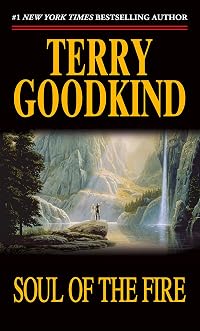
Seeker of the Truth Richard Rahl battles so-called chimes, beings capable of stealing souls, who threaten to destroy the world by absorbing its magic. By the author of Temple of the Winds.Tags
Recommendations


Member Reviews
(Original Review, 2002)
"Hissing, hackles lifting, the chicken's head rose. Kahlan pulled back. Its claws digging into stiff dead flesh, the chicken slowly turned to face her. It cocked its head, making its comb flop, its wattles sway. "Shoo," Kahlan heard herself whisper. There wasn't enough light, and besides, the side of its beak was covered with gore, so she couldn't tell if it had the dark spot, But she didn't need to see it. "Dear spirits, help me," she prayed under her breath. The bird let out a slow chicken cackle. It sounded like a chicken, but in her heart she knew it wasn't. In that instant, she completely understood the concept of a chicken that was not a chicken. This looked like a chicken, like most of the Mud People's show more chickens. But this was no chicken. This was evil manifest."
In "Soul of the Fire" by Terry Goodkind.
Goodkind is responsible for the worst thing ever written by a human being; the now legendary evil chicken scene (above).
I read along the fantasy cliches and admittedly fascinated by the creepily detailed sex and torture scenes - wow, there are adults who write this sort of smut in fantasy? A woman who can’t have sex because she’ll have an orgasm which will destroy her partner (and why can’t she just masturbate beforehand?)? A hero who gets deflowered by a sexy S&M torture nymph? Torture, torture, torture, big hulking Teutonic soldier men, graphic sexual violence, wow how does this sort of thing get published next to Tolkien? But one book is a bad taste curiosity, a whole series of increasingly unhinged writing is just appalling. His books are ranty ultra-conservative bullshit with bizarrely detailed descriptions of near rape, child dissection, sexual torture, child killing, sexual assault, kicking children in the face, rape, cheesy romantic sex, evil chickens, intelligent goats, and attractive women in either skintight dresses (somehow their curves always got described, of course) or skintight leather (how do they sneak up on enemies in the dark? How much talc do they have to wear?). It is near explicitly described that these things are what happens to society when it doesn’t follow Objectivism, and I’m not kidding. I just hope the covers put people off..
Goodkind is not only a hack, he's an Ayn Rand hack. "Wizard's First Rule" is the only book that I have purposefully abandoned at a train station, hoping that it would go to some "Lost Items" limbo. Maybe it’s still there...
[2018 edit: Urgh, did not need this reminder of the crap I read back in the day.] show less
"Hissing, hackles lifting, the chicken's head rose. Kahlan pulled back. Its claws digging into stiff dead flesh, the chicken slowly turned to face her. It cocked its head, making its comb flop, its wattles sway. "Shoo," Kahlan heard herself whisper. There wasn't enough light, and besides, the side of its beak was covered with gore, so she couldn't tell if it had the dark spot, But she didn't need to see it. "Dear spirits, help me," she prayed under her breath. The bird let out a slow chicken cackle. It sounded like a chicken, but in her heart she knew it wasn't. In that instant, she completely understood the concept of a chicken that was not a chicken. This looked like a chicken, like most of the Mud People's show more chickens. But this was no chicken. This was evil manifest."
In "Soul of the Fire" by Terry Goodkind.
Goodkind is responsible for the worst thing ever written by a human being; the now legendary evil chicken scene (above).
I read along the fantasy cliches and admittedly fascinated by the creepily detailed sex and torture scenes - wow, there are adults who write this sort of smut in fantasy? A woman who can’t have sex because she’ll have an orgasm which will destroy her partner (and why can’t she just masturbate beforehand?)? A hero who gets deflowered by a sexy S&M torture nymph? Torture, torture, torture, big hulking Teutonic soldier men, graphic sexual violence, wow how does this sort of thing get published next to Tolkien? But one book is a bad taste curiosity, a whole series of increasingly unhinged writing is just appalling. His books are ranty ultra-conservative bullshit with bizarrely detailed descriptions of near rape, child dissection, sexual torture, child killing, sexual assault, kicking children in the face, rape, cheesy romantic sex, evil chickens, intelligent goats, and attractive women in either skintight dresses (somehow their curves always got described, of course) or skintight leather (how do they sneak up on enemies in the dark? How much talc do they have to wear?). It is near explicitly described that these things are what happens to society when it doesn’t follow Objectivism, and I’m not kidding. I just hope the covers put people off..
Goodkind is not only a hack, he's an Ayn Rand hack. "Wizard's First Rule" is the only book that I have purposefully abandoned at a train station, hoping that it would go to some "Lost Items" limbo. Maybe it’s still there...
[2018 edit: Urgh, did not need this reminder of the crap I read back in the day.] show less
Richard and Kahlan are now (finally) married, but on the very next day, everything starts to go wrong again. Magic is beginning to fail and monsters are loose in the world. Richard believes that Kahlan accidentally release the Chimes, an ancient trio of murderous elementals who are eating up magic and murdering children. If Richard cannot find away to stop them, life as they know it might come to an end.
Well if you've made it this far into the Sword of Truth series then you know what to expect. Fully one third of the book will be a painfully detailed rehash of everything that has gone before. You probably also won't be surprised to find a frankly tedious amount of rape in this book. Nearly every woman gets raped. If women aren't being show more raped, then past rapes (typically gang rapes) are being described. You can almost hear the creepy author breathing heavily over his keyboard. Seriously, he must be getting off on this because for people that aren't turned on by rape (myself) the near constant descriptions become laughably drawn out. It's just stupid and in poor taste. If women aren't being raped, then they're being flighty, being whores, or are just being stupid. Even Kara manages to be outsmarted by two illiterate hayseed teenagers. Good grief.
To make matters worse, Richard and Kahlan are barely in the novel. They come in at the beginning to remind the reader of their entire life story, then they disappear for the meat of the novel only to return briefly at the end. Most of the book is taken up in describing a new city-state with all of it's cultural history and a whole host of new characters. Just in case you were wondering if there would be a pay off for the information dump, let me go ahead and burst your bubble right now. By the end of the novel, everyone is dead, so there was literally no point.
This is probably the worst book in the series. Sorry. show less
Well if you've made it this far into the Sword of Truth series then you know what to expect. Fully one third of the book will be a painfully detailed rehash of everything that has gone before. You probably also won't be surprised to find a frankly tedious amount of rape in this book. Nearly every woman gets raped. If women aren't being show more raped, then past rapes (typically gang rapes) are being described. You can almost hear the creepy author breathing heavily over his keyboard. Seriously, he must be getting off on this because for people that aren't turned on by rape (myself) the near constant descriptions become laughably drawn out. It's just stupid and in poor taste. If women aren't being raped, then they're being flighty, being whores, or are just being stupid. Even Kara manages to be outsmarted by two illiterate hayseed teenagers. Good grief.
To make matters worse, Richard and Kahlan are barely in the novel. They come in at the beginning to remind the reader of their entire life story, then they disappear for the meat of the novel only to return briefly at the end. Most of the book is taken up in describing a new city-state with all of it's cultural history and a whole host of new characters. Just in case you were wondering if there would be a pay off for the information dump, let me go ahead and burst your bubble right now. By the end of the novel, everyone is dead, so there was literally no point.
This is probably the worst book in the series. Sorry. show less
This particular installment of the Sword of Truth series was a bit of a downer. Albeit the best possible downer. Goodkind takes a major pause from the main storyline in order to develop a secondary storyline which has a huge impact on Richard and Kahlan toward the end of the book. I absolutely love the way in which Goodkind presents political agendas. My favorite quote in the book is from an up and coming social climber, Dalton Campbell, who recognizes the folly of his ambition a bit too late. "Following the lead of noted people such as the Directors, ordinary people had not taken to loudly voicing the tailored notions they had been fed. Even though Dalton had expected it, he never failed to find it remarkable the way he had but to say show more a thing enough times, through enough people, and it became the popular truth, its provenance lost as it was mimicked by ordinary people who came to believe that it was their own idea." The book ends on a massive cliffhanger, so make sure to have Faith of the Fallen in hand well before you conclude this one. show less
I enjoyed the exercise in world building that this book seems to represent. The author laid out the history of Anderith and then used that foundation to give us a story about political intrigue and domination.
I also enjoyed how things played out at the end, though I'm not sure it made much sense.The common people would be the ones to suffer the most, while the elites who manipulated them in the first place would likely escape retribution, like Dalton. So, could that really satisfy Richard's desire for vengeance? It does make his actions seem more juvenile. What he's doing at the end of the story is pretty juvenile too. "They don't like me so I'm going home!" Isn't this guy supposed to be Lord Rahl? Wouldn't his past experiences have show more hardened him up and made a man out of him by this point? Are his actions believable?
I feel like Goodkind spends a lot of time building new characters up and developing them in really creative ways, only to have them meet their ends in extremely anti-climactic situations that felt rushed and left me wondering what the point of learning about them was in the first place.
That rushed feeling permeates the last 60 pages or so of the book. One moment everything is fine, and then suddenly the enemy is there and everything quickly wraps up in catastrophe. It doesn't feel measured. It doesn't feel like good storytelling. It feels like the author put too much time into the build-up and then realized he only had 50 pages to find some sort of conclusion. The ending was choppy and unsatisfying. Goodkind also puts too much weight on weak storylines. The prime example isusing Franka's situation at the end of the book to explain Dalton's change of heart, but for that to be believable Dalton's relationship with Franka should have been more deeply examined.
The story could have been better if Goodkind had spent less time detailing characters and a culture that were disposable and had spent more time developing the main characters instead. Throughout the story, all of the main characters fail to work together. The actions they take aren't believable given their situations.Kahlan doubting Richard and the mud people elder about the chicken is the most glaring example. Why would they lie about it, and if it had turned out to be untrue, so what? They'd have checked and maybe killed a few chickens and then they could have settled things. Instead, she gets portrayed as a doubting, whining bitch that slows down story progression, which isn't fair to her considering who she is supposed to be. Richard has his turn to be an idiot when he doesn't trust Kahlan's opinion later on in the story.
The story just feels like a wasted opportunity, or like filler material. show less
I also enjoyed how things played out at the end, though I'm not sure it made much sense.
I feel like Goodkind spends a lot of time building new characters up and developing them in really creative ways, only to have them meet their ends in extremely anti-climactic situations that felt rushed and left me wondering what the point of learning about them was in the first place.
That rushed feeling permeates the last 60 pages or so of the book. One moment everything is fine, and then suddenly the enemy is there and everything quickly wraps up in catastrophe. It doesn't feel measured. It doesn't feel like good storytelling. It feels like the author put too much time into the build-up and then realized he only had 50 pages to find some sort of conclusion. The ending was choppy and unsatisfying. Goodkind also puts too much weight on weak storylines. The prime example is
The story could have been better if Goodkind had spent less time detailing characters and a culture that were disposable and had spent more time developing the main characters instead. Throughout the story, all of the main characters fail to work together. The actions they take aren't believable given their situations.
The story just feels like a wasted opportunity, or like filler material. show less
I am putting this 5th book in the Sword of Truth series aside, perhaps permanently. I started it immediately after finishing the previous book, "Temple of the Winds", and then put it aside for the holidays when I was too busy to read. When I picked it back up, I was unhappy about the imminent rape scene about to be described and stopped again. A week later I tried again, starting several pages back; this time I was uncomfortable with the fictional culture of Anderith particularly in light of the events in the U.S. at this time.
Wikipedia describes this culture this way: "Both the Anders, black-haired people who govern the city, and the Hakens, red-haired people under the boot of Ander oppression, occupy Anderith. From an early age, show more Hakens are kept under control and disrespected by the Anders and are taught that this oppression is a necessity to protect the Hakens from their violent ancestral ways. Most Hakens have bought into this idea and willingly subject themselves to the oppression."
In the book, this oppression of the Hakens is clearly attributed to the idea that at some past point in their history, the Hakens had been the dominant race and their current situation was in retribution for their crimes towards the Anders at that time.
Whether Goodkind meant this parallel or not, it was too close to the way white supremists here view the U.S. - that whites are being (unjustly) oppressed by people of color in payment for historical injustices. I don't want to be reading anything right now that feels like justification for white supremists! show less
Wikipedia describes this culture this way: "Both the Anders, black-haired people who govern the city, and the Hakens, red-haired people under the boot of Ander oppression, occupy Anderith. From an early age, show more Hakens are kept under control and disrespected by the Anders and are taught that this oppression is a necessity to protect the Hakens from their violent ancestral ways. Most Hakens have bought into this idea and willingly subject themselves to the oppression."
In the book, this oppression of the Hakens is clearly attributed to the idea that at some past point in their history, the Hakens had been the dominant race and their current situation was in retribution for their crimes towards the Anders at that time.
Whether Goodkind meant this parallel or not, it was too close to the way white supremists here view the U.S. - that whites are being (unjustly) oppressed by people of color in payment for historical injustices. I don't want to be reading anything right now that feels like justification for white supremists! show less
This review refers to the SOT series through book 9.
Terry Goodkind’s first book Wizard’s First Rule was great! Except for the actual First Rule ("People are Stupid"), which was...stupid. The story had so many unique and fascinating characters (especially the secondary ones). I was in love with Richard; I wanted to be a Mord-Sith. The next couple of books of The Sword of Truth were pretty good, too.
Then...I don’t know what happened...it just TOTALLY lost it. The writing style became incredibly annoying and Richard was getting WAY too preachy (constant Ayn Rand-ish humanistic ranting). But, I kept going because I was really invested by this time. And each time I bought one of his $25 hardback books, I found myself rolling my eyes at show more every passive sentence and starting to fall asleep during the sermons (when did Richard hire a speech writer??).
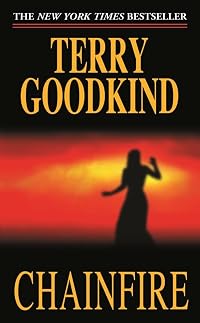
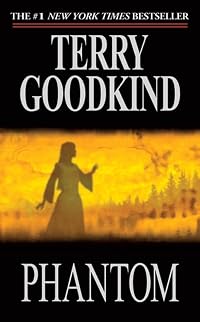
And the plot really got ssslllllloooowwww (just look at the book covers for Chainfire and Phantom — you can tell we're not going anywhere). But the weirdest thing is that I kept buying these 1 star books! I can’t explain my behavior, except to say that Terry Goodkind is (was) a master at plot and characterization (truly, his secondary characters are so well done). So I kept thinking that things would get better, but they did not. How did he pull off that excellent first booK?? I've learned from this experience that I can put down a book if it's not good. There's too much good literature to read.
According to Mr Goodkind, those of us who have bailed out are ignorant and uneducated. Wow. That is something I have never been called before. I should have realized right from the start ("Wizard's First Rule: People are stupid") what kind of fellow Terry Goodkind is. Here is a quote from a chat session conducted with Mr Goodkind (this used to be on his website, but has now been removed. It is well-documented on the internet, however.):
"Why would they continue to read books they claim are bad? Because they hate that my novels exists. Values arouse hatred in these people. Their goal is not to enjoy life, but to destroy that which is good — much like a school child who does not wish to study for a test and instead beats up a classmate who does well. These people hate what is good because it is good. Their lives are limited to loathing and indifference. It isn't that they want to read a good book, what they want is to make sure that you do not. Ignore them." —Terry Goodkind
I say Terry Goodkind is the one acting like a school child having a tantrum. I regret that he got so much of my money. I hope you won't give him any of yours. If you really want to try a Goodkind book, I would recommend that you go to the library and check out the first few, and then trust me that you don't need to read any further. I will not read the last book. I'm not even tempted. What an ass.
Read more Terry Goodkind book reviews at Fantasy Literature . show less
Terry Goodkind’s first book Wizard’s First Rule was great! Except for the actual First Rule ("People are Stupid"), which was...stupid. The story had so many unique and fascinating characters (especially the secondary ones). I was in love with Richard; I wanted to be a Mord-Sith. The next couple of books of The Sword of Truth were pretty good, too.
Then...I don’t know what happened...it just TOTALLY lost it. The writing style became incredibly annoying and Richard was getting WAY too preachy (constant Ayn Rand-ish humanistic ranting). But, I kept going because I was really invested by this time. And each time I bought one of his $25 hardback books, I found myself rolling my eyes at show more every passive sentence and starting to fall asleep during the sermons (when did Richard hire a speech writer??).
And the plot really got ssslllllloooowwww (just look at the book covers for Chainfire and Phantom — you can tell we're not going anywhere). But the weirdest thing is that I kept buying these 1 star books! I can’t explain my behavior, except to say that Terry Goodkind is (was) a master at plot and characterization (truly, his secondary characters are so well done). So I kept thinking that things would get better, but they did not. How did he pull off that excellent first booK?? I've learned from this experience that I can put down a book if it's not good. There's too much good literature to read.
According to Mr Goodkind, those of us who have bailed out are ignorant and uneducated. Wow. That is something I have never been called before. I should have realized right from the start ("Wizard's First Rule: People are stupid") what kind of fellow Terry Goodkind is. Here is a quote from a chat session conducted with Mr Goodkind (this used to be on his website, but has now been removed. It is well-documented on the internet, however.):
"Why would they continue to read books they claim are bad? Because they hate that my novels exists. Values arouse hatred in these people. Their goal is not to enjoy life, but to destroy that which is good — much like a school child who does not wish to study for a test and instead beats up a classmate who does well. These people hate what is good because it is good. Their lives are limited to loathing and indifference. It isn't that they want to read a good book, what they want is to make sure that you do not. Ignore them." —Terry Goodkind
I say Terry Goodkind is the one acting like a school child having a tantrum. I regret that he got so much of my money. I hope you won't give him any of yours. If you really want to try a Goodkind book, I would recommend that you go to the library and check out the first few, and then trust me that you don't need to read any further. I will not read the last book. I'm not even tempted. What an ass.
Read more Terry Goodkind book reviews at Fantasy Literature . show less
There are people who loved Terry Goodkind's Sword of Truth series from beginning to end. But a lot of people who loved it through the first four books feel this is where the series jumped the shark. Goodkind is a devotee of Ayn Rand; he's open about that on his website. But although you could see libertarian themes in the earlier books, this is the one where it's more than subtext easily ignored. If that is what bothers you about this book, to the point you didn't find it enjoyable, you might want to stop here, because in Faith of the Fallen that line becomes even more explicit and beyond that even I, who am mostly sympathetic to his philosophy, finds Goodkind unbearably preachy and just plain unbearable.
But this book, even if I do see show more it as falling off in enjoyment from the earlier books, is still very entertaining as Richard and Kahlan combat the power of the chimes leaching magic from the world. There are still characters I love here, and there's still humor, and there's still imagination in Goodkind's world-building to burn. And I do like that there are consequences here to actions from previous books. So even if here I could see the shark's fin protruding from the water, he hadn't jumped for me. Yet. show less
But this book, even if I do see show more it as falling off in enjoyment from the earlier books, is still very entertaining as Richard and Kahlan combat the power of the chimes leaching magic from the world. There are still characters I love here, and there's still humor, and there's still imagination in Goodkind's world-building to burn. And I do like that there are consequences here to actions from previous books. So even if here I could see the shark's fin protruding from the water, he hadn't jumped for me. Yet. show less
Members
- Recently Added By
Lists

NPRs your picks: top 100 Sci-Fi/Fantasy books
297 works; 80 members
Author Information

123+ Works 82,412 Members
Writer Terry Goodkind was born in Omaha, Nebraska in 1949. As a child, he had trouble reading and writing because he suffered from a form of dyslexia. It wasn't until high school that a composition teacher recognized his writing talent. Before becoming a writer, he worked as a carpenter, violin-maker, hypnotherapist, wildlife artist and restorer show more of rare artifacts. Goodkind's first novel, "Wizards First Rule" (1994), took a year for him to write and had a record-breaking debut. It became an international bestseller and won the praise of many writers in the fantasy genre. The sequels "Stone of Tears" (1995) and "Blood of the Fold" (1996) experienced equal success. His fourth book, "Temple of the Winds" was published in 1997. His other books include The Pillars of Creation, Naked Empire, Confessor, The Omen Machine, Severed Souls, and Shroud of Eternity. His series included Sword of Truth; Richard and Kahlan; Jack Raines; Nicci Chronicles; and Children of D'Hara. Terry Goodkind, author of over 35 books, novellas, and short stories, died on September 17, 2020. He was 72. (Bowker Author Biography) show less
Some Editions
Awards and Honors
Distinctions
Series


Belongs to Publisher Series
Work Relationships
Common Knowledge
- Canonical title
- Soul of the Fire
- Original title
- Soul of the Fire
- Original publication date
- 1999-03-15
- People/Characters
- Richard Rahl
- Dedication
- To James Frenkel, a man of great patience, courage, integrity, and talent.
- First words
- "I wonder what's bothering the chickens," Richard said.
- Last words
- (Click to show. Warning: May contain spoilers.)"I guess it has."
- Publisher's editor
- Frenkel, James
- Blurbers*
- McCaffrey, Anne
- Original language*
- Englisch
*Some information comes from Common Knowledge in other languages. Click "Edit" for more information.
Classifications
Statistics
- Members
- 6,062
- Popularity
- 2,091
- Reviews
- 37
- Rating
- (3.54)
- Languages
- 8 — Czech, Dutch, English, French, German, Italian, Polish, Russian
- Media
- Paper, Audiobook, Ebook
- ISBNs
- 47
- UPCs
- 1
- ASINs
- 17