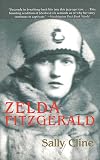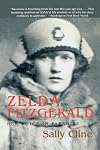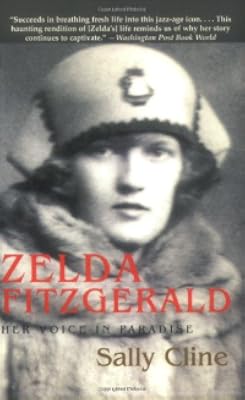
Zelda Fitzgerald: Her Voice in Paradise
by Sally Cline
On This Page
Description
A portrait of the Jazz Age artist and wife of F. Scott Fitzgerald traces their dysfunctional marriage, Zelda's work as a painter and dancer, and her struggle to define herself.Tags
Recommendations












Member Reviews
Zelda Fitzgerald fascinates me. She is known as a beautiful, talented woman who became an icon of an age, the original 'American flapper', but she was also a troubled, frustrated and deeply unhappy woman. All I could think while reading Sally Cline's intelligent and well researched biography was, 'What if?' Did her marriage to Scott Fitzgerald make Zelda or destroy her? Could she ever have been happy as an independent artist, or did her marriage feed her writing, painting and dancing?
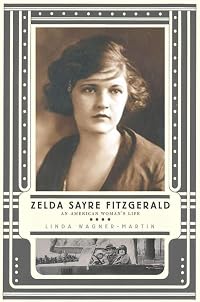
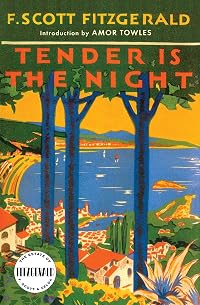
Cline had access to perhaps the most sources, public and private, on Scott and Zelda, so this is a full and fact-based perspective of their life, compared to Milford's pioneering study or Linda Wagner-Martin's rather bitter feminist diatribe. Cline doesn't show more have to drag Scott down for stifling his wife's many talents or stealing her unique thoughts for his own writing - she lets him do that for himself. After reading the 'discussion' between Zelda, Scott and an 'impartial' referee in 1933, the dialogue recorded by a stenographer, I was tempted to destroy my copy of 'Tender is the Night'. Scott always stole his wife's words for his stories, lifting sections from her diaries and jotting down her witty sayings, but to actually claim that Zelda's experiences in various asylums belonged solely to him as 'material', and that she wasn't allowed to write her own book because it would upstage his work in progress, was taking an incredible liberty. The worst part is that Zelda was originally supportive of Scott's writing - she let him use her words, and put his name to her magazine articles and short stories, because she loved him and put him first. Then, after she was hospitalised and wanted to write for herself, Scott turned on her. He actually called her a 'third rate writer and a third rate ballet dancer', yet couldn't answer why he was then so bothered about Zelda writing for herself. Much of the psychiatric background in 'Tender' is lifted directly from Zelda's own history, and the two central characters are based on friends of theirs. Scott Fitzgerald was a good writer, but he could only write what - and who - he knew, again and again, mostly inspired by his wife and their mutual experiences. Zelda, on the other hand, was an original and lyrical wordsmith, and her fantastic metaphors and sharp wit are uniquely hers.
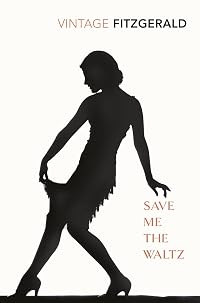
Anger at Scott Fitzgerald aside, I thoroughly enjoyed this biography, especially after reading Zelda's only completed novel, 'Save Me the Waltz'. I would have liked to see some examples of the art that Cline describes, but I suppose that's a separate book! show less
Cline had access to perhaps the most sources, public and private, on Scott and Zelda, so this is a full and fact-based perspective of their life, compared to Milford's pioneering study or Linda Wagner-Martin's rather bitter feminist diatribe. Cline doesn't show more have to drag Scott down for stifling his wife's many talents or stealing her unique thoughts for his own writing - she lets him do that for himself. After reading the 'discussion' between Zelda, Scott and an 'impartial' referee in 1933, the dialogue recorded by a stenographer, I was tempted to destroy my copy of 'Tender is the Night'. Scott always stole his wife's words for his stories, lifting sections from her diaries and jotting down her witty sayings, but to actually claim that Zelda's experiences in various asylums belonged solely to him as 'material', and that she wasn't allowed to write her own book because it would upstage his work in progress, was taking an incredible liberty. The worst part is that Zelda was originally supportive of Scott's writing - she let him use her words, and put his name to her magazine articles and short stories, because she loved him and put him first. Then, after she was hospitalised and wanted to write for herself, Scott turned on her. He actually called her a 'third rate writer and a third rate ballet dancer', yet couldn't answer why he was then so bothered about Zelda writing for herself. Much of the psychiatric background in 'Tender' is lifted directly from Zelda's own history, and the two central characters are based on friends of theirs. Scott Fitzgerald was a good writer, but he could only write what - and who - he knew, again and again, mostly inspired by his wife and their mutual experiences. Zelda, on the other hand, was an original and lyrical wordsmith, and her fantastic metaphors and sharp wit are uniquely hers.
Anger at Scott Fitzgerald aside, I thoroughly enjoyed this biography, especially after reading Zelda's only completed novel, 'Save Me the Waltz'. I would have liked to see some examples of the art that Cline describes, but I suppose that's a separate book! show less
Ratings
Members
- Recently Added By
Author Information

14 Works 391 Members
Sally Cline has received a Harry Ransom Humanities Research Center Fellowship for research on this biography. She teaches at Cambridge University.
Common Knowledge
- People/Characters
- Zelda Fitzgerald; F. Scott Fitzgerald
- Canonical DDC/MDS
- Test
Classifications
- Genres
- Biography & Memoir, Literature Studies and Criticism, Fiction and Literature
- DDC/MDS
- 813.52 — Literature & rhetoric American literature in English American fiction in English 1900-1999 1900-1945
- LCC
- PS3511 .I9234 .Z64 — Language and Literature American literature American literature Individual authors 1900-1960
- BISAC
Statistics
- Members
- 130
- Popularity
- 251,541
- Reviews
- 1
- Rating
- (3.93)
- Languages
- English
- Media
- Paper, Ebook
- ISBNs
- 9
- ASINs
- 5