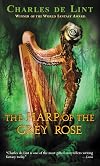
The Harp of the Grey Rose
by Charles de Lint
On This Page
Description
The compelling and powerful first novel from World Fantasy Award winner Charles de Lint! He is the Songweaver, but before he was a master of song he was merely Cerin of Wran Cheaping--a seventeen-year-old orphan raised by a wildland witch. Then he encountered the Maid of the Grey Rose--the lone survivor of the war that devastated the Trembling Lands and the promised bride of Yarac Stone-Slayer, the feared and terrible Waster. The mysterious beauty captured Cerin's heart, drawing him into a show more world both dark and deadly, until armed with only a tinkerblade and the magic of song, he would take on a man's challenge . . . and choose a treacherous path toward a magnificent destiny. "Charles de Lint is one of the most gifted storytellers writing fantasy today."--Locus show lessTags
Recommendations







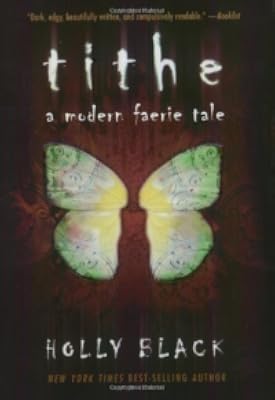
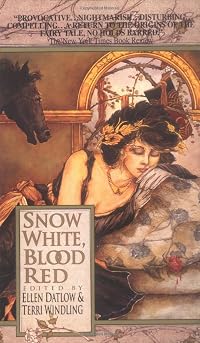

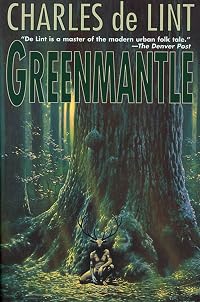
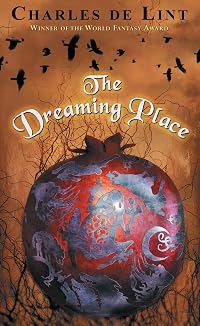






Member Reviews
I'm on a quest to reread all the early Charles de Lint, because I want to see the way his particular world began. The Harp of the Grey Rose is, structurally, a fairly traditional sword-and-sorcery bildungsroman. What it definitely isn't is beholden to older fantastical fiction races, simple in its portrayal of traveling peoples (both the tinkers in the story are delightfully non-stereotypical), conventionally one-punch in its plot (there are actually several events, not just one climactic battle), or afraid of a little dialect, which de Lint gets away with using because he uses it sparingly, for emphasis, and without unnecessary gimmicks (like apostrophes).
Yarrow and Jack the Giant-Killer are two other early works that demonstrate more show more of the urban/faerie crossover we all now know and love, but The Harp of the Grey Rose is a useful return trip for one crucial reason: there are races blending at geographical and educational margins who have competing stories about the nature of the world and - this is crucial - know that the world was already old when they arrived. In that cultural map lies a key clue to how the juxtaposing peoples of de Lint's later work interact.
Is it a beautiful story? Well, if you're into buddy films, the friendships between the main character, Cerin, and his unlikely pals Hickathrift and Calman are rounded and yet as random as real friendships. If you like weird landscapes and creatures, de Lint has a quiverful. Like your protagonists imperfect, yet willing? Cerin's that kind. The love story element, however, falls victim to one of the classic 1980's blunders, so look to de Lint's later stories if that's what you're after. Mostly this book is fun for people who, having fallen in love with de Lint around the time of Memory and Dream or The Little Country, want to know how the author's internal landscape looked during the early years of its formation. show less
Yarrow and Jack the Giant-Killer are two other early works that demonstrate more show more of the urban/faerie crossover we all now know and love, but The Harp of the Grey Rose is a useful return trip for one crucial reason: there are races blending at geographical and educational margins who have competing stories about the nature of the world and - this is crucial - know that the world was already old when they arrived. In that cultural map lies a key clue to how the juxtaposing peoples of de Lint's later work interact.
Is it a beautiful story? Well, if you're into buddy films, the friendships between the main character, Cerin, and his unlikely pals Hickathrift and Calman are rounded and yet as random as real friendships. If you like weird landscapes and creatures, de Lint has a quiverful. Like your protagonists imperfect, yet willing? Cerin's that kind. The love story element, however, falls victim to one of the classic 1980's blunders, so look to de Lint's later stories if that's what you're after. Mostly this book is fun for people who, having fallen in love with de Lint around the time of Memory and Dream or The Little Country, want to know how the author's internal landscape looked during the early years of its formation. show less
Any book that contains the sentence "A darkness came washing over me and I knew no more" is a bit hackneyed. Even the worst of it could be a lot worse, and there are fine things about it, but this is unmistakeably the work of a still-developing author.
The main interest here is that it is one of de Lint's very first published novels -- high fantasy and almost preposterously derivative of LOTR in the basic movement of the story however also well-written and with some of its own twists and indicative of potential. I've had this on my tbr shelf forever and, as I have played harp for yonks, am surprised that I hadn't read it. Only for fans, I'd say. Read quickly. ***
Charles de Lint's first completed novel. A fine first book rooted in a traditional style folk tale. This tells of the young orphan Cerin; his falling in love and his quest to battle evil. Most of the traditional elements are here and it shows the promise of de Lint's future work.
I picked up this predictable, derivative Pringle of a book because the other two books I'm reading are too brainy for me to read without a break (and one of them is too heavy for the subway). Just in time for Valentine's day, it's a romantic fantasy, the story of one young hero's love for an otherworldly princess ... or perhaps it's really the story of Charles de Lint's love for the works of J.R.R. Tolkien.
Some of the more obvious recycled plot points include:
- The hero is an orphan whose parents turn out to be magical.
- He falls in love with a girl whom everyone mistakenly thinks is evil.
- He kills a big baddy with a magical sword.
- When he gets to the big city, the high court is under the influence of an evil power (i.e. Wormtongue).
- show more Elves and dwarves.
- The dwarf rediscovers the long-lost underground dwarven kingdom (i.e. Mines of Moria).
- In the end it turns out the big baddy wasn't who the hero thought it was; it was someone else equally obvious.
The book held my interest enough for me to finish it -- after all, it's a formula I know and love -- but when I was finished I moved on to another piece of relative mind candy. Maybe it's just time for February school vacation.
Original post on "All The Things I've Lost" show less
Some of the more obvious recycled plot points include:
- The hero is an orphan whose parents turn out to be magical.
- He falls in love with a girl whom everyone mistakenly thinks is evil.
- He kills a big baddy with a magical sword.
- When he gets to the big city, the high court is under the influence of an evil power (i.e. Wormtongue).
- show more Elves and dwarves.
- The dwarf rediscovers the long-lost underground dwarven kingdom (i.e. Mines of Moria).
- In the end it turns out the big baddy wasn't who the hero thought it was; it was someone else equally obvious.
The book held my interest enough for me to finish it -- after all, it's a formula I know and love -- but when I was finished I moved on to another piece of relative mind candy. Maybe it's just time for February school vacation.
Original post on "All The Things I've Lost" show less
This was the first or second book he wrote, and you can tell. Lots of stuff happens, but the plot feels too pat. Lots of pseudo-Irish stuff with psychic harper powers. The plot felt very constructed. The author gets better in later books. On the other hand, I'd probably have enjoyed it 30 years ago.
This reads more like a short story than the short novel it is. This leaves you wanting more stories about Cerin Songweaver. You quickly learn to like Cerin and his friends and wish him luck in his quest for the Grey Rose.
Members
- Recently Added By
Lists

A Rainbow of Books: Colors in the Title
570 works; 24 members
Author Information

196+ Works 43,470 Members
Charles de Lint, an extraordinarily prolific writer of fantasy works, was born in the Netherlands in 1951. Due to his father's work as a surveyor, the family lived in many different places, including Canada, Turkey, and Lebanon. De Lint was influenced by many writers in the areas of mythology, folklore, and science fiction. De Lint originally show more wanted to play Celtic music. He only began to write seriously to provide an artist friend with stories to illustrate. The combination of the success of his work, The Fane of the Grey Rose (which he later developed into the novel The Harp of the Grey Rose), the loss of his job in a record store, and the support of his wife, Mary Ann, helped encourage de Lint to pursue writing fulltime. After selling three novels in one year, his career soared and he has become a most successful fantasy writer. De Lint's works include novels, novellas, short stories, chapbooks, and verse. He also publishes under the pseudonyms Wendelessen, Henri Cuiscard, and Jan Penalurick. He has received many awards, including the 2000 World Fantasy Award for Best Collection for Moonlight and Vines, the Ontario Library Association's White Pine Award, as well as the Great Lakes Great Books Award for his young adult novel The Blue Girl. His novel Widdershins won first place, Amazon.com Editors' Picks: Top 10 Science Fiction & Fantasy Books of 2006. In 1988 he won Canadian SF/Fantasy Award, the Casper, now known as the Aurora for his novel Jack, the Giant Killer. Also, de Lint has been a judge for the Nebula Award, the World Fantasy Award, the Theodore Sturgeon Award and the Bram Stoker Award. (Bowker Author Biography) show less
Common Knowledge
- Original publication date
- 1985
Classifications
Statistics
- Members
- 694
- Popularity
- 41,358
- Reviews
- 15
- Rating
- (3.47)
- Languages
- Dutch, English
- Media
- Paper
- ISBNs
- 6
- ASINs
- 3