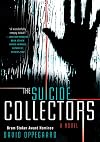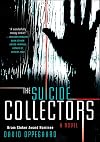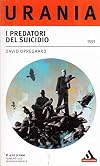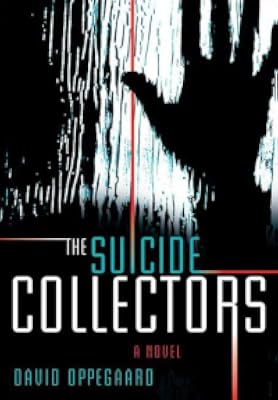
The Suicide Collectors
by David Oppegaard
On This Page
Description
The Despair has plagued the earth for five years. Most of the world's population has inexplicably died by its own hand, and the few survivors struggle to remain alive. A mysterious, shadowy group called the Collectors has emerged, inevitably appearing to remove the bodies of the dead. In the crumbling state of Florida, a man named Norman takes an unprecedented stand against the Collectors, propelling him on a journey across North America. It's rumored that a scientist in Seattle is working show more on a cure for the Despair, but in a world ruled by death, it won't be easy for Norman to get there. show lessTags
Recommendations






















Member Reviews
Oppegard's debut novel takes a familiar genre trope - the post-apocalyptic road-trip - and adds some welcome kinks. To start with, there are no zombies, nor radiation-addled mutants, nor roving bands of cannibals. What ended the civilized world was something simultaneously much more mundane, and more chilling: a rash of suicides that has left the world at something around a tenth of its population. His characters are less magically immune to this inexplicable phenomenon than simply stubborn, weary men and women that nonetheless cling to life, more as an act of defiance than for any particular goal. Survival in this particular apocalypse is less a matter of finding how to survive - no zombies to fight, no precious resources to husband - show more but more a matter of finding a reason why.
Oppegaard lays out this new world with stunning efficiency in the first few chapters as we're introduced to the last two members of a small Florida town; Norman, who loses his wife to the suicidal impulse that has swept the globe in the opening pages, and Pops, who lost his much earlier. They talk; they drink; they mourn those lost; they don't do a whole lot of anything, because there's really not much point, anymore. But there's an even darker turn to this despair ravaged world - a group of people known as Collectors who claim the dead, carting them off to parts unknown if they're not put in the ground immediately. Norman, in his grief, takes umbrage at the very knowledge that they're going to collect his wife, and waits by her body with his loaded shotgun. In the chaos that ensues, Norman and Pops have angered the last true power in the world, and it's road trip time - from Florida to Seattle, where a fabled Despair-free zone might await.
The Suicide Collectors settles in quickly to an epsodic format after that, chronicling both Norman and Pops' adventures through a despair-ravaged America, and branching off to tell the stories of others who have found a reason to survive. It's in these middle stretches that Oppegaard hits his stride, crafting frighteningly plausible reactions to an America hanging under a cloud of constant suicide while simultaneously mining a rich vein of dark humor to be had in a world abandoned by hope. And while I won't spoil the latter half of the book, suffice it to say that Oppegaard is not afraid to rock the boat of his narrative, swapping back and forth between light social commentary, tense thriller, and a kind of bleak humanism that does his supremely likeable characters justice.
-Drew show less
Oppegaard lays out this new world with stunning efficiency in the first few chapters as we're introduced to the last two members of a small Florida town; Norman, who loses his wife to the suicidal impulse that has swept the globe in the opening pages, and Pops, who lost his much earlier. They talk; they drink; they mourn those lost; they don't do a whole lot of anything, because there's really not much point, anymore. But there's an even darker turn to this despair ravaged world - a group of people known as Collectors who claim the dead, carting them off to parts unknown if they're not put in the ground immediately. Norman, in his grief, takes umbrage at the very knowledge that they're going to collect his wife, and waits by her body with his loaded shotgun. In the chaos that ensues, Norman and Pops have angered the last true power in the world, and it's road trip time - from Florida to Seattle, where a fabled Despair-free zone might await.
The Suicide Collectors settles in quickly to an epsodic format after that, chronicling both Norman and Pops' adventures through a despair-ravaged America, and branching off to tell the stories of others who have found a reason to survive. It's in these middle stretches that Oppegaard hits his stride, crafting frighteningly plausible reactions to an America hanging under a cloud of constant suicide while simultaneously mining a rich vein of dark humor to be had in a world abandoned by hope. And while I won't spoil the latter half of the book, suffice it to say that Oppegaard is not afraid to rock the boat of his narrative, swapping back and forth between light social commentary, tense thriller, and a kind of bleak humanism that does his supremely likeable characters justice.
-Drew show less
This novel takes place in a post-apocalyptic world, where a strange plague of depression has swept the world, driving most people to kill themselves. After Norman's wife kills herself, he and the wise old man known as "Pops" are the only two people left alive in their Florida town. Remembering a rumor he heard from a drifter, Norman suggests they move to Seattle where there is supposed to be a core of survivors working on a cure. Add to the mix a mysterious group of black robe-wearing strangers that magically appear to collect the bodies of the dead. Just who are these "collectors" and what do they want?
Wow, this book was awful. I thought it was just really boring and poorly written until the end - in which nothing was explained or show more resolved. What is causing the Despair? What are the Collectors doing with the dead bodies and why? I hope you didn't want to know, because you will never find out. An odd combination of cliches, awkward dialogue, and endless exposition, this book reads more like a series of unconnected and grisly vignettes. Not a lot of character development or depth. Simply terrible. show less
Wow, this book was awful. I thought it was just really boring and poorly written until the end - in which nothing was explained or show more resolved. What is causing the Despair? What are the Collectors doing with the dead bodies and why? I hope you didn't want to know, because you will never find out. An odd combination of cliches, awkward dialogue, and endless exposition, this book reads more like a series of unconnected and grisly vignettes. Not a lot of character development or depth. Simply terrible. show less
A truly stellar work, surprisingly "together" for a first novel. Norman lives in a world afflicted by the "Despair," a general depression which causes people to commit suicide. The dead are almost immediately spirited away by mysterious individuals called "collectors," and when Norman kills one, he finds himself on the run. A short read, both due to its small size and fascinating narrative, "Collectors" provides a surprisingly incisive look at the perceived senselessness of suicide, and the bravery and emotional toll it sometimes takes simply to go on living.
I wanted to really like this book just because the premise was so fascinating. But I think this dude had a deadline he was about to miss because he ended it very abruptly, without explaining anything, and it just didn't gel with the rest of the book. It was a little like drinking a decent cup of coffee. It's doing its job, it tastes pretty good, but you put it down for a minute and when you pick it back up it is cold and more bitter than you thought previously. So you stop drinking it and get another cup. I'm ready for my next book.
This book reminded me quite a bit of Stephen King, which to me is a great compliment. I really enjoyed it. An end of civilization book with a twist. I had a hard time putting it down after I started reading it.
This was another book read for genre-expanding.
The basics of the plot: There's this great sadness, almost like a disease, spreading over the world and causing people to commit suicide. A lot of people. Like 90% of the world. Of course, there are some survivors, and they make a pilgrimage of sorts.
The story clips along, and it's like reading a good zombie book or post-apocalypse story. What's nice and different is that the author doesn't make every person into a complete asshole, which is unusual for the genre. It's more realistic in that sense. It kind of sucks that one of the best books of all time, the Road, fits into this genre and all others will be compared to it. Because let's face it, that book is fantastic and pretty tough to show more match up with.
There were three essential things about the Suicide Collectors that bothered me:
1. There's a female character who is 11, but she seems awfully mature for 11. I guess that might happen if you saw people killing themselves all damn day, but why not just make her 14?
2. The ending is a little unsatisfying. However, there is an ending, so props for that.
3. This is kind of a personal pet peeve, but there are two fairly long dream sequences, or what you might call dream sequences. I just have no patience for that in fiction. It's a made up story, so what is the point of a mde-up story inside of a made-up story? Also, in literature, dreams almost always have some deeper significance, but it's sort of a cheat because that significance should come in the story, not within a dream within the story. It feels like taking a shortcut that I can't really abide by. Again, personal pet peeve, so if that stuff doesn't bother you, you'll be fine. show less
The basics of the plot: There's this great sadness, almost like a disease, spreading over the world and causing people to commit suicide. A lot of people. Like 90% of the world. Of course, there are some survivors, and they make a pilgrimage of sorts.
The story clips along, and it's like reading a good zombie book or post-apocalypse story. What's nice and different is that the author doesn't make every person into a complete asshole, which is unusual for the genre. It's more realistic in that sense. It kind of sucks that one of the best books of all time, the Road, fits into this genre and all others will be compared to it. Because let's face it, that book is fantastic and pretty tough to show more match up with.
There were three essential things about the Suicide Collectors that bothered me:
1. There's a female character who is 11, but she seems awfully mature for 11. I guess that might happen if you saw people killing themselves all damn day, but why not just make her 14?
2. The ending is a little unsatisfying. However, there is an ending, so props for that.
3. This is kind of a personal pet peeve, but there are two fairly long dream sequences, or what you might call dream sequences. I just have no patience for that in fiction. It's a made up story, so what is the point of a mde-up story inside of a made-up story? Also, in literature, dreams almost always have some deeper significance, but it's sort of a cheat because that significance should come in the story, not within a dream within the story. It feels like taking a shortcut that I can't really abide by. Again, personal pet peeve, so if that stuff doesn't bother you, you'll be fine. show less
The story starts five years into the mysterious Despair and 90% of the world's population has committed suicide. Norman takes a stand against the enigmatic Collectors who are the undertakers in this brave new world. They appear and collect the bodies in helicopters and carry them away. After his defiance Norman decides to leave his small town in Florida and travel to Seattle where it is rumored that a cure for the Despair is being worked on. He convinces his friend and neighbor Pops to go with him and pick up a stray young girl named Zero along the way. Things build to a fairly unpredictable if slightly disappointing confrontation with the power that controls the Collectors called the Source. I really wanted to like this book and I did show more enjoy reading it. I loved the name of Zero for a character and the reason behind it resonated with me. There were several clever items in the book that I wondered (hoped) were on purpose. The location of Seattle for the place of the cure was pretty inspired. The author even made a veiled reference to coming to see the wizard. All they had to do was follow the Duracrete road. Also having Seattle be the place where people have avoided suicide is sort of ironic given the urban myth surrounding suicide rates in a city where it is perpetually raining. The snippets of the country that Norman encounters were well formed and I would have loved to see the journey take longer. In general I wanted more from the book. (I read a lot of verbose authors and it took me a while to get used to Oppegarad's brisk style. The style reminded me a little bit of Johnathan Lethem's shorter works.) From the very beginning I wanted to know more about Norman and what his life was like before the Despair. I found it a little hard to relate to him and while I enjoyed the construct of all the characters I didn't really care about any of them. Definitely worth reading and I will pick up the next book by Oppegaard when it comes out. show less
Members
- Recently Added By
Lists

Post-Apocalyptic Fiction
57 works; 3 members
Author Information

9 Works 276 Members
Awards and Honors
Awards
Common Knowledge
- Original title
- The Suicide Collectors
- Original publication date
- 2008
- First words
- The path home was overrun with weeds and hanging vines.
Classifications
Statistics
- Members
- 172
- Popularity
- 191,271
- Reviews
- 15
- Rating
- (3.22)
- Languages
- English, Spanish
- Media
- Paper, Audiobook, Ebook
- ISBNs
- 6
- ASINs
- 4