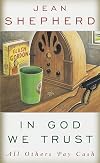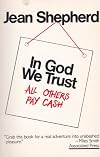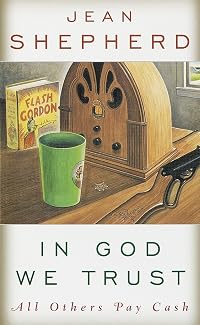
In God We Trust: All Others Pay Cash
by Jean Shepherd
On This Page
Description
A collection of humorous and nostalgic Americana stories—the beloved, bestselling classics that inspired the movie A Christmas StoryBefore Garrison Keillor and Spalding Gray there was Jean Shepherd: a master monologist and writer who spun the materials of his all-American childhood into immensely resonant—and utterly hilarious—works of comic art. In God We Trust: All Others Pay Cash represents one of the peaks of his achievement, a compound of irony, affection, and perfect detail that show more speaks across generations.
In God We Trust, Shepherd's wildly witty reunion with his Indiana hometown, disproves the adage “You can never go back.” Bending the ear of Flick, his childhood-buddy-turned-bartender, Shepherd recalls passionately his genuine Red Ryder BB gun, confesses adolescent failure in the arms of Junie Jo Prewitt, and relives a story of man against fish that not even Hemingway could rival. From pop art to the World's Fair, Shepherd's subjects speak with a universal irony and are deeply and unabashedly grounded in American Midwestern life, together rendering a wonderfully nostalgic impression of a more innocent era when life was good, fun was clean, and station wagons roamed the earth.
A comic genius who bridged the gap between James Thurber and David Sedaris, Shepherd may have accomplished for Holden, Indiana, what Mark Twain did for Hannibal, Missouri. show less
Tags
Recommendations
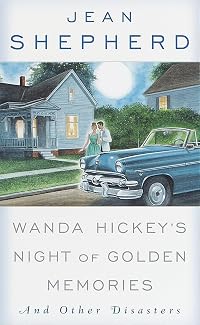
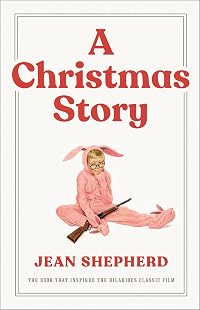


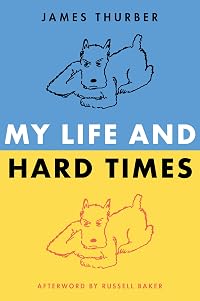







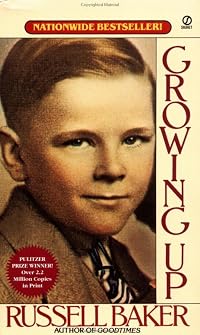
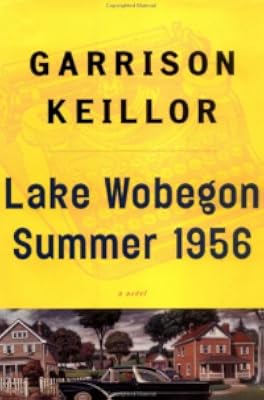
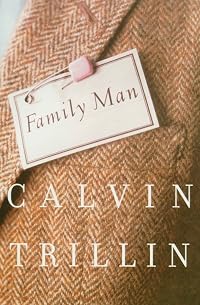


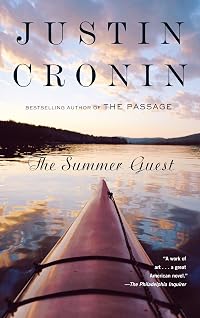






Member Recommendations
persky Daniel Pinkwater grew up listening to Shep's radio shows, and there is a common style of unexpected continuitity in the radio bits that are collected in his own autobiographies.
Member Reviews
I actually started reading this just before Christmas, but kept putting it down to read/finish other things. In case you’re not at all familiar with it, this is the book that the movie The Christmas Story is based on. My advice: If you like that movie, avoid this book. If you don’t like that movie, forget this book exists.
The cover blurb says that Shepherd bridges the gap between James Thurber and David Sedaris. But he’s neither as concise as Thurber nor as interesting as Sedaris. Neither is he as funny nor original as either one of them. Basically, Shepherd has maybe a half-dozen humorist tricks that he uses over and over again. If you’ve seen the movie, you’ll recognize them. There’s the “stuff of legend” trick, for show more example, where he remarks in one way or another that a particular event is still part of the lore of Cleveland Street to this day. Funny in the movie, not so much in the book—especially by the seventh time he uses it. There are a very few others, and these are the devices he turns to over and over again throughout the book.
And don’t even get me started on the frame. I’m not a big fan of frames as a storytelling device anyway, but (a) Shepherd’s particular frame is a really lame one, and (2) he’s not satisfied with just one frame, so most of the book exists within a double frame. Basically, the premise of the book is that he’s going back to his hometown and hooking up with an old friend (Flick, who’s in the movie) for drinks. They are bullshitting and Shepherd completely dominates the conversation with wistful stories from their youth. But he begins most of these stories for Flick by talking about some event that’s happened to him recently in his Life in the Big City. This is the double frame I’m referring to. You can imagine how annoying this gets.
I could go on and on, but I won’t. It’s a crappy book, and I only bothered finishing about 3/4 of it. It’s pretty rare that I consciously give up on a book, but I just can’t waste any more time with this one. Obviously, if I could have given it less than 1 star, I would have. show less
The cover blurb says that Shepherd bridges the gap between James Thurber and David Sedaris. But he’s neither as concise as Thurber nor as interesting as Sedaris. Neither is he as funny nor original as either one of them. Basically, Shepherd has maybe a half-dozen humorist tricks that he uses over and over again. If you’ve seen the movie, you’ll recognize them. There’s the “stuff of legend” trick, for show more example, where he remarks in one way or another that a particular event is still part of the lore of Cleveland Street to this day. Funny in the movie, not so much in the book—especially by the seventh time he uses it. There are a very few others, and these are the devices he turns to over and over again throughout the book.
And don’t even get me started on the frame. I’m not a big fan of frames as a storytelling device anyway, but (a) Shepherd’s particular frame is a really lame one, and (2) he’s not satisfied with just one frame, so most of the book exists within a double frame. Basically, the premise of the book is that he’s going back to his hometown and hooking up with an old friend (Flick, who’s in the movie) for drinks. They are bullshitting and Shepherd completely dominates the conversation with wistful stories from their youth. But he begins most of these stories for Flick by talking about some event that’s happened to him recently in his Life in the Big City. This is the double frame I’m referring to. You can imagine how annoying this gets.
I could go on and on, but I won’t. It’s a crappy book, and I only bothered finishing about 3/4 of it. It’s pretty rare that I consciously give up on a book, but I just can’t waste any more time with this one. Obviously, if I could have given it less than 1 star, I would have. show less
I grew up in Brooklyn in the 1950s. Late at night I would occasionally go into my parent’s bedroom. If my father’s light was on next to their bed his radio was on. There was Jean Shepard. No one else, just Jean Shepard going on and on. It was a thing of beauty. He always had something to say, no need to work off the comments of someone else. It was pure monologue. Astounding ability. When I came across this book’s title I immediately could hear Jean Shepard. It was the sort of thing he would be saying. I had to read this.
Unfortunately I was disappointed. My hopes were too high. I can’t for the life of me remember what Shepard’s subject was back in the 1950s, but I was not prepared for the subject of this book. Yes Shepard show more would reminisce. But he was remembering things that were before my time. The premise of this book is that he is a reporter from New York in the early sixties, so far so good. But he’s going back to where he grew up just outside of Gary Indiana in the thirties. He finds a local bar whose owner/bartender is one of his buddies from the old days. This provides him with the opportunity to find out what happened to so and so from their time together in the depression.
This leads to description and description of their old friend, remembering when this happened and learning whether they’ve moved on or are still tied to the old home town. Was their house still standing, did it burn down, what has replaced it, etc. Then there was the theater, what about that movie? Remember what happened? How about that teacher? What about that bully? Who did that girl marry? Who died in the war? It was tripping down memory lane. There were lots of references to people I knew something about, Mickey Rooney, Bob Hope, Gene Autrey, Sears Roebuck. There were many references to the industries that left long ago, the steel mills, the blast furnaces and the polluted air and dust they breathed with every breath. Then there were the cars we no longer hear about such as Horch and Hupmobile. And trips to the big city, Chicago, only thirty miles away. I had wanted to hear about Johnny Carson, Packards and Mommas and the Pappas. I felt left out.
Reading also unlocked for me Shepard’s secret. He repeated and repeated the same thing with minor modification over and over again. Great way to fill up empty air but makes for very slow moving plots which never seem to get anywhere. Another part of style was constant use of hyperbole. That was the greatest, the last time, never to be forgotten, once in a lifetime, the high point, the worst ever, etc. That was fine for a while but eventually got very tedious. Unfortunately for Shepard it sounded like…..Donald J Trump, yikes. Yes I realize this is guilt by association. but it got in the way of enjoying Shepard.
I don’t know if Shepard has written anything else. My hope is he would have at least moved on from the 1930s. show less
Unfortunately I was disappointed. My hopes were too high. I can’t for the life of me remember what Shepard’s subject was back in the 1950s, but I was not prepared for the subject of this book. Yes Shepard show more would reminisce. But he was remembering things that were before my time. The premise of this book is that he is a reporter from New York in the early sixties, so far so good. But he’s going back to where he grew up just outside of Gary Indiana in the thirties. He finds a local bar whose owner/bartender is one of his buddies from the old days. This provides him with the opportunity to find out what happened to so and so from their time together in the depression.
This leads to description and description of their old friend, remembering when this happened and learning whether they’ve moved on or are still tied to the old home town. Was their house still standing, did it burn down, what has replaced it, etc. Then there was the theater, what about that movie? Remember what happened? How about that teacher? What about that bully? Who did that girl marry? Who died in the war? It was tripping down memory lane. There were lots of references to people I knew something about, Mickey Rooney, Bob Hope, Gene Autrey, Sears Roebuck. There were many references to the industries that left long ago, the steel mills, the blast furnaces and the polluted air and dust they breathed with every breath. Then there were the cars we no longer hear about such as Horch and Hupmobile. And trips to the big city, Chicago, only thirty miles away. I had wanted to hear about Johnny Carson, Packards and Mommas and the Pappas. I felt left out.
Reading also unlocked for me Shepard’s secret. He repeated and repeated the same thing with minor modification over and over again. Great way to fill up empty air but makes for very slow moving plots which never seem to get anywhere. Another part of style was constant use of hyperbole. That was the greatest, the last time, never to be forgotten, once in a lifetime, the high point, the worst ever, etc. That was fine for a while but eventually got very tedious. Unfortunately for Shepard it sounded like…..Donald J Trump, yikes. Yes I realize this is guilt by association. but it got in the way of enjoying Shepard.
I don’t know if Shepard has written anything else. My hope is he would have at least moved on from the 1930s. show less
I selected In God We Trust: All Others Pay Cash because I love the movie, The Christmas Story, which is based on this book by Jean Shepherd. Like many books and their movie adaptations, there are many differences between film and text. What is unusual, I think, in this case is that my over-familiarity with the movie forced the book to live up to its comedic standards (I would argue that it's usually the other way around). In many ways, I was not disappointed.
Ralph Parker returns to his hometown in Indiana and finds his friend, Flick, at his bar. Together, they drink and reminisce about their childhoods during the Great Depression. Here, we find the wonderful stories that make up the movie: the Red Ryder BB gun, the infamous Leg Lamp show more and the fight with the yellow-eyed bully. But there's a lot more. We learn more about the characters and get a first-hand account on what it was like to live during the Great Depression. We also learn about Ralph's life as an adult, living in New York City.
Shepherd's use of language in this book left me in tears. His grasp of irony and wit parallels Mark Twain and James Thurber. He made the ordinary into magnificent pieces of humor. Modern writers like Christopher Moore and Carl Hiassen surely must owe their craft to humorists like Jean Shepherd.
A delightful treat, just like the movie, I am glad to have read In God We Trust and would recommend to anyone who enjoys reading Coming of Age Tales or humorous stories - or just loves the best Christmas movie ever. show less
Ralph Parker returns to his hometown in Indiana and finds his friend, Flick, at his bar. Together, they drink and reminisce about their childhoods during the Great Depression. Here, we find the wonderful stories that make up the movie: the Red Ryder BB gun, the infamous Leg Lamp show more and the fight with the yellow-eyed bully. But there's a lot more. We learn more about the characters and get a first-hand account on what it was like to live during the Great Depression. We also learn about Ralph's life as an adult, living in New York City.
Shepherd's use of language in this book left me in tears. His grasp of irony and wit parallels Mark Twain and James Thurber. He made the ordinary into magnificent pieces of humor. Modern writers like Christopher Moore and Carl Hiassen surely must owe their craft to humorists like Jean Shepherd.
A delightful treat, just like the movie, I am glad to have read In God We Trust and would recommend to anyone who enjoys reading Coming of Age Tales or humorous stories - or just loves the best Christmas movie ever. show less
another solid work from Mr. Sheperd. it was great to see where all the stories from the movie A Christmas Story came from and even more impressive to see how they wove them together into the masterpiece of the movie. very well done.
back to the book- Ralphie visiting his home town after living in New York successfully (he nonchalantly says that he has a Rollex) and stopping by Flick's bar to reminisce was the glue that held the stories together in this one. A great premise and one that worked.
I admit that the strangest aspect for me was seeing these characters as adults and hearing about things they did when older. sometimes, it was even a bit shocking like when they off-handedly mention that Schwartz was shot down over Italy during the show more war and never found. somehow, these characters matter and it felt like a low blow to find out about Schwartz that way.
As always, Sheperd turned the nostalgic melancholy lurking in the midst of all of his stories into hilarious smirks at the silly things adults do to maintain their often ridiculous world and how kids survive to become a part of it. show less
back to the book- Ralphie visiting his home town after living in New York successfully (he nonchalantly says that he has a Rollex) and stopping by Flick's bar to reminisce was the glue that held the stories together in this one. A great premise and one that worked.
I admit that the strangest aspect for me was seeing these characters as adults and hearing about things they did when older. sometimes, it was even a bit shocking like when they off-handedly mention that Schwartz was shot down over Italy during the show more war and never found. somehow, these characters matter and it felt like a low blow to find out about Schwartz that way.
As always, Sheperd turned the nostalgic melancholy lurking in the midst of all of his stories into hilarious smirks at the silly things adults do to maintain their often ridiculous world and how kids survive to become a part of it. show less
My best friend in high school introduced me to Jean Shepherd and I have been a fan of his stories ever since. This was the book that introduced me to "Ralphie". It tells the story of both the adult Ralph who lives in New York. He returns to his hometown for a visit, and meets his buddy Flick, who runs a bar in that town. But those chapters inevitably lead to old stories which introduce the young "Ralphie" and his friends. The Ralph and Flick half really just serves as a setup and the exposition of why Ralph would head off to New York as he describes the hard-scrabble nature of Flick’s daily burden. The other half does a great job describing life for a kid in the 1930s. The result is sheer reading pleasure. My 1967 Bantam paperback show more edition is showing signs of age (so am I). show less
I watch "A Christmas Story" quite frequently each Christmas season, as I am sure that many Americans do. For some time, I have taken note as it begins that it is based on this book, and have been interested in seeking it out and reading it. I finally did it this Christmas season (2017).
The book has a few chapters, and a few parts of chapters that are reflected in the movie. These reflections are sometimes very clear, and sometimes they are dim reflections. The movie is very cheerful and funny. The book has funny parts, but it also has reflective, sad, and observant moods. Personally, I really enjoyed these viewpoints.
The storyteller proclaims that the book is a work of fiction, but even a casual search about the book's background show more indicates that it is semi-autobiographical. The view points are from various ages between around 7 to maybe 16 or so, as well as viewpoints of a grown man talking to an old friend and reminiscing. We therefore get Indiana depression era reminisces mixed in with what seems to be mid 60's reflections about mid-America and New York (where the storyteller currently resides). I found the mixture of these reflections to be thought educing and enjoyable.
The book is laid out in a manner of a man returning to his old haunt, and grateful that it is only for a short visit. The charms of the place are covered with the mundane and the muck of normal life in a blue collar area. Shepherd relates stories of the cold (which is ever present, and I can attest to as I lived nearby in Wisconsin during the winter), boyhood experiences such as candy, sports, various school adventures, blind dates, and then some adult experiences from the perspective of a boy such as fireworks, fishing, and taxes. The story about taxes is particularly poignant, especially as it is told pretty straight forward. This quote was one of my favorites, which came at the conclusion of that story: " I'll tell you one thing," flick said, "I Keep up with the bills. I don't owe nobody..."
This type of book brings me great enjoyment, fulfillment, and often brings about a self-awareness and introspection. Perhaps it was even stronger because of the time of year that I read it. show less
The book has a few chapters, and a few parts of chapters that are reflected in the movie. These reflections are sometimes very clear, and sometimes they are dim reflections. The movie is very cheerful and funny. The book has funny parts, but it also has reflective, sad, and observant moods. Personally, I really enjoyed these viewpoints.
The storyteller proclaims that the book is a work of fiction, but even a casual search about the book's background show more indicates that it is semi-autobiographical. The view points are from various ages between around 7 to maybe 16 or so, as well as viewpoints of a grown man talking to an old friend and reminiscing. We therefore get Indiana depression era reminisces mixed in with what seems to be mid 60's reflections about mid-America and New York (where the storyteller currently resides). I found the mixture of these reflections to be thought educing and enjoyable.
The book is laid out in a manner of a man returning to his old haunt, and grateful that it is only for a short visit. The charms of the place are covered with the mundane and the muck of normal life in a blue collar area. Shepherd relates stories of the cold (which is ever present, and I can attest to as I lived nearby in Wisconsin during the winter), boyhood experiences such as candy, sports, various school adventures, blind dates, and then some adult experiences from the perspective of a boy such as fireworks, fishing, and taxes. The story about taxes is particularly poignant, especially as it is told pretty straight forward. This quote was one of my favorites, which came at the conclusion of that story: " I'll tell you one thing," flick said, "I Keep up with the bills. I don't owe nobody..."
This type of book brings me great enjoyment, fulfillment, and often brings about a self-awareness and introspection. Perhaps it was even stronger because of the time of year that I read it. show less
Received this and another Jean Shepherd book as Christmas gifts from my parents. My dad loves Jean Shepherd and one of our family Christmas traditions is watching A Christmas Story (and saying some of the more infamous lines with the movie). I can see why the movie has such staying power - it uses three or four of the stories from this book, most of them almost word for word, and Shepherd's writing is storytelling at its best. You get sucked in immediately, the details plop you right into his world, and the epic tale unwinds before you like a masterful symphony.
Members
- Recently Added By
Lists

NPR Readers Poll: 100 Favorite Funny Books
100 works; 5 members

Read
293 works; 4 members
Author Information

Jean Shepherd is a multitalented author and actor. He created the popular MGM film A Christmas Story, along with Ollie Hopnoodle's Haven of Bliss, The Phantom of the Open Hearth, The Great American Fourth of July, and Other Disasters, and The Star-Crossed Romance of Josephine Cosnowski. His books include In God We Trust (All Others Pay Cash), show more Wanda Hickey's Night of Golden Memories, and Other Disasters, and The Ferrari in the Bedroom. Shepherd has been called "America's leading satirist of the underground." show less
Work Relationships
Has the adaptation
Common Knowledge
- Original publication date
- 1966
- People/Characters
- Ralph Parker
- Important places
- Hohman, Indiana, USA
- Related movies
- A Christmas Story (1983 | IMDb)
- Epigraph
- There are at least two kinds of education.
. . . George Ade - Dedication
- To my Mother, and my Kid Brother
And the Rest of the Bunch . . . - First words
- I felt like a spy.
- Last words
- (Click to show. Warning: May contain spoilers.)I waited briefly at the light and then turned left, toward the bus stop.
Classifications
Statistics
- Members
- 912
- Popularity
- 29,417
- Reviews
- 23
- Rating
- (3.97)
- Languages
- English
- Media
- Paper, Audiobook, Ebook
- ISBNs
- 6
- ASINs
- 9