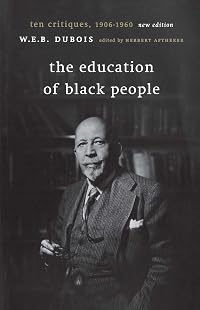
The Education of Black People: Ten Critiques, 1906 - 1960
by W. E. B. Du Bois
61 Members (5.00)
On This Page
Description
Undoubtedly the most influential black intellectual of the twentieth century and one of America's finest historians, W.E.B. DuBois knew that the liberation of the African American people required liberal education and not vocational training. He saw education as a process of teaching certain timeless values: moderation, an avoidance of luxury, a concern for courtesy, a capacity to endure, a nurturing love for beauty. At the same time, DuBois saw education as fundamentally subversive. This show more was as much a function of the well-established role of educationfrom Plato forwardas the realities of the social order under which he lived. He insistently calls for great energy and initiative; for African Americans controlling their own lives and for continued experimentation and innovation, while keeping education's fundamentally radical nature in view. Though containing speeches written nearly one-hundred years ago, and on a subject that has seen more stormy debate and demagoguery than almost any other in recent history, The Education of Black People approaches education with a timelessness and timeliness, at once rooted in classical thought that reflects a remarkably fresh and contemporary relevance. show lessTags
Recommendations

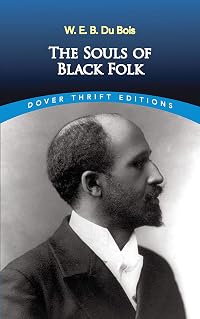







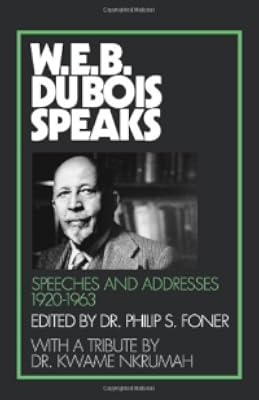














Member Reviews
Members
- Recently Added By
Author Information

187+ Works 13,039 Members
Civil rights leader and author, William Edward Burghardt Du Bois was born in Great Barrington, Massachusetts on February 23, 1868. He earned a B.A. from both Harvard and Fisk universities, an M.A. and Ph.D. from Harvard, and studied at the University of Berlin. He taught briefly at Wilberforce University before he came professor of history and show more economics at Atlanta University in Ohio (1896-1910). There, he wrote The Souls of Black Folk (1903), in which he pointed out that it was up to whites and blacks jointly to solve the problems created by the denial of civil rights to blacks. In 1905, Du Bois became a major figure in the Niagara Movement, a crusading effort to end discrimination. The organization collapsed, but it prepared the way for the founding of the National Association for the Advancement of Colored People (NAACP), in which Du Bois played a major role. In 1910, he became editor of the NAACP magazine, a position he held for more than 20 years. Du Bois returned to Atlanta University in 1932 and tried to implement a plan to make the Negro Land Grant Colleges centers of black power. Atlanta approved of his idea, but later retracted its support. When Du Bois tried to return to NAACP, it rejected him too. Active in several Pan-African Congresses, Du Bois came to know Fwame Nkrumah, the first president of Ghana, and Jono Kenyatta the president of Kenya. In 1961, the same year Du Bois joined the Communist party, Nkrumah invited him to Ghana as a director of an Encyclopedia Africana project. He died there on August 27, 1963, after becoming a citizen of that country. (Bowker Author Biography) show less
Classifications
- Genres
- Nonfiction, History, Philosophy, General Nonfiction, Politics and Government
- DDC/MDS
- 370.11 — Society, government, & culture Education Education Theory of education; Meaning; Aim Objectives of Education
- LCC
- LC2801 .D79 — Education Special aspects of education Special aspects of education Education of special classes of persons Blacks. African Americans
- BISAC
Statistics
- Members
- 61
- Popularity
- 508,838
- Rating
- (5.00)
- Languages
- English
- Media
- Paper
- ISBNs
- 4