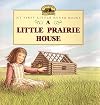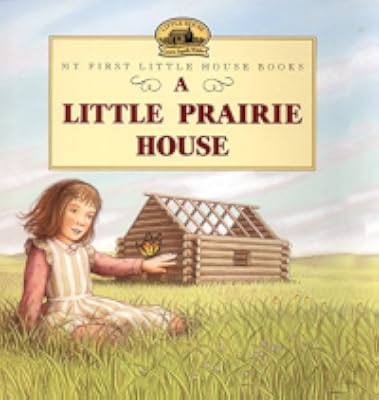
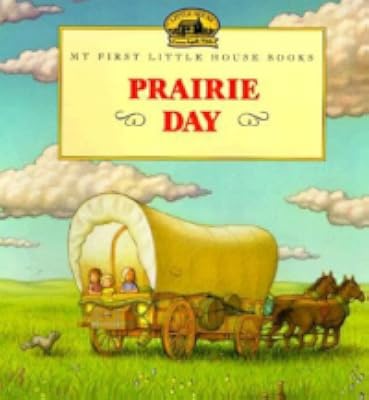
A Little Prairie House (Little House Picture Book)
by Laura Ingalls Wilder
My First Little House Books
On This Page
Description
A family travels to a new home on the prairie, where they build a house and meet a friendly neighbor.Tags
Recommendations




Member Reviews
A great introduction to the beloved Little House series. Wonderful pictures to help illustrate a bygone era for young children. Great to read along with the Little House first chapter book series.
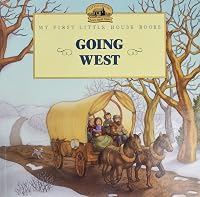
This book was great! I liked the plot and how it gave us insight into history and how things used to be, through the use of pictures and words. The book is about a little girl named Laura, who travels by covered wagon, with her family. The plot is interesting because it isn’t something that we see today. That ties into the illustrations in this book. For example, it shows Laura and her family in the covered Wagon. Nowadays, all we see are cars. I also like the plot because her family was traveling to find themselves a place to build their house. Today, people usually buy a house or buy a piece of land, but our reasons for buying houses in a certain places today are different than they used to be. This book also showed the difference show more between today and long ago, regarding how they got from place to place. Not only did they travel on a covered wagon, but also they had no roads. For example, one page says, “when the sun rose, they were driving across the prairie. There was no road to drive on, so Pet and Patty, the two gentle mustangs, waded through the grass.” Along with this was an image of the mustangs guiding the covered wagon through the grass. I also enjoyed the word choice and vocabulary in this book. It helped me to paint a picture in my mind because it was very expressive and detailed. For example, the word, “waded,” helped me to visualize how the mustangs lead the wagon through the grass. The main idea of this book is to show how things used to be and how they are different in today’s world. show less
Summary: This book is a historical fiction book about a little girl named Laura who traveled in a covered wagon across the giant prairie. Laura’s Pa, Ma, and her big sister Mary and the families bulldog Jack tagged along. They traveled searching for the perfect piece of land for them to build a house and call home. The book illustrated what a daily life on the trail would look like, sleeping outside, cooking food on a fire and the overall experience of living in the late 1800’s.
Personal Review: I think this is a very cute book. The book is great to show students what living in the 1800’s would be like. I thought the illustrations were cute and very inviting. I love how Mom and Dad were Ma and Pa very true to the time.
Classroom show more extensions: Students could get into groups and have a discussion on if they lived in the late 1800’s where would they move to and why. Another great activity for the students would be to have the students make a list of the things that they would pack when moving and a list that they think Laura packed and compare. show less
Personal Review: I think this is a very cute book. The book is great to show students what living in the 1800’s would be like. I thought the illustrations were cute and very inviting. I love how Mom and Dad were Ma and Pa very true to the time.
Classroom show more extensions: Students could get into groups and have a discussion on if they lived in the late 1800’s where would they move to and why. Another great activity for the students would be to have the students make a list of the things that they would pack when moving and a list that they think Laura packed and compare. show less
I enjoyed this book for it's plot and illustrations. I liked that he plot is organized and moves in chronological order. For example, the story begins with the family traveling in their covered wagon across the country then follows them as they begin to build their home. The plot was realistic and believable.
I liked that the illustrations were appropriate for the book and believe they enhanced the text. The illustrations help the readers determine the setting and time period of the book. The illustrations depict the characters wearing "old" clothes such as bonnets and driving a covered wagon. These illustrations date the story as being from a different time period.
The main purpose of this text is to describe how American pioneers lived show more in the late 1800s.
Writing: engaging, organized, flows, paced well, etc.
Characters: believable, well-developed, etc.
Point of view: first person (I), third person (he/she), etc.
Plot: organized, pace, suspense/tension, conflict, etc.
Illustrations: enhance the story, style fits the written text, appropriate to the mood of the story, etc. show less
I liked that the illustrations were appropriate for the book and believe they enhanced the text. The illustrations help the readers determine the setting and time period of the book. The illustrations depict the characters wearing "old" clothes such as bonnets and driving a covered wagon. These illustrations date the story as being from a different time period.
The main purpose of this text is to describe how American pioneers lived show more in the late 1800s.
Writing: engaging, organized, flows, paced well, etc.
Characters: believable, well-developed, etc.
Point of view: first person (I), third person (he/she), etc.
Plot: organized, pace, suspense/tension, conflict, etc.
Illustrations: enhance the story, style fits the written text, appropriate to the mood of the story, etc. show less
Book summary- this is a story of a girl and family and there quest across the midwest.
Content summary- historical fiction, family
Content summary- historical fiction, family
A family travels to a new home on the prairie where they build a new house and meet a new neighbor.
Ratings
Members
- Recently Added By
Author Information

189+ Works 152,549 Members
Wilder was born near Pepin, Wisconsin; attended school in DeSmet, South Dakota; and became a teacher before she was 16, teaching for seven years in Dakota Territory schools. She and her husband, Almanzo Wilder, farmed near DeSmet for about nine years and then moved to Mansfield, Missouri, where they lived out the rest of their days. Wilder did not show more write her first book, Little House in the Big Woods, about her early years in Wisconsin, until late in life, on the urging of her daughter, Rose Wilder Lane. It was first published in 1932. She followed this with Farmer Boy (1933), a book about her husband's childhood in New York State. She then completed a series of books about her life as she and her family moved westward along the frontier. Little House on the Prairie (1935) records the family's move to Kansas. On the Banks of Plum Creek (1937) describes the family's move to Minnesota. By the Shores of Silver Lake (1939) records the family's move to South Dakota, as do the final three books in the series: The Long Winter, Little Town on the Prairie (1941), and These Happy Golden Years (1943), which ends with her marriage to Almanzo Wilder. Three of Wilder's books were published posthumously: On the Way Home, a diary of her trip to Mansfield; The First Four Years, an unfinished book about her first four years of marriage; and West from Home, letters she wrote on a visit to her daughter in San Francisco, none of them up to the quality of her earlier books. At her best, Wilder employs a clear, simple style, a wealth of fascinating detail, and a straightforward narrative style. Her tales of a strong, traditional frontier family that endures the hardships of the late eighteenth century are seen through the eyes of a child, which endears them to young readers. Her work is possibly the best example of historical realistic fiction for children. (Bowker Author Biography) show less
Series

Classifications
Statistics
- Members
- 984
- Popularity
- 26,665
- Reviews
- 6
- Rating
- (4.18)
- Languages
- English
- Media
- Paper
- ISBNs
- 11
- ASINs
- 3