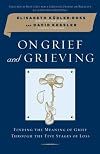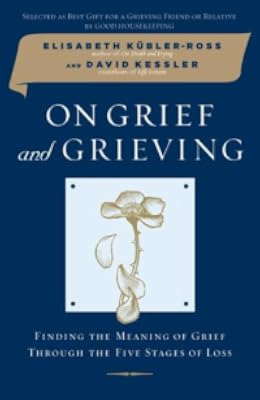
On Grief and Grieving: Finding the Meaning of Grief Through the Five Stages of Loss
by Elisabeth Kübler-Ross, David Kessler
On This Page
Description
Ten years after the death of Elisabeth Kübler-Ross, this commemorative edition of her final book combines practical wisdom, case studies, and the authors' own experiences and spiritual insight to explain how the process of grieving helps us live with loss. Now with an introduction by Maria Shriver and an additional resources section.Elisabeth Kübler-Ross's On Death and Dying changed the way we talk about the end of life. Before her own death in 2004, she and David Kessler completed On show more Grief and Grieving, which looks at the way we experience the process of grief.
Just as On Death and Dying taught us the five stages of death—denial, anger, bargaining, depression, and acceptance—On Grief and Grieving applies these stages to the grieving process and weaves together theory, inspiration, and practical advice, including sections on sadness, hauntings, dreams, isolation, and healing. This is "a fitting finale and tribute to the acknowledged expert on end-of-life matters" (Good Housekeeping). show less
Tags
Recommendations














Member Reviews
Well-written and poignant, this book is quite heartwarming and helpful. There is a disclaimer at the beginning of the book that tells us that grief is different for everyone, and that if you are really having a hard time you should see a therapist.
Using personal stories and other contributions, this book talks about the stages of grief, but also how grief manifests itself or could manifest itself in you. The five stages are too cut and dry to apply to every single person, and the book addresses that fact. It also claims that many people misunderstand the five stages as a whole. To me, this is also understandable. Take denial for instance; if someone has died that is close to you, you may accept their being gone, but expect to hear show more their voice, or see them in their favorite chair or something along those lines.
Throughout, it talks about how to deal with the fact that your loved one is gone in a consoling and understanding manner. Of course people want you to be happy, but grief is a natural part of loss and it is healthy to let it all out, even if it does make others uncomfortable.
It is split into seven sections with commentary by the authors occupying the last two sections. The first covers the classic five stages one by one and how they might manifest themselves in a person. The second section covers the Inner World of Grief. This talks about how you can deal with it by telling stories, cracking their jokes, seeing angels, getting dreams about them and so on. The third section talks about the Outer World of Grief. This is focused on stuff like "How do I celebrate our Wedding Anniversary?" or "what do I do with all of these possessions?" The fourth section deals with specific situations. Say your loved one had Alzheimer's Disease. It relates stories of people that had to go through that sort of thing and reach terrible decisions and regret those decisions later. It also talks about what to say to children about dying and how to handle their grief. The Fifth section talks about the changing face of grief, and the final two sections are personal notes from the authors on the grief they had experienced in their lives.
Final thoughts: this was a wonderful book, and if you are grieving or know someone grieving, this might help to relate to them or give them some solace. show less
Using personal stories and other contributions, this book talks about the stages of grief, but also how grief manifests itself or could manifest itself in you. The five stages are too cut and dry to apply to every single person, and the book addresses that fact. It also claims that many people misunderstand the five stages as a whole. To me, this is also understandable. Take denial for instance; if someone has died that is close to you, you may accept their being gone, but expect to hear show more their voice, or see them in their favorite chair or something along those lines.
Throughout, it talks about how to deal with the fact that your loved one is gone in a consoling and understanding manner. Of course people want you to be happy, but grief is a natural part of loss and it is healthy to let it all out, even if it does make others uncomfortable.
It is split into seven sections with commentary by the authors occupying the last two sections. The first covers the classic five stages one by one and how they might manifest themselves in a person. The second section covers the Inner World of Grief. This talks about how you can deal with it by telling stories, cracking their jokes, seeing angels, getting dreams about them and so on. The third section talks about the Outer World of Grief. This is focused on stuff like "How do I celebrate our Wedding Anniversary?" or "what do I do with all of these possessions?" The fourth section deals with specific situations. Say your loved one had Alzheimer's Disease. It relates stories of people that had to go through that sort of thing and reach terrible decisions and regret those decisions later. It also talks about what to say to children about dying and how to handle their grief. The Fifth section talks about the changing face of grief, and the final two sections are personal notes from the authors on the grief they had experienced in their lives.
Final thoughts: this was a wonderful book, and if you are grieving or know someone grieving, this might help to relate to them or give them some solace. show less
Over a period of having lost my first son aged 19, then my wife aged 72 and finally my other son aged 38 I desperately needed help with the grieving process. This book gave me that template for understanding the various levels of grief and how people deal and benefit from good, simple and practical examples. It will serve as template I can reuse when the going gets tough and I need further help.
At last! Someone who really does understand!
This volume explores all the aspects of death, grief and loss and gives a deeper understanding of how and why grief is necessary. Having lost my beloved husband suddenly and far too early I had been looking for answers which I thought no-one could ever answer. This book does. Although it cannot take the pain and loss away, it made me look at these horrible feelings in a different light. Grief is dreadful but however bad it is it has a purpose - it is a healing process. That may sound simple but knowing that eventually it will heal me makes understand why I must go through it.
It would be great if everyone involved with losing a loved one or supporting someone who is bereaved reads this book - show more a lot of misunderstanding would be eliminated.
Thank you to a great lady who passed away after writing this book, I hope her family find the strength that I haven't yet. And bless you David Kessler. show less
This volume explores all the aspects of death, grief and loss and gives a deeper understanding of how and why grief is necessary. Having lost my beloved husband suddenly and far too early I had been looking for answers which I thought no-one could ever answer. This book does. Although it cannot take the pain and loss away, it made me look at these horrible feelings in a different light. Grief is dreadful but however bad it is it has a purpose - it is a healing process. That may sound simple but knowing that eventually it will heal me makes understand why I must go through it.
It would be great if everyone involved with losing a loved one or supporting someone who is bereaved reads this book - show more a lot of misunderstanding would be eliminated.
Thank you to a great lady who passed away after writing this book, I hope her family find the strength that I haven't yet. And bless you David Kessler. show less
Ein geliebter Mensch stirbt - und wie riesige Wellen überschwemmen einen die unterschiedlichsten Gefühle: Schmerz, Verzweiflung, Wut, Zorn, Reue... Wie nur wieder ins normale Leben zurückfinden? Es dünkt unmöglich.
Dieses Hörbuch scheint einen Weg dorthin zu wissen, wie schon der Titel und auch der Untertitel (Den Sinn des Trauerns durch fünf Stadien des Verlusts finden) aussagt. Und in der Tat: Voller Teilnahme und Mitgefühl für die individuelle Situation werden die unterschiedlichen Emotionen beschrieben und erklärt, die die Trauernden durchleben. Jede Trauer ist einzigartig, kein Schmerz vergleichbar mit einem anderen, was die Gefühle des Verlassenseins und der Einsamkeit noch verstärkt. Dies vermittelt den Zuhörenden show more das Empfinden verstanden zu werden und öffnet sie für Vorschläge der Autoren, wie sie mit ihrer Trauer leben können.
Hannelore Hoger ist die ideale Vortragende für diese Beiträge. Mit ihrer rauen Stimme vermittelt sie so viel Anteilnahme und Mitgefühl, dass man glaubt, man höre einer guten Freundin zu.
Dennoch hinterlässt die CD ein etwas zwiespältiges Gefühl: Drei der sechs Beiträge, die insgesamt 3/5 der Gesamtlaufzeit umfassen, sind eher autobiographisch gehalten als im Stil eines Ratgebers. David Kessler erzählt zum einen von seinem Abschied von Elisabeth Kübler-Ross, die kurz nach Fertigstellung dieses Buches, das der CD zugrunde liegt, starb. Und zum andern, wie er persönlich seine Trauer erlebt und mit ihr lebt. Im dritten Beitrag schildert die Autorin in einer Art Kurzbiographie ihr Leben und den Weg, der sie zu dieser Auseinandersetzung mit Trauer, Leben und Tod führte. Auch hier finden sich Beispiele, die bei den Zuhörenden das Verständnis für ihre Situation vergrößern, doch sie sind nicht der eigentliche Inhalt dieser Kapitel. Der eigentliche 'Ratgeberteil', von dem sich akut Trauernde und Verzweifelte Hilfe erhoffen, fällt somit deutlich zu kurz aus. Alle Anderen, die sich grundsätzlich mit dem Thema Trauer beschäftigen möchten, ist die CD durchaus zu empfehlen - nicht zuletzt wegen Hannelore Hoger. show less
Dieses Hörbuch scheint einen Weg dorthin zu wissen, wie schon der Titel und auch der Untertitel (Den Sinn des Trauerns durch fünf Stadien des Verlusts finden) aussagt. Und in der Tat: Voller Teilnahme und Mitgefühl für die individuelle Situation werden die unterschiedlichen Emotionen beschrieben und erklärt, die die Trauernden durchleben. Jede Trauer ist einzigartig, kein Schmerz vergleichbar mit einem anderen, was die Gefühle des Verlassenseins und der Einsamkeit noch verstärkt. Dies vermittelt den Zuhörenden show more das Empfinden verstanden zu werden und öffnet sie für Vorschläge der Autoren, wie sie mit ihrer Trauer leben können.
Hannelore Hoger ist die ideale Vortragende für diese Beiträge. Mit ihrer rauen Stimme vermittelt sie so viel Anteilnahme und Mitgefühl, dass man glaubt, man höre einer guten Freundin zu.
Dennoch hinterlässt die CD ein etwas zwiespältiges Gefühl: Drei der sechs Beiträge, die insgesamt 3/5 der Gesamtlaufzeit umfassen, sind eher autobiographisch gehalten als im Stil eines Ratgebers. David Kessler erzählt zum einen von seinem Abschied von Elisabeth Kübler-Ross, die kurz nach Fertigstellung dieses Buches, das der CD zugrunde liegt, starb. Und zum andern, wie er persönlich seine Trauer erlebt und mit ihr lebt. Im dritten Beitrag schildert die Autorin in einer Art Kurzbiographie ihr Leben und den Weg, der sie zu dieser Auseinandersetzung mit Trauer, Leben und Tod führte. Auch hier finden sich Beispiele, die bei den Zuhörenden das Verständnis für ihre Situation vergrößern, doch sie sind nicht der eigentliche Inhalt dieser Kapitel. Der eigentliche 'Ratgeberteil', von dem sich akut Trauernde und Verzweifelte Hilfe erhoffen, fällt somit deutlich zu kurz aus. Alle Anderen, die sich grundsätzlich mit dem Thema Trauer beschäftigen möchten, ist die CD durchaus zu empfehlen - nicht zuletzt wegen Hannelore Hoger. show less
This is the kind of book that will probably only really be of interest to someone who has experienced or is about to experience the loss of someone they love. I have found it helpful, much more helpful than "On Death and Dying". "On Death and Dying" in its day was *the* book to read if you were facing your own imminent mortality, but it was and is less helpful for those people being left behind. "On Grief and Grieving" better supports the thoughts and feelings of the survivors and is all the more poignant for having been written by Elisabeth Kubler-Ross and David Kessler while Elisabeth herself was dying.
I bought it primarily to help me cope with my mother's passing, but it's also been a help as I try to deal with the recent death of a show more beloved family pet. There's a reason that Good Housekeeping selected this book as the best gift for a grieving friend or relative. show less
I bought it primarily to help me cope with my mother's passing, but it's also been a help as I try to deal with the recent death of a show more beloved family pet. There's a reason that Good Housekeeping selected this book as the best gift for a grieving friend or relative. show less
Of all the books I devoured after my husband passed away, this one was most helpful to me. While many of Kübler-Ross' books focus on the dying, this book is for those of us who are left behind to grieve and find our way through an unimaginable and indescribable loss.
On Grief and Grieving begins by describing the five stages of grief which include denial, anger, bargaining, depression and acceptance. These can last for different periods of time, or we can go through all of them in one day. This book helped me to understand the path of grief that I was walking. For the first time, I could identify with every feeling and situation described. It was a great comfort to know that my feelings were normal and that I was not alone. Grief is a show more part of the healing. show less
On Grief and Grieving begins by describing the five stages of grief which include denial, anger, bargaining, depression and acceptance. These can last for different periods of time, or we can go through all of them in one day. This book helped me to understand the path of grief that I was walking. For the first time, I could identify with every feeling and situation described. It was a great comfort to know that my feelings were normal and that I was not alone. Grief is a show more part of the healing. show less
I read On Grief and Grieving for a couple of reasons. One, my husband and I have experienced a handful of significant losses in the past two years and we’re both still dealing with the effects of that. Our grief counselor suggested this book. Two, I’m writing a novel in which the main characters deal with a huge loss (art imitating life?) and I wanted more insight into how grief works and how different people grieve. It’s a great book, full of information that will shed light on an often-confusing darkness and help you feel less alone. Grief is a strange animal and this book is all about embracing that fact and being patient with the process. I plan to keep this book on the shelf for future hard times. I know it will come in handy.
Members
- Recently Added By
Lists

Deathreads
78 works; 2 members

Men's healing resources
750 works; 1 member

Grief
15 works; 1 member

Psychology: Abuse, Grief, Self-Help
189 works; 1 member
Author Information

73+ Works 9,484 Members
Elisabeth Kubler-Ross was a psychiatrist with a particular interest in end-of-life care. Especially interested in the care of dying patients, she researched their attitudes to death.
8 Works 1,516 Members
David Kessler is one of the most well-known experts and lecturers on death and grief. His first book, The Needs of the Dying, a #1 best-selling hospice book, received praise by Mother Teresa. His services have been used by Elizabeth Taylor, Jamie Lee Curtis, and Marianne Williamson when their loved ones faced life-challenging illness. He also show more worked with late actors Anthony Perkins and Michael Landon. Kessler's work has been featured on CNN, NBC, PBS, and Entertainment Tonight; and he has been interviewed on Oprah Friends. He has been discussed in The New York Times and The New Yorker, and he is a contributing writer for Oparh.com as well as an AOL.com Health Expert. He has also written for The Boston Globe, the Los Angeles Times, the San Francisco Chronicle, The Wall Street Journal, and Anderson Cooper 360. Visions, Trips, and Crowded Rooms is a finalist for Best Spiritual Book of the Year in the 2010 Books for a Better Life Awards. show less
Common Knowledge
- Canonical title
- On Grief and Grieving: Finding the Meaning of Grief Through the Five Stages of Loss
- Original title
- On Grief and Grieving: Finding the Meaning of Grief Through the Five Stages of Loss
- Original publication date
- 2005
- Dedication
- For my beloved granddaughters, Emma Sadie and Sylvia Anna, who kept me going when I kept going. - Elisabeth
For my two dear friends, Berry Berenson Perkins and Wayne Hutchinson; love never dies. - David - First words
- On August 24, 2004, Elisabeth Kubler-Ross died. (Preface)
Anticipation heightens the senses and enhanced birthdays, holiday celebrations, vacations. (Introduction)
The stages have evolved since their introductio... (show all)n, and they have been very misunderstood over the past three decades. - Last words
- (Click to show. Warning: May contain spoilers.)Yours is the grace of life, death, and love.
Classifications
- Genres
- Nonfiction, General Nonfiction
- DDC/MDS
- 155.937 — Philosophy & psychology Psychology Differential and developmental psychology Environmental psychology Influences of Traumatic Experiences and Bereavement Death and Dying
- LCC
- BF575 .G7 .K82 — Philosophy, Psychology and Religion Psychology Psychology Affection. Feeling. Emotion
- BISAC
Statistics
- Members
- 748
- Popularity
- 37,810
- Reviews
- 20
- Rating
- (4.11)
- Languages
- 6 — Dutch, English, French, German, Korean, Spanish
- Media
- Paper, Audiobook, Ebook
- ISBNs
- 25
- ASINs
- 7