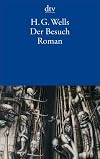
The Wonderful Visit
by H. G. Wells
On This Page
Description
What if an angel fell to earth—and nobody liked him? That's the fascinating premise at the heart of this engrossing fantasy tale from science fiction master H. G. Wells. Penned around the same time Wells captured the world's imagination with novels like The Time Machine and The War of the Worlds, The Wonderful Visit is a satisfying diversion for readers ready to let their imaginations run wild..
Tags
Recommendations















Member Reviews
In a parallel dimension, creatures of myth and fantasy live their magical lives without care, or pain, or need of food. One day, a rift opens, and one of its inhabitants falls through into late Victorian England. It's an angel. It's not really much of an angel. Its only miraculous ability seems to be an unnatural talent for playing the violin, but it does have wings and other angelic features.
The local English vicar, Mr. Hilyer, hears rumors of sightings of a large, strange bird in the area, and, being an amateur ornithologist, he does what all good naturalists of the time would do. He grabs his gun and heads out to bag the beast to be catalogued, stuffed, and added to his collection. The scene in which Wells describes this particular show more series of events had me cracking up. (This is one area in which I think modern society has made some progress.) Of course, Hilyer ends up shooting the angel and injuring its wing. After that, what's a Victorian vicar to do other than apologize politely and invite the mythological winged gentleman to be his houseguest while he recovers?
First published in 1895, Wells does here what he is well known for -- satirical comment on Victorian society. The angel, coming from an alternate reality that knows nothing of human culture, provides an outside perspective from which to examine it. Wells allows him to do so, and Mr. Angel's innocent and nonjudgmental observations can be quite charming. At one point he asks, insofar as people do not like pain, why is it that they keep inflicting it on one another. Good question, I thought.
Biases about race, gender, and social class are dragged out for dry ridicule, as are such things as clothing styles, beliefs, values and other attitudes. In one scene, Wells, as narrator, pops in briefly to apologize to the reader for making a servant appear too much like a real person and promises that he'll make sure they're portrayed more accurately as mindless stereotypes in some future story. This cracked me up, too, but I suppose I'm easily amused.
From an outside perspective, these Victorian conventions all seem somewhat arbitrary, if not silly, but perhaps no more so than our current ones. (I'm sure you can imagine a few examples.) The point Wells is trying to make, I think, is one that cannot be made too often. Question your assumptions. Question your values. Do they make sense? What do they say about you? This advice is as good today as it was in 1895.
I suppose I could pick on a few things to criticize about the book. It could have been funnier; the satire could have been sharper, but somehow I think Wells was intentionally trying to be, if not subtle, and least not blatantly offensive. His audience, after all, included people who held the attitudes he was holding up for ridicule, and you don't want to upset your readers too much. They might stop buying your books.
Both the beginning and the ending leave questions unanswered. How did the rift between dimensions open? Suddenly the angel simply appears here with no understanding of how. It leaves, presumably returning, in the same way, possibly taking with it a human housemaid, which it was previously explained does not happen. No one new ever shows up in the angel universe. No one is born, no one dies, and no one visits. Except for this, we don't know much about the parallel dimension that is home for angels and hippogriffs and magical beings of other types.
That's about as critical as I'm prepared to be. I found this book humorous and charming. Insofar as it is readily available free as an e-book, it is well worth the cost. (I snagged a freebie Kindle version from Amazon.) It is also worth the time it takes to read. I highly recommend it. show less
The local English vicar, Mr. Hilyer, hears rumors of sightings of a large, strange bird in the area, and, being an amateur ornithologist, he does what all good naturalists of the time would do. He grabs his gun and heads out to bag the beast to be catalogued, stuffed, and added to his collection. The scene in which Wells describes this particular show more series of events had me cracking up. (This is one area in which I think modern society has made some progress.) Of course, Hilyer ends up shooting the angel and injuring its wing. After that, what's a Victorian vicar to do other than apologize politely and invite the mythological winged gentleman to be his houseguest while he recovers?
First published in 1895, Wells does here what he is well known for -- satirical comment on Victorian society. The angel, coming from an alternate reality that knows nothing of human culture, provides an outside perspective from which to examine it. Wells allows him to do so, and Mr. Angel's innocent and nonjudgmental observations can be quite charming. At one point he asks, insofar as people do not like pain, why is it that they keep inflicting it on one another. Good question, I thought.
Biases about race, gender, and social class are dragged out for dry ridicule, as are such things as clothing styles, beliefs, values and other attitudes. In one scene, Wells, as narrator, pops in briefly to apologize to the reader for making a servant appear too much like a real person and promises that he'll make sure they're portrayed more accurately as mindless stereotypes in some future story. This cracked me up, too, but I suppose I'm easily amused.
From an outside perspective, these Victorian conventions all seem somewhat arbitrary, if not silly, but perhaps no more so than our current ones. (I'm sure you can imagine a few examples.) The point Wells is trying to make, I think, is one that cannot be made too often. Question your assumptions. Question your values. Do they make sense? What do they say about you? This advice is as good today as it was in 1895.
I suppose I could pick on a few things to criticize about the book. It could have been funnier; the satire could have been sharper, but somehow I think Wells was intentionally trying to be, if not subtle, and least not blatantly offensive. His audience, after all, included people who held the attitudes he was holding up for ridicule, and you don't want to upset your readers too much. They might stop buying your books.
Both the beginning and the ending leave questions unanswered. How did the rift between dimensions open? Suddenly the angel simply appears here with no understanding of how. It leaves, presumably returning, in the same way, possibly taking with it a human housemaid, which it was previously explained does not happen. No one new ever shows up in the angel universe. No one is born, no one dies, and no one visits. Except for this, we don't know much about the parallel dimension that is home for angels and hippogriffs and magical beings of other types.
That's about as critical as I'm prepared to be. I found this book humorous and charming. Insofar as it is readily available free as an e-book, it is well worth the cost. (I snagged a freebie Kindle version from Amazon.) It is also worth the time it takes to read. I highly recommend it. show less
"Truly this is no world for an Angel" surmises the Angel towards the end of H G Wells delightful second novel. The plot is a simple fantasy tale: An angel falls down to earth and is promptly shot at by a vicar, out looking to collect rare specimens; the wounded angel is nursed by the vicar who dares not reveal to anybody else the true nature of what he has collected. The angel is completely at a loss in the local village and within a week has managed to shock and incite such hatred from all the locals that he is effectively run out of town. Wells uses the story to satirise small town life in the late Victorian age and also peoples hatred of anything and anyone who appears an outsider.
This is a fantasy firmly grounded in the time of it's show more publication, people would have recognised the typical human attitudes that Wells depicts here and it is a winning combination with his descriptions of the beauty of the angel and the brief glimpses of the world that he inhabits. There are times however when the satire bites deep. This is Mr Hilyer the vicar describing his role at a burial service to the Angel (there is no pain or death in the angels world):
"And afterwards when they are falling to pieces, I try and persuade them of a strange world in which I scarcely believe in myself, where life is altogether different from what they have had - or desire. And in the end I bury them, and read out of my book to those who will presently follow into the unknown land. I stand at the beginning, and at the zenith, and at the setting of their lives. And on every seventh day, I who am a man myself, I who see no further than they do, talk to them of the Life to Come - the life of which we know nothing. If such a life there be. And slowly I drop to pieces amidst my prophesying."
"What a strange life!" said the Angel
Wells adds another dimension to the story by making his angel feel increasingly human during his first week on earth. He feels pain for the first time when he is shot by the vicar and as the week goes on more human emotions infiltrate his mind, until he begins to take very human actions which ultimately lead to the final twist in the tale. The angels wonder at what is happening to him is both funny and well drawn and holds the readers interest in what is a slight tale.
Well's occasionally interjects a little clumsily into his story, but his writing is generally full of wit and charm and is a pleasure to read. I thoroughly enjoyed it and would recommend it to anybody who is in the mood for a quaint little fantasy, that has a little bite to it. 3.5 stars show less
This is a fantasy firmly grounded in the time of it's show more publication, people would have recognised the typical human attitudes that Wells depicts here and it is a winning combination with his descriptions of the beauty of the angel and the brief glimpses of the world that he inhabits. There are times however when the satire bites deep. This is Mr Hilyer the vicar describing his role at a burial service to the Angel (there is no pain or death in the angels world):
"And afterwards when they are falling to pieces, I try and persuade them of a strange world in which I scarcely believe in myself, where life is altogether different from what they have had - or desire. And in the end I bury them, and read out of my book to those who will presently follow into the unknown land. I stand at the beginning, and at the zenith, and at the setting of their lives. And on every seventh day, I who am a man myself, I who see no further than they do, talk to them of the Life to Come - the life of which we know nothing. If such a life there be. And slowly I drop to pieces amidst my prophesying."
"What a strange life!" said the Angel
Wells adds another dimension to the story by making his angel feel increasingly human during his first week on earth. He feels pain for the first time when he is shot by the vicar and as the week goes on more human emotions infiltrate his mind, until he begins to take very human actions which ultimately lead to the final twist in the tale. The angels wonder at what is happening to him is both funny and well drawn and holds the readers interest in what is a slight tale.
Well's occasionally interjects a little clumsily into his story, but his writing is generally full of wit and charm and is a pleasure to read. I thoroughly enjoyed it and would recommend it to anybody who is in the mood for a quaint little fantasy, that has a little bite to it. 3.5 stars show less
This was a book that played out better than expected. The language was mixed with poetic sentimentality and the overall story one that reminded me of some moments in Frankenstein. Overall, I believe that this book is worth reading for those interested in classics, Wells, or English literature.
3.5 stars
3.5 stars
Laughed at the beginning, but sad at the end. An angel flies into the earth's atmosphere, and is shot out of the sky by a vicar thinking it's an amazing bird. In a "stranger in a strange land" leitmotif, the Angel learns about human kindness and cruelty in a small village. I got the feeling that having written through his experiences with humour and just a bit of social criticism, Wells wrote himself into a corner and had to contrive an ending.
I wish I had such a pretty edition!
A wonderful, slightly satirical, and melancholic little novel by Wells about an angel who falls to earth and his impact on a small English village. Wells wrote this right after The Time Machine and it shares some similar ideas, but is a bit more fanciful. There are some remarkable passages about pain and human suffering that almost seem Buddhist in their concepts.
A wonderful, slightly satirical, and melancholic little novel by Wells about an angel who falls to earth and his impact on a small English village. Wells wrote this right after The Time Machine and it shares some similar ideas, but is a bit more fanciful. There are some remarkable passages about pain and human suffering that almost seem Buddhist in their concepts.
I had high hopes for this book - It sounded interesting... But instead I found it to be a dull and tedious. The story is that of an Angel who finds himself inexplicably in our world, with no memory of how he arrived or how to return to his own, profoundly different universe. Much might have been done with that idea. Much *has* been done with that idea by other writers. But all Wells really tried to explore here is the simple concept that people are so wrapped up in their craziness and illusions of how things are *supposed* to be, that anyone living outside the norm would be driven mad before they made any sense of things. Our dysfunctional society will attack and destroy any flame of passion or compassion until it is driven from it's show more folds or destroyed utterly.
That's all fine and dandy but frankly, it would have taken a 20 page short story to convey what Wells dragged on about for 251 pages. This might have been a great book if there had been just a little more complexity... Wells tried to insert romance, but there really wasn't enough there to feel for the characters. If Wells had not immediately detached his Angel from Christianity, perhaps there would have been deeper spiritual issues to examine... But Wells emphatically declares that his angel is that of art, not religion. So what we are left with is a simple, "What if a man/alien traveled through time/space and found themselves in a strange land?" story. Hilarity ensues while alien figures out the purpose of a can opener and poignant commentary on societal absurdities and the burden of intellectual freedom is made... Which, in a odd way, is rather interesting - So many writers are prone to doing that to Mr. Wells in film and literature.
I know Wells is capable of conveying the concepts within this book in far more eloquent and poignant ways - I've seen him do it. I think this one might have been his sketch pad before moving on to grander works. Obviously, I may come to appreciate this book more after some research - I'm sure there is a lot of background information which might put things in a different, better light. Until then, I will say one thing I liked... Wells does show some snappy wit here and there - I came away with a page of quotes.
Am I right? Am I wrong? Discuss: http://agentxpndble.livejournal.com/125246.html show less
That's all fine and dandy but frankly, it would have taken a 20 page short story to convey what Wells dragged on about for 251 pages. This might have been a great book if there had been just a little more complexity... Wells tried to insert romance, but there really wasn't enough there to feel for the characters. If Wells had not immediately detached his Angel from Christianity, perhaps there would have been deeper spiritual issues to examine... But Wells emphatically declares that his angel is that of art, not religion. So what we are left with is a simple, "What if a man/alien traveled through time/space and found themselves in a strange land?" story. Hilarity ensues while alien figures out the purpose of a can opener and poignant commentary on societal absurdities and the burden of intellectual freedom is made... Which, in a odd way, is rather interesting - So many writers are prone to doing that to Mr. Wells in film and literature.
I know Wells is capable of conveying the concepts within this book in far more eloquent and poignant ways - I've seen him do it. I think this one might have been his sketch pad before moving on to grander works. Obviously, I may come to appreciate this book more after some research - I'm sure there is a lot of background information which might put things in a different, better light. Until then, I will say one thing I liked... Wells does show some snappy wit here and there - I came away with a page of quotes.
Am I right? Am I wrong? Discuss: http://agentxpndble.livejournal.com/125246.html show less
Not bad. Chapters were oddly short at times. Seems like this had more potential than Wells managed to get out of it.
Members
- Recently Added By
Author Information

1,559+ Works 109,125 Members
H. G. Wells was born in Bromley, England on September 21, 1866. After a limited education, he was apprenticed to a draper, but soon found he wanted something more out of life. He read widely and got a position as a student assistant in a secondary school, eventually winning a scholarship to the Royal College of Science in South Kensington, where show more he studied biology. He graduated from London University in 1888 and became a science teacher. He also wrote for magazines. When his stories began to sell, he left teaching to write full time. He became an author best known for science fiction novels and comic novels. His science fiction novels include The Time Machine, The War of the Worlds, The Wonderful Visit, The Island of Doctor Moreau, The Invisible Man, The First Men in the Moon, and The Food of the Gods. His comic novels include Love and Mr. Lewisham, Kipps: The Story of a Simple Soul, The History of Mr. Polly, and Tono-Bungay. He also wrote several short story collections including The Stolen Bacillus, The Plattner Story, and Tales of Space and Time. He died on August 13, 1946 at the age of 79. (Bowker Author Biography) show less
Series
Belongs to Publisher Series
Work Relationships
Common Knowledge
- Canonical title
- The Wonderful Visit
- Original title
- The Wonderful Visit
- Original publication date
- 1895-09
- Related movies
- La merveilleuse visite (1974 | IMDb)
- Dedication
- To the Memory of my dear Friend, Walter Low.
- First words
- On the Night of the Strange Bird, many people at Sidderton (and some nearer) saw a Glare on the Sidderford moor.
- Last words
- (Click to show. Warning: May contain spoilers.)"He got quite careless about his dress... He died within a twelvemonth of the fire."
Classifications
Statistics
- Members
- 143
- Popularity
- 229,468
- Reviews
- 9
- Rating
- (3.81)
- Languages
- 5 — English, German, Italian, Russian, Swedish
- Media
- Paper, Ebook
- ISBNs
- 56
- ASINs
- 12