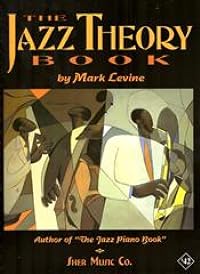
The Jazz Theory Book
by Mark Levine
On This Page
Description
"A great jazz solo consists of: 1% magic 99% stuff that is explainable, analyzable, categorizable, doable. This book is mostly about the 99% stuff ... 'Theory' is the little intellectual dance we do around the music, attempting to come up with rules so we can understand why Charlie Parker and John Coltrane sounded the way they did. There are almost as many 'jazz theories' as there are jazz musicians ... When ... listening to a great solo, the player is not thinking 'II-V-I, blues lick, AABA, show more altered scale, ' and so forth ... Experienced musicians have internalized this information to the point that they no longer have to think about it very much if at all. The great players have also learned what the chords and the scales look and feel like on their instrument ... Aim for that state of grace ... no longer [thinking] about theory, and ... it [will] be much easier to tap into the magical 1%."-- show lessTags
Recommendations





Member Reviews
This is a fantastic "what" book (https://www.lesswrong.com/posts/oPEWyxJjRo4oKHzMu/the-3-books-technique-for-learning-a-new-skilll) for learning jazz. It walks you through what tons of things /sound/ like, and goes on and on about how to derive and play scales.
What it doesn't do very well is prepare you to actually play this stuff. For example, the book takes 245 pages before it gets to "how should you be practicing what we've been talking about so far?" If you're like me and generally just dive into books at the front, this is NOT A PARTICULARLY GOOD STRATEGY. This is part of a more general flaw in the book, which is that it's disorganized. There are 16 chapters total which are organized more by theme than usefulness or skill show more progression. If I were to rework it, I'd suggest reading the chapters in the following order: 1, 4, 2, 3, 5, 12, 6---that's the order I wish I had approached them. show less
What it doesn't do very well is prepare you to actually play this stuff. For example, the book takes 245 pages before it gets to "how should you be practicing what we've been talking about so far?" If you're like me and generally just dive into books at the front, this is NOT A PARTICULARLY GOOD STRATEGY. This is part of a more general flaw in the book, which is that it's disorganized. There are 16 chapters total which are organized more by theme than usefulness or skill show more progression. If I were to rework it, I'd suggest reading the chapters in the following order: 1, 4, 2, 3, 5, 12, 6---that's the order I wish I had approached them. show less
An impressively large tome, this seems to be a fairly comprehensive and authoritative treatise on the subject of music theory in the jazz world. It contains lots of examples written out for piano and seems to assume at least some basic knowledge of music theory - e.g. it doesn't tell you how to read music. The writing style is generally clear and the book is well laid out. The spiral binding makes it quite handy to use. Plenty of material in here to keep you busy for quite some time.
The most highly-acclaimed jazz theory book ever published! Over 500 pages of comprehensive, but easy to understand text covering every aspect of how jazz is constructed---chord construction, II-V-I progressions, scale theory, chord/scale relationships, the blues, reharmonization, and much more. A required text in universities world-wide, translated into five languages, endorsed by Jamey Aebersold, James Moody, Dave Liebman, etc.
Ratings
Members
- Recently Added By
Author Information

5 Works 484 Members
Classifications
Statistics
- Members
- 271
- Popularity
- 119,910
- Reviews
- 3
- Rating
- (4.10)
- Languages
- English, French, German, Italian
- Media
- Paper, Ebook
- ISBNs
- 6
- UPCs
- 2
- ASINs
- 1