Permanent Midnight: A Memoir
by Jerry Stahl
On This Page
Description
Jerry Stahl's seminal memoir of drug addiction and a career in Hollywood, Permanent Midnight is a classic along the lines of Hubert Selby, Jr.'s Last Exit to Brooklyn. Illuminating the self-loathing and self-destruction of an addict's inner life, Permanent Midnight follows Stahl through the dregs of addiction and into sobriety. In 1998, Ben Stiller, Owen Wilson, and Maria Bello starred in a film version of Permanent Midnight to much acclaim. Nic Sheff, author of Tweak, wrote the introduction show more to this edition. show lessTags
Recommendations








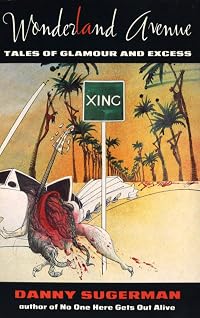



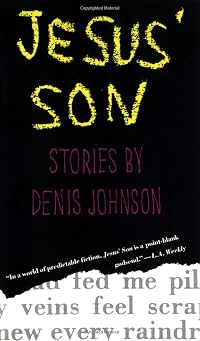
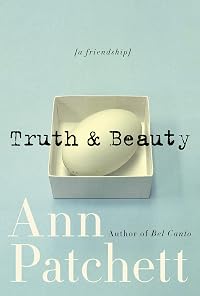

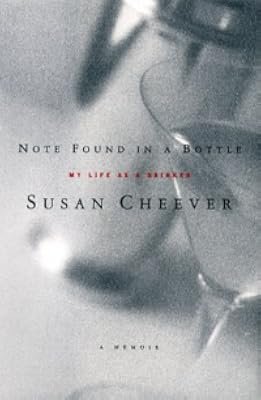

Member Reviews
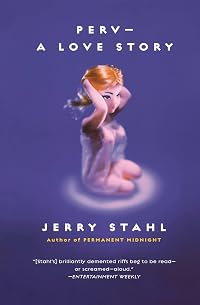
Well, that was a ride. In "Permanent Midnight" Jerry Stahl consumes industrial quantities of drugs, has a daughter, blows up two relationships, somehow gets clean, and yes, writes a few scripts for ALF. The drug-and-recovery memoir is a well-populated genre -- not that I can stop myself from reading 'em -- and I wouldn't call "Permanent Midnight" the best of them. Not every one of these books has to end in a nice and neat little homily about loving yourself and working hard to overcome adversity, but at one point in this one, the head writer at one of the brainstorming sessions in which Stahl participated in looked at him and yelled "That's not a plot, it's just a bunch of sentences!" That's a hell of a thing to say to a writer, but he show more probably wasn't wrong. Stahl, in the opening pages of this one, more or less admits that his life often comes off as a series of trainwrecks. Years ago, I read the entirety of Stahl's "Perv" on a long flight and that, too, seemed like an endless, if entertaining, series of encounters with the bizarre. At least now I know where the author got his story ideas from. "Permanent Midnight" often seems less like Jerry Stahl's story and more like a drug diary.
Which isn't always a bad thing, honestly, and it's at least kind of understandable: who really expects junkies to live stable, goal-oriented lives? And Jerry, to his credit, can really milk his drug experiences on the page. While some former users offer one, neat description of what it's like to get -- as the kids say -- completely faded on heroin or crack, Jerry gets positively baroque. Eyeballs melt, brains splatter, the paint on walls boils. At one point, Stahl compares breathing while quitting smack cold turkey to "inhaling a cheese grater." Whatever deficiencies he has a writer at the sentence or story level, the man has a real talent for indelible descriptions and cutting jokes. Even so, all of this wears thin pretty quickly. Stahl sometimes seems like one of those guys at your local alcoholics anonymous meeting that wants to quit but really, really misses his drinking days, too. And now wonder, really. The experiences he describes sound unbelievably intense. It's no wonder that clean life can't really compete.
And that's leads us to another problem I have with "Permanent Midnight." There's tragedy to spare in the author's past, and Stahl presents himself as something of a misfit, a guy who never quite fit in, and therefore, the sort of person who'd be naturally attracted to the L.A. cultural underworld. But there's a nasty edge to this books that smacks (sorry) of aging hipsterdom, a bitterness born of watching your cultural moment fade. Really, any book this intense would have to be written by -- or at least about the experiences of -- a young man. But Stahl was in LA when Nirvana, armed with a few monster riffs, some fuzzy solos, and some inscrutable lyrics, ended the career of dozens of hair metal bands, and simultaneously, much of the counterculture that had thrived in their shadow. Stahl wouldn't be caught dead in flannel, and he's not shy about letting you know it. But he seems peeved that the action is suddenly is suddenly elsewhere and that he's not as hip as he used to be, which is perhaps a less than noble sentiment. Honestly, there are numerous episodes in this book that don't really put Stahl in the best light, and whether you like this one might depend on how much you like him. Sometimes that's difficult to do, but at least he cops to being a born degenerate. When hard-working normies make him for a drug addict, he can't help but sympathize -- at least a little -- with their disdain for him. Heck, most of the time, he doesn't walk into a room, he slimes into it. An annoying turn of phrase? Maybe? But let's give the author some credit: he seems to know exactly who he is. I'll recommend this one -- as so many other books I've reviewed here on LibraryThing -- to fans of midlife memoirs. But I found it to be a tough read, and your tolerance -- I can't stop with the drug puns! -- for both the book and the author may vary. show less
Which isn't always a bad thing, honestly, and it's at least kind of understandable: who really expects junkies to live stable, goal-oriented lives? And Jerry, to his credit, can really milk his drug experiences on the page. While some former users offer one, neat description of what it's like to get -- as the kids say -- completely faded on heroin or crack, Jerry gets positively baroque. Eyeballs melt, brains splatter, the paint on walls boils. At one point, Stahl compares breathing while quitting smack cold turkey to "inhaling a cheese grater." Whatever deficiencies he has a writer at the sentence or story level, the man has a real talent for indelible descriptions and cutting jokes. Even so, all of this wears thin pretty quickly. Stahl sometimes seems like one of those guys at your local alcoholics anonymous meeting that wants to quit but really, really misses his drinking days, too. And now wonder, really. The experiences he describes sound unbelievably intense. It's no wonder that clean life can't really compete.
And that's leads us to another problem I have with "Permanent Midnight." There's tragedy to spare in the author's past, and Stahl presents himself as something of a misfit, a guy who never quite fit in, and therefore, the sort of person who'd be naturally attracted to the L.A. cultural underworld. But there's a nasty edge to this books that smacks (sorry) of aging hipsterdom, a bitterness born of watching your cultural moment fade. Really, any book this intense would have to be written by -- or at least about the experiences of -- a young man. But Stahl was in LA when Nirvana, armed with a few monster riffs, some fuzzy solos, and some inscrutable lyrics, ended the career of dozens of hair metal bands, and simultaneously, much of the counterculture that had thrived in their shadow. Stahl wouldn't be caught dead in flannel, and he's not shy about letting you know it. But he seems peeved that the action is suddenly is suddenly elsewhere and that he's not as hip as he used to be, which is perhaps a less than noble sentiment. Honestly, there are numerous episodes in this book that don't really put Stahl in the best light, and whether you like this one might depend on how much you like him. Sometimes that's difficult to do, but at least he cops to being a born degenerate. When hard-working normies make him for a drug addict, he can't help but sympathize -- at least a little -- with their disdain for him. Heck, most of the time, he doesn't walk into a room, he slimes into it. An annoying turn of phrase? Maybe? But let's give the author some credit: he seems to know exactly who he is. I'll recommend this one -- as so many other books I've reviewed here on LibraryThing -- to fans of midlife memoirs. But I found it to be a tough read, and your tolerance -- I can't stop with the drug puns! -- for both the book and the author may vary. show less
Yeah... but Stahl's voice is tolerable because it is self-depreciative with a fair amount of smarm... James Frey was just kinda whiny. I only read half of the Million book about a year or two before the Oprah anointment & subsequent teary admission because it was JUST THAT BORING. Jerry Stahl is funny even when he's wallowing in the dregs and totally absent self-pity, which is important with this sort of memoir. He brought it all gloriously crashing upon himself as do we all. I wanna go back and watch a few episodes of ALF now that I know he was shooting up every half hour during the writers' brainstorming sessions.
Another to hell and back memoir of drug use ( and TV writing)elevated by the author's heavy use of sarcasm and a sharp self-deprecating wit. Do not see the movie--read the book.
Wow, Jerry, who knew. This story just rips at you and the torment that travels with drug fueled lives. Interesting, terrifying, sometimes funny, and proud you could pull out of it.
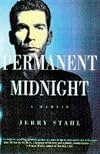
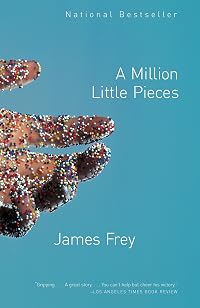
I picked this one up when I was working on a second-hand book stall at uni just for the freaky cover. A very entertaining read, but since the James Frey incident, I'm wary of memoirs with outrageous stories (even if they are a good read).
Jerry Stahl's story of being a herion fiend and still being able to write for Hollywood shows. Interesting, sad and funny at the same time.
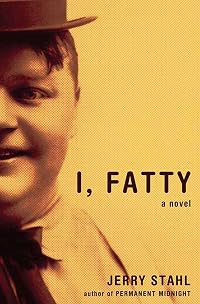
Stahl was a heroin addict. He also wrote TV scripts for "Moonlighting" and "Alf". When you come off heroin, so says Jerry, everything (and he means everything) hurts: showering, breathing, etc. Alf deserved better than Jerry gave him, but Jerry has since cleaned up and recently wrote a thinly-fictionalized version of Fatty Arbuckle's life that I've been meaning to read forever.
Members
- Recently Added By
Author Information

15+ Works 1,098 Members
Common Knowledge
- Original publication date
- 1995
- Epigraph
- Normal people have nothing to forget. (E.M. Cioran)
- Dedication
- For Hubert Selby, Jr.
- First words
- I'm wearing a diaper.
- Last words
- (Click to show. Warning: May contain spoilers.)I held the nozzle over my head, turned the spigot, and raised my face to the streaming water.
- Blurbers
- Wolff, Tobias
Classifications
- Genres
- Biography & Memoir, Nonfiction, General Nonfiction
- DDC/MDS
- 362.293092 — Society, government, & culture Social problems and social services Social Welfare Mental illness Substance abuse Narcotics - Heroin, Opium
- LCC
- PN1992.4 .S72 .A3 — Language and Literature Literature (General) Literature (General) Drama Broadcasting Television broadcasts
- BISAC
Statistics
- Members
- 291
- Popularity
- 111,069
- Reviews
- 9
- Rating
- (3.84)
- Languages
- English, French, Italian, Spanish
- Media
- Paper, Audiobook, Ebook
- ISBNs
- 10
- ASINs
- 4