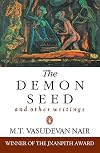
The Demon Seed and Other Writings
by M. T. Vasudevan Nair
On This Page
Description
A representative selection from one of India's leading fiction writers The most versatile writer in Malayalam today, M.T. Vasudevan Nair has published short stories, novels, screenplays, as well as articles on the state of literature and cinema in India. At the heart of this collection is The Demon Seed, a fresh translation of Asuravithu, arguably one of his best novels. Published in Malayalam in 1962, it is an uncompromising look at the crumbling matrilineal order, and the breakdown of the show more joint family system. The novel tells the story of Govindankutty, a young unemployed Nair boy. When his wealthy brother-in-law takes him on as the manager of his property, and a marriage is arranged for him, Govindankutty dares to dream for the first time in his life. He brings his bride home, eager to start life afresh, but discovers to his horror that she is already pregnant by another man-his urbane lawyer-cousin Krishnettan. Shattered by the knowledge that his family had connived to betray him, Govindankutty goes berserk. Finally, estranged from home and village, he converts to Islam in the ultimate gesture of defiance. Tautly written and brilliantly characterized, The Demon Seed is a powerful novel about a society in transition. The collection also brings together six of MT's best stories, including 'Vanaprastham', The Jackal's Wedding' and 'Sherlock'. Also included are 'The Era of Ramanan', an essay on the impact of the first modem verse romance in Malayalam, and a beautifully crafted piece on contemporary cinema. Taken together, these writings are testimony to the remarkable range and depth of M.T. Vasudevan Nair's work. show lessTags
Member Reviews
This was my first time reading MT Nair's writing, an author whose name I've always heard associated with Malayalam literature, and I am honestly impressed. Each story is set in a time filled with abject poverty, yet the social commentary subtly done really makes you think. He really brings to light the utter stupidity in caste pride of the Nairs, when they are starving and on the brink of homelessness, we see characters caring about their reputation and what others think of them. There is a firm belief in the Goddess and pleasing Her, while living in the worst possible conditions possible. There's also looking down at Cherumans, Pulayas and other castes, all while being selfish and utterly devoid of humanity.
The novel, The Demon Seed, show more was added to these short stories and it was hella depressing. Ofc Kerala society has quite a few people that still care about their reputations and family pride, all while living the most pathetic of lives and having zero moral character - as in the case of many characters in this book. But this novel also showcases the fights between Hindu-Muslim (Mapilla) communities at the time - however, all is forgotten at the face of death and cholera. There's no ending as such, just realities.
I hated the translation; that's what killed this book for me. Super clunky and annoying to read, with no sentence flow. show less
The novel, The Demon Seed, show more was added to these short stories and it was hella depressing. Ofc Kerala society has quite a few people that still care about their reputations and family pride, all while living the most pathetic of lives and having zero moral character - as in the case of many characters in this book. But this novel also showcases the fights between Hindu-Muslim (Mapilla) communities at the time - however, all is forgotten at the face of death and cholera. There's no ending as such, just realities.
I hated the translation; that's what killed this book for me. Super clunky and annoying to read, with no sentence flow. show less
Members
- Recently Added By
Author Information

63+ Works 372 Members
Awards and Honors
Notable Lists
Classifications
- Genres
- Fiction and Literature, General Fiction
- DDC/MDS
- 894.812371 — Literature & rhetoric Asian Literature Literatures of Altaic, Uralic, Hyperborean, Dravidian languages; literatures of miscellaneous languages of south Asia Dravidian literatures South Dravidian languages Malayalam Malayalam fiction
- LCC
- PL4718.9 .V32 — Language and Literature Languages and literatures of Eastern Asia, Africa, Oceania Languages of Eastern Asia, Africa, Oceania Dravidian languages
- BISAC
Statistics
- Members
- 12
- Popularity
- 1,873,607
- Reviews
- 1
- Rating
- (4.00)
- Languages
- English
- Media
- Paper, Ebook
- ISBNs
- 2
- ASINs
- 2