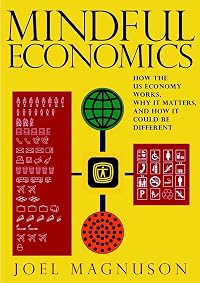
Mindful Economics: How the U.S. Economy Works, Why it Matters, and How it Could Be Different
by Joel Magnuson
On This Page
Description
Are the huge profits garnered by corporations each year a case of a few bad apples in the business world taking advantage of unmonitored dealings? Is this consolidation of wealth made at the expense of the overall economy and the wellbeing of the average citizen? Will the planet be saved by developing more "green businesses" and "green collar" jobs? Joel Magnuson delivers a powerful response to the current misconceptions about the US economy in his brilliantly accessible Mindful Economics. show more The troubles we face are not the result of a good system gone awry, but rather a system that is built to do exactly what it is doing: corporations are designed to reap profits for its shareholders, at any cost. The greater welfare of society, or of the environment, will never be as important as financial gain. Magnuson shows us the relationship between the current wars abroad; rising oil prices; the recession; ballooning incomes of top CEOs; the mortgage crisis; and the health care, insurance, and auto industries, and he teaches us that the best way to understand the US economy is to think like an economist. With stunning clarity, Magnuson shows the interconnectedness of the local with the global, and offers real alternatives to this capitalist model. show lessTags
Recommendations
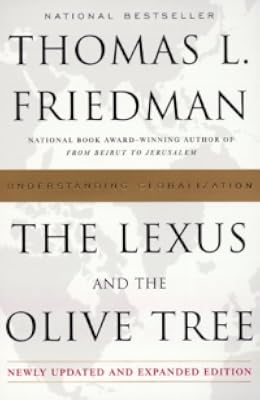
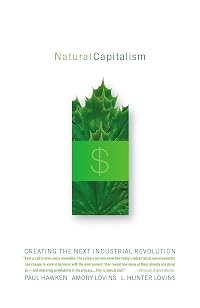
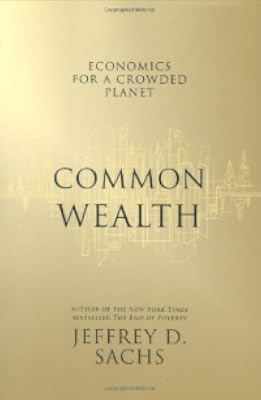
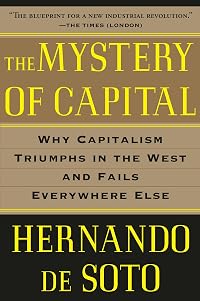
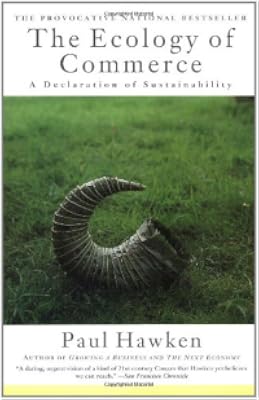

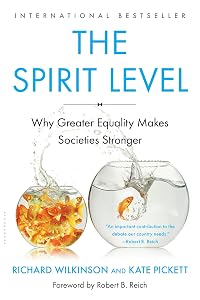
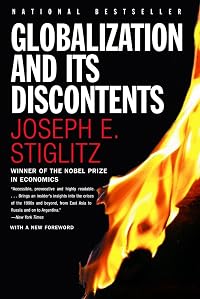
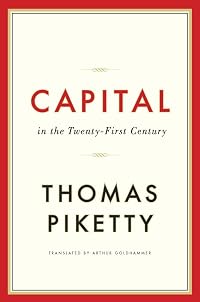








Member Recommendations
Member Reviews
Wow! What a great book! The author first gives a great introduction to economics, specifically capitalism, as that's the system that's currently screwing everything up here in the States.
After the economic primer (which I found interesting even though I had taken several classes in economics as an undergrad, so some of this was review) Magnuson outlines how capitalism in the US has lead to financial instability, economic inequality, and runaway growth. He argues that these aren't random products of capitalism, but the very byproduct of true, successful capitalism.
Finally, Magnuson wraps up the book with some ideas for how we can change the system. I like how his ideas for change (mostly: small, family owned businesses and cooperatives) show more are quite practical, and he doesn't make any grandiose claims about being able to overturn capitalism in a short period of time. He acknowledges that it's going to be a long haul, but he provides some great tools for getting there.
I found this book to be particularly awesome because I've known for quite a long time that capitalism just isn't working, but reading this book really helped me see exactly why that is, and really made it all crystal clear.
My only beef with this book is the short chapter on sustainable energy. Magnuson seems to think that wind and solar are absolutely the answer to the problem, without recognizing that solar is largely inefficient, and the semiconductor industry is a huge industry (hello capitalism) and makes use of awful chemicals (I work with them all the time, as I do research in semiconductors). The wind industry isn't so much better, I worked for GE in their wind department and their motives were certainly not to make the Earth a greener place, it was to make a profit. GE is currently the largest supplier of wind turbines in the US. For a better look into renewable energy, I highly recommend reading Heat. show less
After the economic primer (which I found interesting even though I had taken several classes in economics as an undergrad, so some of this was review) Magnuson outlines how capitalism in the US has lead to financial instability, economic inequality, and runaway growth. He argues that these aren't random products of capitalism, but the very byproduct of true, successful capitalism.
Finally, Magnuson wraps up the book with some ideas for how we can change the system. I like how his ideas for change (mostly: small, family owned businesses and cooperatives) show more are quite practical, and he doesn't make any grandiose claims about being able to overturn capitalism in a short period of time. He acknowledges that it's going to be a long haul, but he provides some great tools for getting there.
I found this book to be particularly awesome because I've known for quite a long time that capitalism just isn't working, but reading this book really helped me see exactly why that is, and really made it all crystal clear.
My only beef with this book is the short chapter on sustainable energy. Magnuson seems to think that wind and solar are absolutely the answer to the problem, without recognizing that solar is largely inefficient, and the semiconductor industry is a huge industry (hello capitalism) and makes use of awful chemicals (I work with them all the time, as I do research in semiconductors). The wind industry isn't so much better, I worked for GE in their wind department and their motives were certainly not to make the Earth a greener place, it was to make a profit. GE is currently the largest supplier of wind turbines in the US. For a better look into renewable energy, I highly recommend reading Heat. show less
Ratings
Members
- Recently Added By
Lists

Seven Stories Press
18 works; 1 member
Author Information

5 Works 83 Members
Common Knowledge
- Original publication date
- 2007
- First words
- The Eastern parable, Indra's Net, tells the story of a celestial net that extends infinitely in all directions.
- Last words
- (Click to show. Warning: May contain spoilers.)And unlike a Utopia, which means "nowhere," the alternatives are everywhere all around us.
- Blurbers
- Henwood, Doug; Garson, Barbara; McChesney, Robert W.; Hunt, E. K.; Napoleoni, Loretta
Classifications
Statistics
- Members
- 56
- Popularity
- 548,262
- Reviews
- 1
- Rating
- (4.20)
- Languages
- English
- Media
- Paper, Ebook
- ISBNs
- 3
- ASINs
- 1