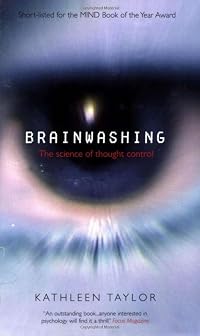
Brainwashing: The Science of Thought Control
by Kathleen Taylor
On This Page
Description
Throughout history, humans have attempted to influence and control the thoughts of others. Since the word 'brainwashing' was coined in the aftermath of the Korean War, it has become part of the popular culture and been exploited to create sensational headlines. It has also been the subject of learned discussion from many disciplines: including history, sociology, psychology, and psychotherapy. But until now, a crucial part of the debate has been missing: that of anyserious reference to the show more science of the human brain. Descriptions of how opinions can be changed, whether by persuasion, deceit, or force, have been almost entirely psychological. In Brainwashing, Kathleen Taylor brought the worlds of neuroscience and social psychology together for the first time. In elegant and accessible prose, and with abundant use of anecdotes and case-studies, she examines the ethical problems involved in carrying out the required experiments on humans, the limitations of animal models, and the frightening implications of such research. She also explores the history of thought-control and shows how it persists all around us, from marketingand television, to politics and education. This edition includes a new preface from the author reflecting on the uses of brainwashing today, including by the Islamic State. Oxford Landmark Science books are 'must-read' classics of modern science writing which have crystallized big ideas, and shaped the way we think. show lessTags
Recommendations























Member Reviews
The subject matter of this book is extremely fascinating, and the author is quite thorough in her multi-faceted approach, including insights from neuroscience, psychology, history, sociology, even literature. Unfortunately, the poor structure of the book doesn't quite put it all together. This is only made worse by the fact that the author doesn't ever define the word used for the book's title, so that any instance of mental manipulation could be included under a vague umbrella. I think the book would have been more effective if the focus was narrowed to examples of mass manipulation by force and stealth, which is likely what readers are looking for in a book entitled Brainwashing. A little humor and personality would have went a long show more way, too. In the end, this book is a champion for critical thinking, which is good because you'll need it to navigate the awkward order of information and the author's occasional condescension of ideas she disagrees with. Take it all with a grain of salt, and you just might enjoy this well-researched but disorganized book. show less
I got this book hoping that it would provide me with scientific evidence that would help me develop a more informed opinion on the controversial issue of brainwashing. Unfortunately, Taylor points out that it is ethically impossible to conduct controlled brainwashing studies, so I did not find the specific evidence I was looking for. What the book does provide, however, is a detailed discussion of what science can tell us about how we come to believe what we do, and how influence attempts can impact that process.
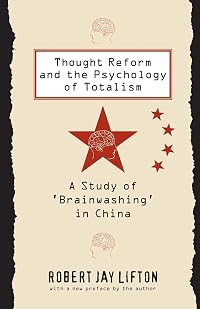
Taylor’s discussion of influence techniques is thorough, ranging from advertising and education through systematic techniques used by cult leaders to the physical abuse used on American prisoners during the Korean War. By show more diving into neuroscience to detail how concepts and ideas are established in the brain, Taylor offers insight into how different kinds of manipulation attempts try to change how people think about the world around them. Her discussion of how skilled manipulators work to link strong emotion to a new idea in attempt to bypass the critical thought processes that would make people stop and think is particularly important for people interested in cultic issues. show less
Taylor’s discussion of influence techniques is thorough, ranging from advertising and education through systematic techniques used by cult leaders to the physical abuse used on American prisoners during the Korean War. By show more diving into neuroscience to detail how concepts and ideas are established in the brain, Taylor offers insight into how different kinds of manipulation attempts try to change how people think about the world around them. Her discussion of how skilled manipulators work to link strong emotion to a new idea in attempt to bypass the critical thought processes that would make people stop and think is particularly important for people interested in cultic issues. show less
I bought this book in order to read more theoretical discussions about thought control. I did not get this in this book (although to be fair, I didn't read it in its entirety). What I got was chapter after chapter defending various social institutions with a definite right-wing slant. I also got amazing glimpses in the disturbed mind of the author (such as her comment about Lolitas roaming the streets or that it's people's fault if they fall for advertising). What I didn't get was actual information about thought control. This book is garbage (now literally, in my case).
Ratings
Members
- Recently Added By
Lists

Recovery from Psychopath
132 works; 1 member
Author Information

6 Works 308 Members
Some Editions
Awards and Honors
Awards
Series
Belongs to Publisher Series
Common Knowledge
- People/Characters
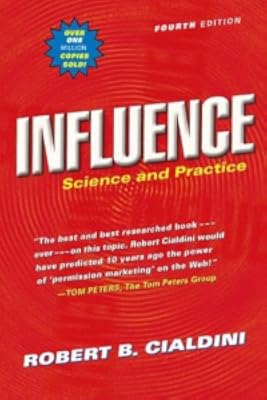
- Robert Cialdini; Robert Lifton; Patty Hearst; Winston Smith; George Orwell
- Important places
- China
- First words
- The term 'brainwashing' was born in the crucible of war. Not, as one might expect, the Second World War - though it was retrospectively applied to Nazi techniques - but the Korean War.
- Last words
- (Click to show. Warning: May contain spoilers.)We should make the most of it.
Classifications
- Genres
- Nonfiction, General Nonfiction, Science & Nature
- DDC/MDS
- 153.853 — Philosophy & psychology Psychology Conscious mental processes and intelligence Decision Making And Persuasion Persuasion Brainwashing and Indoctrination
- LCC
- BF633 .T39 — Philosophy, Psychology and Religion Psychology Psychology Will. Volition. Choice. Control
- BISAC
Statistics
- Members
- 205
- Popularity
- 160,124
- Reviews
- 3
- Rating
- (3.27)
- Languages
- Czech, English, Italian
- Media
- Paper, Audiobook, Ebook
- ISBNs
- 12
- ASINs
- 4