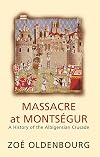
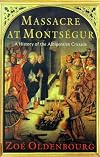
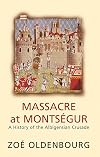
Massacre at Montsegur: A History of the Albigensian Crusade
by Zoé Oldenbourg
On This Page
Description
In 1208 Pope Innocent III called for a Crusade against a country of fellow-Christians. The new enemy was Raymond VI, Count of Toulouse, one of the greatest princes in Western Christendom, premier baron of all the territories in southern France where the langue d'oc was spoken. So began the Albigensian Crusade (named after the French town of Albi), which was to culminate in 1244 with the massacre of Cathars at the mountain fortress of Montségur. This Crusade was the Catholic Church's show more response to the rapid growth of a rival Christian religion in the very heart of Christendom - the religion of the Cathars (or 'pure ones'). These heretics drew their strength from the consciousness of belonging to a faith that had never seen eye to eye with Catholicism and was more ancient than the Church itself. From the beginning this religious war was to show all the characteristics of a national resistance movement, so that in the end it was not just the survival of the Cathar faith that was at stake but also that of the Languedoc itself as an autonomous and independent region of France. show lessTags
Recommendations













Member Recommendations

Member Reviews
Friendly reminder that the Catholic Church was and is an absolute abomination of an organization:
“Before the Albigensian Crusade and the inquisition, bishops and abbots still raised their voices in protest against the burning of heretics, and preached compassion towards such strayed brethren. In the thirteen century, however, St Thomas Aquinas justified such autos-da-fé in terms that are ill-suited to any Christian. Excesses that could previously be attributed to ignorance or the brutal mores of the period were now given the stamp of approval, consecrated ex cathedra theologica by one of the greatest philosophers of Christianity. This fact is too serious to be minimized. From the thirteenth century onwards we no longer find saint show more or doctor in the Catholic Church bold enough to assert (as for instance St Hildegarde had done in the twelfth century) that a man who errs in religious matters is still one of God’s creatures, and that to deprive him of his life is a crime. The Church which so resolutely forgot this very simple truth no longer deserved the title of ‘Catholic’; in this sense we may claim that heresy had dealt the Church a blow from which it never recovered.
The victory was bought at too great a price. Even if the Roman Church, by taking the strong line against heresy that she did, spared Western Christendom grave troubles which might have brought the whole social and cultural structure crashing down in ruins—and this is by no means certain—she only did so at the cost of a moral capitulation the consequences of which she is still suffering today.” show less
“Before the Albigensian Crusade and the inquisition, bishops and abbots still raised their voices in protest against the burning of heretics, and preached compassion towards such strayed brethren. In the thirteen century, however, St Thomas Aquinas justified such autos-da-fé in terms that are ill-suited to any Christian. Excesses that could previously be attributed to ignorance or the brutal mores of the period were now given the stamp of approval, consecrated ex cathedra theologica by one of the greatest philosophers of Christianity. This fact is too serious to be minimized. From the thirteenth century onwards we no longer find saint show more or doctor in the Catholic Church bold enough to assert (as for instance St Hildegarde had done in the twelfth century) that a man who errs in religious matters is still one of God’s creatures, and that to deprive him of his life is a crime. The Church which so resolutely forgot this very simple truth no longer deserved the title of ‘Catholic’; in this sense we may claim that heresy had dealt the Church a blow from which it never recovered.
The victory was bought at too great a price. Even if the Roman Church, by taking the strong line against heresy that she did, spared Western Christendom grave troubles which might have brought the whole social and cultural structure crashing down in ruins—and this is by no means certain—she only did so at the cost of a moral capitulation the consequences of which she is still suffering today.” show less
BIBLIOGRAPHY; INDEX; NOTES AND REFERENCES; APPENDICES: A CATHARIST RITUAL, PRELIMINARY DISCOURSE ADDRESSED TO THE POSTULANT BY THE ELDER, A CATHARIST PRAYER, REPRESSIVE MEASURES AND DECREES PROMULGATED AGAINST THE CATHARS BY COUNCILS BETWEEN 1179 AND 1246, SENTENCES OF THE INQUISITION, THE DEBATE BETWEEN IZARN AND SICART; CHRONOLOGICAL TABLE
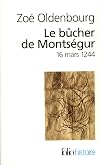
LE BÛCHER DE MONTSEGUR. 16 mars 1244
Résumé :
Dans la vénérable série des journées qui ont fait la France, entre Giono, Edgar Faure et François Mitterand on trouve cet ouvrage remarquable de Zoé Oldenbourg. Elle y analyse la "croisade" contre les Cathares menée par l’Église défaillante dans un Languedoc étonnamment moderne.
Avec force détails elle montre le mécanisme qui amène la Papauté à déclencher une croisade violente et sanglante contre le pays du Languedoc, mené par le Comte de Toulouse et alors très indépendant du Royaume de France.
Elle étudie à la fois les hérésies (Cathares, Vaudoises, etc.) en les remettant dans leur contexte historique et international et montre à quel point l’Église était remise show more en cause en Languedoc.
Elle montre enfin comment le Roi de France, futur Saint-Louis vient tirer les marrons du feu après plusieurs années de violences régulières. Ceci explique à quel point cet événement fait partie des dates constitutives de la France, car c’est le Languedoc qui va donner une teinte latine à un royaume encore très «Franc» à ce moment.
L’injustice et la haine qui ont dirigé cette croisade ne rehausse pas le blason de l’Église et de la Papauté. On voit bien sur ce malheureux bûcher à quel point le pouvoir temporel est recherché par une Église dévoyée.
Avec un ton très simple et pourtant très fouillé, Zoé Oldenbourg parvient à nous expliquer tous ces éléments et à nous en faire comprendre les enjeux. show less
Résumé :
Dans la vénérable série des journées qui ont fait la France, entre Giono, Edgar Faure et François Mitterand on trouve cet ouvrage remarquable de Zoé Oldenbourg. Elle y analyse la "croisade" contre les Cathares menée par l’Église défaillante dans un Languedoc étonnamment moderne.
Avec force détails elle montre le mécanisme qui amène la Papauté à déclencher une croisade violente et sanglante contre le pays du Languedoc, mené par le Comte de Toulouse et alors très indépendant du Royaume de France.
Elle étudie à la fois les hérésies (Cathares, Vaudoises, etc.) en les remettant dans leur contexte historique et international et montre à quel point l’Église était remise show more en cause en Languedoc.
Elle montre enfin comment le Roi de France, futur Saint-Louis vient tirer les marrons du feu après plusieurs années de violences régulières. Ceci explique à quel point cet événement fait partie des dates constitutives de la France, car c’est le Languedoc qui va donner une teinte latine à un royaume encore très «Franc» à ce moment.
L’injustice et la haine qui ont dirigé cette croisade ne rehausse pas le blason de l’Église et de la Papauté. On voit bien sur ce malheureux bûcher à quel point le pouvoir temporel est recherché par une Église dévoyée.
Avec un ton très simple et pourtant très fouillé, Zoé Oldenbourg parvient à nous expliquer tous ces éléments et à nous en faire comprendre les enjeux. show less
Sep 25, 2024Spanish
MASSACRE ET MONTSEGUR
In 1208 Pope Innocent III called for a Crusade against a country of fellow-Christians. The new enemy was Raymond VI, Count of Toulouse, one of the greatest princes in Western Christendom, premier baron of all the territories in southern France where the langue d'oc was spoken. So began the Albigensian Crusade (named after the French town of Albi), which was to culminate in 1244 with the massacre of Cathars at the mountain fortress of Montségur.
This Crusade was the Catholic Church's response to the rapid growth of a rival Christian religion in the very heart of Christendom - the religion of the Cathars (or 'pure ones'). These heretics drew their strength from the consciousness of belonging to a faith that had never show more seen eye to eye with Catholicism and was more ancient than the Church itself. From the beginning this religious war was to show all the characteristics of a national resistance movement, so that in the end it was not just the survival of the Cathar faith that was at stake but also that of the Languedoc itself as an autonomous and independent region of France. show less
In 1208 Pope Innocent III called for a Crusade against a country of fellow-Christians. The new enemy was Raymond VI, Count of Toulouse, one of the greatest princes in Western Christendom, premier baron of all the territories in southern France where the langue d'oc was spoken. So began the Albigensian Crusade (named after the French town of Albi), which was to culminate in 1244 with the massacre of Cathars at the mountain fortress of Montségur.
This Crusade was the Catholic Church's response to the rapid growth of a rival Christian religion in the very heart of Christendom - the religion of the Cathars (or 'pure ones'). These heretics drew their strength from the consciousness of belonging to a faith that had never show more seen eye to eye with Catholicism and was more ancient than the Church itself. From the beginning this religious war was to show all the characteristics of a national resistance movement, so that in the end it was not just the survival of the Cathar faith that was at stake but also that of the Languedoc itself as an autonomous and independent region of France. show less
Feb 20, 2025Spanish
LA HOGUERA DE MONTSEGUR
«Me admira el esfuerzo sobrehumano realizado por la autora, quien, con absoluta objetividad, llev su tarea hasta sus últimas consecuencias.»
Gérard Walter
«Me admira el esfuerzo sobrehumano realizado por la autora, quien, con absoluta objetividad, llev su tarea hasta sus últimas consecuencias.»
Gérard Walter
Apr 27, 2024Spanish
Ratings
Members
- Recently Added By
Lists

Zoé Oldenbourg
12 works; 1 member
Author Information

Some Editions
Series
Belongs to Publisher Series
Gallimard, Trente journées qui ont fait la France (6, 16-03-1244)
Common Knowledge
- Original title
- Le Bûcher de Montségur
- Original publication date
- 1959-09-28 (1e édition originale française ∙ Trente journées qui ont fait la France ∙ Gallimard) (1e édition originale française ∙ Trente journées qui ont fait la France ∙ Gallimard)
- People/Characters
- Cathars; Innocent III, pope, 1198-1216; Raymond IV, Count of Toulouse
- Important places
- Montségur, Occitanie, France; Occitanie, France; France
- Important events
- Albigensian Crusade (1209 | 1229)
- Original language
- French
Classifications
- Genres
- History, Nonfiction, Religion & Spirituality, General Nonfiction
- DDC/MDS
- 272.3 — Religion History of Christianity Persecutions in church history Waldenses and Albigenses (11th-12th century)
- LCC
- DC83.3 .O473 — History of Europe, Asia, Africa and Oceania France – Andorra – Monaco History of France History By period Early and medieval to 1515
- BISAC
Statistics
- Members
- 393
- Popularity
- 79,684
- Reviews
- 6
- Rating
- (3.85)
- Languages
- English, French, Italian, Spanish
- Media
- Paper, Ebook
- ISBNs
- 14
- ASINs
- 15