
The Poverty of Historicism
by Karl R. Popper
On This Page
Description
On its publication in 1957, The Poverty of Historicism was hailed by Arthur Koestler as 'probably the only book published this year which will outlive the century.' A devastating criticism of fixed and predictable laws in history, Popper dedicated the book to all those 'who fell victim to the fascist and communist belief in Inexorable Laws of Historical Destiny.' Short and beautifully written, it has inspired generations of readers, intellectuals and policy makers. One of the most important show more books on the social sciences since the Second World War, it is a searing insight into the ideas of this great thinker. show lessTags
Recommendations











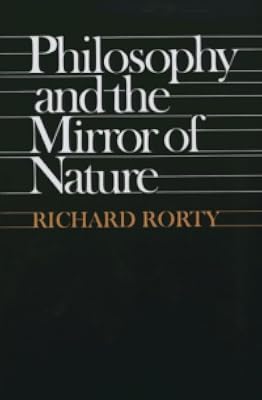

















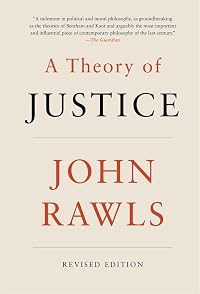

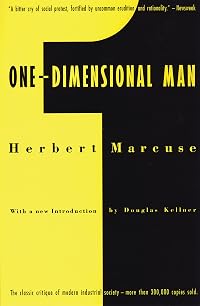



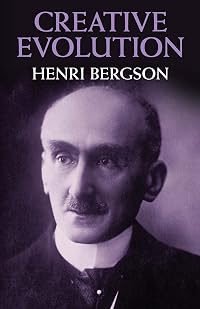









Member Recommendations

Member Reviews
Historicism is a very old movement. Its oldest forms, such as the doctrines of the life-cycles of cities and races, actually precede the primitive teleological view that there are hidden purposes behind the apparently blind decrees of fate. Although this divination of hidden purposes is far removed from the scientific way of thinking it has left unmistakable traces upon even the most modern historicist theories. Every version of historicism expresses the feeling of being swept into the future by irresistible forces.
Modern historicists, however, seem to be unaware of the antiquity of their doctrine. They believe—and what else could their deification of modernism permit?—that their own brand of historicism is the latest and boldest show more achievement of the human mind, an achievement so staggeringly novel that only a few people are sufficiently advanced to grasp it. They believe, indeed, that it is they who have discovered the problem of change—one of the oldest problems of speculative metaphysics.
This is a great critique of the historicism, which often in the XXth century went hand in hand with totalitarian state. Both communism and Nazism grounded their philosophies at least partially on it. It is especially pleasant to see that the author quotes Friedrich Hayek on both economics and social sciences in general. It is not an easy read, but such philosophical texts rarely are. show less
Modern historicists, however, seem to be unaware of the antiquity of their doctrine. They believe—and what else could their deification of modernism permit?—that their own brand of historicism is the latest and boldest show more achievement of the human mind, an achievement so staggeringly novel that only a few people are sufficiently advanced to grasp it. They believe, indeed, that it is they who have discovered the problem of change—one of the oldest problems of speculative metaphysics.
This is a great critique of the historicism, which often in the XXth century went hand in hand with totalitarian state. Both communism and Nazism grounded their philosophies at least partially on it. It is especially pleasant to see that the author quotes Friedrich Hayek on both economics and social sciences in general. It is not an easy read, but such philosophical texts rarely are. show less
I'm no philosopher, nor have I training in that respect. That said, this work is a small book that is quite comprehensible to the layman. It gives powerful arguments against "historicism", the sense that history is moving in a provable direction and that activists can help it get there. This is - to me - a horrid thing, as it inevitably will lead to forcing the path of history, and God help anyone in the way. Think of communism and the resultant death toll. Popper believes in small, testable steps of human progress - a pension plan here, some urban planning there. This to me is doable, sensible, and completely congruent with a democratic society. I instinctively liked Popper and his philosophy. Highly recommended read.
Popper's book on historicism has sustained a surprising popularity considering the fact that its key concepts - such as "piecemeal social engineering" and "historicism" itself - have been all but ignored in subsequent social theory. Perhaps Popper's exceptional lucidity has compensated for it's lack of contemporary relevance. Popper paints a picture of historicism as a doctrine which is part anti-naturalistic (social phenomena cannot be studied with the same methods as natural science) and part naturalistic (general "historical laws" are applicable to all ages). He proceeds to refute the doctrine on both accounts.
Popper's description of historicism is in my opinion too self-contained. He hardly even mentions any actual proponents of show more this school of thought. It's obvious that they include Comte, Marx and Mill, but none of these authors directly advocated all the propositions that Popper attributes to historicism. In the end it seems to me that Popper is mostly just peddling his own philosophy of social science rather than discussing an established doctrine. This short book is worth reading but I found more depth and insight in The Open Society and Its Enemies. show less
Popper's description of historicism is in my opinion too self-contained. He hardly even mentions any actual proponents of show more this school of thought. It's obvious that they include Comte, Marx and Mill, but none of these authors directly advocated all the propositions that Popper attributes to historicism. In the end it seems to me that Popper is mostly just peddling his own philosophy of social science rather than discussing an established doctrine. This short book is worth reading but I found more depth and insight in The Open Society and Its Enemies. show less
Ensayo que incide en la debilidad interna que aqueja a la estructura teórica de esta corriente de pensamiento y que es partir de una premisa tan errónea en su planteamiento como falaz en sus implicaciones: la certeza de que la evolución humana puede ser objeto de predicción mediante el descubrimiento de los ritos, modelos, leyes o tendencias que supuestamente gobernarían su curso.
Dedicated to those who lost their lives to Fascism, Popper's treatise examines the failure and inherent oppression of historicism applied. This along with his Open Society and its Enemies are among the most important works of 20th century political philosophy. Today's proponents historicism would do well to read it.
Dedicated to those who lost their lives to Fascism, Popper's treatise examines the failure and inherent oppression of historicism applied. This along with his Open Society and its Enemies are among the most important works of 20th century political philosophy. Today's proponents historicism would do well to read it.
Dedicated to those who lost their lives to Fascism, Popper's treatise examines the failure and inherent oppression of historicism applied. This along with his Open Society and its Enemies are among the most important works of 20th century political philosophy. Today's proponents historicism would do well to read it.
Members
- Recently Added By
Lists

Política - Clásicos
164 works; 2 members
Author Information

123+ Works 11,094 Members
Although he writes widely in philosophy, Sir Karl Raimund Popper is best known for his thesis that an empirical statement is meaningless unless conditions can be specified that could show it to be false. He was born and educated in Vienna, where he was associated with, although not actually a member of, the Vienna Circle. Two years after the show more German publication of his Logic of Scientific Discovery (1935), he left Austria for New Zealand, where he was senior lecturer at the University of Canterbury. In 1945 he moved to England and began a distinguished career at the London School of Economics and Political Science. According to Popper, there is no "method of discovery" in science. His view holds that science advances by brilliant but unpredictable conjectures that then stand up well against attempts to refute them. This view was roundly criticized by more dogmatic positivists, on the one hand, and by Feyerabend and Kuhn, on the other. In 1945 he published The Open Society and Its Enemies, which condemns Plato, Georg Hegel, and Karl Marx as progenitors of totalitarianism and opponents of freedom. The scholarship that underpins this book remains controversial. Popper's later works continue his interest in philosophy of science and also develop themes in epistemology and philosophy of mind. He is particularly critical of historicism, which he regards as an attitude that fosters a deplorable tendency toward deterministic thinking in the social sciences. (Bowker Author Biography) show less
Some Editions
Awards and Honors
Series
Belongs to Publisher Series
Work Relationships
Has as a reference guide/companion
Common Knowledge
- Canonical title
- The Poverty of Historicism
- Original title
- The Poverty of Historicism
- Original publication date
- 1944 (Econometrica) (Econometrica); 1957 (book) (book)
- Epigraph*
- Ter herinnering aan de talloze mannen en vrouwen van alle geloofsovertuigingen, naties en volken, die het slachtoffer zijn geworden van het fascistische en communistische geloof in de Onverbiddelijke Wetten, die de loop van d... (show all)e geschiedenis zouden bepalen.
- Dedication
- In memory of the countless men and women of all creeds or nations or races who fell victims to the fascist and communist belief in Inexorable Laws of Human Destiny.
- Original language*
- Engels
*Some information comes from Common Knowledge in other languages. Click "Edit" for more information.
Classifications
- Genres
- Philosophy, Nonfiction, Sociology, History, Science & Nature, General Nonfiction, Politics and Government
- DDC/MDS
- 121 — Philosophy & psychology Epistemology (how do you know what you know?) Epistemology (Theory of knowledge)
- LCC
- D16.8 .P57 — History of Europe, Asia, Africa and Oceania History (General)
- BISAC
Statistics
- Members
- 1,065
- Popularity
- 24,133
- Reviews
- 16
- Rating
- (4.09)
- Languages
- 18 — Chinese, Czech, Danish, Dutch, English, Estonian, Finnish, French, German, Greek, Hungarian, Italian, Japanese, Portuguese, Romanian, Spanish, Swedish, Turkish
- Media
- Paper, Audiobook, Ebook
- ISBNs
- 42
- ASINs
- 25