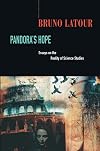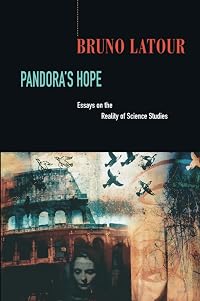
Pandora's Hope: Essays on the Reality of Science Studies
by Bruno Latour
On This Page
Description
A scientist friend asked Bruno Latour point-blank: "Do you believe in reality?" Taken aback by this strange query, Latour offers his meticulous response in Pandora's Hope. It is a remarkable argument for understanding the reality of science in practical terms. In this book Latour, identified by Richard Rorty as the new "bête noire of the science worshipers," gives us his most philosophically informed book since Science in Action. Through case studies of scientists in the Amazon analyzing show more soil and in Pasteur's lab studying the fermentation of lactic acid, he shows us the myriad steps by which events in the material world are transformed into items of scientific knowledge. Through many examples in the world of technology, we see how the material and human worlds come together and are reciprocally transformed in this process. Why, Latour asks, did the idea of an independent reality, free of human interaction, emerge in the first place? His answer to this question, harking back to the debates between Might and Right narrated by Plato, points to the real stakes in the so-called science wars: the perplexed submission of ordinary people before the warring forces of claimants to the ultimate truth. show lessTags
Recommendations
















Member Reviews
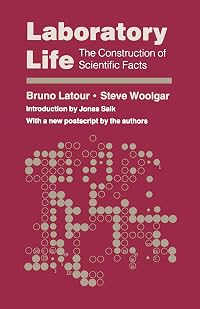
After having been fairly impressed by Laboratory Life, another book by Bruno Latour, co-authored with Steve Woolgar, I picked up Latour's Pandora's Hope without much hesitation when I saw it in a used bookstore. This was at a time, I think during my undergrad at Concordia, when I was particularly interested in questions around the reality of scientific phenomena and constructivist versus realist epistemologies (a distinction that, after reading Pandora's Hope, it is clear Latour would dislike).
While it was enjoyable, thought-provoking, admirable in its intentions and refreshing in its style, I felt it ultimately fell short of its goal, which was, as Latour puts it throughout and again in the conclusion, to walk away from the show more realist/constructivist debate and to show how actual scientists (and most actual people) do not operate within its fact/fetish binary.
Read more here: http://www.lukerodgers.ca/2008/07/pandoras-hope-by-bruno-latour/ show less
While it was enjoyable, thought-provoking, admirable in its intentions and refreshing in its style, I felt it ultimately fell short of its goal, which was, as Latour puts it throughout and again in the conclusion, to walk away from the show more realist/constructivist debate and to show how actual scientists (and most actual people) do not operate within its fact/fetish binary.
Read more here: http://www.lukerodgers.ca/2008/07/pandoras-hope-by-bruno-latour/ show less
Ratings
Members
- Recently Added By
Lists

Books referenced in David Weinberger's Too Big to Know
65 works; 2 members
Author Information

112+ Works 4,974 Members
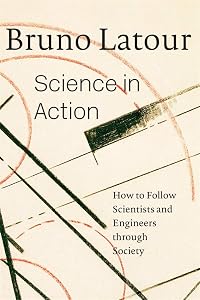
Bruno LaTour was born in the French province of Burgundy, where his family has been making wine for many generations. He was educated in Dijon, where he studied philosophy and Biblical exegesis. He then went to Africa, to complete his military service, working for a French organization similar to the American Peace Corps. While in Africa he became show more interested in the social sciences, particularly anthropology. LaTour believes that through his interests in philosophy, theology, and anthropology, he is actually pursuing a single goal, to understand the different ways that truth is built. Throughout the 1980s and 1990s, LaTour has written about the philosophy and sociology of science in an original, insightful, and sometimes quirky way. Works that have been translated to English include The Pasteurization of France; Laboratory Life; Science in Action: How to Follow Scientists and Engineers through Society; We Have Never Been Modern; and Aramis, or the Love of Technology. LaTour is a professor at the Center for the Sociology of Innovation, a division of the Ecole Nationale Superieure des Mines, in Paris. (Bowker Author Biography) show less
Classifications
Statistics
- Members
- 289
- Popularity
- 111,844
- Reviews
- 1
- Rating
- (3.38)
- Languages
- 7 — English, French, German, Polish, Portuguese (Portugal), Slovenian, Spanish
- Media
- Paper, Ebook
- ISBNs
- 19
- ASINs
- 2