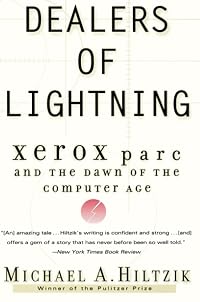
Dealers of Lightning: Xerox PARC and the Dawn of the Computer Age
by Michael A. Hiltzik
On This Page
Description
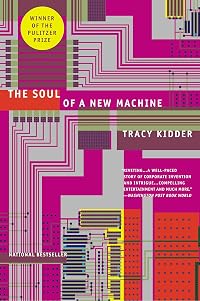
In the bestselling tradition of The Soul of a New Machine, Dealers of Lightning is a fascinating journey of intellectual creation. In the 1970s and '80s, Xerox Corporation brought together a brain-trust of engineering geniuses, a group of computer eccentrics dubbed PARC. This brilliant group created several monumental innovations that triggered a technological revolution, including the first personal computer, the laser printer, and the graphical interface (one of the main precursors of the show more Internet), only to see these breakthroughs rejected by the corporation. Yet, instead of giving up, these determined inventors turned their ideas into empires that radically altered contemporary life and changed the world. Based on extensive interviews with the scientists, engineers, administrators, and executives who lived the story, this riveting chronicle details PARC's humble beginnings through its triumph as a hothouse for ideas, and shows why Xerox was never able to grasp, and ultimately exploit, the cutting-edge innovations PARC delivered. Dealers of Lightning offers an unprecedented look at the ideas, the inventions, and the individuals that propelled Xerox PARC to the frontier of technohistoiy--and the corporate machinations that almost prevented it from achieving greatness. show lessTags
Recommendations





Member Reviews
I’ve heard of Xerox PARC (Palo Alto Research Center) for years now and of its importance, but this book really drove home just what a critical place PARC was for the development of the personal computer. It was an excellent, excellent book. I thoroughly enjoyed it.
Back in the mid-60s, Xerox decided they wanted to compete with IBM and AT&T by developing their own research labs in the hopes of winning prestige and a possible Nobel or two, just like Bell Labs did. They set PARC up with a virtually unlimited budget and told the director he could hire whomever he wanted. Pake, the director, had heard of one Bob Taylor, formerly of ARPA, the precursor of the Internet, and hired him to head his computer lab. Taylor instilled a fierce show more commitment in his employees, but had a very adversarial management style and made a lot of enemies around the company. Another key hire was Alan Kay, a programmer with a dream of creating laptops and one day tablets (30 years before they ever came out) which would be so easy to program, kids could do it. Soon PARC had the best and the brightest from Stanford, MIT, Carnegie Mellon, Harvard, UC Berkeley, Utah, etc. They came from all over, from the best computer science programs. And there were no deadlines and nothing to produce – it was like a giant think tank where you could just follow your dreams to see where they’d lead with unlimited funding. For the most part.
By the late 60s, one of the programmers had produced a mouse, ancient by our current standards, but radical by theirs. Also, they were producing GUI operating systems for point and click possibilities. By the mid to late 70s, the inventers had invented a graphical user interface, an operating system, overlapping windows, a text editor (word processor), a programming language, software, Ethernet for networking, a mouse, display, keyboard, audio, and a laser printer, which would be the only thing Xerox would go on to make money with. And that’s the crux of the situation. Xerox didn’t know what it had. Xerox did nothing with PARC. PARC embarrassed Xerox. The wizards at corporate were so far behind the times that change of that enormity just unnerved them too much to act, so they didn’t. In fact, they got rid of the R&D people who had created PARC, brought in new managers to run PARC, got rid of Bob Taylor (who had gotten too big for his britches), prompting a ton of resignations from his team members, and lost a lot of people who went on to form companies like 3Com, Adobe, SGI, and others. Xerox could have OWNED computing and they blew it! They literally could have been Microsoft, IBM, and Apple rolled into one and they blew it. The author tries to shield them from this criticism. He tries to say that as a copier company, they weren’t equipped to sell computers. Well, why invest in researching them, then? He tried to say you’d have to retrain 100,000 salesmen. Well, do it. Piss poor excuses, in my opinion. Xerox has no excuse for blowing things the way they did.
One last thing. I really enjoyed the chapter on the visit by Steve Jobs. Of course, it’s a famous story about how Jobs visited PARC, saw what they had, ripped them off, put everything in the Mac, and made a killing. Part of which is true. However, with his first visit, he was given just a main demo given anyone who would visit. Apparently he wasn’t impressed and he had the ear of the Xerox CEO, who was investing in Apple, so PARC got a call telling them to show Apple everything. Jobs and his crew went back again and this time got more, but not everything. Somehow Jobs knew this, and before Jobs was out of the building, the Xerox CEO was on the phone to PARC telling them to show them everything. This elicited a great deal of stress and agony in some Xerox employees, who thought they were giving away the store. (They were.) So Jobs went back and apparently went nuts when he saw the GUI interface, and his engineers also appreciated the mouse and networking, etc, et al. And so the Mac was born.
This book isn’t perfect. There are a ton of people to keep up with. It gets hard. Sometimes the book gets a little boring. But all in all, if you’re into computers and into the development of the personal computer, the story of how the first one was built before Steve Wozniak came along and claimed to do it is pretty awesome and the story of Xerox PARC is pretty awe inspiring. Definitely recommended. show less
Back in the mid-60s, Xerox decided they wanted to compete with IBM and AT&T by developing their own research labs in the hopes of winning prestige and a possible Nobel or two, just like Bell Labs did. They set PARC up with a virtually unlimited budget and told the director he could hire whomever he wanted. Pake, the director, had heard of one Bob Taylor, formerly of ARPA, the precursor of the Internet, and hired him to head his computer lab. Taylor instilled a fierce show more commitment in his employees, but had a very adversarial management style and made a lot of enemies around the company. Another key hire was Alan Kay, a programmer with a dream of creating laptops and one day tablets (30 years before they ever came out) which would be so easy to program, kids could do it. Soon PARC had the best and the brightest from Stanford, MIT, Carnegie Mellon, Harvard, UC Berkeley, Utah, etc. They came from all over, from the best computer science programs. And there were no deadlines and nothing to produce – it was like a giant think tank where you could just follow your dreams to see where they’d lead with unlimited funding. For the most part.
By the late 60s, one of the programmers had produced a mouse, ancient by our current standards, but radical by theirs. Also, they were producing GUI operating systems for point and click possibilities. By the mid to late 70s, the inventers had invented a graphical user interface, an operating system, overlapping windows, a text editor (word processor), a programming language, software, Ethernet for networking, a mouse, display, keyboard, audio, and a laser printer, which would be the only thing Xerox would go on to make money with. And that’s the crux of the situation. Xerox didn’t know what it had. Xerox did nothing with PARC. PARC embarrassed Xerox. The wizards at corporate were so far behind the times that change of that enormity just unnerved them too much to act, so they didn’t. In fact, they got rid of the R&D people who had created PARC, brought in new managers to run PARC, got rid of Bob Taylor (who had gotten too big for his britches), prompting a ton of resignations from his team members, and lost a lot of people who went on to form companies like 3Com, Adobe, SGI, and others. Xerox could have OWNED computing and they blew it! They literally could have been Microsoft, IBM, and Apple rolled into one and they blew it. The author tries to shield them from this criticism. He tries to say that as a copier company, they weren’t equipped to sell computers. Well, why invest in researching them, then? He tried to say you’d have to retrain 100,000 salesmen. Well, do it. Piss poor excuses, in my opinion. Xerox has no excuse for blowing things the way they did.
One last thing. I really enjoyed the chapter on the visit by Steve Jobs. Of course, it’s a famous story about how Jobs visited PARC, saw what they had, ripped them off, put everything in the Mac, and made a killing. Part of which is true. However, with his first visit, he was given just a main demo given anyone who would visit. Apparently he wasn’t impressed and he had the ear of the Xerox CEO, who was investing in Apple, so PARC got a call telling them to show Apple everything. Jobs and his crew went back again and this time got more, but not everything. Somehow Jobs knew this, and before Jobs was out of the building, the Xerox CEO was on the phone to PARC telling them to show them everything. This elicited a great deal of stress and agony in some Xerox employees, who thought they were giving away the store. (They were.) So Jobs went back and apparently went nuts when he saw the GUI interface, and his engineers also appreciated the mouse and networking, etc, et al. And so the Mac was born.
This book isn’t perfect. There are a ton of people to keep up with. It gets hard. Sometimes the book gets a little boring. But all in all, if you’re into computers and into the development of the personal computer, the story of how the first one was built before Steve Wozniak came along and claimed to do it is pretty awesome and the story of Xerox PARC is pretty awe inspiring. Definitely recommended. show less
I've read "Where Wizards Stay Up Late", and "Steve Jobs" --- this book is a nice piece of history linking the events of those two things. It's a fun read about a bunch of visionaries and their cool engineering. Though the book hit a little too close to home; the toxic politics inside PARC reminded me of a lot of the otherwise-great jobs I've had! Xerox's bureaucracy's complete incapacity to do anything with their amazing research is a great warning against growing too big.
The PARC guys are inspiring; they aren't allowed to buy a computer so they say "fuck it, we'll just make one." They don't have the cash to buy fancy speakers, so they reverse engineer someone's set, learn what they need to, and then build their own for 1/10th of the show more cost. They need to send files back and forth, but they are in two separate offices a few miles apart. So they hook up some lasers on the roof and beam the information to a truck parked half way, which beams it the rest of the way. Pretty good solution compared to waiting for months to run the cables! show less
The PARC guys are inspiring; they aren't allowed to buy a computer so they say "fuck it, we'll just make one." They don't have the cash to buy fancy speakers, so they reverse engineer someone's set, learn what they need to, and then build their own for 1/10th of the show more cost. They need to send files back and forth, but they are in two separate offices a few miles apart. So they hook up some lasers on the roof and beam the information to a truck parked half way, which beams it the rest of the way. Pretty good solution compared to waiting for months to run the cables! show less
The overarching question is "Did Xerox let the PARC technologies escape?" And the answer is "Of course." Of course.
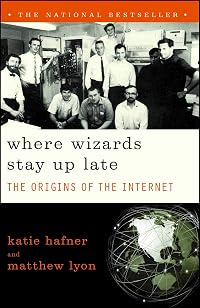
Hiltzik argues--successfully, I think--that the question oversimplifies the reality, in several dimensions: Xerox did use some of the Palo Alto Research Center creations, Xerox didn't really have the ability/agility to implement others, and that clashing cultures made some gains difficult. He also explores the strengths and weaknesses of Bob Taylor's management practices at some length (an interesting thing, actually, as I'm also reading Katie Hafner & Matthew Lyon's Where Wizards Stay Up Late, which also features Taylor as a key player). Finally, he points out, Xerox continued to fund those rebels it supposedly didn't show more listen to.
Well-written & researched. Each chapter is thematic, and mixes contextual explanation with word portraits of the key players. The book is very much focused on PARC's computer and system projects, but aware of external events occurring more or less simultaneously with them and how those interacted. It acknowledges, but doesn't really explore, the non-computer activities occurring in the center.
All in all, one of the better histories of early computing.
This review has also been published on a dabbler's journal. show less
Hiltzik argues--successfully, I think--that the question oversimplifies the reality, in several dimensions: Xerox did use some of the Palo Alto Research Center creations, Xerox didn't really have the ability/agility to implement others, and that clashing cultures made some gains difficult. He also explores the strengths and weaknesses of Bob Taylor's management practices at some length (an interesting thing, actually, as I'm also reading Katie Hafner & Matthew Lyon's Where Wizards Stay Up Late, which also features Taylor as a key player). Finally, he points out, Xerox continued to fund those rebels it supposedly didn't show more listen to.
Well-written & researched. Each chapter is thematic, and mixes contextual explanation with word portraits of the key players. The book is very much focused on PARC's computer and system projects, but aware of external events occurring more or less simultaneously with them and how those interacted. It acknowledges, but doesn't really explore, the non-computer activities occurring in the center.
All in all, one of the better histories of early computing.
This review has also been published on a dabbler's journal. show less
This history was an enjoyable read overall. My favorite parts focused on the work and work products - and trying to realize how ground-breaking they were at the time. The parts about the administration and the palace intrigue were less interesting to me, but they did serve a purpose. On a related note, there were so many people named in the text that it was, at times, tough to keep them straight without a scorecard.
There were themes discussed here that fit well, IMO, with the main theme of "The Innovator's Dilemma". Would have been nice to see some recognition of that research in the last chapter, "Did Xerox Blow It?". Maybe in a revised edition :^)
There were themes discussed here that fit well, IMO, with the main theme of "The Innovator's Dilemma". Would have been nice to see some recognition of that research in the last chapter, "Did Xerox Blow It?". Maybe in a revised edition :^)
It was helpful to read this relatively shortly after Steve Jobs. That biography rather confirmed the supposition (urban legend?) in my mind that Apple UI was stolen nonchalantly by Jobs and was confirmation of ineptly managed PARC. This book goes far to remind me that for the laser printer along Xerox has effected world-changing innovation and that the unpredictability of the PC market at the time meant few really knew what was going to work and why. Rather similar to this, this 1999 work puts future of Apple in doubt published, as it was, on the verge of the Apple comeback. How short its own foresight was.
A story of PARC, the famed Xerox Palo Alto Research Center , that follows both the business and the "people" aspect of the founding and evolution of the institution.
It is written as a story of the people there but the compelling, informed and witty writing bring weave what amount to a page-turner about real life events.
It is not a business manual, nor a software or hardware textbook, yet it has aspects of all of these subject and provides a fascinating insight into the recent history of computing.
It is written as a story of the people there but the compelling, informed and witty writing bring weave what amount to a page-turner about real life events.
It is not a business manual, nor a software or hardware textbook, yet it has aspects of all of these subject and provides a fascinating insight into the recent history of computing.
Great book, but a too many characters for me to keep track of.
Members
- Recently Added By
Author Information

8 Works 1,647 Members
Michael Hiltzik is a Pulitzer Prize-winning journalist and author. He currently serves as the Los Angeles Times's business columnist and blogger. He and his wife live in Southern California.
Common Knowledge
- Original title
- Dealers of Lightning: Xerox PARC and the Dawn of the Computer Age
- Original publication date
- 1999
Classifications
- Genres
- Technology, Nonfiction, General Nonfiction, History, Business, Science & Nature
- DDC/MDS
- 004.072079473 — Computer science, information & general works Computer science, knowledge & systems Computer science standard subdivisions Education, research, related topics Research
- LCC
- QA76.27 .H55 — Science Mathematics Mathematics Instruments and machines Calculating machines Electronic computers. Computer science
- BISAC
Statistics
- Members
- 660
- Popularity
- 43,700
- Reviews
- 10
- Rating
- (3.91)
- Languages
- Chinese, English
- Media
- Paper, Audiobook, Ebook
- ISBNs
- 10
- UPCs
- 1
- ASINs
- 3