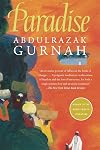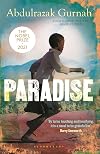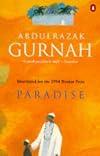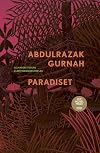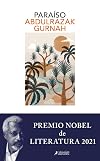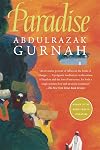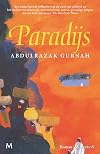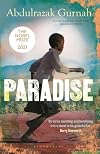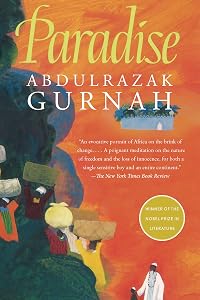
Paradise
by Abdulrazak Gurnah
On This Page
Description
From the Nobel Prize winner, a coming-of-age story that illuminates the harshness and beauty of an Africa on the brink of colonization. Paradise was characterized by the Nobel Prize committee as Abdulrazak Gurnah's "breakthrough" work. It is at once the chronicle of an African boy's coming-of-age, a tragic love story, and a tale of the corruption of African tradition by European colonialism. Sold by his father in repayment of a debt, twelve-year-old Yusuf is thrown from his simple rural life show more into complexities of pre-colonial urban East Africa. Through Yusuf's eyes, Gurnah depicts communities at war, trading safaris gone awry, and the universal trials of adolescence. show lessTags
Recommendations












Member Reviews
Yusuf is only 7 years old when he is given to a wealthy merchant to repay his family's debts. He is never beaten, overworked or even treated unkindly but the fact remains that he is a slave -- even though he (and we) will not understand this until much later in the novel.
This book is exactly what I hope for when I read international literature. It contains everything I look for in a book: lush, descriptive prose, realistic characterization and a story line that addresses ideas significant to humanity but leaves you with plenty of room to analyze and interpret on your own. At the same time, it offers me an opportunity to deepen my knowledge about another corner of the globe. Abdulrazak Gurnah's East Africa is a vibrant confluence of show more multiple religions and cultures. What emerges is a portrait of a society that can be both beautiful and inhumane, one where colonialism is just one more facet of already-ingrained local prejudice and cruelty. Reading this book was hard at times, but the beautiful language always salved the occasional rawness of the subject matter. I felt absorbed through the whole novel and I really admired the way the author let the story speak for itself rather than moralizing at the end. I will be checking out more of Abdulrazak Gurnah's work. show less
This book is exactly what I hope for when I read international literature. It contains everything I look for in a book: lush, descriptive prose, realistic characterization and a story line that addresses ideas significant to humanity but leaves you with plenty of room to analyze and interpret on your own. At the same time, it offers me an opportunity to deepen my knowledge about another corner of the globe. Abdulrazak Gurnah's East Africa is a vibrant confluence of show more multiple religions and cultures. What emerges is a portrait of a society that can be both beautiful and inhumane, one where colonialism is just one more facet of already-ingrained local prejudice and cruelty. Reading this book was hard at times, but the beautiful language always salved the occasional rawness of the subject matter. I felt absorbed through the whole novel and I really admired the way the author let the story speak for itself rather than moralizing at the end. I will be checking out more of Abdulrazak Gurnah's work. show less
Met dit boek reisde ik terug naar het begin van de 20e eeuw, naar wat nu Tanzania is. Er marcheerden af en toe wat Duitse soldaten voorbij die het land koloniseerden, maar dat was meer op de achtergrond. Het boek vertelt het verhaal van een jongen die als onderpand voor een lening wordt meegegeven aan een koopman. Formeel is de slavernij afgeschaft, maar feitelijk leeft deze jongen als slaaf. Hoewel hij niet wordt afgebeuld, en zelfs met de koopman mee mag op een handelsmissie naar het binnenland, heeft hij niet de vrijheid zijn eigen beslissingen te nemen en is hij compleet afhankelijk van de koopman. Veel in dit boek is impliciet, gebeurt in dromen en verhalen die worden verteld in de nacht. Het is best een beklemmend boek, maar het show more wist mij wel te betoveren vooral ook door de beschrijvingen van die niet meer bestaande wereld. show less
I am troubled by this book. I need more time to digest it. But I’ll share my thoughts having just completed it. In a nutshell, I wanted to be more impressed than I was. And it would be unfair to Gurnah if I did not admit to being impressed nevertheless. Yusuf, the protagonist, is sold by his father at the age of 12. Leaving behind his family and rural village, he becomes an apprentice of sorts to Aziz, a wealthy, worldly merchant in precolonial urban East Africa. The story is at once no more than and much more than a coming-of-age story. It is Africa’s story as well, at least in part. All this said, I found the end baffling for a number of reasons. I am not giving anything away by saying that it seems to me a bit forced; that what show more happens doesn’t quite mesh with what preceded it. The large pieces of the novel are all fascinating and all well done; I don’t think that they are woven seamlessly. For example, the story of Aziz’s wife felt “tacked on.” While well done, it didn’t work as part of and successor to all that preceded it. A troubling novel but one which has convinced me to read more of Gurnah. show less
48. Paradise by Abdulrazak Gurnah
published: 1994
format: 247-page paperback
acquired: 2019 – sent from an LT friend
read: Oct 8-16
time reading: 8:12, 2.0 mpp
rating: 5
locations: circa 1910 Tanzania
about the author: born 1948 in the Sultanate of Zanzibar. Fled to England after the Zanzibar Revolution in 1968. Now a retired professor of English and postcolonial literature at the University of Kent.
This is simply wonderful, but of course not in a way I can capture. Gurnah takes us into the world of caravan trading in what is now Tanzania in southeast Africa, and what was then a cultural mélange, a world of merchants from different parts of Africa, Arabia and India, along with the leftovers around that trade, under German colonial rule. No show more dates, but there is an automobile, and a war coming; and the traditional ways, along with all their tragedy and risk and romanticism, are coming to an end.
Yusuf (whose significantly biblical name took me about 90% of the book to figure out, because of the spelling) finds himself taken from his parents by a rich uncle, and dumped in a shop, and then later on and off a caravan right out of something Marco Polo might have experienced, but here westward into the very distant heart of Africa. The civilized Islamic traders dealing with isolated pagan Africa tribes. Except this isn't the 1300's. This is a colonial ruled territory in the 20th century. Yusuf grows up, and encounters various characters, and their large personalities, and expounding on their philosophies and playing their tricks and trying to manage the traditions and changes.
My first time reading the new Nobel Prize winner. An LT friend sent this my way in April of 2019, after posting to me in her Club Read thread, "If one is going to try to hook someone on an author, one must do it properly!" It took me over two years and that prize to finally open it up and see what she meant. I'm anxious to read more by Gurnah.
2021
https://www.librarything.com/topic/333774#7630031 show less
published: 1994
format: 247-page paperback
acquired: 2019 – sent from an LT friend
read: Oct 8-16
time reading: 8:12, 2.0 mpp
rating: 5
locations: circa 1910 Tanzania
about the author: born 1948 in the Sultanate of Zanzibar. Fled to England after the Zanzibar Revolution in 1968. Now a retired professor of English and postcolonial literature at the University of Kent.
This is simply wonderful, but of course not in a way I can capture. Gurnah takes us into the world of caravan trading in what is now Tanzania in southeast Africa, and what was then a cultural mélange, a world of merchants from different parts of Africa, Arabia and India, along with the leftovers around that trade, under German colonial rule. No show more dates, but there is an automobile, and a war coming; and the traditional ways, along with all their tragedy and risk and romanticism, are coming to an end.
Yusuf (whose significantly biblical name took me about 90% of the book to figure out, because of the spelling) finds himself taken from his parents by a rich uncle, and dumped in a shop, and then later on and off a caravan right out of something Marco Polo might have experienced, but here westward into the very distant heart of Africa. The civilized Islamic traders dealing with isolated pagan Africa tribes. Except this isn't the 1300's. This is a colonial ruled territory in the 20th century. Yusuf grows up, and encounters various characters, and their large personalities, and expounding on their philosophies and playing their tricks and trying to manage the traditions and changes.
My first time reading the new Nobel Prize winner. An LT friend sent this my way in April of 2019, after posting to me in her Club Read thread, "If one is going to try to hook someone on an author, one must do it properly!" It took me over two years and that prize to finally open it up and see what she meant. I'm anxious to read more by Gurnah.
2021
https://www.librarything.com/topic/333774#7630031 show less
Intriguing story told from the point of view of Yusuf, a boy pawned into bondage with a Muslim trader, who later accompanies his new master on a caravan into the interior of East Africa. It is a harrowing journey, a parallel to Conrad's Heart of Darkness, but one that subverts the Western perception throughout. The trader is a manipulator, but ultimately small fry compared to the Germans and British vying for control on the region on the cusp of WWI. The colonial geo-politics provides the backdrop of a world in flux, while the story centres on how Yusuf, Khalil and Amina are all trapped with no escape in a web spun by the trader.
A story of exile, Abdulrazak Gurnah’s fourth novel Paradise tells the story of Yusuf who was born in Tanzania at the turn of the 20th century. His family is poor, and it’s a treat when Yusuf finds a bone in his soup, but the family manages to put on a feast for the regular visits of Uncle Azia. Yusuf — already showing signs of strategic thinking which will serve him in good stead — always arranges his activities to coincide with Uncle Aziz’s departure and his gift of 10 annas (a unit of currency in parts of colonial Africa).
Aziz, however, is no genial uncle. He isn’t an uncle at all. He is a merchant made wealthy by shady deals and a usurer who preys on people like Yusuf’s family, by lending money at exorbitant rates to show more people who have no prospect of repaying it. Yusuf’s childhood is abruptly terminated when he is sold to ‘Uncle’ Aziz in payment of his father’s debts, and he never sees his family again. As he makes his way across Africa as an unpaid servant for Aziz’s trading caravans, he encounters the advent of German colonialism and the way it ruptures traditional ownership and traditions.
It’s a hyper-masculine world that Yusuf enters at twelve with an often brutal apprenticeship with an older boy, Khalil. The boys are mostly left to their own devices as long as the shop is profitable, and Khalil is supposed to teach him the tricks of the trade, but he also introduces him to the crude culture of the trading station. His method of instruction is mostly with a sharp slap to the head to remind Yusuf not to be ‘stupid’ and he enjoys telling Yusuf frightening stories to keep him in line.
The reader’s sympathies are not with Khalil for most of the novel because we don’t learn until quite late that he is also a bonded servant who theoretically could one day be redeemed by his family, but it’s not likely ever to happen, even if they knew where he was. He has an adopted sister too, whose fate was not uncommon in those days.
(One of the aspects of Gurnah’s fiction that I like is that he doesn’t romanticise pre-colonial societies.)
To read the rest of my review please visit https://anzlitlovers.com/2025/08/29/paradise-1994-by-abdulrazak-gurnah/ show less
Aziz, however, is no genial uncle. He isn’t an uncle at all. He is a merchant made wealthy by shady deals and a usurer who preys on people like Yusuf’s family, by lending money at exorbitant rates to show more people who have no prospect of repaying it. Yusuf’s childhood is abruptly terminated when he is sold to ‘Uncle’ Aziz in payment of his father’s debts, and he never sees his family again. As he makes his way across Africa as an unpaid servant for Aziz’s trading caravans, he encounters the advent of German colonialism and the way it ruptures traditional ownership and traditions.
It’s a hyper-masculine world that Yusuf enters at twelve with an often brutal apprenticeship with an older boy, Khalil. The boys are mostly left to their own devices as long as the shop is profitable, and Khalil is supposed to teach him the tricks of the trade, but he also introduces him to the crude culture of the trading station. His method of instruction is mostly with a sharp slap to the head to remind Yusuf not to be ‘stupid’ and he enjoys telling Yusuf frightening stories to keep him in line.
The reader’s sympathies are not with Khalil for most of the novel because we don’t learn until quite late that he is also a bonded servant who theoretically could one day be redeemed by his family, but it’s not likely ever to happen, even if they knew where he was. He has an adopted sister too, whose fate was not uncommon in those days.
(One of the aspects of Gurnah’s fiction that I like is that he doesn’t romanticise pre-colonial societies.)
To read the rest of my review please visit https://anzlitlovers.com/2025/08/29/paradise-1994-by-abdulrazak-gurnah/ show less
This is a seemingly simple Bildungsroman, set in east Africa in the years before the First World War—but beneath the coming of age story of Yusuf, a slave sold by his father to settle a debt, lies a complex exploration of slavery, religion, cultural interactions, colonialism, innocence and honour. Gurnah has an immense gift for using understated language to call up vivid imagery—there's no overblown description here, no moralising, and the reader nonetheless gets a strong sense of the region which would later become Tanzania at the turn of the twentieth century. A fascinating book, which dovetails very nicely with the nonfiction reading in African history which I've been doing this semester.
Members
- Recently Added By
Published Reviews
ThingScore 75
This, Abdulrazak Gurnah's fourth novel, is many-layered, violent, beautiful and strange. It incorporates its disparate elements - myth, folktale, Biblical and Koranic tradition, a strong whiff of Conrad - without a dilution of its essence.
added by thorold
Lists

Top Five Books of 2022
736 works; 272 members

Books Read in 2023
5,638 works; 147 members

Booker Prize
491 works; 62 members

Best African and African diaspora books
111 works; 4 members

Africa
109 works; 8 members

Childhood: Books for or about children in different cultures around the wor
345 works; 18 members

Man Booker Prize Longlist 1994
6 works; 1 member

Booker Prize Shortlist: Titles Not Yet Read
161 works; 4 members

Books Read in 2022
5,226 works; 115 members

A Good Read (Radio 4)
287 works; 1 member

Around the World in 80 Books
79 works; 4 members

Big Jubilee List
70 works; 3 members

Tanzania
46 works; 1 member

BBC World Book Club
267 works; 5 members
Author Information

18+ Works 3,386 Members
Abdulrazak Gurnah teaches at the University of Kent in England.
Some Editions
Awards and Honors
Awards
Notable Lists
The Big Jubilee Read (1992-2001 – 1994)
Series
Belongs to Publisher Series
Common Knowledge
- Canonical title
- Paradise
- Original title
- Paradise
- Alternate titles*
- Paradijs : roman
- Original publication date
- 1994
- People/Characters
- Yusuf; Uncle Aziz; Khalil; Amina; Mohammed Abdallah ("mnyapara"); Ba Tembo (show all 24); Mzee Tamim; Ali Mafuta; Kisimamajongoo; Ma Ajuza; Mzee Hamdani; Hamid Suleiman; Maimuna Suleiman; Kalasinga (Harbans Singh); Hussein; Asha; Ali; Suda; Simba Mwene; Nyundo; Mfipo; Chatu; Bati; Zulekha
- Important places
- East Africa
- Important events
- German occupation of East Africa
- Dedication
- For Salma Abdalla Basalama
- First words
- The boy first. His name was Yusuf, and he left his home suddenly during his twelfth year.
- Quotations
- He thinks he's the nephew of a rich merchant and likes to lie under the orange trees and dream of Paradise.
They accepted their share with mutters of gratitude, barely glancing at whatthey had been given. Then they sat politely with the merchant on the terrace unsure if they were of any further use to him but reluctant to remove th... (show all)emselves too quickly in case they gave offence. As they both rose to leave, the merchant putout hand and held back Simba Mwene. For a moment, Mohammad Abdalla stood perfectly
still, his eyes on the ground. Then he walked calmly
away.
He thought of Khalil and smiled despite the gloom and a certain sense of safe the gloom and the sudden sense of self-pity he felt. That was how he would become, if he kept his wits. Like Khalil. Nervous and combative, hemmed ... (show all)in from all sides and dependent. Stranded in the middle of nowhere. He thought of his ceaseless banter with the customers, and his impossible cheerfulness, and knew that it only disguised hidden wounds. Like Kalasinga, a 1000 miles away from home. Like all of them, stuck in some smelly place or another, infested by longing and comforted by visions of lost wholeness.
If only they could leave our bodies to themselves and be sure that they will know how to look to their well-being and pleasure. - Last words
- (Click to show. Warning: May contain spoilers.)He glanced round quickly and then ran after the column with smarting eyes.
- Original language
- English
- Canonical DDC/MDS
- 823.914
*Some information comes from Common Knowledge in other languages. Click "Edit" for more information.
Classifications
- Genres
- General Fiction, Fiction and Literature, Historical Fiction
- DDC/MDS
- 823.914 — Literature & rhetoric English & Old English literatures English fiction 1900- 1901-1999 1945-1999
- LCC
- PR9399.9 .G87 .P37 — Language and Literature English English Literature English literature: Provincial, local, etc.
- BISAC
Statistics
- Members
- 857
- Popularity
- 31,978
- Reviews
- 37
- Rating
- (3.68)
- Languages
- 15 — Danish, Dutch, English, Finnish, French, German, Indonesian, Italian, Norwegian (Bokmål), Polish, Portuguese, Romanian, Spanish, Swahili, Swedish
- Media
- Paper, Audiobook, Ebook
- ISBNs
- 49
- ASINs
- 11