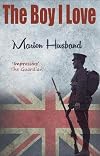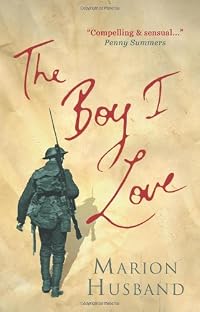
On This Page
Description
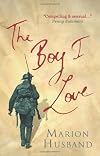
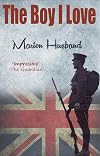
Set in the aftermath of World War I, and full of early twentieth-century taboos, love and betrayal, Marion Husband tackles of the difficulties faced in the post-war period by ex-soldiers.'Its evocation of quiet lives, intensely lived, is impressive' The Guardian
'As with all the best novelists, Husband's talent seems to draw its energy from the experience of writing from perspectives far removed from her own as she inhabits other genders, other sexualities, other eras' Patrick Gale
show more Lieutenant Paul Harris returns to his father's home and to the arms of his secret lover, Adam, after suffering from shell shock after his time at war. But when he discovers that Margot, the fiancée of his dead brother, is pregnant, he marries her due to an immense sense of loyalty. Forced to hide his true desires and his relationship with a fellow solider, Marion Husband sensitively explores the difficulties that he faces.
Through vivid flashbacks, effortless prose and realistic dialect, 'the love that dare not speak its name' is explored with true feeling and passion. Exploring the prejudice of only a few generations ago, The Boy I Love is a classic romance.
Just some of the amazing GOODREADS REVIEWS:
'A beautiful, melancholy book which feels terribly true to it's time and to the characters.'
'A wonderful book. One of those that I just couldn't put down.'
'I absolutely loved this book. Found it utterly unputdownable.'
. show less
Tags
Recommendations






















Member Reviews
The Boy I Love is just a fantastic, readable, totally absorbing novel that has haunted me since reading it. The main character, Paul Harris is beautifully realised and believable that it's impossible not to feel for him, despite the fact that he often does the wrong thing for the right reasons. In fact all the characters in this novel are fully rounded and I was captivated by them all. Husband writes in a really straight-forward, fluent style but still manages to instill a real feeling for atmosphere and suspense. A wonderful, thought-provoking novel.
This was disappointing. I was hoping for a bittersweet sordid romance with the tragedy of war as the backdrop but what this is is a group of young adults with no communication skills whining constantly about their post-war lives and finding solace in sleeping around with each other instead of actually talking. None of the characters had redeeming qualities and while this may be a pretty realistic view of 1910s small village Britain I just found it all rather boring.
If not for the extensive reading I did in the past few years about the WWI was poets and their close relationship with each other, sometime bordering and merging into love, I would have probably considered this as only a good piece of fiction. But I do know about Siegfried Sassoon, and his love for Wilfred Owen, tragically ended with Owen’s death in 1918; his close relationship with Robert Graves, maybe more friendship then love; and his second attempt at happiness Stephen Tennant, that maybe pushed him to marry Hester Gatty and finally having a family, like he had always desired.
I can see the Paul of The Boy I love in Siegfried Sassoon, like probably I can see Adam in Robert Graves, and why not Patrick in Wilfred Owen (with a show more different ending); there is also Margot in Hester Gatty. Of course the inter-relationships are different, like different are their outcomes. And truth be told, I don’t like so much Paul, there is who sees courage in his decisions, but the only thing I can see is the broken hearts he is leaving behind. Already from the beginning, when he is describing the intense desire he has to be with Adam, and his desire is genuine, I can see that he is already detaching himself from his real life, to build a fake one. On this regard, Patrick is maybe less refined than Paul, but he is more sincere and open in his approaches.
It’s true that all these men, even Adam, were completely and tragically changed by the war, and it’s also true that many of them didn’t have a choice; it was probably easier for the Stephen Tennant of the time, people from aristocracy, being dubbed as “eccentric”, and living as they liked, but for the many Pauls, Adams and Patricks it was not so simple.
Just recently I argued with another reader on what makes a romance; the other opinion was that to be a romance you need to have an uplifting happily ever after; my opinion is that you need to have a love story, and the happily ever after is a bonus, but not a rule. So yes, I consider The Boy I Love a wonderful romance, maybe even comparable to the likes of Maurice, but unlike Maurice, it has not an happily ever after, at least not for Paul. I’m not sure if the author is planning something different for Adam and Patrick, maybe at the time she wrote this novel, she wanted for the reader to build their own finale. Now there are two more books in the series, so it will be interesting to see what is waiting for these men.
I wanted for this novel to have an happily ever after, even if I don’t like so much Paul (but more for the output of his decisions that for him as a character), I was enthralled by his story, as I was by Patrick and Adam (Adam is probably my favorite), but I knew it was not in the star; in a way, it could have been worst, in the end, Paul and Patrick are back from war (and many didn’t make it), Adam is still alive, but what life is without the total happiness of being able to basking to the sun of your love? It’s like living in a perennial shadow, it’s not bad, but not even perfection.
http://www.amazon.com/dp/1908262729/?tag=elimyrevandra-20 show less
I can see the Paul of The Boy I love in Siegfried Sassoon, like probably I can see Adam in Robert Graves, and why not Patrick in Wilfred Owen (with a show more different ending); there is also Margot in Hester Gatty. Of course the inter-relationships are different, like different are their outcomes. And truth be told, I don’t like so much Paul, there is who sees courage in his decisions, but the only thing I can see is the broken hearts he is leaving behind. Already from the beginning, when he is describing the intense desire he has to be with Adam, and his desire is genuine, I can see that he is already detaching himself from his real life, to build a fake one. On this regard, Patrick is maybe less refined than Paul, but he is more sincere and open in his approaches.
It’s true that all these men, even Adam, were completely and tragically changed by the war, and it’s also true that many of them didn’t have a choice; it was probably easier for the Stephen Tennant of the time, people from aristocracy, being dubbed as “eccentric”, and living as they liked, but for the many Pauls, Adams and Patricks it was not so simple.
Just recently I argued with another reader on what makes a romance; the other opinion was that to be a romance you need to have an uplifting happily ever after; my opinion is that you need to have a love story, and the happily ever after is a bonus, but not a rule. So yes, I consider The Boy I Love a wonderful romance, maybe even comparable to the likes of Maurice, but unlike Maurice, it has not an happily ever after, at least not for Paul. I’m not sure if the author is planning something different for Adam and Patrick, maybe at the time she wrote this novel, she wanted for the reader to build their own finale. Now there are two more books in the series, so it will be interesting to see what is waiting for these men.
I wanted for this novel to have an happily ever after, even if I don’t like so much Paul (but more for the output of his decisions that for him as a character), I was enthralled by his story, as I was by Patrick and Adam (Adam is probably my favorite), but I knew it was not in the star; in a way, it could have been worst, in the end, Paul and Patrick are back from war (and many didn’t make it), Adam is still alive, but what life is without the total happiness of being able to basking to the sun of your love? It’s like living in a perennial shadow, it’s not bad, but not even perfection.
http://www.amazon.com/dp/1908262729/?tag=elimyrevandra-20 show less
I foudn this a really unusual read - Husband's style is quite different to most of the writers I admire but none the worse for that - she writes with a light touch that on reflection hides some thought-provoking stuff as I found myself thinking about this novel and its characters long after I'd finished reading it. But then it was reccommended to me by a gay friend (the main plot line is a gay love story and touches on many of the difficutlies homosexual men faced before it became legal). He loved it, as did his book group. But it's well worth a read no matter if you're gay or straight as it gives such insight into the lives of young soldiers returning home from the 1914-18 war.
This is a powerful book that confronts difficult issues with incredible sensitivity. Set in the aftermath of WW1 in a nothern town it involves an unusual love triangle - Paul is gay but has married his dead brother's fiance as she was pregnant. He is a honourable man but his passions lie elsewhere - in the arms of his male lovers.
I found this to be a gripping book and can also reccomend the sequel - Paper Moon.
Ideal for Reading Groups as there are plenty of controversial aspects to discuss.
I found this to be a gripping book and can also reccomend the sequel - Paper Moon.
Ideal for Reading Groups as there are plenty of controversial aspects to discuss.
Yet another pseudo-homoromantic novel written by a straight woman which misses the mark. Lots of sexual innuendos and homosexual lusting, nice setting, no chemistry, a literal pat on the back for non-gay people to help make themselves feel politically correct LGBT supporters. Dropped in the bin.
Based near the end of World War I this is the story of some men who have returned from the war with a variety of problems. One of the problem several of them have is that they are trying to fit into regular society while trying to hide the fact that they are in fact gay.
In fact all of the characters are broken in some way. They all are trying to live ordinary lives while perhaps they should be thinking about living their dreams.
It wasn't a bad read but I wasn't horribly impressed. While readable it just didn't fire me with any enthuaism.
In fact all of the characters are broken in some way. They all are trying to live ordinary lives while perhaps they should be thinking about living their dreams.
It wasn't a bad read but I wasn't horribly impressed. While readable it just didn't fire me with any enthuaism.
Members
- Recently Added By
Published Reviews
added by gsc55
Lists

World War I Fiction
94 works; 15 members
Author Information

9 Works 172 Members
Marion Husband teaches creative writing through the Open College of the Arts.

Marion Husband is a LibraryThing Author, an author who lists their personal library on LibraryThing.
Series

Work Relationships
Is contained in
Common Knowledge
- Original publication date
- 2005
- People/Characters
- Paul Harris; Margot Harris; Patrick Morgan; Michael Morgan; Hetty Roberts; Adam Mason (show all 7); George Harris
- Important places
- Stockton-on-Tees, County Durham, England, UK
- Dedication
- For John
- Original language
- English
Classifications
Statistics
- Members
- 79
- Popularity
- 400,134
- Reviews
- 9
- Rating
- (3.82)
- Languages
- English
- Media
- Paper, Ebook
- ISBNs
- 10
- ASINs
- 2