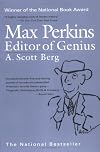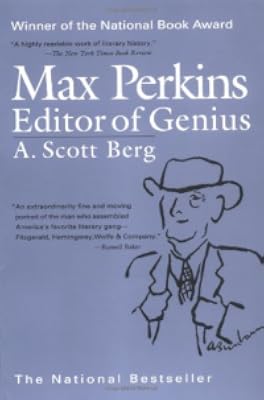
Max Perkins: Editor of Genius
by A. Scott Berg
On This Page
Description
The National Book Award winner from Pulitzer Prize-winning author A. Scott Berg is now celebrating its 40th anniversary.The talents he nurtured were known worldwide: F. Scott Fitzgerald, Ernest Hemingway, Thomas Wolfe, and numerous others. But Maxwell Perkins remained a mystery, a backstage presence who served these authors not only as editor but also as critic, career manager, moneylender, psychoanalyst, father-confessor, and friend.
This outstanding biography, a winner of the National show more Book Award, is the first to explore the fascinating life of this genius editor extraordinare—in both the professional and personal domains. It tells not only of Perkins’s stormy marriage, endearing eccentricities, and secret twenty-five-year romance with Elizabeth Lemmon, but also of his intensely intimate relationships with the leading literary lights of the twentieth century. It is, in the words of Newsweek, “an admirable biography of a wholly admirable man.”
The basis for the Major Motion Picture Genius, Starring Colin Firth, Nicole Kidman, and Jude Law.. show less
Tags
Recommendations


















Member Reviews
[Look Homeward, Angel] by Thomas Wolfe
[Max Perkins, Editor of Genius] by A. Scott Berg
“No leaf hangs for me in the forest; I shall lift no stone upon the heels; I shall find no door in any city. There is one voyage, the first, the last, the only one.”
Reading Thomas Wolfe is to mourn anew, each and every time. Forget the recent movement to abuse his writing as indulgent and overblown. Forget the neo-literary community, perched on a corpse they declare bloated, all the while picking and tearing with sour beaks. Attacking our heroes is the newest fad, and a distasteful one. And Wolfe isn’t the only classic that has suffered at the hands of revisionary criticism. Hemingway is now all too often considered boring and over simple and show more stereotypically uber-masculine; Fitzgerald’s work superficial and derivative, perhaps even plagiarized from his wife.
Thankfully, A. Scott Berg, with his [Editor of Genius], saw these men through the eyes of Max Perkins, the man who discovered them and midwifed their work. As the title suggests, Perkins saw them all as geniuses, particularly Wolfe. The editor had an intimidating task in distilling Wolfe’s mammoth text. Recent critics have tried to debunk the story about the manuscript’s delivery, but Berg quotes Wolfe’s agent, Madeline Boyd, requesting a truck to pick up the full work. As Perkins read, he was enchanted by the poetic and epic book. Working closely with the author, he reorganized and whittled, often foiled by Wolfe’s ability to replace several pages of new writing for the one or two cut. In the end, the book was an epic coming of age Southern tale. While the story still sags occasionally, the pay off in the last chapter is worth the effort. Eugene is ushered through his transformed hometown by the ghost of his deceased brother, assured that his journey is the only journey in life. It is easily one of the most perfect passages ever written.
Reading Berg’s history along with Wolfe’s debut, [Look Homeward, Angel] is a revelation. Seeing a photo of Wolfe standing next to a crate, filled with loose paper reaching up to knee-height, with a caption noting it’s one of three crates containing a manuscript, give Perkins’ the credit he’s due for translating the Wolfe’s beasts. But Wolfe is revealed, too. [Look Homeward, Angel]’s hero, Eugene Gant, is Wolfe himself – introverted, bookish, out of place in every circumstance except with a pen in his hand; overshadowed by a large and eccentric Southern family but a keen observer. In fact, the book was banned from Wolfe’s hometown after it was published because people were so angry with their fictionalized treatment. Reading about Gant’s youth and transformation into a writer is echoed in Perkins’ biography.
The most affecting passages in the biography are the ones detailing Perkins and Wolfe’s relationship. With five daughters, Perkins found the son he’d always wanted in Wolfe. And Wolfe had found a supportive and loving father. W.O. Gant, the substitute in [Look Homeward, Angel] for Wolfe’s real father, is an acerbic drunk with a piercing tongue. Nothing is ever good enough for W.O., and he casts himself as the eternal victim of the world’s conspiracies. Wolfe flourished under Perkins’ encouraging, and the two were easily one of the most creative partnerships ever seen.
Hemingway and Fitzgerald are showcased in Perkins’ story, as well. Not only the pugilistic bombast and the petulant child that have been substituted for their names over the years. But the secret creative zeal they both harbored, and the fragile egos that refuted the desperate need to create. Hemingway and Fitzgerald reacted in two very different ways during these battles. At one point in Perkins’ story, Fitzgerald is confined to bed with ‘grippe,’ sick to the bone over his financial situation, criticism of his work, and the progress of his next writing project. His treatment was to write about the illness, penning an article about all his daily aches and pains. Hemingway, on the other hand, was constantly on the defensive, raging against the world. Berg recounts him stringing up a tuna he’d caught and using it as a punching bag after someone told him tuna fishing was easy.
Given the genius Perkins corralled in just these three, it’s hard to believe he also edited Ring Lardner, Marjorie Kinnan Rawlings, James Jones, and Taylor Caldwell. And the biography is a rich source for other authors to seek out: Nancy Hale, Marcia Davenport, Martha Gellhorn, Will James, Etta Shiber, and Christine Watson – many would never have been known without Perkins’ eye for talent.
Though Perkins and Wolfe were estranged toward the end of Wolfe’s life, their love and admiration for one another never faltered. Wolfe’s last writing was a note from his deathbed remembering a climb to the top of a tall building with Perkins, the power and glory of life laid out before them. Perkins believed Wolfe was lost to the world much too early – and reading these two books is a testament to that obvious truth.
Bottom Line: The epitome of literary classics.
5 bones!!!!!
All time favorites. show less
[Max Perkins, Editor of Genius] by A. Scott Berg
“No leaf hangs for me in the forest; I shall lift no stone upon the heels; I shall find no door in any city. There is one voyage, the first, the last, the only one.”
Reading Thomas Wolfe is to mourn anew, each and every time. Forget the recent movement to abuse his writing as indulgent and overblown. Forget the neo-literary community, perched on a corpse they declare bloated, all the while picking and tearing with sour beaks. Attacking our heroes is the newest fad, and a distasteful one. And Wolfe isn’t the only classic that has suffered at the hands of revisionary criticism. Hemingway is now all too often considered boring and over simple and show more stereotypically uber-masculine; Fitzgerald’s work superficial and derivative, perhaps even plagiarized from his wife.
Thankfully, A. Scott Berg, with his [Editor of Genius], saw these men through the eyes of Max Perkins, the man who discovered them and midwifed their work. As the title suggests, Perkins saw them all as geniuses, particularly Wolfe. The editor had an intimidating task in distilling Wolfe’s mammoth text. Recent critics have tried to debunk the story about the manuscript’s delivery, but Berg quotes Wolfe’s agent, Madeline Boyd, requesting a truck to pick up the full work. As Perkins read, he was enchanted by the poetic and epic book. Working closely with the author, he reorganized and whittled, often foiled by Wolfe’s ability to replace several pages of new writing for the one or two cut. In the end, the book was an epic coming of age Southern tale. While the story still sags occasionally, the pay off in the last chapter is worth the effort. Eugene is ushered through his transformed hometown by the ghost of his deceased brother, assured that his journey is the only journey in life. It is easily one of the most perfect passages ever written.
Reading Berg’s history along with Wolfe’s debut, [Look Homeward, Angel] is a revelation. Seeing a photo of Wolfe standing next to a crate, filled with loose paper reaching up to knee-height, with a caption noting it’s one of three crates containing a manuscript, give Perkins’ the credit he’s due for translating the Wolfe’s beasts. But Wolfe is revealed, too. [Look Homeward, Angel]’s hero, Eugene Gant, is Wolfe himself – introverted, bookish, out of place in every circumstance except with a pen in his hand; overshadowed by a large and eccentric Southern family but a keen observer. In fact, the book was banned from Wolfe’s hometown after it was published because people were so angry with their fictionalized treatment. Reading about Gant’s youth and transformation into a writer is echoed in Perkins’ biography.
The most affecting passages in the biography are the ones detailing Perkins and Wolfe’s relationship. With five daughters, Perkins found the son he’d always wanted in Wolfe. And Wolfe had found a supportive and loving father. W.O. Gant, the substitute in [Look Homeward, Angel] for Wolfe’s real father, is an acerbic drunk with a piercing tongue. Nothing is ever good enough for W.O., and he casts himself as the eternal victim of the world’s conspiracies. Wolfe flourished under Perkins’ encouraging, and the two were easily one of the most creative partnerships ever seen.
Hemingway and Fitzgerald are showcased in Perkins’ story, as well. Not only the pugilistic bombast and the petulant child that have been substituted for their names over the years. But the secret creative zeal they both harbored, and the fragile egos that refuted the desperate need to create. Hemingway and Fitzgerald reacted in two very different ways during these battles. At one point in Perkins’ story, Fitzgerald is confined to bed with ‘grippe,’ sick to the bone over his financial situation, criticism of his work, and the progress of his next writing project. His treatment was to write about the illness, penning an article about all his daily aches and pains. Hemingway, on the other hand, was constantly on the defensive, raging against the world. Berg recounts him stringing up a tuna he’d caught and using it as a punching bag after someone told him tuna fishing was easy.
Given the genius Perkins corralled in just these three, it’s hard to believe he also edited Ring Lardner, Marjorie Kinnan Rawlings, James Jones, and Taylor Caldwell. And the biography is a rich source for other authors to seek out: Nancy Hale, Marcia Davenport, Martha Gellhorn, Will James, Etta Shiber, and Christine Watson – many would never have been known without Perkins’ eye for talent.
Though Perkins and Wolfe were estranged toward the end of Wolfe’s life, their love and admiration for one another never faltered. Wolfe’s last writing was a note from his deathbed remembering a climb to the top of a tall building with Perkins, the power and glory of life laid out before them. Perkins believed Wolfe was lost to the world much too early – and reading these two books is a testament to that obvious truth.
Bottom Line: The epitome of literary classics.
5 bones!!!!!
All time favorites. show less
To realize this grew out of the author's senior thesis at college is to wonder what I've been doing with my life, but so be it. There's a bit of irony in reading such a big book about a man who strove to stay out of the limelight, preferring that the books he edited and their authors (Fitzgerald, Hemingway, Wolfe, to name just a few) get the attention. He had a Puritan's work ethic and belief in the value of suffering, coupled with a belief that nothing in the world could matter as much as a well-done book. His life in interesting because of the light it sheds on many classics of twentieth-century American literature and the process by which they came about. Along the way, it offers valuable insights into the process of editing. After show more reading his advice to his authors, you almost feel as if you've been the recipient of one of his thoughtful, encouraging letters and feel inspired to write. show less
A fascinating look into the success, struggles, and general life of one of modern literature's most prolific editors. Filled with intriguing stories that round out both Perkins and his more famous clients (Fitzgerald, Hemingway, Wolfe). It is an unabashed look into everything that made this man--his determination, his alcoholism, his generosity, his failure at emotional expression. It shows us the man how he was, great but flawed. For those interested in any of his more famous writers, publishing, or editing in general, this is a must read.
A fascinating story that is about the authors of Max Perkins as much as it is a biography of Perkins himself. I think the book would be of interest to anyone who enjoys biography, but it's also important an important read for writers, editors, and students of writing and literature.
As for me, the nature of biography is to cover absurd amounts of information, and this biography's nature was especially complicated due to the fact that Perkins lived through his authors and so their stories must be told to elucidate his. I struggled with the chronology of the book, which unnecessarily exploded each chapter with dozens of characters of varying levels of consequence. Still, very interesting and often amusing.
As for me, the nature of biography is to cover absurd amounts of information, and this biography's nature was especially complicated due to the fact that Perkins lived through his authors and so their stories must be told to elucidate his. I struggled with the chronology of the book, which unnecessarily exploded each chapter with dozens of characters of varying levels of consequence. Still, very interesting and often amusing.
Excellent, sympathetic account of a gentle man and excellent editor. One thing I've wondered since reading this book is if anyone has taken Thomas Wolfe's brain tumors into account regarding his rift with Perkins shortly before his death. It just seems bizarre that Wolfe would turn on Perkins the way he did. It seems to me his many brain tumors—along with his attempts to self-medicate by drinking heavily—were the culprits of his behavior. In other words, I don't think he was responsible for the bizarre behavior he exhibited when he got sick. He had so many brain tumors his cranial fluid shot across the room when the doctors opened his skull during surgery. That many tumors have got to affect a person's behavior. I wish someone was show more around to point that out to Perkins, given that he obviously felt a lot of pain over his falling out with Wolfe. show less
Please Mommy, can I grow up to be Max Perkins? Please?! Pretty please?!
What a wonderful eye and ear this man had. He's the one responsible for Thomas Wolfe's success because he's the only editor in all of recorded history to be willing to mine 3+-million words for the best 300,000 and then publish that as a book.
Incredible!
What a wonderful eye and ear this man had. He's the one responsible for Thomas Wolfe's success because he's the only editor in all of recorded history to be willing to mine 3+-million words for the best 300,000 and then publish that as a book.
Incredible!
A really interesting biography of Max Perkins, an editor most well-known now for discovering F. Scott Fitzgerald, Ernest Hemingway and Thomas Wolfe—though he also edited many bestsellers of the 20s, 30s and 40s which are now forgotten. There are times when Berg's coyness in telling anonymous anecdotes, coupled with his seeming desire to excuse Perkins' sexism with sexism, makes for a slightly frustrating read. Perhaps it might also be more enjoyable for people who have an interest in Perkins' most famous authors (I am indifferent to Fitzgerald, can't abide Hemingway, and had never heard of Wolfe), though I was certainly interested in what I learned. All in, however, this is a solid introduction to Perkins, and to the era in which he show more lived. show less
Members
- Recently Added By
Lists

TED 2013 Summer Reading List
190 works; 13 members
Author Information

10+ Works 4,675 Members
A. Scott Berg was born in Norwalk, Connecticut on December 4, 1949. He became fascinated with novelist F. Scott Fitzgerald while he was in high school. Berg even went so far as to attend Princeton University, from which he graduated in 1971, mainly because it was Fitzgerald's alma mater. While studying 20th-century literature at Princeton, Berg show more noticed that one name - that of editor Max Perkins - kept coming up in connection with authors such as Fitzgerald, Hemingway, and Wolfe. He decided to base his senior thesis on Max Perkins. Berg's research on Perkins continued for several years after graduation, eventually culminating in the 1978 publication of Max Perkins: Editor of Genius, which received the American Book Award. His other works include Goldwyn: A Biography and Kate Remembered, He also made The New York Times Best Seller List in 2013 for his title Wilson. Lindbergh won the Pulitzer Prize for Biography or Autobiography in 1998. He also wrote the story for a film entitled Making Love (1982). (Bowker Author Biography) show less
Awards and Honors
Awards
Distinctions
Common Knowledge
- Original publication date
- 1978
- People/Characters
- Maxwell Perkins; F. Scott Fitzgerald; Ernest Hemingway; Thomas Wolfe
- Related movies
- Genius (2015 | IMDb)
Classifications
- Genres
- Biography & Memoir, Nonfiction, General Nonfiction, Literature Studies and Criticism
- DDC/MDS
- 070.4 — Computer science, information & general works News media, journalism & publishing Documentary media, educational media, news media; journalism; publishing Journalism
- LCC
- PN149.9 .P4 .B4 — Language and Literature Literature (General) Literature (General) Authorship
- BISAC
Statistics
- Members
- 558
- Popularity
- 52,898
- Reviews
- 17
- Rating
- (4.28)
- Languages
- English, Portuguese, Spanish
- Media
- Paper, Ebook
- ISBNs
- 18
- ASINs
- 8