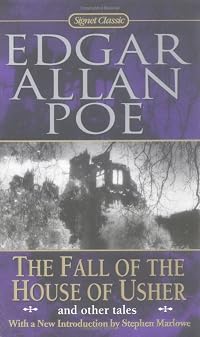
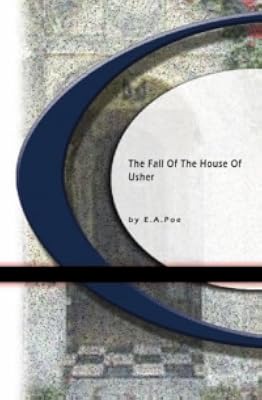
The Fall of the House of Usher and Other Tales
by Edgar Allan Poe
On This Page
Description
A collection of fourteen of the author's best-known tales of mystery and the macabre includes "The Pit and the Pendulum," "The Tell-Tale Heart," and "The Fall of the House of Usher," in which a visitor to a gloomy mansion finds a childhood friend dying under the spell of a family curse.Tags
Recommendations
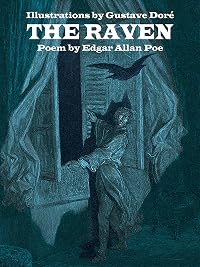





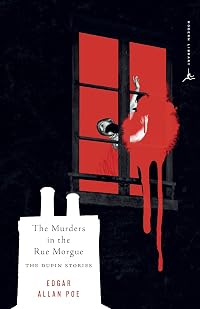
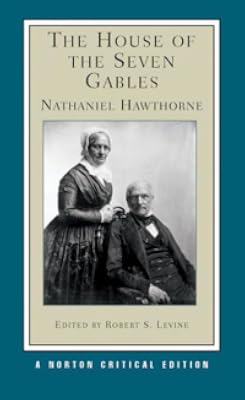

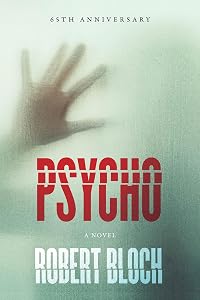





Member Recommendations
Member Reviews
I'd never read Poe before when I bought this book. I usually hate florid writing (basically, anything before the late 19th century) and a quick glance at the prose made me a little worried about whether I would even be able to make sense of it. However, I persevered and now I've finished all the stories and am sad cause I know there's no more to read.
Poe understands horror and suspense to perfection. He also understands a lot of other things which nobody seems to appreciate anymore, IMO.
Some of the more surreal stories in this collection reminded me strongly of Gogol. I'm not really a fan of surreal writing, but many of the other stories - especially the 'futuristic technology' ones - reminded me of some of Conan Doyle's stories, which show more is some of the highest praise I could give an author.
In particular, I'm indebted to Poe for inspiring Conan Doyles's Sherlock Holmes, one of my favorite literary protagonists of all time. I actually think the Sherlock Holmes stories are better developed than Poe's detective tales, but one can forgive him since he pioneered the detective genre.
My favorite story, by far, was 'Narrative of Arthur Gordon Pym'. I love a good adventure story, and this was an epic that just went on and on and oooon....in a very good way. It also showed how incredibly educated the author was on everything from the breedings habits of sea-birds to handling a ship. I learnt so much about random subjects from this story.
I was going to try to list some of my other favorites, but there are just too many so I'm leaving it at this. show less
Poe understands horror and suspense to perfection. He also understands a lot of other things which nobody seems to appreciate anymore, IMO.
Some of the more surreal stories in this collection reminded me strongly of Gogol. I'm not really a fan of surreal writing, but many of the other stories - especially the 'futuristic technology' ones - reminded me of some of Conan Doyle's stories, which show more is some of the highest praise I could give an author.
In particular, I'm indebted to Poe for inspiring Conan Doyles's Sherlock Holmes, one of my favorite literary protagonists of all time. I actually think the Sherlock Holmes stories are better developed than Poe's detective tales, but one can forgive him since he pioneered the detective genre.
My favorite story, by far, was 'Narrative of Arthur Gordon Pym'. I love a good adventure story, and this was an epic that just went on and on and oooon....in a very good way. It also showed how incredibly educated the author was on everything from the breedings habits of sea-birds to handling a ship. I learnt so much about random subjects from this story.
I was going to try to list some of my other favorites, but there are just too many so I'm leaving it at this. show less
I find with this collection, my opinion on Poe is evolving; becoming more refined. First, this may be better named The Narrative of A. Gordon Pym and Other Tales as Poe’s only full-length novel closing out this compendium is the lion's share of the pages. Also, purported as a response to a Poe hoax is completes the bookends with the initial newspaper piece "Balloon-Hoax".
In this realm of writing, I find there is science fiction - tales tethered to scientific facts - and science fantasy - fiction with more magical, mystical premises. Popularly, Poe may be thought more in the fantasy with this "macabre" musings, but really he is more like Jules Verne in that he is tightly bound to a scientific reality, if even he relies on unproven show more assumptions. Much of that here is of a nautical flavor: "Ms. Found in a bottle" and "Descent into the maelstrom", etc. I find Poe loses effectiveness when he tries to bring in byzantine details and the ornate imaginings crowd out of the exposition anything that would allow a reader to solve the case or even put it together from any missed clues on a re-read as in "Murders in the Rue Morgue" and "The Purloined letter" where the delight in details becomes a breathless exercise in ratiocination thus being some of world's first detective stories but with deux ex machina revelations. More to the fantasy side we have "Black cat" (I recoil at the animal cruelty) and maybe even the eponymous "Fall of the house of Usher". Some of his famous stories here for me are exemplars of how he should just keep it simple. "Pit and the pendulum" gives to us the relentless, nearing death but does anyone really reflect back with joy on the multiple awakenings, pit-within-a-pit, compacting walls, and Lord of the Flies ending? Similarly, in "Masque of the red death" like in The Village (2004 film) (even with the 'bad color') we have the seeds of destruction brought into the man-made Eden, but do we really need the various monochromatic rooms and intricacies of spreading light? I feel Poe is best at simple, direct tale of base and basic human motivations with little adornment, as in "Cask of Amontillado" and "Tell-tale heart", which Stephen King called “the best tale of inside evil ever written”. show less
In this realm of writing, I find there is science fiction - tales tethered to scientific facts - and science fantasy - fiction with more magical, mystical premises. Popularly, Poe may be thought more in the fantasy with this "macabre" musings, but really he is more like Jules Verne in that he is tightly bound to a scientific reality, if even he relies on unproven show more assumptions. Much of that here is of a nautical flavor: "Ms. Found in a bottle" and "Descent into the maelstrom", etc. I find Poe loses effectiveness when he tries to bring in byzantine details and the ornate imaginings crowd out of the exposition anything that would allow a reader to solve the case or even put it together from any missed clues on a re-read as in "Murders in the Rue Morgue" and "The Purloined letter" where the delight in details becomes a breathless exercise in ratiocination thus being some of world's first detective stories but with deux ex machina revelations. More to the fantasy side we have "Black cat" (I recoil at the animal cruelty) and maybe even the eponymous "Fall of the house of Usher". Some of his famous stories here for me are exemplars of how he should just keep it simple. "Pit and the pendulum" gives to us the relentless, nearing death but does anyone really reflect back with joy on the multiple awakenings, pit-within-a-pit, compacting walls, and Lord of the Flies ending? Similarly, in "Masque of the red death" like in The Village (2004 film) (even with the 'bad color') we have the seeds of destruction brought into the man-made Eden, but do we really need the various monochromatic rooms and intricacies of spreading light? I feel Poe is best at simple, direct tale of base and basic human motivations with little adornment, as in "Cask of Amontillado" and "Tell-tale heart", which Stephen King called “the best tale of inside evil ever written”. show less
I'm a big EAP fan, but realized I hadn't read the title story yet! So that's why I picked this up! And what better time of the year to read Poe? This collection is dang good, but I didn't give it 5 stars because two of the stories were kind of lame, and very un-Poe like. Neither "The Balloon Hoax" nor "Diddling" seemed to belong in this book, as neither were creepy or thrilling. They should either not have been included, or two different stories that matched the theme of the rest of the collection should have been substituted. But apart from that, I was very satisfied with the read!
Kind of a hit or miss collection. There were a few stories that I found really dull to read, but I really enjoyed the title story, "The Fall of the House of Usher", along with "The Black Cat", and all the classic Poe tales, "The Tell-Tale Heart", "The Masque of the Red Death", etc. Poe is a master at delving into the dark psychological recesses of the human mind.
I also really liked the Dupin tales, which reminded me a lot of Sherlock Holmes-- makes sense since apparently Poe's Dupin provided the inspiration for Sir Arthur Conan Doyle's iconic detective. "Diddling" was also an interesting find, it's more of an exposition than a story but I enjoyed all the descriptions of the various cons.
Poe's only full-length novel, "Narrative of A. show more Gordon Pym", was a real disappointment. An adventure story and travelogue, it didn't have as much excitement as I was expecting despite having a couple sea voyages with humans braving against the forces of nature, a mutiny, cannabalism, a mysterious island and an encounter with an unknown culture. Naturally, Poe does a great job describing the despair of being lost at sea, sick and starving, and all the mental distresses of the main character in bleak times. The emotions and agonies are felt so viscerally in his writing. Much of the story, though, is bogged down by dry descriptions of the technical aspects of sea voyages, and I found myself skimming through those to get to more interesting parts. show less
I also really liked the Dupin tales, which reminded me a lot of Sherlock Holmes-- makes sense since apparently Poe's Dupin provided the inspiration for Sir Arthur Conan Doyle's iconic detective. "Diddling" was also an interesting find, it's more of an exposition than a story but I enjoyed all the descriptions of the various cons.
Poe's only full-length novel, "Narrative of A. show more Gordon Pym", was a real disappointment. An adventure story and travelogue, it didn't have as much excitement as I was expecting despite having a couple sea voyages with humans braving against the forces of nature, a mutiny, cannabalism, a mysterious island and an encounter with an unknown culture. Naturally, Poe does a great job describing the despair of being lost at sea, sick and starving, and all the mental distresses of the main character in bleak times. The emotions and agonies are felt so viscerally in his writing. Much of the story, though, is bogged down by dry descriptions of the technical aspects of sea voyages, and I found myself skimming through those to get to more interesting parts. show less
http://nwhyte.livejournal.com/1670297.html
I was completely unfamiliar with Poe's prose before launching into this collection of his complete stories. I must say that I wish I had bought a 'Best Of Poe' rather than a Complete Poe. The sad truth is that a lot of the stories are pretty rubbish. His philosophising about death and aesthetics is dull, his humourous pieces range from self-indulgent to racist (the Dutch being particular targets) and the early romantic horror pieces are suffused with the icky self-loathing that you might get from an author who married his thirteen-year-old cousin and was then habitually unfaithful to her.
It's not all bad. Most of the really famous stories, the ones I had previously heard of, were indeed worth show more reading - Arthur Gordon Pym (I smiled when I saw the Ge'ez letters familiar to me from Ethiopia), the Dupin stories (though Sherlock Holmes rightly observes that he himself is better), the Fall of the House of Usher, the Cask of Amontillado, and basically everything that Zelazny references in his A Dark Travelling. Two stories I had not heard of that I also enjoyed were the end-of-the-world tale of Eiros and Charmion, and the doppelganger yarn of William Wilson. But Poe wrote an awful lot of rubbish as well, and you can skip it in good conscience. show less
I was completely unfamiliar with Poe's prose before launching into this collection of his complete stories. I must say that I wish I had bought a 'Best Of Poe' rather than a Complete Poe. The sad truth is that a lot of the stories are pretty rubbish. His philosophising about death and aesthetics is dull, his humourous pieces range from self-indulgent to racist (the Dutch being particular targets) and the early romantic horror pieces are suffused with the icky self-loathing that you might get from an author who married his thirteen-year-old cousin and was then habitually unfaithful to her.
It's not all bad. Most of the really famous stories, the ones I had previously heard of, were indeed worth show more reading - Arthur Gordon Pym (I smiled when I saw the Ge'ez letters familiar to me from Ethiopia), the Dupin stories (though Sherlock Holmes rightly observes that he himself is better), the Fall of the House of Usher, the Cask of Amontillado, and basically everything that Zelazny references in his A Dark Travelling. Two stories I had not heard of that I also enjoyed were the end-of-the-world tale of Eiros and Charmion, and the doppelganger yarn of William Wilson. But Poe wrote an awful lot of rubbish as well, and you can skip it in good conscience. show less
I've read two stories from this collection for the 1001 books to read before you die list. The first one "The Purloined Letter" sucked. I DNF because it was so boring and really too much information to get through just to find out how he got his hands on the letter. However, the second story "The Fall of the House of Usher" was more of the Poe writing that I enjoy. It's about a haunted house with a poor man who is going crazy inside it. Ending was strange and left it to the reader's imagination what happened to Usher.
Un cuento clásico con una enorme influencia desde su creación y una construcción prodigiosa de la atmósfera. Me sigue pareciendo magnífico por muchas veces que lo lea. Buena edición con excelentes ilustraciones.
Members
- Recently Added By
Lists

Classics you know you should have read but probably haven't
421 works; 406 members

Survey of Classic Fantastic Fiction
36 works; 9 members

Short Story Collections and Anthologies
261 works; 42 members

Books Featured on Gilmore Girls
307 works; 21 members

Blue Pyramid 1,276 Best Books of All Time
1,248 works; 32 members

Readable Classics
110 works; 15 members

Rory Gilmore Book Club
193 works; 5 members

Victorian Period
113 works; 10 members

Best Horror Mega-List
342 works; 6 members

Books Read in 2015
3,299 works; 129 members

Reedsydiscovery 100 Best Horror Books of All Time
100 works; 5 members

Books Read in 2003
257 works; 7 members

American Lit for Eng 11 Research Project
368 works; 6 members

Recommended Reading : 600 Classics Reviewed, Editors of Salem Press, 2015
634 works; 6 members

To Read - Horror
137 works; 14 members

Crime and Mysteries to Read
746 works; 31 members

I Could Live There
185 works; 12 members

Reading LIst
648 works; 1 member

Unread books
1,063 works; 87 members
501 Must-Read Books
529 works; 72 members
Author Information

3,811+ Works 107,485 Members
Edgar Allan Poe was born in Boston, Massachusetts on January 19, 1809. In 1827, he enlisted in the United States Army and his first collection of poems, Tamerlane and Other Poems, was published. In 1835, he became the editor of the Southern Literary Messenger. Over the next ten years, Poe would edit a number of literary journals including the show more Burton's Gentleman's Magazine and Graham's Magazine in Philadelphia and the Broadway Journal in New York City. It was during these years that he established himself as a poet, a short story writer, and an editor. His works include The Fall of the House of Usher, The Tell-Tale Heart, The Murders in the Rue Morgue, The Mystery of Marie Roget, A Descent into the Maelstrom, The Masque of the Red Death, and The Raven. He struggle with depression and alcoholism his entire life and died on October 7, 1849 at the age of 40. (Bowker Author Biography) show less
Some Editions
Awards and Honors
Series
Belongs to Publisher Series
Biblioteca El Mundo (21)
Work Relationships
Is contained in
Contains
Common Knowledge
- Canonical title
- The Fall of the House of Usher and Other Tales
- Original title
- The Fall of the House of Usher and Other Tales
- Original publication date
- 1839-09
- People/Characters
- Roderick Usher; Madeline Usher
- Important places
- House of Usher
- Related movies
- The Fall of the House of Usher (1928 | IMDb); The Fall of the House of Usher (1950 | IMDb); The Fall of the House of Usher (1979 | IMDb)
- First words
- During the whole of a dull, dark, and soundless day in the autumn of the year, when the clouds hung oppressively low in the heavens, I had been passing alone, on horseback, through a singularly dreary tract of country, and at... (show all) length found myself, as the shades of evening drew on, within view of the melancholy House of Usher.
- Last words
- (Click to show. Warning: May contain spoilers.)"I have graven it within the hills and my vengeance upon the dust within the rock."
- Original language
- English
- Disambiguation notice
- This short story collection contains:
- The balloon-hoax
- Ms found in a bottle
- A descent into the maelstrom
- The murders in the Rue Morgue
- The purloined letter
- The black cat ... (show all)
- The fall of the House of Usher
- The pit and the pendulum
- The masque of the red death
- The cask of Amontillado
- The tell-tale heart
- Diddling
- The man that was used up
- Narrative of A. Gordon Pym
Please do not combine it with any of the individual stories, or with collections containing different stories.
Classifications
Statistics
- Members
- 2,236
- Popularity
- 9,012
- Reviews
- 20
- Rating
- (3.98)
- Languages
- 8 — Dutch, English, French, German, Italian, Portuguese, Spanish, Swedish
- Media
- Paper, Audiobook, Ebook
- ISBNs
- 106
- UPCs
- 1
- ASINs
- 26