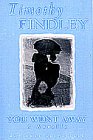
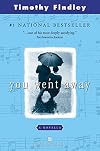
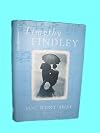
You Went Away
by Timothy Findley
On This Page
Description
Findley has written a small gem of a novel in this World War II story set on the Home Front. Findley uses the device of a family photo album to recall the personal history and memories of the boy, Matthew Forbes, whose parents' marriage is dissolving during the time of the false peace of wartime Canada.Tags
Recommendations





















Member Reviews
--SPOILERS WITHIN --
We would now call this a book about toxic masculinity, although I don’t think that term was in vogue when Findley wrote it in 1996. Nevertheless, it explores one small story about the expectations placed on men, how some men respond and the impacts of those responses on the people around them.
The men at the centre of the story are children. Mi’s husband Graeme acts like he is still in school, afraid of his emotions, afraid of women. Ivan, a pilot trainer, plays with his toy Spitfire when Mi gives it to him and goes “Zoom” just like the boy in the story. Graeme is trying to live up to the impossible ideal of his dead hero brother, but he cannot in his office job, and he leaps at the chance to join the air show more force when World War II breaks out. When that doesn’t work, he falls back on alcohol. He directs his guilt at his wife, has affairs and shuts her out of his life, refusing even to talk to her. He is almost as cold to his son. The book’s title, You Went Away, describes Graeme’s emotional withdrawal from his family. While there are a few mature and caring men, they are background figures only.
The women in the story, by contrast, are empathetic and supportive. They talk to each other and look after each other when things go bad, lend each other clothes so that they can make the best impression on the men. They try to hold the family together, to make enough compromises that they, or at least their kids, can survive. At one point, Mi says to her husband, I’ve given up trying to make our marriage work, but I won’t give up on our son and I’ll make you stay for him. Reading this, I had to wonder if an angry, resentful father would be better than an absent one. But in the 1940s, divorce was not an acceptable option. Of course, the marriage does not work and the drama has a tragic end.
Matthew, the son, may be set to replicate his father’s pattern. He goes to his father’s boarding school, where he is miserable and has to see his family’s school achievements every day. He has no real friends and can’t talk to his mother. His closest male relationships are with the pilot who takes him for motorcycle rides, and a wealthy schoolmate who leaves for holidays and writes occasionally. His future is very uncertain at the end of the story as he retreats into himself. The story closes on a painting he receives of birds floating in the sky, with the label Heroes. He will have to fight to overcome the toxicity that destroyed his father, but he’s not much of a fighter.
This is a story of a family falling apart. Findley writes it with great sympathy, contrasting the outward expressions of the characters with the inner voices showing what they really want to say. This lets him look inside the minds and feelings of the characters. He conveys emotions that feel very apt – resentful, angry, jealous, and loving as well. His central characters are complex, pulled in different directions and trying to make sense of domestic circumstances that are not simple. The setting on the edge of World War II perhaps suggests that the domestic wars have their reflection in the big events of the world. Does toxic masculinity lead to military conflict, or are they both an expression of a pathological society?
Findley calls this a novella, perhaps because, with a straightforward plot in 218 pages, it doesn’t have the heft of his longer novels. Nevertheless, it’s emotional weight and substantial themes give it enough depth for a serious read. show less
We would now call this a book about toxic masculinity, although I don’t think that term was in vogue when Findley wrote it in 1996. Nevertheless, it explores one small story about the expectations placed on men, how some men respond and the impacts of those responses on the people around them.
The men at the centre of the story are children. Mi’s husband Graeme acts like he is still in school, afraid of his emotions, afraid of women. Ivan, a pilot trainer, plays with his toy Spitfire when Mi gives it to him and goes “Zoom” just like the boy in the story. Graeme is trying to live up to the impossible ideal of his dead hero brother, but he cannot in his office job, and he leaps at the chance to join the air show more force when World War II breaks out. When that doesn’t work, he falls back on alcohol. He directs his guilt at his wife, has affairs and shuts her out of his life, refusing even to talk to her. He is almost as cold to his son. The book’s title, You Went Away, describes Graeme’s emotional withdrawal from his family. While there are a few mature and caring men, they are background figures only.
The women in the story, by contrast, are empathetic and supportive. They talk to each other and look after each other when things go bad, lend each other clothes so that they can make the best impression on the men. They try to hold the family together, to make enough compromises that they, or at least their kids, can survive. At one point, Mi says to her husband, I’ve given up trying to make our marriage work, but I won’t give up on our son and I’ll make you stay for him. Reading this, I had to wonder if an angry, resentful father would be better than an absent one. But in the 1940s, divorce was not an acceptable option. Of course, the marriage does not work and the drama has a tragic end.
Matthew, the son, may be set to replicate his father’s pattern. He goes to his father’s boarding school, where he is miserable and has to see his family’s school achievements every day. He has no real friends and can’t talk to his mother. His closest male relationships are with the pilot who takes him for motorcycle rides, and a wealthy schoolmate who leaves for holidays and writes occasionally. His future is very uncertain at the end of the story as he retreats into himself. The story closes on a painting he receives of birds floating in the sky, with the label Heroes. He will have to fight to overcome the toxicity that destroyed his father, but he’s not much of a fighter.
This is a story of a family falling apart. Findley writes it with great sympathy, contrasting the outward expressions of the characters with the inner voices showing what they really want to say. This lets him look inside the minds and feelings of the characters. He conveys emotions that feel very apt – resentful, angry, jealous, and loving as well. His central characters are complex, pulled in different directions and trying to make sense of domestic circumstances that are not simple. The setting on the edge of World War II perhaps suggests that the domestic wars have their reflection in the big events of the world. Does toxic masculinity lead to military conflict, or are they both an expression of a pathological society?
Findley calls this a novella, perhaps because, with a straightforward plot in 218 pages, it doesn’t have the heft of his longer novels. Nevertheless, it’s emotional weight and substantial themes give it enough depth for a serious read. show less
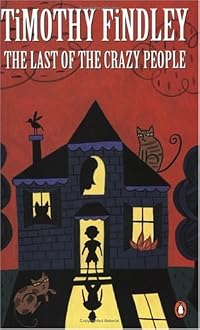
Timothy Findley blew me away with his skill of story telling when I read The Last of the Crazy People last year. He did not disappoint me with this one.
The story starts out in our time period as a nameless narrator describes to the reader a flea market find - a shoe box filled with photographs, with no identifying labels or other indicators of the lives captured in those frozen images - and compares this book to the contents of the shoebox. The narrator goes on to describe some of the photos in the shoebox, guessing at their time periods and the story behind the pictures. After that short, introductory interlude, the reader is launched into the real story behind those photos, starting on September 3, 1939, when England declared war on show more Germany. The story ends on August 16, 1942.
The story focuses on the Forbes family - father Graeme, mother Michael (Mi), son Matthew and daughter Bonnie during those turbulent times in history. Graeme, a former high school football star, appears to relish the fact that the world will plunge, yet again, into a global conflict. Graeme's older brother Ian died in the Great War and is enshrined by their mother Ellen on the mantelpiece, along with the images of her dead husband. During the early months of this new war, Graeme enlists to do his bit in hopes of battle glory in the skies, only to find himself relegated to flying a desk.
Findley presents a striking glimpse into family and relationship struggles on the home front, where lines in the sand are examined and drawn. The War that has mobilized nations is present and yet takes a back seat to the internal wars being faced within the Forbes family. Findley's writing style that I really liked in this one is the reoccurring internal dialogue the characters have with themselves. I like to think of this dialogue as one between the character and a tiny person perched on their shoulder, having this private conversation. This literary tool added insight and levity to the story overall and the topics of infidelity, coming of age, insecurity and death.
Overall, I continue to enjoy the stories that Findley has written. His characters have flaws and he is a great writer for conveying the hidden and troubled souls of his characters. show less
The story starts out in our time period as a nameless narrator describes to the reader a flea market find - a shoe box filled with photographs, with no identifying labels or other indicators of the lives captured in those frozen images - and compares this book to the contents of the shoebox. The narrator goes on to describe some of the photos in the shoebox, guessing at their time periods and the story behind the pictures. After that short, introductory interlude, the reader is launched into the real story behind those photos, starting on September 3, 1939, when England declared war on show more Germany. The story ends on August 16, 1942.
The story focuses on the Forbes family - father Graeme, mother Michael (Mi), son Matthew and daughter Bonnie during those turbulent times in history. Graeme, a former high school football star, appears to relish the fact that the world will plunge, yet again, into a global conflict. Graeme's older brother Ian died in the Great War and is enshrined by their mother Ellen on the mantelpiece, along with the images of her dead husband. During the early months of this new war, Graeme enlists to do his bit in hopes of battle glory in the skies, only to find himself relegated to flying a desk.
Findley presents a striking glimpse into family and relationship struggles on the home front, where lines in the sand are examined and drawn. The War that has mobilized nations is present and yet takes a back seat to the internal wars being faced within the Forbes family. Findley's writing style that I really liked in this one is the reoccurring internal dialogue the characters have with themselves. I like to think of this dialogue as one between the character and a tiny person perched on their shoulder, having this private conversation. This literary tool added insight and levity to the story overall and the topics of infidelity, coming of age, insecurity and death.
Overall, I continue to enjoy the stories that Findley has written. His characters have flaws and he is a great writer for conveying the hidden and troubled souls of his characters. show less
You went away by the Canadian author Timothy Findley is an immensely sad novella. Starting point for the story is a shoe box with discarded family photos on a flea market. The photos tell a story, the story, the novella, is, of course, imagined, what could have been. A story which is dated between September 3, 1939 and August 16, 1942.
It tells the story how a family falls apart, because of the war. In the opening chapters, the family is described as very happy; as the war approaches, the family father, Graeme, volunteers. The army brings out the worst in him, as he starts drinking, and soon becomes an alcoholic, abandoning his family, and sadistically teasing his wife. Mother 'Mi' (Michael) thus driven away from him develops a more than show more platonic affection for Graeme's room mate, who is killed in a flight accident in which Graeme may have had a hand.
You went away contains very little narrative, and consists largely of dialogue, especially very short sentences, or even just single words. This creates a sense in the reader of being very close to the characters.
The story is very tragic, and some scenes are outright shocking, such as the loss of the family's daughter, Bonnie, which is almost burnt into my retina.
Oddly, while truly sad, the writing style gives the reader a feeling of long summer days with field larks chirping high in the sky. This makes a dramatic story readable. show less
It tells the story how a family falls apart, because of the war. In the opening chapters, the family is described as very happy; as the war approaches, the family father, Graeme, volunteers. The army brings out the worst in him, as he starts drinking, and soon becomes an alcoholic, abandoning his family, and sadistically teasing his wife. Mother 'Mi' (Michael) thus driven away from him develops a more than show more platonic affection for Graeme's room mate, who is killed in a flight accident in which Graeme may have had a hand.
You went away contains very little narrative, and consists largely of dialogue, especially very short sentences, or even just single words. This creates a sense in the reader of being very close to the characters.
The story is very tragic, and some scenes are outright shocking, such as the loss of the family's daughter, Bonnie, which is almost burnt into my retina.
Oddly, while truly sad, the writing style gives the reader a feeling of long summer days with field larks chirping high in the sky. This makes a dramatic story readable. show less
Graeme is living under the shadow of his brother and his father's heroism. Michael, Mi, his wife, is living under the shadow of his alcoholism and infidelities. Their son, Matthew, is living under the shadow of all the shadows. Graeme is flying a desk in the middle of World War II, bouncing from air base to air base and slowly, their entwined lives fall to pieces.
This was actually the second time I had read this book all the way through, but somehow, I had forgotten it completely. It was an enjoyable read, but as I finished, I realized why I had forgotten it. It is completely forgettable. It was a decent book, just nothing amazing, nothing that settles itself in your mind and won't be shaken free. Perhaps it's a story to study in order show more to find the subtleties of language and human nature in order to see an incredibly beauty in it, but I think that's lost on the average reader who is only moving through the pages for pure enjoyment.
The average reader will still like this book, I think, and it's certainly worth the read. Findley is a master storyteller and this one is not unlike his other novels - though shorter, being classified as just a 'novella'. It's obvious that each sentence is carefully crafted and joined into paragraphs, and dates and sections. It just doesn't have the staying power of a Really Good Book. show less
This was actually the second time I had read this book all the way through, but somehow, I had forgotten it completely. It was an enjoyable read, but as I finished, I realized why I had forgotten it. It is completely forgettable. It was a decent book, just nothing amazing, nothing that settles itself in your mind and won't be shaken free. Perhaps it's a story to study in order show more to find the subtleties of language and human nature in order to see an incredibly beauty in it, but I think that's lost on the average reader who is only moving through the pages for pure enjoyment.
The average reader will still like this book, I think, and it's certainly worth the read. Findley is a master storyteller and this one is not unlike his other novels - though shorter, being classified as just a 'novella'. It's obvious that each sentence is carefully crafted and joined into paragraphs, and dates and sections. It just doesn't have the staying power of a Really Good Book. show less
This is one of my "best-loved" books. It left me empty and peaceful and the feeling stayed with me for days afterwards.
A wonderful and exceedingly tender little book
I really enjoyed this book! It was an autographed copy that I found in a thrift store. It’s a keeper!
Members
- Recently Added By
Published Reviews
Nothing diminutive about You Went Away, nothing at all: Findley’s prose is as rich as ever and his ability to inhabit the past appears, as ever, effortless.
added by lkernagh
Author Information

34+ Works 7,330 Members
Timothy Findley was born in 1930. A native of Toronto, Canada, novelist and playwright Timothy Findley initially embarked upon an acting career. Findley worked for the Canadian Stratford Festival and later, after study at London's Central School of Speech and Drama, he toured Britain, Europe, and the United States as a contract player. While show more performing in The Matchmaker by Thornton Wilder, Findley was encouraged by the playwright to write fiction. Influenced by film techniques, Findley's first novel, The Last of the Crazy People (1967) is a penetrating look at a family of "emotional cripples" from a child's perspective. With his character Hooker, Findley captures the irrational logic of a child's mind without treating childhood sentimentally.The Butterfly Plague followed in 1969. The Wars (1978), Findley's most successful novel, has been translated into numerous languages and was made into a film. The Wars uses the device of a story-within-a-story to illustrate how a personality transcends elemental forces even while being destroyed by them. In 1981 Famous Last Words was published. This fictionalization of Hugh Selwyn Mauberley by Ezra Pound, a work that was already a "fictional fact," examines fascism. In Not Wanted on the Voyage (1984), Findley rewrites the story of Noah's Ark by giving voices to women, children, workers, animals, and folklore creatures, all of whom question Noah's authority. The novel turns into a parable that seems to challenge imperialism, eugenics, fascism, and any other force that endangers human survival. Again repeating an earlier text, Findley turns to Thomas Mann's Death in Venice to write The Telling of Lies (1986). This novel draws parallels between World War II atrocities and contemporary North America, which Findley sees as a metaphoric concentration camp. Findley died on June 20, 2002 in Provence, France (Bowker Author Biography) show less
Common Knowledge
- Original publication date
- 1996
- People/Characters
- Graeme Forbes; Matthew Forbes; Micheal 'Mi' Forbes; Ivan Henderson; Roy Best; Eloise Best
- Important places
- Ontario, Canada
- Important events
- World War II
- Dedication
- For Al and Nora Joyce and in memory of Agnes Mortson and Edna Mott. This is not their story - bit it was their war ...
- First words
- In the flea market, a shoe box filled with photographs.
- Last words
- (Click to show. Warning: May contain spoilers.)Caught forever - and left behind.
Classifications
Statistics
- Members
- 225
- Popularity
- 144,133
- Reviews
- 7
- Rating
- (3.74)
- Languages
- English, French
- Media
- Paper
- ISBNs
- 5
- ASINs
- 2