On This Page
Description
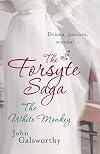
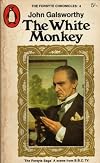
The White Monkey is the fourth of the nine novels in the Forsyte Chronicles and marks the opening of the second trilogy in the series, called A Modern Comedy. In this new chapter, Fleur and Michael Mont begin to question their marriage when their good friend, author Wilfred Desert, can no longer contain his passion for Fleur. Fleur finds herself torn between her love for Michael and passion for Wilfred. Meanwhile, Soames Forsyte, as a director of the Providential Premium Reassurance Society, show more must root out the rumored indiscretions of a manager's dubious dealings with the Germans. The whole while, he is haunted by a painting of a white monkey with rinds of crushed fruit flung about it and eyes searching for something more. show lessTags
Recommendations






















Member Reviews
This book is the fourth in the Forsyte Chronicles, first in the second trilogy. We are now in the roaring 20's, and the book focuses on Soames and his daughter, Fleur, and her husband Michael. Fleur, like Soames, is a collector. However, where Soames collects paintings, Fleur collects people. Galsworthy shows how in this time right after WWI the young people had an "I don't care what they think" attitude. Fleur's husband, Michael, is a likable character, who is madly in love with his wife and will do anything to make her happy. Soames becomes a more sympathetic character in this book, as he tries to fend off scandal, with foreshadowing of the Great Depression that was to come.
This moves the story on and concentrates on Fleur and her husband. Fleur remains quite a shallow young lady, and she is set on collecting. Her collection includes the nice items she owns, but it also includes people who attend her salons and hearts. That of Wilfred is a case in point. She never goes as far as to have intimate relations with him, but she is not mature enough to dismiss him either. This is further complicated by the fact that he was her husband's best man and remains a close friend. Both the men come out of this a lot better than Fleur in terms of character. The white monkey of the title is a painting and that serves as an allegory of the society at the time they find themselves. This books has a wider range of show more non-Forsytes than the previous trilogy. Iy s none the worse for that.
Soames is now an elder statesman and he is a far more sympatheitic character than previously. He has softened, no matter how much he would say he has not. Although he does have a moment of triumph at the shareholders meeting that almost makes me want to cheer. show less
Soames is now an elder statesman and he is a far more sympatheitic character than previously. He has softened, no matter how much he would say he has not. Although he does have a moment of triumph at the shareholders meeting that almost makes me want to cheer. show less
Perhaps 3½ stars. Very well written as shown by the fact that Galsworthy managed to change my feelings about Soames from dislike bordering on hatred to sympathetic understanding in this first novel of "The Modern Comedy" but I missed the grand sweep of the family connections. This entry in The Forsyte Chronicles focuses almost exclusively on Soames & Fleur and a new couple called Bickett. Some of the other members of the Forsyte clan made fleeting appearances (such as June swooping in and enlightening Michael about Fleur's passion for her cousin Jon and then never appearing again). I hope that we see some more of the other branches of the family in the next installment!
Brilliant! I can see why John Galsworthy was awarded the Nobel Prize and why his work is still in print. I found myself reading some passages over and over, reveling in the rich language and apt descriptions of people and society. An example, from Chapter Five:
And out of the corner of her eye she watched those two. The meetings between 'Old Mont' and 'Old Forsyte' - as she knew Bart called her father when speaking of him to Michael - always made her want to laugh, but she never knew quite why. Bart knew everything, but his knowledge was beautifully bound, strictly edited by a mind tethered to the 'eighteenth century'. Her father only knew what was of advantage to him, but the knowledge was unbound, and subject to no editorship. If he show more *was* late Victorian, he was not above profiting if necessary by even later periods. 'Old Mont' had faith in tradition; 'Old Forsyte' none. Fleur's acuteness had long perceived a difference which favoured her father. Yet 'Old Mont's' talk was so much more up-to-date, rapid, glancing, garrulous, redolent of precise information; and 'Old Forsyte's' was constricted, matter-of-fact. Really impossible to tell which of the two was the better museum specimen; and both so well-preserved! show less
And out of the corner of her eye she watched those two. The meetings between 'Old Mont' and 'Old Forsyte' - as she knew Bart called her father when speaking of him to Michael - always made her want to laugh, but she never knew quite why. Bart knew everything, but his knowledge was beautifully bound, strictly edited by a mind tethered to the 'eighteenth century'. Her father only knew what was of advantage to him, but the knowledge was unbound, and subject to no editorship. If he show more *was* late Victorian, he was not above profiting if necessary by even later periods. 'Old Mont' had faith in tradition; 'Old Forsyte' none. Fleur's acuteness had long perceived a difference which favoured her father. Yet 'Old Mont's' talk was so much more up-to-date, rapid, glancing, garrulous, redolent of precise information; and 'Old Forsyte's' was constricted, matter-of-fact. Really impossible to tell which of the two was the better museum specimen; and both so well-preserved! show less
Široce koncipovaný román zachycuje život tří generací rozvětveného patricijského rodu od poklidné éry panování královny Viktorie až do 20. let 20. století. Rodina, z jejíhož středu vyrůstají podnikatelé, právníci a vážení obchodníci, vyznává konvence pohodlného měšťáckého života a jako nejvyšší životní hodnotu uznává vlastnictví peněz a z toho plynoucí moc. Každý pokus o proražení hradby konvencí a tupé měšťácké samolibosti naráží na nepochopení a nekompromisní odsouzení.
Perhaps 3½ stars. Very well written as shown by the fact that Galsworthy managed to change my feelings about Soames from dislike bordering on hatred to sympathetic understanding in this first novel of "The Modern Comedy" but I missed the grand sweep of the family connections. This entry in The Forsyte Chronicles focuses almost exclusively on Soames & Fleur and a new couple called Bickett. Some of the other members of the Forsyte clan made fleeting appearances (such as June swooping in and enlightening Michael about Fleur's passion for her cousin Jon and then never appearing again). I hope that we see some more of the other branches of the family in the next installment!
The epic story of the Forsyte family continues into the 1920's with the focus on Fleur and her husband Michael Mont. Fleur, who is marrying Michael because she can't have her cousin Jon Forsyte, struggles with a marriage that is empty of love and a sense of purpose. Soames is caught in a banking scandal that throws him once more in the public eye. What is sadly missing from this story is anything about the Jolyon Forsyte side of the family. Jon is briefly mentioned in passing as now living in the United States, but the focus is really on Fleur and her father. What I found interesting is that in the past volumes of the Forsyte Saga, these 2 were the villains of the story for me. I found them despicable and really disliked the way they show more manipulated people. Although their personalities remain the same, they become much more complex and redeeming qualities arise in both of them. I actually found myself cheering for Soames in one part. A good story, but I miss Jon and Irene. I think they appear in later stories, so I'll read on. show less
Members
- Recently Added By
Lists

In and About the 1920s
181 works; 31 members

Best family sagas
244 works; 34 members

Out of Copyright
244 works; 14 members
1920s
141 works; 6 members

Books Read in 2017
4,249 works; 130 members

A Rainbow of Books: Colors in the Title
570 works; 24 members
Author Information

349+ Works 11,802 Members
At age 28, after a gentlemanly education at Harrow and Oxford, and a training at law, Galsworthy settled into simultaneous careers as a novelist and a playwright. The Silver Box, Galsworthy's first successful drama, was staged in 1906, the year he published the first volume of what was to become The Forsyte Saga. His one-word titles - Justice show more (1910), Strife (1909), Loyalties (1922)---suggest the nature of Galsworthy's artistic ambition: to generalize a social indictment, keeping faith with the objective methods of naturalism. In each, Galsworthy favors an austere irony and unresolvable situations, and balanced moral positions are displayed in the cabinetwork of "well-made" playwrighting. Reputed to have led to reforms in its time, his realism today seems contrived to produce aesthetic distance and a sense of resignation that is precisely what contemporary political dramatists strain hardest to avoid. Not surprisingly, critics have come away from revivals with the sense that (especially in his spare language) Galsworthy anticipates Harold Pinter rather than more socially engaged playwrights. Galsworthy wrote novels and plays alternately throughout his life. His masterwork, The Forsyte Saga, begun in 1906 and finished in 1928, and consisting of six separate novels and two linking interludes, is the most famous example of the sequence novel in English literature. It is a study of the property sense, the possessive spirit, in different individuals and generations of English middle-class society. He also completed a second trilogy dealing with the Forsyte family, called A Modern Comedy (1928). His last trilogy, a study of the Charwell family, is called End of the Chapter (1933). Galsworthy's later years brought him many honors, including the presidency of P.E.N. and honorary degrees from Oxford, Cambridge, and several other universities. After World War I, he was offered a knighthood, which he refused. He did, however, accept the Order of Merit in 1929, and in 1932 he was awarded the Nobel Prize. He was, however, too ill to attend the Nobel ceremony and died within two months of receiving the award. Although his posthumous reputation had waned, the centenary of his death, in 1967, brought a re-creation of The Forsyte Saga on British and American television in serial form. Interest in him skyrocketed, and the Forsyte novels again became bestsellers. With new popularity came fresh critical analysis. Pamela Hansford Johnson called The Forsyte Saga "a work of profound social insight and patchy psychological insight" (N.Y. Times). His critical writings include The Inn of Tranquility: Studies and Essays (1911) and Author and Critic. (Bowker Author Biography) show less
Some Editions
Series


Work Relationships
Is contained in
Common Knowledge
- Canonical title
- The White Monkey
- Original title
- The White Monkey
- Original publication date
- 1924
- People/Characters
- Fleur Mont; Michael Mont; Soames Forsyte; Wilfrid Desert
- Related movies
- The Forsyte Saga (1967 | IMDb)
- Original language*
- Inglés
*Some information comes from Common Knowledge in other languages. Click "Edit" for more information.
Classifications
Statistics
- Members
- 351
- Popularity
- 90,311
- Reviews
- 10
- Rating
- (3.83)
- Languages
- 14 — Danish, English, Estonian, Finnish, French, German, Norwegian (Bokmål), Norwegian, Polish, Portuguese, Romanian, Russian, Spanish, Swedish
- Media
- Paper, Audiobook, Ebook
- ISBNs
- 35
- ASINs
- 30