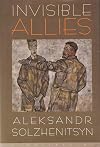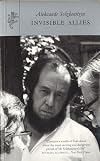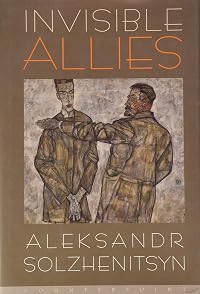
Invisible allies
by Aleksandr Solzhenitsyn
On This Page
Description
After his expulsion from Russia, Aleksandr Solzhenitsyn secretly worked on a memoir that would acknowledge the courageous efforts of the people who hid his writings and smuggled them to the West. Before the fall of Communism, the very publication of Invisible Allies would have put these friends in jeopardy. Now we are finally granted an intimate account of the extensive, ever-shifting network of individuals who risked life and liberty to ensure that Solzhenitsyn's works were kept safe, show more circulated in samizdat, and "exported" via illicit channels. These imperiled conspirators, often unknown to one another, shared a devotion to the dissident writer's work and a hatred of the regime that brought terror to every part of their lives. The circle included scholars and fellow writers and artists, but also such unlikely operatives as an elderly babushka who picked up and delivered manuscripts in her shopping bag. With tenderness, respect, and humor, Solzhenitsyn tells us of the fates of these partners in intrigue: the women who typed distribution copies of his works late into the night under the noses of prying neighbors; the correspondents and diplomats who covertly carried the microfilmed texts across borders; the farflung friends who hid various drafts of Solzhenitsyn's works anywhere they could - under an apple tree, beneath the bathtub, in a mathematics professor's loft with her canoe. In this group of deftly drawn portraits, Solzhenitsyn pays tribute to the anonymous heroes who evaded the KGB to bring The Gulag Archipelago and his many other works to the world. show lessTags
Recommendations






















Member Reviews
An extraordinary acknowledgement of all the people who helped Solzhenitsyn in his literary output.
The endless strain of concealing, the need to rely on a vast network of people whose lives could be ruined by their association with you, and the stress that your life's work could be confiscated at any time, it's remarkable that Solzhenitsyn (or indeed any writer and artist during the Soviet times) persevered and actually succeeded.
Some of the stories are almost too incredible but it's probably only due to this incredibleness that we are able to read Solzhenitsyn's words today, and made me wonder at all the lost writers who weren't as fortuitous. At times, I forgot that Solzhenitsyn was a writer, given all the ingenious spycraft that he show more and his network had had to engage in to keep his work safe yet accessible.
The final chapter was an odd departure of the book in total (an outline of his thesis that And Quiet Flows the Don wasn't written by Sholokhov but plagiarised from Fyodor Kryukov) and I wonder if it should've been left out instead.
All in all, it's a great and heightened look behind the scenes of how much support and work beyond writing that a writer needs in order to actually write. show less
The endless strain of concealing, the need to rely on a vast network of people whose lives could be ruined by their association with you, and the stress that your life's work could be confiscated at any time, it's remarkable that Solzhenitsyn (or indeed any writer and artist during the Soviet times) persevered and actually succeeded.
Some of the stories are almost too incredible but it's probably only due to this incredibleness that we are able to read Solzhenitsyn's words today, and made me wonder at all the lost writers who weren't as fortuitous. At times, I forgot that Solzhenitsyn was a writer, given all the ingenious spycraft that he show more and his network had had to engage in to keep his work safe yet accessible.
The final chapter was an odd departure of the book in total (an outline of his thesis that And Quiet Flows the Don wasn't written by Sholokhov but plagiarised from Fyodor Kryukov) and I wonder if it should've been left out instead.
All in all, it's a great and heightened look behind the scenes of how much support and work beyond writing that a writer needs in order to actually write. show less
Ratings
Members
- Recently Added By
Lists

Stories featuring characters who are mathematicians
42 works; 5 members

All Things Russia
459 works; 11 members
Author Information

359+ Works 44,669 Members
Aleksandr Solzhenitsyn was born on December 11, 1918 in Kislovodsk in the northern Caucusus Mountains. He received a degree in physics and math from Rostov University in 1941. He served in the Russian army during World War II but was arrested in 1945 for writing a letter criticizing Stalin. He spent the next decade in prisons and labor camps and, show more later, exile, before being allowed to return to central Russia, where he worked as a high school science teacher. His first novel, One Day in the Life of Ivan Denisovich, was published in 1962. In 1970, he was awarded the Nobel Prize for Literature. In 1974, he was arrested for treason and exiled following the publication of The Gulag Archipelago. He moved to Switzerland and later the U. S. where he continued to write fiction and history. When the Soviet Union collapsed, he returned to his homeland. His other works include The First Circle and The Cancer Ward. He died due to a heart ailment on August 3, 2008 at the age of 89. (Bowker Author Biography) show less
Series
Belongs to Publisher Series
Harvill (228)
Common Knowledge
- Canonical title
- Invisible allies
- Original title
- Nevidimki
- Original publication date
- 1995 (English translation) (English translation)
- Blurbers
- Scammell, Michael; Rubenstein, Joshua; Kramer, Hilton
Classifications
- Genres
- Fiction and Literature, Biography & Memoir, Literature Studies and Criticism
- DDC/MDS
- 891.73 — Literature & rhetoric Literatures of other languages East Indo-European and Celtic literatures Russian and East Slavic languages Russian fiction
- LCC
- PG3488 .O4 .Z4713 — Language and Literature Slavic languages and literatures. Baltic languages. Albanian language Slavic. Baltic. Albanian Russian literature Individual authors and works 1961-2000
- BISAC
Statistics
- Members
- 118
- Popularity
- 275,870
- Reviews
- 1
- Rating
- (3.88)
- Languages
- English, French, Russian
- Media
- Paper
- ISBNs
- 5
- ASINs
- 2