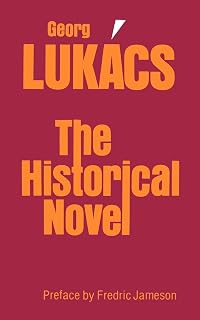
The Historical Novel
by Georg Lukacs
On This Page
Description
Georg Lukà cs (1885- 1971) is now recognized as one of the most innovative and best-informed literary critics of the twentieth century. Trained in the German philosophic tradition of Kant, Hegel, and Marx, he escaped Nazi persecution by fleeing to the Soviet Union in 1933. There he faced a new set of problems: Stalinist dogmatism about literature and literary criticism. Maneuvering between the obstacles of censorship, he wrote and published his longest work of literary criticism, "The show more Historical Novel," in 1937. Beginning with the novels of Sir Walter Scott, "The Historical Novel" documents the evolution of a genre that came to dominate European fiction in the years after Napoleon. The novel had reached a point at which it could be socially and politically critical as well as psychologically insightful. Lukà cs devotes his final chapter to the anti-Nazi fiction of Germany and Austria. show lessTags
Recommendations








Member Reviews
Although it consists of 350 pages of largely turgid Leninist analysis of Western literature of debatable relevance to literary criticism, the book is not without merit. Historical-sociological analysis comes to life in the more strictly literary parts of the book, notably in contrasting the novel and the drama. (1963)
After a lengthy opening study of Scott, this book touches only occasionally on famous authors--Goethe, Cooper, Balzac, Stendhal, Flaubert, Thomas Mann--focusing mostly on books that are forgotten today, like Hugo's 93, Anatole France's The Gods Are Athirst, Stefan Zweig's Erasmus, Heinrich Mann's Henri IV, Leon Feuchtwanger's Josephus and Jew Suss. It pays occasionally embarrassing compliments to Stalin, but naughty politics are no impediment to genuinely provocative criticism. What is a historical novel? How does it relate to epic, historical drama, social novel, to trends like romanticism and naturalism? If nothing else, Lukacs offers a novel way of thinking about what a novel is, should be, and can do, infused with the militant show more anti-fascism of the Popular Front era, with fascinating discussions of issues like the representation of war and revolution, of "heroes" and "the people," and the impossibility of representing "genius" in the novel. This book is pretty tough going at times due to the unfamiliar books that it analyzes but the ideas are accessible and will provide most readers with at least one epiphany. show less
Extremely valuable literary criticism, applicable to many different kinds of criticism and scholarship. He links the rise of historical fiction to the rise of nationalism.
The Historical Novel by Georg Lukacs (1989)
Ratings
Members
- Recently Added By
Author Information

331+ Works 4,591 Members
George Steiner calls Lukacs "the one major critical talent to have emerged from the gray servitude of the Marxist world." This well-known writer on European literature combines a Marxist-Hegelian concern for the historical process with great artistic sensitivity. Lukacs joined the Hungarian Communist party in 1918, serving in its first government show more until the defeat of Bela Kun. He spent many years in exile, first in Berlin and then, from 1933 to 1945, in Moscow, writing and studying. He later became a professor of aesthetics in Budapest, but after the 1956 revolution he was stripped of influence because of his too-friendly attitude to non-Marxist literatures. Steiner has written: "A Communist by conviction, a dialectical materialist by virtue of his critical method, he has nevertheless kept his eyes resolutely on the past. Despite pressure from his Russian hosts, Lukacs gave only perfunctory notice to the much-heralded achievements of Soviet Realism. Instead, he dwelt on the great lineage of eighteenth and nineteenth century European poetry and fiction. The critical perspective is rigorously Marxist, but the choice of themes is central European and conservative." Lukacs has concentrated mainly on criticism of Russian, French, and German authors and often writes in German. Robert J. Clements has reported that Hungarian young people regard him as somewhat passe. (Bowker Author Biography) show less
Series
Belongs to Publisher Series
Common Knowledge
- Original title
- Der historische Roman
- Original publication date
- 1937
- First words*
- Il romanzo storico ha una posizione per molti rispetti eccezionale nell'opera di György Lukács.
Prefazione
Il romanzo storico è nato al principio del secolo XIX, circa all'epoca della caduta di Napoleone. - Quotations*
- Gli intenti che mi sono proposto sono di natura teorica. Il mio scopo era di studiare l'influnza reciproca tra lo spirito storico e quella grande letteratura che rappresenta la totalità della storia; e questo soltanto in rap... (show all)porto alla letteratura borghese [...]
Questo libro non presenta uno svolgimento storico nel senso stretto del termine, cerca però di far vedere le lineee principali dello svolgimento storico e le questioni più importanti che in esso emergono. L'ideale sarebbe n... (show all)aturalmente mettere in rapporto l'elaborazione completa del punto di vista teorico con la trattazione esauriente dello svolgimento storico nel suo complesso. Solo così diventerebbe evidente a tutti la vera forza della dialettica marxista: ognuno potrebbe comprendere come essa nella sua essenza non appartenga in primo luogo al pensiero ma sia il rispecchiamento nel pensiero del processo storico reale.
Il libro quindi, nonostante la sua estensione è soltanto un tentativo, un saggio: un lavoro preparatorio al tempo stesso per l'estetica marxista e per la trattazione materialistica della moderna storia letteraria.
[...] ciò che conta non è escogitare qualcosa che pretenda di essere «radicalmente nuovo», bensì - come Lenin ci ha insegnato - assimilare quanto vi è di di valido nell'evoluzione precedente ed elaborarlo criticamente. ... (show all)L'attualità e l'esemplarità dei classici è anche per il romanzo storico contemporaneo un problema centrale.
Manca al cosiddetto romanzo storico anteriore a Walter Scott proprio l'elemento storico specifico: il far derivare il particolare modo di agire degli uomini dalle caratteristiche storiche dell'epoca loro. - Last words*
- (Click to show. Warning: May contain spoilers.)Se il periodo storico di cui questo libro esemplarmente riassume le aratteristiche, gli orizzonti e le potenzialità teoriche, è ormai concluso, ciò gli permette anzi di essere letto con quella sensazione di trovarsi di fronte a una formulazione provvisoria nel corso generale dello spirito, ma definitiva all'interno di una sua singola fase, che si prova di fronte a tutti i classici del pensiero.
Prefazione
(Click to show. Warning: May contain spoilers.)Il romanzo storico del nostro tempo deve quindi anzitutto rinnegare in modo radicale e netto il suo antecedente immediato ed eliminarne con energia le tradizioni dalla propria opera creativa. Il necessario avvicinamento al romanzo storico di tipo classico, che ne consegue, non sarà affatto, come le nostre osservazioni hanno mostrato una semplice accettazione di queste tradizioni classiche, ma, se mi si consente l'espressione ricavata dalla terminologia hegeliana, un rinnovamento nella forma della negazione della negazione. - Original language
- German
*Some information comes from Common Knowledge in other languages. Click "Edit" for more information.
Classifications
- Genres
- Literature Studies and Criticism, Nonfiction, Fiction and Literature
- DDC/MDS
- 809.381 — Literature & rhetoric Literature, rhetoric & criticism History, description, critical appraisal of more than two literatures Fiction Genre Fiction Historical Fiction
- LCC
- PN3441 .L813 — Language and Literature Literature (General) Literature (General) Prose. Prose fiction Special kinds of fiction. Fiction genres
- BISAC
Statistics
- Members
- 322
- Popularity
- 99,138
- Reviews
- 4
- Rating
- (3.81)
- Languages
- 7 — English, French, German, Hungarian, Italian, Portuguese, Spanish
- Media
- Paper
- ISBNs
- 9
- ASINs
- 8