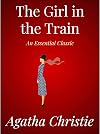
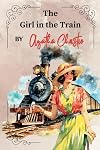
The Girl in the Train [short story]
by Agatha Christie
On This Page
Description
Previously published in the print anthology The Golden Ball and Other Stories. George Rowland, a bored playboy, disowned for the seventh time by his wealthy uncle, is on the train to London. When a beautiful girl bursts into his compartment, frantically begging to be hidden, his life changes dramatically.Tags
Member Reviews
Written near the mid 1920s, this story very much has the feel of those light and charming early tales of Earl Derr Biggers’ pre-Charlie Chan stories. The Girl in the Train is a product of another era which readers will either embrace or dismiss. I loved it.
The Girl in the Train is an utterly charming light romantic adventure, a story that is very old-fashioned and enjoyable, not to mention quite humorous. Christy displays a deft touch for light adventure here that is quite refreshing. Those expecting something more akin to Poirot or Marple, or especially Mr. Quin, may find it too light and frivolous, but being a fan of Earl Derr Biggers’ early stories like The Agony Column, I found this quite wonderful.
The Girl in the Train is an utterly charming light romantic adventure, a story that is very old-fashioned and enjoyable, not to mention quite humorous. Christy displays a deft touch for light adventure here that is quite refreshing. Those expecting something more akin to Poirot or Marple, or especially Mr. Quin, may find it too light and frivolous, but being a fan of Earl Derr Biggers’ early stories like The Agony Column, I found this quite wonderful.
A fun listen, short and to the point.
George Rowland is estranged from his Uncle and so he leaves London in High a fit of temper and decides to take a train to a random location - he chooses Rowland's Castle as it shares a name with him, it could be his place of origin and he could claim his castle (note - it is a real place and the remains of the castle amount to a couple of blocks of masonry near the station - it's not an impressive castle and no-one knows who Rowland was). This train leaves from Waterloo and he takes the stopping train (note - from experience to stop at Rowland's Castle you take a train that seems to stop at every garden gate!). As it is about to depart a girl bursts into the carriage and begs George to hide her, show more which he does and so begins a wild goose chase of a story that takes place in a provincial hotel in Portsmouth. It's a tale of mistaken identity, criminals, foreign nobility and general ill deeds that George manages to negotiate his way through, more through good luck than any thing else. It all ends back on a train heading in the reverse direction, by which time George's life has changed somewhat - and he is planning a return visit to Rowland's Castle. show less
George Rowland is estranged from his Uncle and so he leaves London in High a fit of temper and decides to take a train to a random location - he chooses Rowland's Castle as it shares a name with him, it could be his place of origin and he could claim his castle (note - it is a real place and the remains of the castle amount to a couple of blocks of masonry near the station - it's not an impressive castle and no-one knows who Rowland was). This train leaves from Waterloo and he takes the stopping train (note - from experience to stop at Rowland's Castle you take a train that seems to stop at every garden gate!). As it is about to depart a girl bursts into the carriage and begs George to hide her, show more which he does and so begins a wild goose chase of a story that takes place in a provincial hotel in Portsmouth. It's a tale of mistaken identity, criminals, foreign nobility and general ill deeds that George manages to negotiate his way through, more through good luck than any thing else. It all ends back on a train heading in the reverse direction, by which time George's life has changed somewhat - and he is planning a return visit to Rowland's Castle. show less
Ratings
Members
- Recently Added By
Lists

Agatha Christie’s short stories
142 works; 1 member
Author Information

2,183+ Works 441,639 Members
One of the most successful and beloved writer of mystery stories, Agatha Mary Clarissa Christie was born in 1890 in Torquay, County Devon, England. She wrote her first novel, The Mysterious Affair at Styles, in 1920, launching a literary career that spanned decades. In her lifetime, she authored 79 crime novels and a short story collection, 19 show more plays, and six novels written under the name of Mary Westmacott. Her books have sold over a billion copies in the English language with another billion in 44 foreign languages. Some of her most famous titles include Murder on the Orient Express, Mystery of the Blue Train, And Then There Were None, 13 at Dinner and The Sittaford Mystery. Noted for clever and surprising twists of plot, many of Christie's mysteries feature two unconventional fictional detectives named Hercule Poirot and Miss Jane Marple. Poirot, in particular, plays the hero of many of her works, including the classic, The Murder of Roger Ackroyd (1926), and Curtain (1975), one of her last works in which the famed detective dies. Over the years, her travels took her to the Middle East where she met noted English archaeologist Sir Max Mallowan. They married in 1930. Christie accompanied Mallowan on annual expeditions to Iraq and Syria, which served as material for Murder in Mesopotamia (1930), Death on the Nile (1937), and Appointment with Death (1938). Christie's credits also include the plays, The Mousetrap and Witness for the Prosecution (1953; film 1957). Christie received the New York Drama Critics' Circle Award for 1954-1955 for Witness. She was also named Dame Commander of the Order of the British Empire in 1971. Christie died in 1976. (Bowker Author Biography) show less
Work Relationships
Is contained in
Agatha Christie Crime Collection: The Listerdale Mystery / The Murder at the Vicarage / The Mystery of the Blue Train by Agatha Christie (indirect)
El misterioso caso de Styles ; Los cuatro grandes ; El templete de Nasse House ; El misterio de Pale Horse ; El misterio de Listerdale by Agatha Christie (indirect)
The Golden Ball and Other Stories • Why Didn't They Ask Evans? • Murder on the Orient Express by Agatha Christie (indirect)
Has the adaptation
Common Knowledge
- Canonical title
- The Girl in the Train [short story]
- Original title
- The girl in the train
- Original publication date
- 1924-02
Classifications
Statistics
- Members
- 17
- Popularity
- 1,453,124
- Reviews
- 2
- Rating
- (4.06)
- Languages
- English, Finnish
- Media
- Paper, Audiobook, Ebook
- ISBNs
- 2
- ASINs
- 4