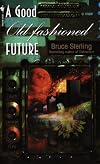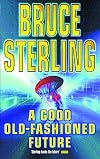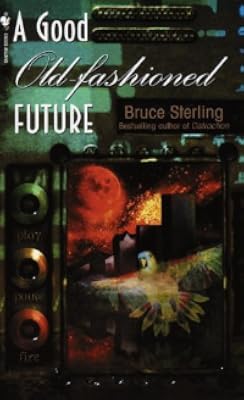
A Good Old-Fashioned Future
by Bruce Sterling
On This Page
Description
From the subversive to the antic, the uproarious to the disturbing, the stories of Bruce Sterling are restless, energy-filled journeys through a world running on empty--the visionary work of one of our most imaginative and insightful modern writers. They live as strangers in strange lands. In worlds that have fallen--or should have. They wage battles in wars already lost and become heroes--and sometimes martyrs--in their last-ditch efforts to preserve the dignity and individuality of show more humanity. A hack Indian filmmaker takes the pulse of a wounded and declining civilization--21st-century Britain. A pair of swashbuckling Silicon Valley entrepreneurs join forces to make a commercial killing--in organic underground slime and computer-generated jellyfish. A man in a Japanese city takes orders from a talking cat while pursuing a drama of danger and adventure that has become the very essence of his life. From "The Littlest Jackal", a darkly hilarious thriller of mercs and gunrunners set in Finland, to a stark vision of a post-atomic netherworld in his haunting tale "Taklamakan", Bruce Sterling once again breaks boundaries, breaks icons, and breaks rules to unleash the most dangerously provocative and intelligent science fiction being written today. show lessTags
Recommendations











Member Reviews
Let me get this out of the way. I am a Sterling fan, I love everything he's done unconditionally, but I think A Good Old Fashioned Future, is his best short story collection, and the best introduction to his work. From the soft and thoughtful "Maneki Neko", to the gonzo cyber-entrepreneur-terrorist-punk of "The Littlest Jackel" to the tour de force trio of linked stories at the end, Sterling shows us precisely how strange our very human future is going to be, and how we might survive and thrive in it.
*** Updated for 2024 ***
What a weird journey it has been in the 13 years since I last cracked open this book. I'm glad I returned to it, because if anything these stories have only improved with age (with the exception of the Rudy Rucker show more collab "Big Jelly", which was never much good). After another cycle or three of tech hype bullshit, the parodic take on 90s dotcom boom culture has golden nostalgic glow. But in this are four utterly serious, damn near perfect stories about technology, their consequences, and the way that people living in our future see their present. "Taklamakan, in particular, is a gem. show less
*** Updated for 2024 ***
What a weird journey it has been in the 13 years since I last cracked open this book. I'm glad I returned to it, because if anything these stories have only improved with age (with the exception of the Rudy Rucker show more collab "Big Jelly", which was never much good). After another cycle or three of tech hype bullshit, the parodic take on 90s dotcom boom culture has golden nostalgic glow. But in this are four utterly serious, damn near perfect stories about technology, their consequences, and the way that people living in our future see their present. "Taklamakan, in particular, is a gem. show less
Um Futuro... Não-Muito-Distante.
Coletânea de Contos (1999)
Contos de um futuro-à-moda-antiga; também, de um futuro-próximo, e em certos aspectos, de um futuro-presente. Apesar de decisões estruturais duvidosas, o livro publicado pelo Bruce Sterling um ano antes da virada do milênio ainda é potente por sua originalidade; faz um cyberpunk único, com menos cyber e mais punk; menos neon e luzes, e mais revoluções tecnológicas e belicosas: conceitos e ideias originais que se passam em fronteiras geográficas bem delimitadas.
Esse ano mesmo eu li uma ficção científica da década de 2010 (Blindisght, do Watts) que nem de perto soou e englobou tão bem o mundo pós moderno, globalizado, do Sterling. Até mesmo na questão do estilo show more literário: a voz aqui é irreverente, ágil, quase de um jornalismo gonzo, e não denso, pesado e científico, como geralmente costumam imaginar a ficção científica.
Sterling, que foi um dos pais do Cyberpunk, é aqui bastante cético e essas sete narrativas diversas apresentam incertezas sobre um futuro, que sob as penas de outros escritores do gênero, é muito idealizado; ele é límpido: nós não nós livraremos das nossas bagagens sociais, econômicas e psicológicas tão cedo. Esses outros futuros, mais fantasiosos e imaginativos, estão MUITO distantes, ou, nem mesmo vão chegar próximo de acontecer.
Esse aqui, como você perceberá, em certos aspectos já aconteceu.
Maneki Neko (6.5)
Tokyo.
É difícil definir esse conto, que apesar da forma básica, tem um ponto central forte. Não por acaso, acabou sendo indicado a diversos prêmios na literatura de gênero. Bruce Sterling, imagina aqui um tipo de seita de favores, com leve influência da cultura oriental de dar e receber presentes.
Em um “aplicativo de bolso” o membro/participante deve realizar favores anônimos, peculiares mas simples de realizar, e que em si mesmos mal parecem ter importância. Mas no todo, no algoritmo avançado que há por trás dele, na inteligência artificial e no vasto banco de dados, os pequenos favores (como os nossos cliques) tem a capacidade de estragar a vida de uma pessoa, de modo bastante crível e beirando o cômico.
Shimizu Tsuyoshi trabalha convertendo gravações obsoletas em novos formatos digitais com auxílio de IAs (como fazemos hoje em dia, e no celular inclusive!); e participa, por lazer, dessa rede de favores e tarefas; isso significa que, frequentemente, chegam mensagens com instruções estranhas e enigmáticas que ele deve completar, desde entregar um doce para um desconhecido nas proximidades até pegar o papel higiênico do banheiro público. A rede é automatizada e corre numa miríade de direções, sempre favorecendo aqueles que cumprem com as instruções.
Numa dessas empreitadas, Shimizu cruza com Louise Hashimoto, uma promotora federal dos EUA, que declara histericamente que essa tal rede de presentes (ou favores) é uma conspiração criminosa. É a investigadora que puxa a narrativa, com a perscrutação dessa instituição digital, após passar a ser "indiretamente" perseguida por seus membros. O conto corre para um lado mais humorístico, como deixará claro algumas passagens que traduzi livremente:
Maneki Neko é bem prosaico, mas não deixa de ser interessante. Integra nalgumas revistas de ficção científica "The Best of SF", o que me parece exagero. O interessante, ao menos para mim, foi mais a proximidade com a gente do que por qualidades narrativas/literárias: a seita quase-maçônica tecnológica que com ajuda de algoritmos, envia desafios e tarefas por notificações, e a realização destas faz com que o usuário passe a ser compensado, facilitando a vida geral em sociedade, pode muito bem existir (se é que já não existe?) nos nossos aplicativos de bolso, hoje em dia.
Ganhou o Locus (1999) em Best Short Story
Segundo Lugar no Hugo (1999) Best Short Story
Big Jelly (6.0)
California.
Apesar de não ser o meu favorito da antologia, esse é o meu tipo de conto de ficção científica favorito; totalmente maluco, mas maluco com base científica, de modo que, sem didatismo lhe entretém e lhe ensina fatos novos e bastantes específicos sobre um certo assunto: nesse caso, diversos espécimes de Água-Viva, experimentos biológicos estranhos, e também sobre o Urschleim (o suposto fluido celular da mãe terra, o lodo primordial).
Um conto ululante, com um ritmo maluco, e uma reta final que é a cereja do bolo que o conto precisava; triste para quem sempre espera por conclusões catastróficas ou grandiosos, e feliz para quem se diverte e se deixa levar pelas águas-viva-de-hélio-artificiais.
The Littlest Jackal (6.5)
Finlândia.
Numa narrativa que se aproxima mais de uma ficção comum do que de uma ficção científica, acompanhamos Leggy Starlitz, Khoklov, Raf-Chacal e Aino num golpe político que toma como base nossas famigeradas "revoluções sulamericanas" e as junta com as *runs* tecnológicas, num contexto de leste-europeu.
É um bom conto, talvez um pouco extenso demais e anticlimático, mas, como dizem, o que importa é a jornada, e o ponto que o Sterling toca nesse conto é de que de certa maneira, *nos já estamos vivendo em um cenário Cyberpunk.*
Toda a tecnologia é real, assim como as facções políticas. Acrescenta-se aí, no entanto, algumas organizações e uma temática quase “shadowrunrizada”: um culto apocalíptico japonês, uma equipe de ataque da Mossad, uma tentativa de montar banco-paraíso fiscal para lavagem dinheiro; uma organização, no meio de tudo, que quer estabelecer um estado livre na Finlândia, ex-agentes da KGB; há até no meio de tudo uma escritora de livros infantis finalandesa que viralizou no Japão. É um conto que exemplifica bem o conceito que o Sterling tem da globalização, vista de 99”.
Há uma contrapartida: é fácil perder-se, principalmente quando se descobre que o conto se insere e também finaliza uma sequência narrativa que provém de outros livros e outros contos; isso explica mas não exime a falta de credibilidade, ou mesmo qualidade, do desfecho narrativo. Por que razão montar, em uma antologia, um sequência final de contos que é cronológica e bem amarrada (chegaremos lá — é o destaque desse livro aqui, por sinal), e antes, um conto (este) de um “outro universo” deslocado?
Sacred Cow (3.0)
India/Inglaterra
De longe o pior conto da antologia. Em resumo, o ocidente foi dizimado pela doença da vaca louca, e só sobrou algumas sociedades asiáticas que tratavam a Vaca como animal sagrado, ou seja, não a comiam, daí o título. A trama se desenvolve num teatro/cinema, e não me lembro mais de muita coisa além de envolve filmes baratos, cinema indiano, e que me entediou até a alma.
Deep Eddy (6.5)
Düsseldorf
Eu consigo contar nos dedos da mão esquerda — do Lula — quantas narrativas de ficção científica conseguem se sustentar e sobressair apenas na relação ente personagens. Com só dois, então, apenas esta: Deep Eddy do Sterling.
Eddy é um negociador de spex-ware (pelo que eu entendi, um tipo de óculos de realidade aumentada e integrada) e Sardelle, uma segurança proletariada, cansada e desgastada que deve levar Eddy até o homem que o trouxe do Tennessee até Dusseldorf. Ela é extremamente direta e faz tudo para que seu trabalho seja facilitado, e é isso que deixa toda a interação entre ambos realmente divertida e engraçada de ler; a primeira metade do conto é praticamente só de turismo e interação, e é curiosamente bom.
Düsseldörf está tendo um dos infames Wende’s, uma reunião espontânea de torcida organizada (Hooligans), cyberpunks libertários como o próprio Eddy, fornecedores e contrabandistas de: pornografia ilegal, manuais para manufaturação de bombas, drogas e armas, politicos, e muitos outros tipos de pessoas. Isso tudo é inicialmente pano de fundo para a relação entre o Eddy e a Sardelle; e também entre o mundo real e o mundo visto através do spex (Eddy até ali vivia quase mergulhado num metaverso; até suas relações sexuais eram por lá), e até, de um ideal disforme do Americano que quer se envolver confusões européias.
O Wende-Carnavalesco faz com que tudo descabele-se para uma conclusão maluca e caótica, que eu não vou estragar, mas que tem a ver com manifestações e políticos; um ótimo conto de ficção (mesmo fora da literatura de gênero) e pau a pau com o conto final do livro, que também faz parte dessa “trilogia de Chattanooga”.
Alguns trechos livremente traduzidos:
Bicycle Repairman (6.5)
Tennessee, Chattanooga.
Nessa “sequência”, que cronologicamente se passa enquanto o Eddy do conto anterior está na Europa, tornamos a um conto de ficção científica mais, digamos, estrito; com suas ideias e conceitos estranhos e únicos.
Mas ainda sim, mais uma vez, o Sterling joga a ação central do conto para o diálogo, bastante expositivo, sim, é normal nesse gênero, mas ainda sim merece ser elogiado por não recorrer a uma forma rígida e densa; a única coisa que se repete ao longo dos contos, talvez seja a voz do narrador.
A protagonista é Lyle, uma amiga do Eddy. Uma “neuter”, uma mulher assexuada que participa dos novos – e diversos – movimentos de gênero que proliferaram nesse futuro (eu não disse que era um futuro-presente?), promovendo a “Deliberação Sexual”, que artificialmente erradica o desejo e impulso sexual de quem o quiser.
Como o título diz, ela também conserta e é obcecada por bicicletas, e é nessa loja barra da amiga que o Eddy sorrateiramente manda, recebe e comercia os seus specs tecnológicos. Lyle recebe, como sempre, mais um desses pacotes, e julga ser só mais quincarias do Eddy. Até a loja ser invadida pelo segurança de um político, que tenta roubar o pacote.
Aperte os cintos.
A partir daqui revela-se que o pacote tem relação com a NAFTA (que também aparece na conclusão do conto anterior) e com a União Europeia; mais especificamente: o pacote é uma gravação que pode revelar e incriminar o Senador da NAFTA como sendo um Mook. Isso significa que, um antigo software anteriormente utilizado para ser um assistente artificial do político, sussurrando no seu ouvido uma retórica perfeita, valores morais firmes e políticas excelente, tomou, roubou e assumiu identidade do homem. A inteligência artificial passou a crer ser o próprio Senador.
Lyle, não faz a mínima ideia de tudo isso, e as armadilhas (medidas de segurança pela região onde fica a loja) pegam o agente do Senador. Ela não sabe bem o que fazer, e liga para o Pete, um amigo que faz parte das “Aranhas da Cidade”, um grupo de escaladores urbanos, altamente tecnológicos, que sobem os arranha-céus das megalópoles apenas pela emoção de subir; invadem prédios seguros e classificados apenas pela adrenalina de trespássa-los
Com Pete, vem Mabel, e o conto revolve-se aí a partir do diálogo ente os quatro; Kitty (o agente) passa a ser interrogado; ninguém ali sabe muito bem o que fazer. Uma “Neuter”, um Escalador Urbano, uma Liberal-Progressista e um Agente de Político. O que pode se esperar disso? Para onde isso vai?
Um pouco cansativo, mas no fim agradávell.
Taklamakan (7.5)
De longe o conto mais surpreendente, engenhoso e interessante da coleção. Em questões de enredo, é o meu favorito. É ficção científica clássica e, sobretudo, boa.
Taklamakan é o nome do conto e do deserto real da Ásia Central onde se passa essa história, que também encerra a trilogia narrativa iniciada em Deep Eddy. Passou-se dez anos desde os acontecimentos de Bicycle Repairman, e o que ressurge nesse conto são alguns isolados conceitos e instituições anteriormente utilizados, podendo ser muito bem lido isoladamente, mas com certeza torna-se mais díficil.
Caçadores de Recompensas modernos (antigos escaladores urbanos) recebem uma informação que pode vir a ser muitíssimo lucrativa, e buscam se infiltrar em uma base de foguetes que pertenceria supostamente à União Asiática.
Encontram, no lugar, um enorme buraco artificial, que guardava um segredo assustadoramente estranho: com interesse em testar a viabilidade das viagens espaciais demasiado longas, e com as tribos do deserto incomodando-os, a NASA junto com essa União Asiática, enfiam três naves estelares falsas nesse buraco, e convidam (não gentilmente) essa população a (não tão literalmente) ir para o espaço.
O porém: as Naves não decolam, e sim afundam. As paredes, o buraco e as naves foram preparadas para passar a sensação de que aquelas pessoas estavam realmente viajando no espaço (estrelas e galáxias móveis são projetadas nas paredes que encobrem as janelas), mas estavam mesmo é paradas, no fundo de um buraco, no meio do deserto. Tudo a fim de testar vários aspectos de engenharia social e mecânica, dos efeitos de uma viagem espacial de centenas de anos.
É isso que os Caçadores de Recompensa encontram, e o desenvolvimento do enredo se dá na tentativa de entrar e de ter contato com a população das naves; o povo, que inicialmente parecia alheio, julgando estarem viajando no espaço, dão indícios de não estarem totalmente enganadas…
Enfim, é um conto muito interessante, e não é atoa que ganhou o Hugo e o Locus de Melhor Noveleta. Um ótimo fechamento para a Coletânea. show less
Coletânea de Contos (1999)
Contos de um futuro-à-moda-antiga; também, de um futuro-próximo, e em certos aspectos, de um futuro-presente. Apesar de decisões estruturais duvidosas, o livro publicado pelo Bruce Sterling um ano antes da virada do milênio ainda é potente por sua originalidade; faz um cyberpunk único, com menos cyber e mais punk; menos neon e luzes, e mais revoluções tecnológicas e belicosas: conceitos e ideias originais que se passam em fronteiras geográficas bem delimitadas.
Esse ano mesmo eu li uma ficção científica da década de 2010 (Blindisght, do Watts) que nem de perto soou e englobou tão bem o mundo pós moderno, globalizado, do Sterling. Até mesmo na questão do estilo show more literário: a voz aqui é irreverente, ágil, quase de um jornalismo gonzo, e não denso, pesado e científico, como geralmente costumam imaginar a ficção científica.
Sterling, que foi um dos pais do Cyberpunk, é aqui bastante cético e essas sete narrativas diversas apresentam incertezas sobre um futuro, que sob as penas de outros escritores do gênero, é muito idealizado; ele é límpido: nós não nós livraremos das nossas bagagens sociais, econômicas e psicológicas tão cedo. Esses outros futuros, mais fantasiosos e imaginativos, estão MUITO distantes, ou, nem mesmo vão chegar próximo de acontecer.
Esse aqui, como você perceberá, em certos aspectos já aconteceu.
Maneki Neko (6.5)
Tokyo.
É difícil definir esse conto, que apesar da forma básica, tem um ponto central forte. Não por acaso, acabou sendo indicado a diversos prêmios na literatura de gênero. Bruce Sterling, imagina aqui um tipo de seita de favores, com leve influência da cultura oriental de dar e receber presentes.
Em um “aplicativo de bolso” o membro/participante deve realizar favores anônimos, peculiares mas simples de realizar, e que em si mesmos mal parecem ter importância. Mas no todo, no algoritmo avançado que há por trás dele, na inteligência artificial e no vasto banco de dados, os pequenos favores (como os nossos cliques) tem a capacidade de estragar a vida de uma pessoa, de modo bastante crível e beirando o cômico.
Shimizu Tsuyoshi trabalha convertendo gravações obsoletas em novos formatos digitais com auxílio de IAs (como fazemos hoje em dia, e no celular inclusive!); e participa, por lazer, dessa rede de favores e tarefas; isso significa que, frequentemente, chegam mensagens com instruções estranhas e enigmáticas que ele deve completar, desde entregar um doce para um desconhecido nas proximidades até pegar o papel higiênico do banheiro público. A rede é automatizada e corre numa miríade de direções, sempre favorecendo aqueles que cumprem com as instruções.
Numa dessas empreitadas, Shimizu cruza com Louise Hashimoto, uma promotora federal dos EUA, que declara histericamente que essa tal rede de presentes (ou favores) é uma conspiração criminosa. É a investigadora que puxa a narrativa, com a perscrutação dessa instituição digital, após passar a ser "indiretamente" perseguida por seus membros. O conto corre para um lado mais humorístico, como deixará claro algumas passagens que traduzi livremente:
“Ela suspira. — Eu sento nas cadeiras, e alguém deixou um chiclete colado. Recebo pizzas de graça, mas são de, um exemplo dessa semana, catupiry com abacaxi. Eu coloco a cabeça fora da janela, e é quase certo que eu leve uma cusparada. Sempre que estou com pressa, o meu lado da fila se enche de idosos que são preferencialmente passados à frente. (…)
— Na rua, minha descarga nunca funciona, — diz Louise. — Minhas encomendas sempre se perdem nos correios. Quando passo do lado dos carros, os alarmes disparam. E todos os olhos me encontram. São sempre essas coisinhas. Coisinhas minúsculas, mas que nunca, nunca cessam. Eu estou remando contra algo muito maior que eu, e muito, muito paciente. Eles sabem tudo sobre mim. Possuem milhões de braços e pernas. E esses braços e pernas são cada uma dessas pessoas, cada um desses usuários.”
Maneki Neko é bem prosaico, mas não deixa de ser interessante. Integra nalgumas revistas de ficção científica "The Best of SF", o que me parece exagero. O interessante, ao menos para mim, foi mais a proximidade com a gente do que por qualidades narrativas/literárias: a seita quase-maçônica tecnológica que com ajuda de algoritmos, envia desafios e tarefas por notificações, e a realização destas faz com que o usuário passe a ser compensado, facilitando a vida geral em sociedade, pode muito bem existir (se é que já não existe?) nos nossos aplicativos de bolso, hoje em dia.
Ganhou o Locus (1999) em Best Short Story
Segundo Lugar no Hugo (1999) Best Short Story
Big Jelly (6.0)
California.
Apesar de não ser o meu favorito da antologia, esse é o meu tipo de conto de ficção científica favorito; totalmente maluco, mas maluco com base científica, de modo que, sem didatismo lhe entretém e lhe ensina fatos novos e bastantes específicos sobre um certo assunto: nesse caso, diversos espécimes de Água-Viva, experimentos biológicos estranhos, e também sobre o Urschleim (o suposto fluido celular da mãe terra, o lodo primordial).
Um conto ululante, com um ritmo maluco, e uma reta final que é a cereja do bolo que o conto precisava; triste para quem sempre espera por conclusões catastróficas ou grandiosos, e feliz para quem se diverte e se deixa levar pelas águas-viva-de-hélio-artificiais.
The Littlest Jackal (6.5)
Finlândia.
Numa narrativa que se aproxima mais de uma ficção comum do que de uma ficção científica, acompanhamos Leggy Starlitz, Khoklov, Raf-Chacal e Aino num golpe político que toma como base nossas famigeradas "revoluções sulamericanas" e as junta com as *runs* tecnológicas, num contexto de leste-europeu.
É um bom conto, talvez um pouco extenso demais e anticlimático, mas, como dizem, o que importa é a jornada, e o ponto que o Sterling toca nesse conto é de que de certa maneira, *nos já estamos vivendo em um cenário Cyberpunk.*
Toda a tecnologia é real, assim como as facções políticas. Acrescenta-se aí, no entanto, algumas organizações e uma temática quase “shadowrunrizada”: um culto apocalíptico japonês, uma equipe de ataque da Mossad, uma tentativa de montar banco-paraíso fiscal para lavagem dinheiro; uma organização, no meio de tudo, que quer estabelecer um estado livre na Finlândia, ex-agentes da KGB; há até no meio de tudo uma escritora de livros infantis finalandesa que viralizou no Japão. É um conto que exemplifica bem o conceito que o Sterling tem da globalização, vista de 99”.
Há uma contrapartida: é fácil perder-se, principalmente quando se descobre que o conto se insere e também finaliza uma sequência narrativa que provém de outros livros e outros contos; isso explica mas não exime a falta de credibilidade, ou mesmo qualidade, do desfecho narrativo. Por que razão montar, em uma antologia, um sequência final de contos que é cronológica e bem amarrada (chegaremos lá — é o destaque desse livro aqui, por sinal), e antes, um conto (este) de um “outro universo” deslocado?
Sacred Cow (3.0)
India/Inglaterra
De longe o pior conto da antologia. Em resumo, o ocidente foi dizimado pela doença da vaca louca, e só sobrou algumas sociedades asiáticas que tratavam a Vaca como animal sagrado, ou seja, não a comiam, daí o título. A trama se desenvolve num teatro/cinema, e não me lembro mais de muita coisa além de envolve filmes baratos, cinema indiano, e que me entediou até a alma.
Deep Eddy (6.5)
Düsseldorf
Eu consigo contar nos dedos da mão esquerda — do Lula — quantas narrativas de ficção científica conseguem se sustentar e sobressair apenas na relação ente personagens. Com só dois, então, apenas esta: Deep Eddy do Sterling.
Eddy é um negociador de spex-ware (pelo que eu entendi, um tipo de óculos de realidade aumentada e integrada) e Sardelle, uma segurança proletariada, cansada e desgastada que deve levar Eddy até o homem que o trouxe do Tennessee até Dusseldorf. Ela é extremamente direta e faz tudo para que seu trabalho seja facilitado, e é isso que deixa toda a interação entre ambos realmente divertida e engraçada de ler; a primeira metade do conto é praticamente só de turismo e interação, e é curiosamente bom.
Düsseldörf está tendo um dos infames Wende’s, uma reunião espontânea de torcida organizada (Hooligans), cyberpunks libertários como o próprio Eddy, fornecedores e contrabandistas de: pornografia ilegal, manuais para manufaturação de bombas, drogas e armas, politicos, e muitos outros tipos de pessoas. Isso tudo é inicialmente pano de fundo para a relação entre o Eddy e a Sardelle; e também entre o mundo real e o mundo visto através do spex (Eddy até ali vivia quase mergulhado num metaverso; até suas relações sexuais eram por lá), e até, de um ideal disforme do Americano que quer se envolver confusões européias.
O Wende-Carnavalesco faz com que tudo descabele-se para uma conclusão maluca e caótica, que eu não vou estragar, mas que tem a ver com manifestações e políticos; um ótimo conto de ficção (mesmo fora da literatura de gênero) e pau a pau com o conto final do livro, que também faz parte dessa “trilogia de Chattanooga”.
Alguns trechos livremente traduzidos:
“Sardelle suspirou. — Descobrimos que você é um homem solteiro, entre dezoito-e-trinta anos. Sem trabalho fixo. Sem teto fixo. Sem esposa, sem filhos. Inclinações politicas radicais; viaja com frequência. Sua demografia é altamente perigosa.‘’
“Eddy sentiu o feitiço da viagem tomá-lo; (…) Uma outra hora, um outro lugar: quaisquer que fossem o vasto conjunto de impossibilidades que militaram contra a sua presença ali, haviam sido todas derrotadas. Era uma noite de sexta feira em Düsseldorf, 13 de Julho, 2035… O relógio marcava dez e dez. A sincronicidade ganhou aspectos mágicos.
“Ela evitava encontrar seus olhos; sua cabeça lançava-se em todas direções, como se estivesse mortalmente envergonhada. Eddy logo percebeu que ela estava, na verdade, escaneando metodicamente o rosto de cada estranho no ônibus.“
Bicycle Repairman (6.5)
Tennessee, Chattanooga.
Nessa “sequência”, que cronologicamente se passa enquanto o Eddy do conto anterior está na Europa, tornamos a um conto de ficção científica mais, digamos, estrito; com suas ideias e conceitos estranhos e únicos.
Mas ainda sim, mais uma vez, o Sterling joga a ação central do conto para o diálogo, bastante expositivo, sim, é normal nesse gênero, mas ainda sim merece ser elogiado por não recorrer a uma forma rígida e densa; a única coisa que se repete ao longo dos contos, talvez seja a voz do narrador.
A protagonista é Lyle, uma amiga do Eddy. Uma “neuter”, uma mulher assexuada que participa dos novos – e diversos – movimentos de gênero que proliferaram nesse futuro (eu não disse que era um futuro-presente?), promovendo a “Deliberação Sexual”, que artificialmente erradica o desejo e impulso sexual de quem o quiser.
Como o título diz, ela também conserta e é obcecada por bicicletas, e é nessa loja barra da amiga que o Eddy sorrateiramente manda, recebe e comercia os seus specs tecnológicos. Lyle recebe, como sempre, mais um desses pacotes, e julga ser só mais quincarias do Eddy. Até a loja ser invadida pelo segurança de um político, que tenta roubar o pacote.
Aperte os cintos.
A partir daqui revela-se que o pacote tem relação com a NAFTA (que também aparece na conclusão do conto anterior) e com a União Europeia; mais especificamente: o pacote é uma gravação que pode revelar e incriminar o Senador da NAFTA como sendo um Mook. Isso significa que, um antigo software anteriormente utilizado para ser um assistente artificial do político, sussurrando no seu ouvido uma retórica perfeita, valores morais firmes e políticas excelente, tomou, roubou e assumiu identidade do homem. A inteligência artificial passou a crer ser o próprio Senador.
Lyle, não faz a mínima ideia de tudo isso, e as armadilhas (medidas de segurança pela região onde fica a loja) pegam o agente do Senador. Ela não sabe bem o que fazer, e liga para o Pete, um amigo que faz parte das “Aranhas da Cidade”, um grupo de escaladores urbanos, altamente tecnológicos, que sobem os arranha-céus das megalópoles apenas pela emoção de subir; invadem prédios seguros e classificados apenas pela adrenalina de trespássa-los
Com Pete, vem Mabel, e o conto revolve-se aí a partir do diálogo ente os quatro; Kitty (o agente) passa a ser interrogado; ninguém ali sabe muito bem o que fazer. Uma “Neuter”, um Escalador Urbano, uma Liberal-Progressista e um Agente de Político. O que pode se esperar disso? Para onde isso vai?
Um pouco cansativo, mas no fim agradávell.
Taklamakan (7.5)
De longe o conto mais surpreendente, engenhoso e interessante da coleção. Em questões de enredo, é o meu favorito. É ficção científica clássica e, sobretudo, boa.
Taklamakan é o nome do conto e do deserto real da Ásia Central onde se passa essa história, que também encerra a trilogia narrativa iniciada em Deep Eddy. Passou-se dez anos desde os acontecimentos de Bicycle Repairman, e o que ressurge nesse conto são alguns isolados conceitos e instituições anteriormente utilizados, podendo ser muito bem lido isoladamente, mas com certeza torna-se mais díficil.
Caçadores de Recompensas modernos (antigos escaladores urbanos) recebem uma informação que pode vir a ser muitíssimo lucrativa, e buscam se infiltrar em uma base de foguetes que pertenceria supostamente à União Asiática.
Encontram, no lugar, um enorme buraco artificial, que guardava um segredo assustadoramente estranho: com interesse em testar a viabilidade das viagens espaciais demasiado longas, e com as tribos do deserto incomodando-os, a NASA junto com essa União Asiática, enfiam três naves estelares falsas nesse buraco, e convidam (não gentilmente) essa população a (não tão literalmente) ir para o espaço.
O porém: as Naves não decolam, e sim afundam. As paredes, o buraco e as naves foram preparadas para passar a sensação de que aquelas pessoas estavam realmente viajando no espaço (estrelas e galáxias móveis são projetadas nas paredes que encobrem as janelas), mas estavam mesmo é paradas, no fundo de um buraco, no meio do deserto. Tudo a fim de testar vários aspectos de engenharia social e mecânica, dos efeitos de uma viagem espacial de centenas de anos.
É isso que os Caçadores de Recompensa encontram, e o desenvolvimento do enredo se dá na tentativa de entrar e de ter contato com a população das naves; o povo, que inicialmente parecia alheio, julgando estarem viajando no espaço, dão indícios de não estarem totalmente enganadas…
Enfim, é um conto muito interessante, e não é atoa que ganhou o Hugo e o Locus de Melhor Noveleta. Um ótimo fechamento para a Coletânea. show less
My reactions to reading this collection in 2000. Spoilers follow.
“Maneki Neko” -- A bizarre, comedic look at a future Japanese “gift economy” organized efficiently and incorruptibly by vast databases and artificial intelligences. Hero Tsuyoshi Shimizu, who makes a living converting obsolete formatted video recordings to new formats, occasionally sends an interesting bit of recording to special databases, interested companies, and newsgroups via the Internet. In exchange, those coordinating AI’s and databases take care of him by sending him odd, cryptic instructions on his pokkecon (with its cartoon characters it’s an oh-so-Japanese combination phone and personal digital assistant) which lead to all kinds of economic and show more social goodies or facilitate giving those to someone else. Things become comical when Tsuyoshi does a favor for his wife, a collector of the cat charm – the Maneki Neko – of the title. He crosses paths with Louise Hashimoto, a federal prosecutor from the U.S., who rather hysterically declares the gift economy is a vast criminal conspiracy. She broke part of a gift network, accessed its coordinating server, and now is the subject of a barrage of ingenious, varied forms of harassment. Tsuyoshi’s “digital panarchies … polycephalous, integrated influence networks” threaten all those countries who to tax his income and benefits. Hashimoto says he lives on kickbacks and bribes. She says his economy is undermining the “lawful, government-approved, regulated economy”. He responds that maybe his economy is better. And maybe it is. It rescues Hashimoto from a mob (which it creates) and may lead to the marriage of Tsuyoshi’s brother and Hashimoto. However, the last line of the story carries an ironic sting: “Then he sat down again and waited patiently for someone to come and give him freedom.” The gift economy comes at a loss of privacy and servitude to the impersonal, computer coordinating apparatus.
“Big Jelly”, Bruce Sterling and Rudy Rucker -- Crossbreed a social commentary on high-tech startup companies with a Texas tall tale, filter the mix through Sterling’s acute sense of observation on mores, politics, and the street’s use of manners, add some Rucker strangeness and comedy of, and you get this odd, pleasing tale of Urschleim (perhaps the first form of life which has become all others) from Texas oil wells. There are also artificial jellyfishes and their homosexual creator – a mathematician desperate for a stake in a successful, high-tech company and an older man to take care of him, and a young Texas oil scion desperate to start a new family fortune. The characterization, social observation (lots of attention to dress and consumer products), and comedy were all good. I liked the technical details of jellyfishes, natural and artificial. Rucker and Sterling almost make the notion of artificial jellyfishes desirable. Certainly jellyfish fan Tug Mesoglea has better ideas than the inventive, quick-witted, but somewhat wacky, futurist Edna Sydney who suggests fake jellyfish as beach toys and fashion accessories (which Tug likes). The story takes an apocalyptic turn at the end. Revel’s Urshleim turns out to be the by product of a gene-engineered bacteria eating up the Texas oil reservoir. However, our heroes are in on the ground floor of a new “paradigm”. The slime gives off helium and uses cold fusion.
“The Littlest Jackal” -- There is no element of fantasy in this story set in 1995 Finland. All the technology is real as are the political factions (well, maybe not the crazy American mercenaries). This story is only sf by Frederik Pohl’s pragmatic definition of sf – something published in an sf magazine since this story was first published in the March 1996 Fantasy & Science Fiction. What this story is a wonderful satire and flashy slice-of-life into the turmoil of post-Soviet Eastern Europe. The story has a Japanese apocalyptic cult, a Mossad hit team, an attempt to set up a black bank (a subject, in part, of Sterling’s Islands in the Net), Japanese pop culture fads, attempted revolutions to set up a free state in Finland, ex-KGB agents turned mobsters, and a rock and roll band manager. I liked the lit major who, with her giant elk rifle, wants to go out in a blaze of gunfire, the titular “Little Jackal” who is a hypocritical Marxist who wants to get rich and rule a country formed out of an obscure chunk of Finland. Starlitz – purveyor of fad items to the Japanese – bails out at the end to an uncertain fate. I’ve noticed in this collection that Sterling favors oblique endings more than I remember. I really liked the discussions on how certain weapons, though technological antiques and inefficient, are used by Raf and the Little Jackal because they have a familiar, intimidating shape. This is a bizarre look at a global world of international chaos, intellectual property theft, fanaticism, cynicism, disintegrating nations, and high tech. It’s colorful, bizarre, like something out of a William Gibson novel. And it’s today. Or, rather, yesterday already. That’s probably Sterling’s main point. We already live in a cyberpunk world.
“Sacred Cow” -- This is the second time I’ve read this story of a future dominated by Asians after the beef-eating Western nations were devastated by Bovine Spongiform Encephalopathy (“mad cow disease”). I appreciated it more this time knowing more about the Asian film industry (the story is about an Indian film crew in England) and for the idea of space flight delayed by the troubles of the West. I also liked the bit about the English musician not living up to the glories of the past – that his art had to be accepted on its own term and not compared to some past glory.
“Deep Eddy” -- For all that Sterling considers himself a technophile and observer of social trends, some of his stories have a satirical bite on humanity in general and cyberpunks (actual and would be) in particular. It’s as if Sterling really believes that the social transformations he postulates as caused by information and biological technology will come true but that the fans and devotees and technicians that will bring about these changes will still be surprised and capable of naiveté. The hero of this story, Deep Eddy, is one such character. His face covered by spex (which seem to be a goggle or eyeglass size display terminal for computer data, wireless communication, and imaging system for different wavelengths of lights, he goes to Düsselsdörf with a smuggled copy of he Cultural Critic’s complete works. (Why he has to smuggle them is never made clear.) Düsseldörf is having one of the infamous Wende (German for "turn" or “bend”), a spontaneous gathering of soccer thugs, libertarian cyberpunks like Deep Eddy; purveyors of illicit black databanks chockfull off illegal porn, bomb and drug and weapon making information, and private material; squatters; partiers; and, lending an allegorical flavor to an otherwise detailed, realistic story, two figures (with their supporters) called the Cultural Critic (who defends the black servers as showing an integral, if usually banal, aspect of human nature) and the Moral Referee (a reactionary that seems, the details are a bit vague, to object to the items on the black server) – though Sterling doesn’t really make much of this conflict. This is more a tale of romance. The Wende has a bit of the flavor of Larry Niven’s Permanent Floating Riot Club. Most of the story involves Deep Eddy’s romantic pursuit of bodyguard Sardelle, and Eddy’s education in how the practical world differs form the world he’s seen through his spex. Sardelle reminds Eddy that, if he fails in his “job”, a ‘cultural loss” incurs. If she fails, real, unpleasant things happen. The Cultural Critic also reminds Deep Eddy (ironically, given his almost doomed pursuit of the elder Sardelle who consents to virtual sex with him at story’s end) that irrational drives form the matrix that ideologies must exist in, that ‘every vital impulse in human life is entirely pre-rational.” He also tells Eddy that he is re-enacting a modern archetypal tale: the young American romantic getting involved in European struggles.
“Bicycle Repairman” -- A sequel of sorts to Sterling’s “Deep Eddy”. This story is full of more interesting ideas than its predecessor. My favorite is the idea of somebody chemically eliminating their sex drive willingly lest it distract them from serious obsessions. Protagonist Lyle is such an obsessive person. His thing is bikes and bicycle repair and, when funds and time allow, a new human/electric powered bike. Lyle’s friend Eddy uses Lyle’s shop as a drop for packages, and one of these odd packages introduces another interesting idea: it is a cable control box that shows NAFTA Senator. (Both this story and “Deep Eddy” envision NAFTA developing from a trade pact to a political entity like the European Union.) Creighton, Tennesse’s senator, (the story is set in Chattanooga) with an accompanying sarcastic commentary. A member of the Senator’s staff, after being caught trying to recover the box, reveals that the software programs, artificial intelligence agents called mooks, that handle phone answering and appointments, have evolved into versatile artificial intelligences that, when loaded up with a person’s diaries and, in the case of a politician, their speeches, can become the politician. Coded with “firm moral values and excellent policies”, Creighton’s mook has gone from a software assistant to whispering in the ear of the brain damaged senator. Armed with a power of attorney, the mook has come to believe it is the senator. With distributed data networks, the software programs can’t be found and exorcised. European agents, hoping to embarrass NAFTA, are distributing the cable boxes. At first glance, this story seems very much to endorse the fantasies of cypherpunks: young, hip people, armed with computer technology, will sweep aside the old reactionary forces of nationalism and capitalism to usher in the new, anarchic world of high tech. Staffer Kitty is caught by a booby trap of Lyle’s (a hip, technological savvy young person who eschewes traditional politics – he doesn’t even know Creighton is his senator). For help, he calls Pete from the City Spiders, a high tech group that lives for the thrill of climbing around the city’s buildings, breaking into secure buildings for the thrill of it and not profit like “greedheads” and “common thieves”. Obviously, they are very hacker like. Sterling seems to have, in a sense, done one of Samuel Delany’s literalized metaphors. The hackers of William Gibson perform break-ins in a virtual world, metaphorically climb the structures of cyberspace. The City Spiders do real climbing, real break ins. (They also helped Lyle set up his shop, a trailer house that moves, using cables, up and down the atrium of an abandoned building.) With Pete comes Mabel, something of a liberal cliché (government employee and social worker who babbles about progressive causes), who is so hip that the notion of a mook really running things doesn’t displease her – she’s non-judgmental about people’s relationship to their “digital alter ego”. (She also complains about Kitty’s gear and such technology being in the hands of a secret military elite”.) This all looks like a cypherpunk/cyberpunk fantasy. But, at story’s end, the old political order incorporates the new technology, the new social order, and uses it to its own ends. Lyle’s silence about the cable box is bough with federal research and development grant for his bike project. Eddy starts an affair with a politician because “politicians are sexy”. The trashed out Zone Lyle lives in may be a place of artist studios, semilegal workshops, illegal clubs but, as “leftist gorgon” Mabel notes, the Zone represents spontaneity from excessive urban planning and will eventually be yuppified. (It’s not that great of a place and his hampered by the barter economy necessitated by the black market and tax evasion.) Kitty, now understanding things better, sees the Zone has political uses for bottling up “weird little vermin” till they make money and become legal or die and that it can be a “vital territory in the culture war”.
“Taklamakan” -- This forms the last part of a short story trilogy started with Sterling’s “Deep Eddy” and continued in “Bicycle Repairman”. It is set possibly about ten years after the 2037 of “Bicycle Repairman”, and its protagonist is Pete from that story. Fulfilling Kitty’s prediction, from the earlier story, that the Spiders could be turned into assets of law and order, Pete has become a high tech covert operative for the NAFTA government. I suspect the title of this collection comes from these three stories. They present a future history and, in an ironic fashion, this story is old-fashioned with its mutations of the old idea of pocket universe and generation starships mixed with newer ideas of machine evolution, evolutionary design, and nanotechnology. The story stars out with a high-tech espionage story as Pete and surgically neutered (voluntarily) Katrinka seek to infiltrate a secret Sphere (presumably from Asian Co-Prosperity Sphere) rocket base. The base turns out to hold a weird, creepy, and rather logical secret. With an interest in space travel (no one is publically interested in pursuing the 400 year voyage to the next star) and confronted by indigenous tribes that just won’t adapt and assimilate into the modern world, the Sphere has built a giant cavern with three faked staships and forced various tribesman into them, test runs for a star voyage to test various aspects of social and mechanical engineering. Guarding the cavern is nanotechnology that builds machines designed by evolutionary software. (The tribesman aren’t all fooled that they are en route to the stars. They try to escape constantly.) The machines eventually break out and unleash a plague of artificial, robot life on the Earth’s surface, it’s design motivated by Pete and Katrinka’s climbing gear which falls in their hands. The only flaw in this memorable story is that it’s not clear if the nanotechnology designs the robots on its own or via computer instruction and what, exactly, the original design goal was. Katrinka uses the example of designing consumer goods. However, the robots mainly seem design to guard the bogus starships and maintain the anthropological experiment though some are weapons. show less
“Maneki Neko” -- A bizarre, comedic look at a future Japanese “gift economy” organized efficiently and incorruptibly by vast databases and artificial intelligences. Hero Tsuyoshi Shimizu, who makes a living converting obsolete formatted video recordings to new formats, occasionally sends an interesting bit of recording to special databases, interested companies, and newsgroups via the Internet. In exchange, those coordinating AI’s and databases take care of him by sending him odd, cryptic instructions on his pokkecon (with its cartoon characters it’s an oh-so-Japanese combination phone and personal digital assistant) which lead to all kinds of economic and show more social goodies or facilitate giving those to someone else. Things become comical when Tsuyoshi does a favor for his wife, a collector of the cat charm – the Maneki Neko – of the title. He crosses paths with Louise Hashimoto, a federal prosecutor from the U.S., who rather hysterically declares the gift economy is a vast criminal conspiracy. She broke part of a gift network, accessed its coordinating server, and now is the subject of a barrage of ingenious, varied forms of harassment. Tsuyoshi’s “digital panarchies … polycephalous, integrated influence networks” threaten all those countries who to tax his income and benefits. Hashimoto says he lives on kickbacks and bribes. She says his economy is undermining the “lawful, government-approved, regulated economy”. He responds that maybe his economy is better. And maybe it is. It rescues Hashimoto from a mob (which it creates) and may lead to the marriage of Tsuyoshi’s brother and Hashimoto. However, the last line of the story carries an ironic sting: “Then he sat down again and waited patiently for someone to come and give him freedom.” The gift economy comes at a loss of privacy and servitude to the impersonal, computer coordinating apparatus.
“Big Jelly”, Bruce Sterling and Rudy Rucker -- Crossbreed a social commentary on high-tech startup companies with a Texas tall tale, filter the mix through Sterling’s acute sense of observation on mores, politics, and the street’s use of manners, add some Rucker strangeness and comedy of, and you get this odd, pleasing tale of Urschleim (perhaps the first form of life which has become all others) from Texas oil wells. There are also artificial jellyfishes and their homosexual creator – a mathematician desperate for a stake in a successful, high-tech company and an older man to take care of him, and a young Texas oil scion desperate to start a new family fortune. The characterization, social observation (lots of attention to dress and consumer products), and comedy were all good. I liked the technical details of jellyfishes, natural and artificial. Rucker and Sterling almost make the notion of artificial jellyfishes desirable. Certainly jellyfish fan Tug Mesoglea has better ideas than the inventive, quick-witted, but somewhat wacky, futurist Edna Sydney who suggests fake jellyfish as beach toys and fashion accessories (which Tug likes). The story takes an apocalyptic turn at the end. Revel’s Urshleim turns out to be the by product of a gene-engineered bacteria eating up the Texas oil reservoir. However, our heroes are in on the ground floor of a new “paradigm”. The slime gives off helium and uses cold fusion.
“The Littlest Jackal” -- There is no element of fantasy in this story set in 1995 Finland. All the technology is real as are the political factions (well, maybe not the crazy American mercenaries). This story is only sf by Frederik Pohl’s pragmatic definition of sf – something published in an sf magazine since this story was first published in the March 1996 Fantasy & Science Fiction. What this story is a wonderful satire and flashy slice-of-life into the turmoil of post-Soviet Eastern Europe. The story has a Japanese apocalyptic cult, a Mossad hit team, an attempt to set up a black bank (a subject, in part, of Sterling’s Islands in the Net), Japanese pop culture fads, attempted revolutions to set up a free state in Finland, ex-KGB agents turned mobsters, and a rock and roll band manager. I liked the lit major who, with her giant elk rifle, wants to go out in a blaze of gunfire, the titular “Little Jackal” who is a hypocritical Marxist who wants to get rich and rule a country formed out of an obscure chunk of Finland. Starlitz – purveyor of fad items to the Japanese – bails out at the end to an uncertain fate. I’ve noticed in this collection that Sterling favors oblique endings more than I remember. I really liked the discussions on how certain weapons, though technological antiques and inefficient, are used by Raf and the Little Jackal because they have a familiar, intimidating shape. This is a bizarre look at a global world of international chaos, intellectual property theft, fanaticism, cynicism, disintegrating nations, and high tech. It’s colorful, bizarre, like something out of a William Gibson novel. And it’s today. Or, rather, yesterday already. That’s probably Sterling’s main point. We already live in a cyberpunk world.
“Sacred Cow” -- This is the second time I’ve read this story of a future dominated by Asians after the beef-eating Western nations were devastated by Bovine Spongiform Encephalopathy (“mad cow disease”). I appreciated it more this time knowing more about the Asian film industry (the story is about an Indian film crew in England) and for the idea of space flight delayed by the troubles of the West. I also liked the bit about the English musician not living up to the glories of the past – that his art had to be accepted on its own term and not compared to some past glory.
“Deep Eddy” -- For all that Sterling considers himself a technophile and observer of social trends, some of his stories have a satirical bite on humanity in general and cyberpunks (actual and would be) in particular. It’s as if Sterling really believes that the social transformations he postulates as caused by information and biological technology will come true but that the fans and devotees and technicians that will bring about these changes will still be surprised and capable of naiveté. The hero of this story, Deep Eddy, is one such character. His face covered by spex (which seem to be a goggle or eyeglass size display terminal for computer data, wireless communication, and imaging system for different wavelengths of lights, he goes to Düsselsdörf with a smuggled copy of he Cultural Critic’s complete works. (Why he has to smuggle them is never made clear.) Düsseldörf is having one of the infamous Wende (German for "turn" or “bend”), a spontaneous gathering of soccer thugs, libertarian cyberpunks like Deep Eddy; purveyors of illicit black databanks chockfull off illegal porn, bomb and drug and weapon making information, and private material; squatters; partiers; and, lending an allegorical flavor to an otherwise detailed, realistic story, two figures (with their supporters) called the Cultural Critic (who defends the black servers as showing an integral, if usually banal, aspect of human nature) and the Moral Referee (a reactionary that seems, the details are a bit vague, to object to the items on the black server) – though Sterling doesn’t really make much of this conflict. This is more a tale of romance. The Wende has a bit of the flavor of Larry Niven’s Permanent Floating Riot Club. Most of the story involves Deep Eddy’s romantic pursuit of bodyguard Sardelle, and Eddy’s education in how the practical world differs form the world he’s seen through his spex. Sardelle reminds Eddy that, if he fails in his “job”, a ‘cultural loss” incurs. If she fails, real, unpleasant things happen. The Cultural Critic also reminds Deep Eddy (ironically, given his almost doomed pursuit of the elder Sardelle who consents to virtual sex with him at story’s end) that irrational drives form the matrix that ideologies must exist in, that ‘every vital impulse in human life is entirely pre-rational.” He also tells Eddy that he is re-enacting a modern archetypal tale: the young American romantic getting involved in European struggles.
“Bicycle Repairman” -- A sequel of sorts to Sterling’s “Deep Eddy”. This story is full of more interesting ideas than its predecessor. My favorite is the idea of somebody chemically eliminating their sex drive willingly lest it distract them from serious obsessions. Protagonist Lyle is such an obsessive person. His thing is bikes and bicycle repair and, when funds and time allow, a new human/electric powered bike. Lyle’s friend Eddy uses Lyle’s shop as a drop for packages, and one of these odd packages introduces another interesting idea: it is a cable control box that shows NAFTA Senator. (Both this story and “Deep Eddy” envision NAFTA developing from a trade pact to a political entity like the European Union.) Creighton, Tennesse’s senator, (the story is set in Chattanooga) with an accompanying sarcastic commentary. A member of the Senator’s staff, after being caught trying to recover the box, reveals that the software programs, artificial intelligence agents called mooks, that handle phone answering and appointments, have evolved into versatile artificial intelligences that, when loaded up with a person’s diaries and, in the case of a politician, their speeches, can become the politician. Coded with “firm moral values and excellent policies”, Creighton’s mook has gone from a software assistant to whispering in the ear of the brain damaged senator. Armed with a power of attorney, the mook has come to believe it is the senator. With distributed data networks, the software programs can’t be found and exorcised. European agents, hoping to embarrass NAFTA, are distributing the cable boxes. At first glance, this story seems very much to endorse the fantasies of cypherpunks: young, hip people, armed with computer technology, will sweep aside the old reactionary forces of nationalism and capitalism to usher in the new, anarchic world of high tech. Staffer Kitty is caught by a booby trap of Lyle’s (a hip, technological savvy young person who eschewes traditional politics – he doesn’t even know Creighton is his senator). For help, he calls Pete from the City Spiders, a high tech group that lives for the thrill of climbing around the city’s buildings, breaking into secure buildings for the thrill of it and not profit like “greedheads” and “common thieves”. Obviously, they are very hacker like. Sterling seems to have, in a sense, done one of Samuel Delany’s literalized metaphors. The hackers of William Gibson perform break-ins in a virtual world, metaphorically climb the structures of cyberspace. The City Spiders do real climbing, real break ins. (They also helped Lyle set up his shop, a trailer house that moves, using cables, up and down the atrium of an abandoned building.) With Pete comes Mabel, something of a liberal cliché (government employee and social worker who babbles about progressive causes), who is so hip that the notion of a mook really running things doesn’t displease her – she’s non-judgmental about people’s relationship to their “digital alter ego”. (She also complains about Kitty’s gear and such technology being in the hands of a secret military elite”.) This all looks like a cypherpunk/cyberpunk fantasy. But, at story’s end, the old political order incorporates the new technology, the new social order, and uses it to its own ends. Lyle’s silence about the cable box is bough with federal research and development grant for his bike project. Eddy starts an affair with a politician because “politicians are sexy”. The trashed out Zone Lyle lives in may be a place of artist studios, semilegal workshops, illegal clubs but, as “leftist gorgon” Mabel notes, the Zone represents spontaneity from excessive urban planning and will eventually be yuppified. (It’s not that great of a place and his hampered by the barter economy necessitated by the black market and tax evasion.) Kitty, now understanding things better, sees the Zone has political uses for bottling up “weird little vermin” till they make money and become legal or die and that it can be a “vital territory in the culture war”.
“Taklamakan” -- This forms the last part of a short story trilogy started with Sterling’s “Deep Eddy” and continued in “Bicycle Repairman”. It is set possibly about ten years after the 2037 of “Bicycle Repairman”, and its protagonist is Pete from that story. Fulfilling Kitty’s prediction, from the earlier story, that the Spiders could be turned into assets of law and order, Pete has become a high tech covert operative for the NAFTA government. I suspect the title of this collection comes from these three stories. They present a future history and, in an ironic fashion, this story is old-fashioned with its mutations of the old idea of pocket universe and generation starships mixed with newer ideas of machine evolution, evolutionary design, and nanotechnology. The story stars out with a high-tech espionage story as Pete and surgically neutered (voluntarily) Katrinka seek to infiltrate a secret Sphere (presumably from Asian Co-Prosperity Sphere) rocket base. The base turns out to hold a weird, creepy, and rather logical secret. With an interest in space travel (no one is publically interested in pursuing the 400 year voyage to the next star) and confronted by indigenous tribes that just won’t adapt and assimilate into the modern world, the Sphere has built a giant cavern with three faked staships and forced various tribesman into them, test runs for a star voyage to test various aspects of social and mechanical engineering. Guarding the cavern is nanotechnology that builds machines designed by evolutionary software. (The tribesman aren’t all fooled that they are en route to the stars. They try to escape constantly.) The machines eventually break out and unleash a plague of artificial, robot life on the Earth’s surface, it’s design motivated by Pete and Katrinka’s climbing gear which falls in their hands. The only flaw in this memorable story is that it’s not clear if the nanotechnology designs the robots on its own or via computer instruction and what, exactly, the original design goal was. Katrinka uses the example of designing consumer goods. However, the robots mainly seem design to guard the bogus starships and maintain the anthropological experiment though some are weapons. show less
This collection starts out nicely. “Maneki Neko” is a fine example of …well, not cyberpunk, but the science fiction that takes computers and lifts them to an extreme not expected. Here, working together in the net, everyone’s life is made better. Mind you, this still manages to keep a hint of Big Brother to mar the landscape. The next story, “Big Jelly” is just about as hard science fiction as you can do, bringing it all up-to-date with the concepts of bioengineering. At this point I was quite excited about the collection and was looking forward to more. But then the stories kind of trail off. By the end of the book, with the kind-of linked stories “Deep Eddy”, “The Bicycle Repairman”, and “Taklamakan” (which all show more move along fine, but don’t have much to make them stand out) it had become a bit of a task to complete. Sterling is a good writer, and it shows in spots within this collection. However, it is obvious that this is just a collection of things written over a period and thrown into a book. And the writing is not strong enough to warrant every word being included. show less
A good set of stories that still feel futuristic even though they were written as being in the near future over a decade ago - which can't be said for many other works from that long ago.
Maneki Neko never underestimate the Japanese gift giving culture. Big Jelly artificial jelly fish - the next big thing.The Littlest Jackal the fluuvins and their author are inspired by the Moomins and their author Sacred Cow mad cow disease has killed 90% of Britain, 30% of Western Europe and 20% of the Americans. Deep Eddy Wende is a spontaneous weekend of good-natured violent anarchy; the name probably comes from the tumbling of the Berlin Wall.Bicycle Repairman, taking place after Deep Eddy. Lyle gets a package for Eddy. He opens it and thinks it is just outdated tech, but is that all it is? Taklamakan Two people explore a hidden facility.
Members
- Recently Added By
Author Information

133+ Works 21,012 Members
Bruce Sterling is a recent winner of the Nebula Award and the author of the nonfiction book "The Hacker Crackdown" as well as novels and short story collections. He co-authored, with William Gibson, the critically acclaimed novel "The Difference Engine." He lives in Austin, Texas, with his wife and daughter. (Publisher Provided)
Awards and Honors
Notable Lists
Work Relationships
Common Knowledge
- Canonical title
- A Good Old-Fashioned Future
- Original publication date
- 1999
- People/Characters
- Tsuyoshi Shimizu; Ai Shimizu; Tug Mesoglea; Revel Pullen; Leggy Starlitz; Pulat R. Khoklov (show all 9); Jimmie Suras; Peter Liebling; Edward Dertouzas
- First words
- "I can't go on," his brother said.
- Last words
- (Click to show. Warning: May contain spoilers.)"Dang," he said.
Classifications
Statistics
- Members
- 589
- Popularity
- 49,836
- Reviews
- 11
- Rating
- (3.58)
- Languages
- English, Italian
- Media
- Paper, Ebook
- ISBNs
- 5
- ASINs
- 1